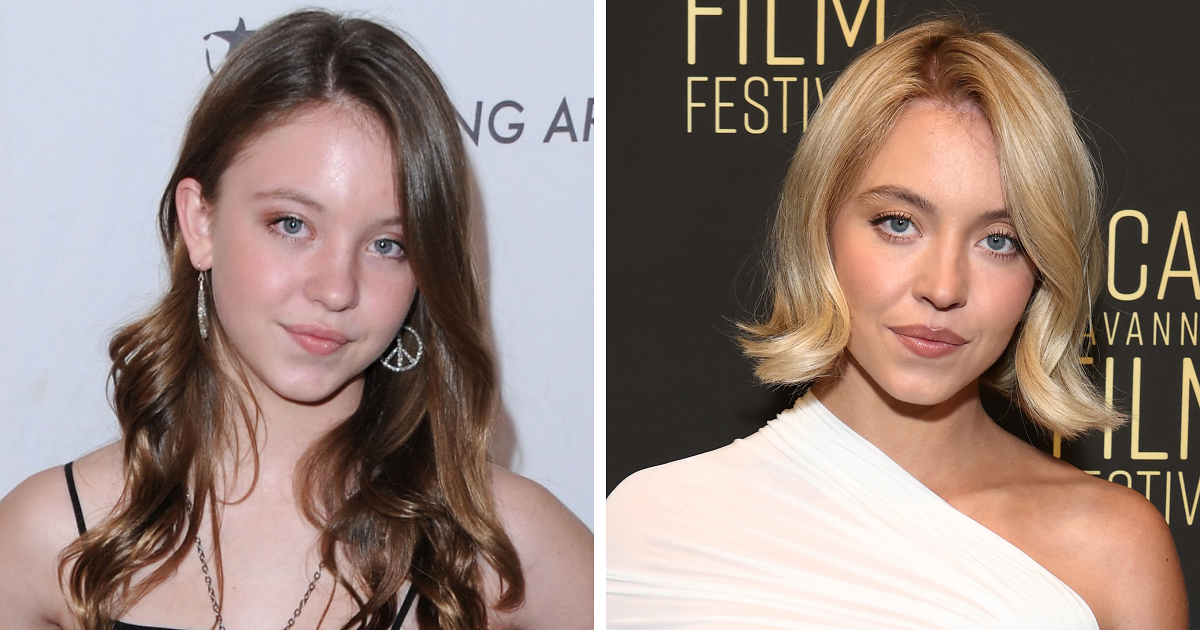
Sydney Sweeney has spent the past few years becoming one of Hollywood’s most watched facesliterally. Every red carpet, magazine cover, movie role, and Instagram appearance seems to invite the internet to zoom in like it has been hired by the FBI’s eyebrow division. So when Sweeney pushed back on rumors that she has had cosmetic work done, the conversation did not quietly leave the room. It put on heels, grabbed a ring light, and ran straight to the comment section.
The actress has said she has “never gotten work done,” explaining that she is afraid of needles and wants to age naturally. Her comments were meant to shut down years of online speculation. Instead, they triggered a fresh debate after fans began circulating side-by-side photos comparing Sweeney’s younger images with more recent professional shots. Some commenters treated those comparisons as evidence that her appearance had changed too much to be explained by time, makeup, lighting, styling, or normal adulthood. Others defended her, arguing that comparing a child or teenager to a fully styled adult celebrity is not exactly a scientific method. It is more like doing detective work with a magnifying glass from a cereal box.
The result is a messy but fascinating celebrity beauty debate: what does “natural beauty” mean in an era of injectables, filters, glam teams, facial massage, contouring, camera angles, cosmetic dentistry, and fans who can pause a video at the least flattering millisecond? More importantly, when does public curiosity become public entitlement?
What Sydney Sweeney Actually Said About Cosmetic Work
Sweeney’s comments about cosmetic procedures have been direct. In public interviews and entertainment coverage, she has denied having plastic surgery, Botox, fillers, or other cosmetic enhancements. She has also pointed to her fear of needles as a major reason she avoids these treatments. In one widely discussed interview, she said she has no tattoos and wants to “age gracefully.”
Her response also addressed the very thing fans later used against her: comparison photos. Sweeney argued that online users often compare old photos of her as a young girl with current images taken under professional lighting, heavy styling, and full glam. In plain English: yes, a 12-year-old and a 28-year-old movie star at a premiere will look different. Shocking development, alert the glam police.
She has also said that a childhood wakeboarding accident left her with stitches near one eye, which she used to explain some facial asymmetry. That detail matters because the internet often treats every uneven eyelid, sharper cheekbone, fuller lip, or different brow shape as evidence of a procedure. Human faces, however, are not factory-made phone cases. They shift, settle, swell, slim, and photograph differently depending on about 47 variables, including whether someone has slept, cried, eaten salty fries, or stood under lighting designed by a villain.
Why Fans Are Posting Side-By-Side Photos
The backlash gained traction because side-by-side celebrity images are the internet’s favorite courtroom exhibit. One photo from years ago goes on the left, one recent red-carpet image goes on the right, and suddenly everyone becomes a board-certified specialist in noses, lips, cheek volume, eyelid space, and “vibes.”
In Sweeney’s case, critics focused on perceived changes in her lips, nose, face shape, chest, and overall styling. Some argued that the differences looked too noticeable to be natural. Others said she should simply “own up” if she had made cosmetic choices. That argument appears often in celebrity culture: fans say they are not judging the procedure itself, only the denial. But the reality is trickier. Celebrities are criticized if they admit to cosmetic work, criticized if they deny it, and criticized if they say nothing. It is a game where the scoreboard is made of smoke.
Supporters pushed back by pointing out that Sweeney has been photographed across many years, in many formats, under wildly different conditions. Childhood photos, paparazzi shots, character stills, magazine shoots, edited campaign images, red-carpet photos, and casual selfies are not equal evidence. A person can look different across them without a surgeon entering the chat.
Side-By-Side Photos Are Compelling, But They Are Not Proof
Side-by-side images feel convincing because the human brain loves patterns. Give people two photos and a rumor, and the mind starts building a bridge between them. But visual comparisons can be deeply misleading, especially with celebrity images.
Lighting Can Rewrite a Face
Lighting changes shadows, and shadows change structure. A soft front-facing light can flatten the nose and smooth the skin. Side lighting can sharpen cheekbones and make the jaw appear more defined. Flash photography can make lips look fuller or thinner depending on reflection. Red-carpet lighting is not normal lighting; it is lighting with a publicist.
Makeup Is Basically Architecture
Modern makeup can reshape the appearance of a face without changing the face itself. Contour can make a nose look narrower. Lip liner can make lips look fuller. Brow styling can change the apparent shape of the eyes. False lashes can lift the outer corners. Strategic blush can make cheeks appear rounder or more sculpted. A talented makeup artist can do things with powder that make Photoshop feel unemployed.
Age Matters More Than Comment Sections Admit
Sweeney began acting young, and many photos used in comparisons show her as a child or teenager. Facial fat distribution changes from adolescence into adulthood. Bone structure becomes more visible. Weight changes, fitness routines, hormones, and styling choices all affect appearance. Comparing a young teen to a fully grown adult is not an “aha” moment; it is biology doing its normal job.
Camera Angles Can Start Rumors
Lens length, head tilt, distance from camera, facial expression, and even the height of the photographer can dramatically change how someone looks. A phone selfie taken close to the face can distort the nose and chin. A professional portrait shot from farther away can create a more balanced look. This is why your passport photo and your best vacation selfie appear to feature two distant cousins.
The Bigger Issue: “Natural Beauty” Is a Loaded Phrase
The phrase “natural beauty” sounds simple, but in celebrity culture it carries baggage. Fans often want stars to be naturally perfect, but not too perfect. Glamorous, but relatable. Enhanced, but honest. Confident, but humble. Sexy, but not trying. Basically, the public asks celebrities to be mythical forest creatures with good PR teams.
When Sweeney says she has not had work done, some fans read it as a personal statement. Others read it as part of a broader beauty culture where “natural” can become a marketing advantage. That is why skepticism becomes so intense. People are tired of being sold impossible standards as effortless genetics. They know that Hollywood beauty often involves professional facials, trainers, stylists, dermatologists, expensive skincare, studio lighting, retouching, and enough preparation to launch a small satellite.
Still, there is a difference between questioning beauty standards and accusing a specific person of lying about their body. The first is cultural analysis. The second can slide into body policing. The internet often confuses the two because outrage travels faster than nuance, and nuance has never gone viral while wearing sweatpants.
Why Sydney Sweeney Gets So Much Scrutiny
Sweeney’s image has become a cultural lightning rod partly because her career sits at the intersection of beauty, sexuality, fame, and public projection. Her breakout performances in shows like Euphoria and The White Lotus placed her in roles that audiences intensely discussed. Her red-carpet looks and fashion campaigns only added to that attention.
She has also been part of broader cultural debates beyond acting. Her American Eagle “great jeans” campaign, built around a jeans-versus-genes pun, sparked public conversation about beauty standards, race, advertising, and how easily a campaign can become a culture-war bonfire. Whether people defended or criticized the campaign, it reinforced one point: Sweeney’s appearance is often treated as public property.
That context explains why her cosmetic-work denial did not land as a simple personal statement. For many viewers, Sweeney is not just an actress; she is a symbol onto which the internet projects arguments about desirability, authenticity, privilege, branding, femininity, and the modern beauty economy. That is a lot to hang on one person’s cheekbones.
Cosmetic Procedures Are More Common, But That Does Not Prove Anything
Part of the reason fans are skeptical is that cosmetic procedures have become mainstream. Botox, dermal fillers, lip injections, skin resurfacing, and other minimally invasive treatments are no longer rare Hollywood secrets. They are widely discussed, widely marketed, and increasingly normalized. In the United States, major plastic surgery organizations have reported millions of minimally invasive procedures in recent years, with neuromodulator injections and hyaluronic acid fillers among the most common.
Botox and fillers are also frequently misunderstood. Botox temporarily relaxes muscles that create expression lines, while dermal fillers add volume or structure. Both can produce subtle results when performed conservatively. That subtlety fuels speculation because fans assume they can detect “small tweaks” in every celebrity face. Sometimes they might be right. Sometimes they are just seeing lip liner, weight change, dental work, puberty, lighting, or a Tuesday.
In Sweeney’s case, there is no verified evidence proving she has had cosmetic enhancements. The public has her own statements, public photos, and speculation. Those are not the same thing. A comment thread is not a medical record.
The Ethics of Celebrity Face Analysis
There is nothing wrong with discussing the pressure celebrities face to look perfect. There is also nothing wrong with criticizing an entertainment industry that sells polished images while pretending perfection is casual. But dissecting a woman’s body part by part can become invasive quickly.
The problem is not just that fans speculate. It is that speculation often becomes a demand for confession. “Just admit it” sounds simple, but no one is owed another person’s medical history. Even if a celebrity did choose Botox, filler, surgery, or any other cosmetic procedure, that information would still be personal unless they decided to share it.
The best version of this conversation is not “Did Sydney Sweeney get work done?” It is “Why do we care so much, and who benefits when women are pressured to prove they are naturally beautiful?” That question leads somewhere more useful than arguing over whether one Getty Images photo has suspicious lip volume.
What Fans Are Really Reacting To
Many fans are reacting less to Sweeney herself and more to a long history of celebrity beauty messaging. Audiences have seen stars deny cosmetic enhancements, only for procedures to be confirmed later. They have watched filters blur skin texture into porcelain. They have seen brands sell “effortless beauty” through campaigns that required twelve professionals and a lighting budget. So when any celebrity claims a natural look, the public’s skepticism is already warmed up and stretching.
That frustration is understandable. But skepticism should not become certainty without evidence. “Her face looks different to me” is an observation. “She is definitely lying” is a claim. The distance between those two statements is where fairness lives.
Experience-Based Reflection: What This Debate Feels Like Online
Anyone who has spent time in celebrity comment sections has seen how quickly a beauty discussion turns into a group project with no teacher and too many rulers. One person posts a side-by-side photo. Another circles the nose. Someone else writes “the lips give it away.” A fourth person says everyone is jealous. Then a fifth arrives with the emotional energy of a courtroom prosecutor and declares the case closed. Nobody has evidence, but everyone has confidence, which is basically the official fuel of the internet.
The Sydney Sweeney debate feels familiar because it mirrors what happens in everyday life, just at celebrity scale. Most people have old photos where they look wildly different. Maybe your brows were thinner. Maybe your face was rounder. Maybe your hair color was a choice best described as “youthful enthusiasm.” If someone compared your middle-school yearbook photo with your current LinkedIn headshot, they might accuse you of having a new jaw, a new nose, and a new personality. In reality, you probably discovered moisturizer, better lighting, and the healing power of not using a webcam from 2009.
That is why these debates are both entertaining and uncomfortable. They reveal how little room women are given to change. If a woman looks the same, people call her frozen. If she looks different, people call her fake. If she wears makeup, she is hiding something. If she skips makeup, she looks tired. If she admits to a procedure, she is insecure. If she denies it, she is accused of dishonesty. The rules are impossible, and the referee is a comment section with a profile picture of a cartoon frog.
From a media-literacy perspective, the useful habit is to pause before treating images as proof. Ask where the photos came from. Ask how old the person was. Ask whether one image is edited, posed, filtered, professionally styled, or taken from an odd angle. Ask whether your reaction is based on evidence or on the expectation that famous women must explain their faces like they are filing tax returns.
There is also a more human lesson here. Public figures may be famous, but fame does not turn a body into community property. Sweeney chose a career that involves cameras, fashion, and publicity; that does not mean strangers are entitled to diagnose her appearance. Fans can critique Hollywood beauty standards without turning one actress into a lab sample.
The better conversation is bigger than Sweeney. It is about how celebrity culture trains audiences to hunt for “authenticity” in images that were never natural to begin with. A red-carpet photo is a production. A magazine cover is a production. A campaign image is a production. Even a casual Instagram photo may involve posing, lighting, selection, and editing. Expecting untouched truth from entertainment imagery is like expecting nutritional advice from a birthday cake.
So yes, the side-by-side photos are interesting. They explain why the debate caught fire. They show how invested people are in celebrity transparency. But they do not prove what happened to Sweeney’s face or body. What they prove is that the internet still struggles to tell the difference between curiosity, criticism, and entitlement.
Conclusion
The uproar over Sydney Sweeney’s natural beauty claim is not really just about Sydney Sweeney. It is about celebrity culture, beauty pressure, cosmetic transparency, social media suspicion, and the modern obsession with comparing faces frame by frame. Fans may believe side-by-side photos reveal the truth, but images alone cannot confirm cosmetic work. Age, makeup, lighting, styling, angles, fitness changes, and normal development can all transform how a person appears.
Sweeney has denied having cosmetic work done, and without verified evidence, the fairest approach is to treat online accusations as speculation rather than fact. The more useful takeaway is this: Hollywood’s beauty machine deserves criticism, but individual women do not owe the public a medical explanation for every change in their appearance. Sometimes a face changes because life changes. Sometimes makeup is doing wizardry. And sometimes the internet simply needs to log off, drink water, and stop cross-examining cheekbones.
Note
This article discusses public reactions, interviews, and online commentary. It does not claim that Sydney Sweeney has had cosmetic procedures. Side-by-side photos are treated as social-media speculation, not medical evidence.