Note: This is a publication-ready HTML body in standard American English. SEO tags are included in JSON format at the end.
Some objects tell time. Others steal the room. A holographic seven-segment clock somehow manages to do both. At first glance, it sounds like a contradiction wrapped in sci-fi packaging: the plainest kind of digital numeral, the humble seven-segment display, fused with one of the flashiest visual ideas in modern optics, the hologram. That is precisely why the concept is so irresistible. It takes the most familiar way to show numbers and gives it a floating, uncanny, almost magical presence.
And that is the real charm here. A holographic seven-segment clock is not trying to reinvent timekeeping. Your phone already has that job covered, along with weather alerts, doomscrolling, and the occasional reminder that you were supposed to call your dentist three weeks ago. What this kind of clock does instead is transform time into an experience. It makes you look twice. It turns a simple minute change into a tiny stage effect. It reminds us that even the most ordinary technology can become delightful when engineering and imagination decide to collaborate.
In the maker world, that combination is catnip. Builders have spent years making clocks out of Nixie tubes, LED matrices, giant acrylic digits, spinning persistence-of-vision rigs, and every possible kind of glowing nonsense that can reasonably sit on a desk without alarming the neighbors. A holographic seven-segment clock fits right into that tradition, but with an extra twist: it sits right on the line between optics, electronics, industrial design, and showmanship. In other words, it is the kind of project that makes people say, “That’s ridiculous,” immediately followed by, “Okay, how does it work?”
What a Holographic Seven-Segment Clock Actually Is
Let’s clear the fog machine before the lasers come on. A seven-segment display is the classic numeric format made from seven bars that light up in different combinations to form digits from 0 to 9. It is the visual language of alarm clocks, calculators, microwaves, ovens, scoreboards, and countless bits of hardware that want to communicate one thing very clearly: number now. The reason it has lasted so long is simple. It is legible, efficient, cheap to drive, and instantly recognizable.
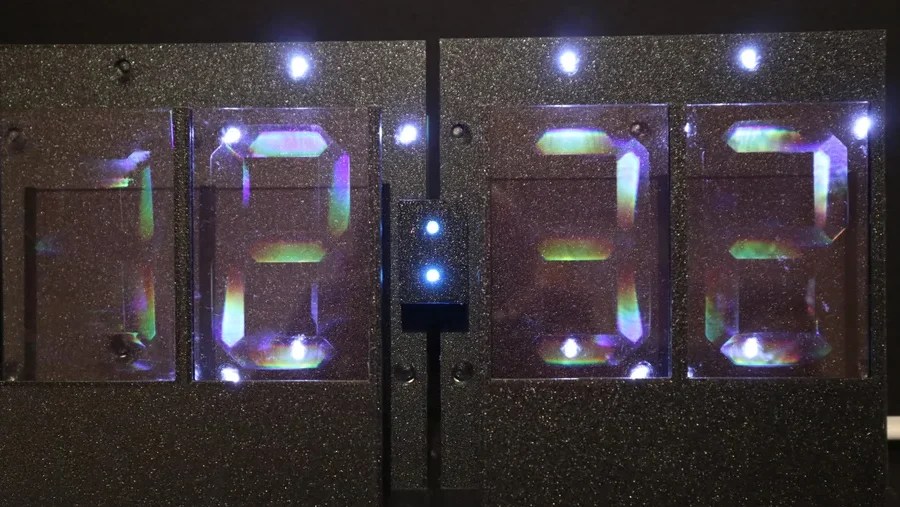
A holographic seven-segment clock keeps that familiar numeric structure, but the segments are no longer just glowing plastic bars sitting flat on a circuit board. Instead, the segments appear to float in space or behind a transparent plate, creating a much stranger visual effect. The result feels futuristic, but the appeal is oddly retro too. Seven-segment numerals already have a nostalgic digital honesty. When those same numerals seem to hover in midair, the effect is both vintage and futuristic at once, like a clock designed by a lab technician who also collects old arcade cabinets.
The most interesting versions of this idea are the ones that use real holographic elements rather than a visual trick alone. In one standout maker build, each segment is recorded as a transmission hologram on special holographic film. The segments are then illuminated from different angles so different parts of the digit light up when needed. That means the number is not simply printed on clear plastic or reflected like a stage illusion. The image is reconstructed optically, which is a much nerdier sentence than “it looks awesome,” but both are true.
Why the Word “Holographic” Needs a Tiny Reality Check
If you have spent more than five minutes around gadgets marketed online, you already know the word holographic gets tossed around like confetti at a startup launch party. A lot of so-called hologram displays are really reflections, projections, spinning LED systems, or optical illusions. Some are brilliant. Some are glorified phone tricks. A few are one step away from a haunted-house prop. None of that is bad, but it helps to know what bucket you are dealing with.
Pepper’s Ghost is one of the oldest and most famous tricks in the book. It uses angled transparent material and reflected imagery to make something appear ghostlike and suspended in space. It is clever, theatrical, and still effective. But it is not the same as a true hologram. Likewise, persistence-of-vision displays can create floating-seeming digits by flashing lights in sync with motion. Those systems can be gorgeous and dramatic, especially in clocks, but they rely on motion and timing rather than holographic recording.
True holography is more demanding. It involves recording interference information from light so an image can later be reconstructed with depth cues. That is why real holography tends to sound less like “slap on some acrylic and hope for the best” and more like “please do not breathe on the table during exposure.” It is also why true holographic builds feel so satisfying. They earn their weirdness.
So when we talk about a holographic seven-segment clock, the most compelling version of the phrase is one that uses real transmission holograms to generate the segments. That distinction matters because it changes the project from a visual gag into an optical instrument that happens to tell you it is 7:42.
How the Clock Works Without Summoning a Wizard
The core idea is surprisingly elegant. Each of the seven segments in a digit is recorded into holographic film. Not all at once in a giant all-purpose blob, but carefully, segment by segment, with each recorded so it can be activated by illumination from a different angle. Later, LEDs positioned behind the film shine light at those specific angles. When the correct LEDs are on, the correct segments reconstruct, and the proper numeral appears.
That means the clock is doing two jobs at the same time. Electronically, it is still behaving like a normal seven-segment display. The controller decides whether a digit should be a 1, 4, 8, or anything else, and sends the corresponding pattern. Optically, however, each “segment on” command is translated into a specific angled beam hitting a holographic recording. The number we see is the result of both systems cooperating. Think of it as a regular digital clock wearing an optics PhD as a disguise.
The build process behind that effect is not casual. Recording holograms requires stable geometry, controlled illumination, and a patient refusal to let vibration ruin the exposure. In a real-world maker implementation, the builder used holographic plates, a red diode laser, a dark recording setup, and repeated exposures for each segment. The segments were recorded separately on the same film area, with the geometry adjusted between exposures so later illumination angles would reconstruct different segment shapes. That is not impossible, but it is also not the sort of thing you finish between reheating pizza and pretending you will finally organize your tools tonight.
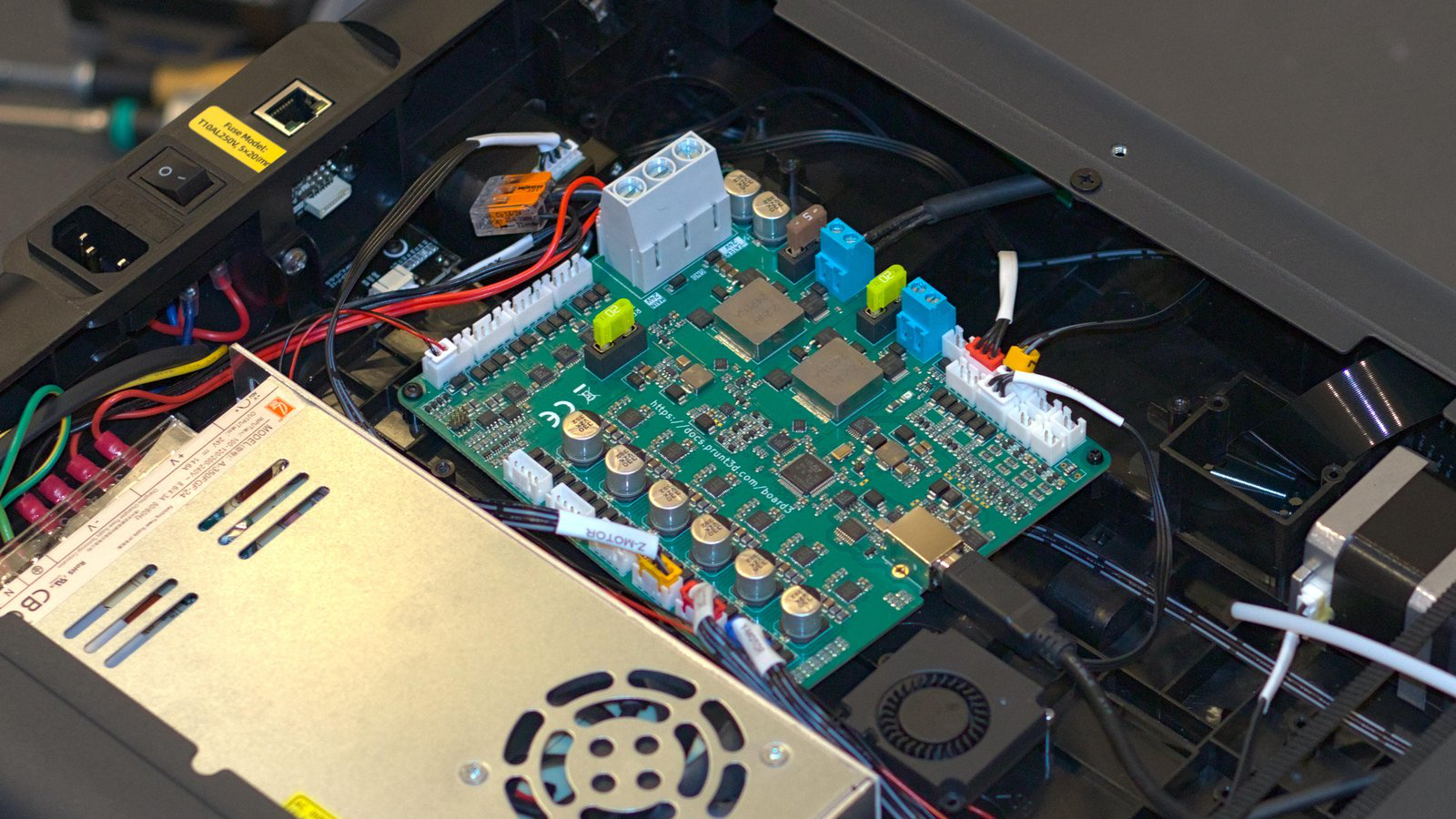
On the electronics side, the design can lean on familiar clock hardware. ESP32 boards are popular because Wi-Fi makes internet time sync easy. Driver chips such as the HT16K33 simplify multiplexing for four-digit seven-segment systems. That matters because the beauty of this project is not in reinventing the digital clock logic. The magic is in the display layer. Smart builders keep the timekeeping reliable and conventional so the optics can be the star of the show.
Why Seven-Segment Displays Still Refuse to Retire
There is something wonderfully stubborn about the seven-segment display. It is not flexible. It is not artistic. It is not trying to be a full-color OLED with a meditation app. It shows numbers and occasionally a colon, and that is pretty much the whole act. Yet that limitation is exactly why it remains so useful. Seven-segment numerals are fast to read from across a room. They have a geometry that feels mechanical even when they are electronic. They are the typography of pure function.
That clarity makes them perfect for clocks. You do not want to decipher your bedside time display as if you are interpreting a ransom note in a new font. You want instant recognition. Seven-segment design gives you that in the cleanest possible way. In fact, one reason holographic versions work so well is that the numeral format is already visually stripped down. The optics add wonder, but the underlying symbol stays simple enough to remain readable.
There is also a cultural layer here. Makers love old display technologies because they carry mood. Nixie tubes glow with atomic-age romance. VFDs feel like test equipment from a secret lab. LED segments are the dependable middle child: less dramatic, more democratic, and still full of character. A holographic seven-segment clock preserves that familiar digital personality while giving it a new theatrical body.
The Engineering Challenges Nobody Sees in the Glamour Shot
A floating digit in a photograph looks effortless. The actual build is a parade of tiny complications wearing black matte PLA. Brightness is one issue. A holographic segment has to be bright enough to read clearly without washing out the rest of the image. Alignment is another. If the reconstruction angle of the LED does not match the recording geometry closely enough, the segment can look dim, distorted, or slightly wrong. And because human beings are extremely good at noticing when a straight line is not quite straight, “slightly wrong” becomes “why does the clock look like it had coffee during calibration?”
Viewing angle is another constraint. Some holographic effects look amazing from one sweet spot and merely confused from the side. That may be fine for an art object, but a clock still has to function as a clock. It should not require you to bow before it from exactly 27 degrees like a digital sun dial for the initiated. A successful design balances spectacle with usability.
Then there is fabrication. Custom holders, LED mounts, wiring paths, and segment spacing all matter because clutter can ruin the illusion. The cleanest builds often use 3D-printed structures, custom PCBs, and careful cable management. That is not just for aesthetics. Optics punish sloppiness. When you are trying to make light look impossible, every visible practical compromise becomes part of the story.
Why This Kind of Clock Feels Bigger Than a Desk Gadget
A holographic seven-segment clock is a neat object, but it also represents something bigger about modern maker culture. We live in an era where advanced display concepts once locked in research labs can now inspire garage builds, desktop experiments, and boutique personal projects. True dynamic holography at large scale is still hard, expensive, and computationally intense. But hobbyists can now explore slices of that world with better components, more accessible fabrication tools, and shared knowledge.
That is why this clock matters beyond its novelty. It acts like a bridge. On one side, you have practical consumer electronics: driver chips, microcontrollers, internet time sync, LED logic. On the other side, you have deep optics: transmission holograms, reconstruction angles, light paths, recording stability. The clock sits right in the middle and says, very casually, “Sure, both of these belong on your workbench.”
It also reminds us that people do not fall in love with technology only because it is useful. They fall in love with it because it can be strange, beautiful, and unnecessary in the most glorious ways. Nobody needs floating digital numerals to survive. But the fact that someone figured out how to make them anyway is exactly the sort of thing that keeps engineering from becoming emotionally beige.
The Experience of Living With a Holographic Seven-Segment Clock
If you are wondering what makes this idea stick in the mind, it is not just the technical achievement. It is the experience around it. A holographic seven-segment clock does not behave like an ordinary desk clock, because ordinary clocks disappear into the background. They become furniture with numbers. A holographic one resists that fate. It keeps pulling your attention back, not in an annoying way, but in the way a clever piece of design keeps rewarding another glance.
In daylight, the clock can feel understated, almost like a transparent sculpture that just happens to know the time. Then the light changes, the segments catch correctly, and suddenly the numerals seem to hover with a confidence that feels disproportionate to their simplicity. They are still just bars making numbers, but now they have presence. The effect is subtle enough to feel sophisticated and strange enough to make visitors lean forward and ask if it is a projection, a mirror trick, or some kind of tiny science-fiction portal. That conversation starts itself.
There is also a deeply satisfying contrast between the old and the new. Seven-segment numerals are familiar in the most domestic way imaginable. They belong to alarm clocks, appliances, and school lab gear. Holography belongs to museum demos, research papers, stage illusions, and ambitious promises about the future. Put those two worlds together, and the result feels emotionally richer than either one alone. It is friendly but mysterious. Functional but theatrical. A little nerdy, a little glamorous, and fully aware of both facts.
For builders, the experience is even more layered. This is not the kind of project that pays off every hour. It pays off in moments. The first successful segment reconstruction. The first time all four digits read correctly. The first time the colon lights and the whole object stops looking like an experiment and starts looking like a real product from an alternate timeline where clocks had cooler childhoods. Even the frustrations become part of the memory: waiting for stillness, adjusting angles, chasing brightness, rethinking mounts, cleaning up wiring, and discovering that light is far more opinionated than it appears.
What makes the clock memorable over time is that it does not become less interesting once it works. Many builds are satisfying mainly because they are finished. This one stays rewarding because the display itself keeps performing. Every minute change is a tiny reveal. Every dim room makes it look a little more dramatic. Every person seeing it for the first time brings the same wonderful sequence of reactions: confusion, curiosity, recognition, delight. It is hard not to enjoy an object that repeatedly causes adults to point at a floating number like they have just rediscovered wonder after a long meeting.
And maybe that is the best argument for the holographic seven-segment clock. It turns time, the most routine thing imaginable, into a small event. It makes the mundane feel engineered, and the engineered feel magical. That is a rare combination. Plenty of gadgets are useful. Plenty are flashy. Very few are both practical and poetic. This one comes surprisingly close.
So no, a holographic seven-segment clock is not necessary. It is better than necessary. It is the kind of idea that proves technology can still be playful without becoming silly, serious without becoming dull, and beautiful without forgetting its job. The digits float, the time remains legible, and somewhere between optics and electronics, a plain old clock becomes a conversation piece. Not bad for seven bars and a stubborn refusal to be ordinary.
Conclusion
A holographic seven-segment clock is what happens when a familiar display format gets promoted from utility to spectacle. At its core, it still relies on the same readable, efficient numeric logic that made seven-segment displays icons of digital timekeeping. But by introducing holographic recording, angled illumination, and careful optical design, the clock becomes something far more memorable than a standard LED readout. It becomes a piece of engineering theater.
That is why the concept resonates so strongly with makers, designers, and anyone who appreciates creative hardware. It is grounded in real science, not empty buzzwords, yet it still delivers the emotional payoff people want from futuristic design. You look at it to check the time and end up admiring the idea. For a desk object, that is a pretty impressive career path.