There are many ways to test a marriage. Assemble flat-pack furniture together. Choose a movie on a Friday night. Try to agree on what “five minutes” means when one person is still looking for their shoes. But perhaps the most unexpectedly revealing test is this: what happens when one spouse says, very clearly, “Please do not give away my special wine,” and the other spouse hears, “Great, free party supplies.”
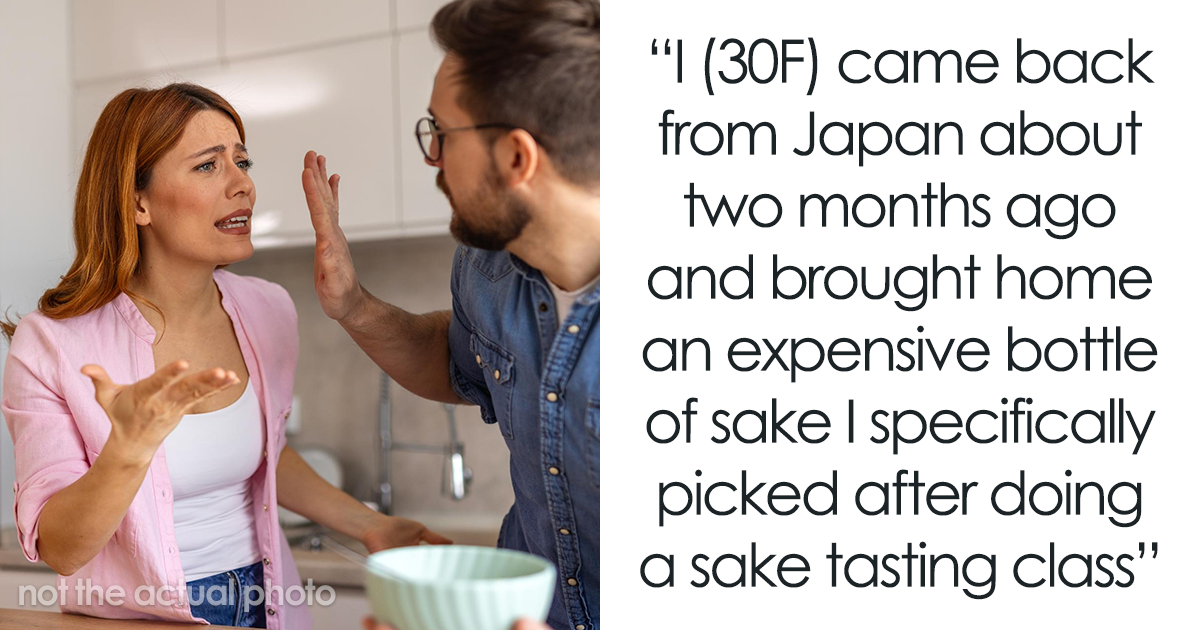
The viral story behind “Wife Warns Hubby Not To Give Away Her Prized Wines, Mad When He Does It Anyway” struck a nerve because it was never just about alcohol. It was about respect, ownership, memory, boundaries, and the tiny domestic betrayals that become big not because the object is priceless, but because the warning was crystal clear. The wife had bottles that meant something to her. She told her husband not to hand them out. He did it anyway. Then came the anger, the internet jury, and the familiar chorus of: “How hard is it to not give away something that is not yours?”
On the surface, it sounds like a household squabble over a couple of bottles. Underneath, it has all the ingredients of a relationship debate: sentimental value, social pressure, entitlement, poor communication, and a husband who apparently mistook a boundary for a decorative suggestion. Let’s uncork the whole mess.
The Story: When “Do Not Touch” Somehow Became “Help Yourself”
In the widely discussed account, a wife had prized bottles she had either carefully chosen, saved, or received as meaningful gifts. These were not random supermarket bottles destined to become emergency pasta sauce wine. They were special. Some bottles are bought for a Tuesday. Others are kept for a memory, a celebration, or the pleasure of opening them with the right person at the right time.
According to the story, the wife warned her husband more than once not to give the bottles away. That detail matters. This was not a case of someone making an honest mistake after seeing an unlabeled bottle near the sink. There was a direct instruction. The emotional contract was simple: these bottles are mine, they matter to me, please leave them alone.
But when guests, friends, or family entered the scene, the husband treated the prized wines as communal inventory. Out they went. Poured, gifted, shared, or otherwise removed from the wife’s control. By the time she found out, the damage was done. You cannot un-pour a bottle, just as you cannot put toothpaste back into the tube without making everyone uncomfortable.
Why This Was Not “Just Wine”
One of the most common bad takes in conflicts like this is: “It’s only wine.” That sentence sounds reasonable until you apply it to anything else. It’s only a wedding ring. It’s only a childhood photo. It’s only your signed baseball. It’s only the concert ticket you kept from the night you got engaged. Objects carry meaning because humans are sentimental little raccoons who collect emotional shiny things.
Wine, especially a bottle picked up during travel or saved for a future occasion, can hold a story. A souvenir bottle might represent a trip, a tasting class, a friendship, a personal milestone, or simply the rare joy of finding something you genuinely love. The price matters less than the meaning, though sometimes the price is also very real. Fine wine and specialty bottles can range from affordable treats to serious collectibles, and proper storage helps preserve both quality and value.
That is why the wife’s anger made sense to so many readers. The husband did not merely consume or give away a beverage. He dismissed the meaning attached to it. He also ignored a direct boundary. That combination is what turned a bottle into a full-bodied marital Cabernet of resentment.
The Boundary Was Already Clear
Healthy relationships do not require partners to agree on every preference. One person can be a wine lover while the other thinks “tannins” sounds like a minor villain from a fantasy novel. The issue is not whether both spouses value the bottle equally. The issue is whether one spouse respects that the other spouse values it.
Boundaries in a household are often simple. Do not use my work laptop. Do not throw away my old notebooks. Do not lend out my tools without asking. Do not eat the dessert with a sticky note that says “for tomorrow.” In a shared home, some things belong to both people, some things belong to one person, and some things require a quick “Hey, is this okay?” before anyone makes a decision.
The wife’s instruction was not mysterious. She did not communicate in riddles, smoke signals, or interpretive dance. She said not to give away the wine. When someone ignores that, the conflict shifts from misunderstanding to disregard.
Gift Etiquette: You Cannot Be Generous With Someone Else’s Stuff
Here is a basic rule of gift etiquette that should probably be embroidered on throw pillows: generosity only counts when the thing is yours to give. Giving away someone else’s property does not make you thoughtful. It makes you a cheerful pirate with better lighting.
People sometimes give away a partner’s belongings to avoid embarrassment in front of guests. Maybe a friend asks for a bottle. Maybe someone praises the wine cabinet. Maybe the husband wants to appear relaxed, generous, and host-of-the-year charming. But social pressure is not a permission slip. If a bottle belongs to your spouse, the proper answer is easy: “That one is hers, so I’ll ask her first,” or “That bottle is being saved, but let me grab something else.”
That answer protects everyone. The guest does not become accidentally involved in a domestic incident. The spouse feels respected. The bottle survives. Civilization continues.
The Real Issue: Trust Takes Years, Bottles Take Seconds
Trust in a marriage is built in small moments. It is not only about dramatic betrayals. It is also about whether your partner remembers what matters to you, checks before making choices that affect you, and takes your “no” seriously even when they personally think the issue is small.
When a spouse repeatedly dismisses small boundaries, the message becomes loud: your preferences are optional when they inconvenience me. That is why readers often react so strongly to stories like this. The bottle is the plot device. The theme is trust.
A spouse who gives away a prized bottle after being warned not to may think, “Why are you making such a big deal?” The other spouse hears, “I did not care enough to protect something you clearly told me mattered.” Those are very different conversations. One is about wine. The other is about emotional safety.
Could the Husband Have Fixed It?
Yes, but not by getting defensive. The repair script was sitting right there, wearing a tiny bow tie:
“I’m sorry. You told me not to give those bottles away, and I did it anyway. I understand why you’re upset. I’ll replace them if possible, and I won’t do that again.”
That is it. No courtroom defense. No blaming her tone. No claiming the wine was “just sitting there.” No suggesting she is overreacting because the bottle is gone and cannot give testimony. A sincere apology acknowledges the action, the impact, and the plan to prevent a repeat performance.
Replacement also matters. If the bottle was available for purchase, the husband should replace it with the same bottle or the closest equivalent, using his own money or discretionary funds. If it was a rare souvenir or sentimental gift, replacement may not fully solve the problem, but the effort still communicates accountability. Sometimes the most important part of making amends is proving that you understand the loss was real.
Why Wine Collectors Are So Protective
To non-collectors, wine can look simple: glass bottle, cork, label, liquid. To collectors or sentimental savers, every detail matters. Certain bottles are tied to regions, vintages, travel memories, limited releases, personal taste discoveries, or meaningful gifts. A bottle from a trip to Japan, France, Germany, California wine country, or a tiny vineyard visited on vacation is not easily replaced by something with a discount sticker and a confident kangaroo on the label.
Wine also needs care. Heat, light, vibration, and poor storage can damage quality over time. Many wine experts recommend stable, cool, dark conditions, with cork-sealed bottles stored on their sides to keep corks from drying out. Serious collectors may invest in wine fridges, professional storage, insurance, or tracking systems. Even casual enthusiasts know that a special bottle should not be treated like a random soda in the back of the fridge.
So when someone casually gives away a treasured bottle, it can feel like they erased not just the wine, but the effort behind choosing, saving, and protecting it.
The Pregnancy-Hormones Problem and Other Bad Deflections
Stories like this often include one especially irritating twist: the upset partner gets accused of being emotional, dramatic, hormonal, petty, or materialistic. That is not accountability. That is a smoke machine. It fills the room with nonsense so nobody has to look at the actual behavior.
Even if someone is tired, pregnant, stressed, or having a hard week, their belongings are still their belongings. Emotions do not cancel boundaries. If anything, blaming someone’s reaction instead of addressing the mistake usually makes the conflict worse. It tells the hurt person, “Not only did I ignore your boundary, but now I would like to grade your response.” Bold strategy. Rarely successful.
What the Husband Should Have Done Instead
Ask First
The easiest solution was also the most obvious: ask. A five-second text could have prevented the entire mess. “Can I open this bottle?” “Can I give this one to my friend?” “Is this wine saved for something?” Those questions are small, but they show respect.
Keep Hosting Wine Separate
Couples who entertain often can avoid conflict by creating a “guest shelf.” Anything on that shelf is fair game. Anything outside it requires permission. This system is not romantic, but neither is arguing beside an empty bottle while guests pretend to study the ceiling.
Label Special Bottles
A simple label can help: “Do not open,” “For anniversary,” “Gift from Sarah,” or “Touch this and sleep with one eye open.” The last one may be a bit much, legally speaking, but the spirit is clear.
Respect the Answer
Asking only matters if “no” is accepted. If one spouse says, “Please save that,” the discussion is over unless both people later agree otherwise.
What the Wife’s Anger Reveals
Her anger likely had layers. First, there was the immediate loss: the bottles were gone. Second, there was the disregard: she had already said no. Third, there was the possible embarrassment of having to explain why a spouse ignored such a simple request. Finally, there was the fear that this was part of a larger pattern.
That last layer is often where internet debates get intense. Commenters are not always reacting to one bottle. They are reacting to what the bottle may symbolize: a partner who minimizes, takes, dismisses, and then acts surprised when consequences arrive wearing steel-toed boots.
Was the Wife Right to Be Mad?
Yes. Anger is a reasonable response when someone gives away something that belongs to you after you explicitly asked them not to. The level of anger should still be handled maturely, of course. Screaming for three days, mailing invoices to every guest, or building a courtroom diorama out of corks may not be ideal. But the core feeling is valid.
The husband’s best path forward would be apology, replacement, and changed behavior. The wife’s best path forward would be to focus the conversation on the real issue: “I need to know that when I tell you something matters to me, you will respect it.” That sentence is far more useful than a debate over whether the bottle was expensive enough to justify her reaction.
How Couples Can Avoid the “Prized Wine” Fight
Every couple has a version of the prized wine. It might be a watch, a tool set, a perfume, a rare book, a collectible, a family recipe notebook, or leftovers from the restaurant you have been thinking about all day. The object changes. The principle does not.
Couples can prevent these fights by separating shared items from personal items, asking before lending or giving things away, and taking sentimental value seriously even when they do not personally feel it. A good relationship does not require identical taste. It requires curiosity and respect. You do not have to understand why your spouse loves a particular bottle. You only have to understand that they do.
Experiences Related to the Topic: The Wine Was Never Alone
Many people have lived through their own version of this story, and the details are almost always painfully familiar. One person saves something special, another person treats it as available, and suddenly the home turns into a very small claims court with worse snacks.
Imagine a wife who brings home a bottle from a vineyard she visited with her sister. She keeps it for years, planning to open it on a milestone birthday. Her husband sees it before dinner guests arrive and thinks, “Perfect, fancy wine.” By the time she walks into the dining room, the bottle is breathing in a decanter and so is her rage. The guests compliment the wine. She smiles like a haunted portrait. Later, he says he thought she would be happy everyone enjoyed it. She says the point was that she wanted to enjoy it, on the day she chose, with the person she chose. Both are talking about wine, but only one is talking about memory.
Or picture a husband who keeps a rare bottle of bourbon given to him by his late father. His wife, wanting to impress visiting relatives, serves it without asking. The bottle is technically replaceable online, but the meaning is not. The hurt comes from the feeling that something personal was treated as decoration for someone else’s evening. That is exactly why sentimental items need extra care. The market price cannot measure the emotional price.
There are also less dramatic examples. A roommate uses an expensive olive oil someone carried back from Italy. A sibling gives away a collectible toy still in its box. A parent donates old concert shirts without asking because “you never wear them.” A partner eats the last slice of cake clearly labeled for tomorrow. None of these are global emergencies, but each sends a message: I made a decision about your thing because my convenience mattered more in the moment.
The best households learn from these small explosions. Some people create a special shelf for saved bottles. Others write labels, keep gift items in separate cabinets, or make a rule that anything sentimental requires direct permission before being used. These systems may sound overly formal, but they are really just guardrails. Guardrails are helpful because humans are distractible, hungry, and occasionally too confident near a wine rack.
The experience many readers recognize is not only losing an object. It is the exhausting feeling of having to defend why the object mattered after it is already gone. That is why the husband in this story missed the bigger lesson. He did not need to become a wine expert. He needed to become an asking-first expert. In marriage, that skill pairs well with everything.
Conclusion: The Bottle Was Small, the Message Was Huge
The story of “Wife Warns Hubby Not To Give Away Her Prized Wines, Mad When He Does It Anyway” became so relatable because it exposes a universal truth: respect is often proven in ordinary moments. A partner who protects your small joys is telling you that your feelings matter. A partner who ignores your clear boundary and then minimizes your anger is telling you something else entirely.
Was the wine worth a fight? Maybe not by itself. Was the disrespect worth addressing? Absolutely. In a healthy marriage, “please don’t give this away” should be enough. No debate. No loopholes. No surprise tasting event for people who did not even know they were drinking the evidence.
The husband can recover from this mistake, but only if he stops treating the issue as a bottle problem and starts treating it as a trust problem. Replace what can be replaced. Apologize for what cannot. And next time, when your spouse says the wine is special, believe them. The cork may be small, but the consequences can be enormous.
Note: This article is an original, fully rewritten feature based on real-world discussions of the viral story, wine storage and collecting practices, gift etiquette, personal property principles, and relationship communication guidance. It contains no copied passages, source-link blocks, or unnecessary reference tags.