Note: This original article synthesizes publicly available information about Summers Off Comics, teacher workplace research, classroom humor, educator burnout, and real teaching experiences. It is written for web publication without source links, as requested.
When the Classroom Becomes a Comedy Club With Homework
Teaching is one of those professions people love to describe from the outside. “You get summers off!” they say, usually while a teacher is laminating flashcards at 10:43 p.m., answering parent emails, and wondering whether glitter is legally considered a hazardous material. That is exactly the kind of reality that Summers Off Comics, created by teacher and artist Mojo Rose, captures with sharp timing, warm honesty, and the kind of humor only someone who has survived a room full of energetic students can fully understand.
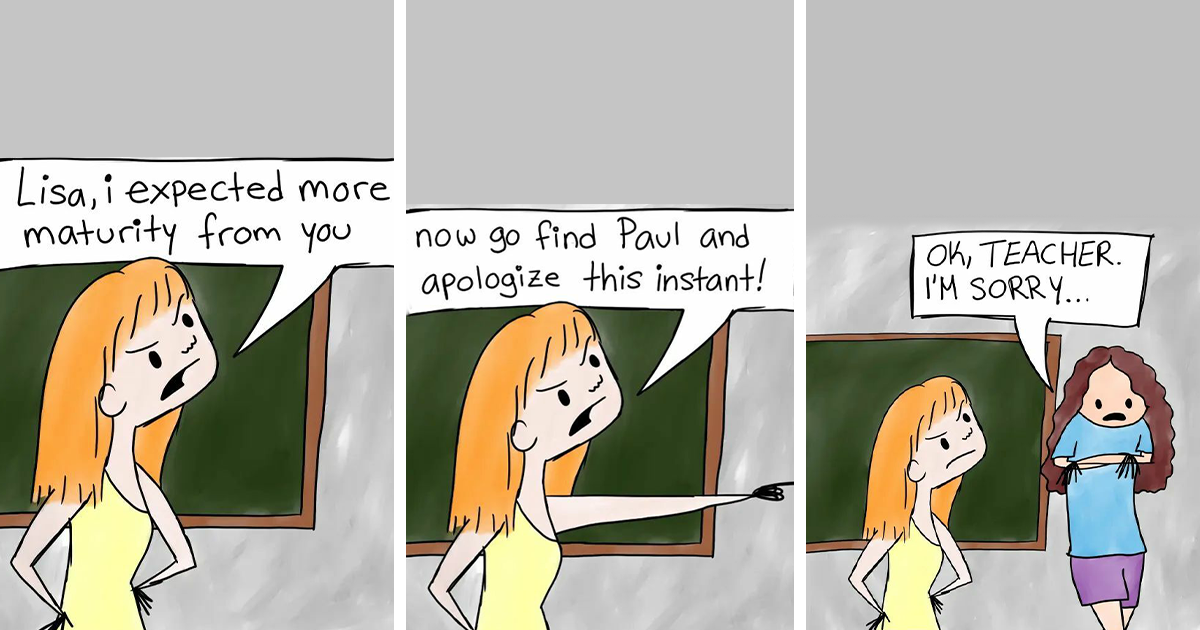
The series, featured in collections such as “This Teacher’s Comics Offer A Humorous Look At The Struggles Of Teaching,” turns the daily chaos of education into bite-sized comic strips. These are not glossy motivational posters with apples and perfect cursive. They are tiny, hilarious field reports from the front lines of classroom life: missing pencils, unexpected student logic, classroom management acrobatics, lesson plans that collapse in real time, and the immortal phrase every educator knows too well: “I finished. What do I do now?”
What makes these teacher comics so popular is not just that they are funny. It is that they are accurate. Mojo Rose began creating comics while working toward her teaching credential, using quick one-panel drawings to process the exhaustion, joy, confusion, and absurdity of learning how to teach. Over time, those tired thoughts turned into a recognizable webcomic world where educators could point at the screen and say, “Yes. That. That happened to me before lunch.”
Why Teacher Comics Feel So Relatable
The best classroom humor usually comes from truth. Students are naturally unpredictable, and teachers live in the tiny gap between “carefully planned lesson objective” and “someone just asked if fish can sneeze.” Summers Off Comics works because it does not punch down at students or romanticize teachers as magical superheroes. Instead, it finds comedy in the friction between good intentions and everyday reality.
One reason the comics resonate is that teaching involves constant emotional gear-shifting. A teacher may begin the day explaining fractions, shift into conflict mediator mode by 9:15, become a lost-and-found detective by 10:00, deliver a mini motivational speech before lunch, and end the afternoon trying to figure out why the classroom pencil sharpener sounds like a motorcycle losing a fight. A comic panel can capture that whiplash faster than a long essay ever could.
The humor also works because many classroom moments are too specific to explain gracefully. Teachers know the “you had to be there” problem. A student says something strange, the room erupts, and later the story makes no sense to anyone outside the building. Comics solve that problem by compressing the moment into a visual gag. They preserve the feeling: the raised eyebrow, the exhausted pause, the student who is somehow both completely wrong and weirdly brilliant.
The Real Struggles Behind the Laughs
Behind the jokes, these comics point toward a larger reality: teaching in America is demanding, emotionally intense, and often misunderstood. Surveys of public K-12 teachers have repeatedly shown high levels of stress, understaffing, behavior challenges, and workload pressure. Many teachers report that their jobs are frequently stressful or overwhelming, while school staffing shortages and student mental health needs add even more weight to the day.
That matters because the funniest teacher comics are rarely about one isolated inconvenience. A lost pencil is not just a lost pencil when it is the seventeenth lost pencil of the week. A student interrupting a lesson is not just an interruption when the teacher has already handled three behavior redirects, a technology failure, a hallway incident, and an email that begins with “Just checking in…” before the first bell has finished echoing.
Mojo Rose’s work gives those moments a pressure valve. The comics let educators laugh without pretending the job is easy. They acknowledge burnout, but they do not turn the classroom into a gloomy documentary. Instead, they say: yes, this is hard; yes, it is ridiculous; and yes, sometimes the only reasonable response is to draw it and let other teachers laugh along.
Classroom Chaos: The Main Character We All Know
Every teacher comic has a secret co-star: chaos. Not disaster-level chaos, usually, but the soft, constant classroom chaos that hums in the background of every school day. It is the student who needs help while another student is asking to go to the bathroom while a third student is dramatically announcing that his Chromebook is “dead forever.” It is the carefully organized supply bin that becomes a crime scene by Wednesday.
Summers Off Comics captures this beautifully because the jokes often come from tiny collisions between adult expectations and child logic. Teachers plan in straight lines. Students arrive in confetti. A teacher may ask for quiet reading time and receive a detailed philosophical debate about whether a dragon could beat a school bus. A teacher may give simple directions, then discover half the class interpreted them as optional jazz.
This is where the comics shine. They do not need villains. The comedy comes from everyone trying their best under absurd conditions. Students are curious, impulsive, hilarious, distracted, kind, dramatic, and occasionally sticky for reasons no one can explain. Teachers are patient, prepared, over-caffeinated, and one broken copier away from speaking in ancient riddles.
Why Humor Matters in Education
Humor is more than a survival tactic; it is a teaching tool. Used well, humor can build trust, lower tension, and help students feel more comfortable participating. A classroom where appropriate laughter is welcome often feels more human. It tells students that learning does not have to be stiff, silent, or joyless.
Of course, teacher humor has to be careful. The best classroom jokes invite students in; they do not embarrass, exclude, or mock. That is another reason Summers Off Comics works. The tone is affectionate, not cruel. It laughs at situations, misunderstandings, and institutional absurdities. It also laughs at the teacher’s own anxieties, which gives the comics a self-aware charm.
In real classrooms, that kind of gentle humor can change the temperature of the room. A playful comment can rescue a lesson from awkward silence. A funny example can make a concept stick. A teacher who can laugh at a minor mistake models resilience for students. When the projector fails, the marker dries out, or the lesson goes sideways, humor says, “We are still okay. We can keep going.”
The “Summers Off” Myth and Why Teachers Laugh at It
The title Summers Off Comics is itself a wink at one of the biggest myths about teaching. People often imagine teachers spending vacation months lounging peacefully while the rest of the workforce suffers. In reality, many teachers use breaks for planning, professional development, second jobs, classroom setup, curriculum revisions, and recovering from the kind of exhaustion that cannot be fixed by one nap and a novelty mug.
Teacher pay and workload remain major issues in the United States. Many educators work beyond contracted hours, spend their own money on classroom supplies, and take on additional work connected or unrelated to education. That financial pressure makes the “summers off” comment feel less like a compliment and more like someone walking into a bakery and saying, “Must be nice to smell bread.” Yes, but please notice the oven.
Comics help translate that frustration without turning every conversation into a policy paper. One good panel about a teacher’s so-called free time can say what a paragraph of explanation cannot. It turns the myth into a punchline and gives teachers a way to respond with humor instead of a 47-slide presentation titled “Actually, Brad, Let’s Discuss Contract Hours.”
What the 30 New Pics Reveal About Teaching Culture
A collection of 30 new teacher comics offers more than quick laughs. It becomes a snapshot of teaching culture: the private jokes, shared rituals, and emotional contradictions that shape school life. Readers see the odd tenderness of the profession. Teachers may joke about chaos, but beneath the sarcasm is deep care. They notice student moods. They remember tiny breakthroughs. They celebrate small wins that outsiders might miss.
The comics also show how teaching blends performance and problem-solving. A teacher is part instructor, part stage manager, part counselor, part detective, part tech support, and part human shield between students and boredom. Every day requires improvisation. Even the most organized teacher knows that the lesson plan is more like a weather forecast than a guarantee.
That is why educators share comics like these in break rooms, group chats, and social feeds. They are not just entertainment. They are recognition. A teacher scrolling after a long day might see a comic about classroom exhaustion and feel instantly less alone. Sometimes that is enough to make tomorrow feel manageable.
Why Parents and Students Love Them Too
Although teachers may be the core audience, parents and students can enjoy Summers Off Comics as well. For parents, the comics offer a peek behind the curtain. They reveal that the classroom is not just desks, worksheets, and grades. It is a living ecosystem full of negotiations, surprises, big feelings, and tiny emergencies involving glue sticks.
For students, the comics can be funny because they recognize themselves. They know the kid who asks a question five seconds after the teacher answered it. They know the classmate who treats every minor inconvenience like a Greek tragedy. They may even realize, with gentle horror, that teachers notice more than they let on.
That shared recognition is powerful. Good school humor can bring teachers, students, and families closer because it frames the classroom as a community. Everyone is trying to get through the day, learn something useful, and avoid stepping on a mystery raisin under the desk.
The Art of Turning Exhaustion Into a Punchline
Creating comics about teaching is not as effortless as the final panel may look. Mojo Rose has described the process as time-consuming, with each comic requiring sketching, refining, pacing, and final artwork. That detail matters because the comics are not random complaints tossed online. They are crafted observations built from lived experience.
Turning exhaustion into humor takes skill. The joke has to be clear, but not shallow. The situation has to feel real, but not mean-spirited. The teacher’s frustration has to be visible, but not bitter. Summers Off Comics often succeeds by finding the exact second when a classroom moment becomes absurd: the pause before the teacher responds, the strange confidence of a student’s wrong answer, or the silent scream behind a professional smile.
That is why the comics feel both light and meaningful. They give teachers permission to laugh at what is difficult without minimizing it. Laughter does not solve understaffing, low pay, or burnout. But it can create community, and community is one of the things that helps educators keep going.
Teaching Experiences That Make These Comics Hit Home
Anyone who has spent time in a classroom knows that teaching produces stories at an alarming rate. A normal office may have awkward meetings and printer problems. A classroom has those too, except the printer problem is happening while twenty-six young people are asking whether they can sharpen their pencils, move seats, charge their laptops, drink water, and explain why their homework is “technically complete in spirit.”
One classic teaching experience is the lesson that works perfectly in your head and immediately falls apart in front of actual humans. You prepare a clever activity, arrange the materials, rehearse the instructions, and imagine students engaging beautifully. Then the first group uses the supplies incorrectly, the second group finishes in three minutes, the third group starts arguing about who gets the blue marker, and one student asks whether this will be graded before you have finished the first sentence. It is stressful in the moment, but later it becomes exactly the kind of scene that belongs in a teacher comic.
Another familiar experience is the strange emotional math of teaching. A teacher can have a difficult day filled with interruptions, missing assignments, behavior issues, and administrative tasks. Then, just when the day feels like a lost cause, one student quietly says, “I get it now,” or leaves a tiny note that says, “Thanks for helping me.” Suddenly the whole day changes shape. Teaching is exhausting because it asks so much, but it is meaningful because those small moments land with surprising force.
There is also the unforgettable comedy of student honesty. Children and teenagers often say what adults would gently edit before speaking. They notice haircuts, tired faces, mismatched socks, and whether the teacher wore the same cardigan last Tuesday. They ask questions that are wildly off-topic but oddly profound. They can roast a teacher’s outdated slang with surgical precision, then ask for help two minutes later as if nothing happened. That combination of bluntness and trust is one of the great comic engines of school life.
Teachers also know the backstage world of education: the break room microwave with mysterious stains, the copier that jams only during emergencies, the staff meeting that could have been an email, and the emergency chocolate stash hidden like classified evidence. These details rarely appear in official school brochures, yet they are part of the real culture of teaching. Comics turn them into shared language.
Perhaps the most relatable experience is the constant balancing act between authority and humanity. Teachers must lead the room, enforce expectations, care for students, stay organized, communicate with families, meet standards, and still be flexible when life happens. They are expected to be calm when students are not, enthusiastic when tired, and patient when the pencil sharpener has become a social destination. Humor helps because it creates breathing room. It lets teachers say, “This is absurd,” while still showing up with care.
That is why Summers Off Comics feels so valuable. The panels may be small, but the recognition is big. They remind educators that their daily struggles are not personal failures; they are part of a profession filled with impossible timing, deep responsibility, and wonderfully strange moments. If teaching is a marathon, these comics are the water station with snacks, sarcasm, and someone saying, “You too? I thought it was just me.”
Conclusion: Laughing Because Teaching Is Hard, Human, and Hilarious
This Teacher’s Comics Offer A Humorous Look At The Struggles Of Teaching succeeds because it understands the emotional truth of education. Teaching is not simply lesson plans and report cards. It is a daily collision of care, chaos, creativity, and caffeine. Mojo Rose’s Summers Off Comics captures that world with affection and wit, giving educators a mirror that is funny enough to share and honest enough to matter.
The 30 new pics are more than jokes about school. They are small reminders that teachers are navigating one of the most demanding jobs in the country while still finding reasons to laugh. That laughter does not erase the workload, the burnout, or the pressure. But it does create connection. And in a profession where so much happens behind closed classroom doors, connection can feel like a tiny miracle with a dry-erase marker.