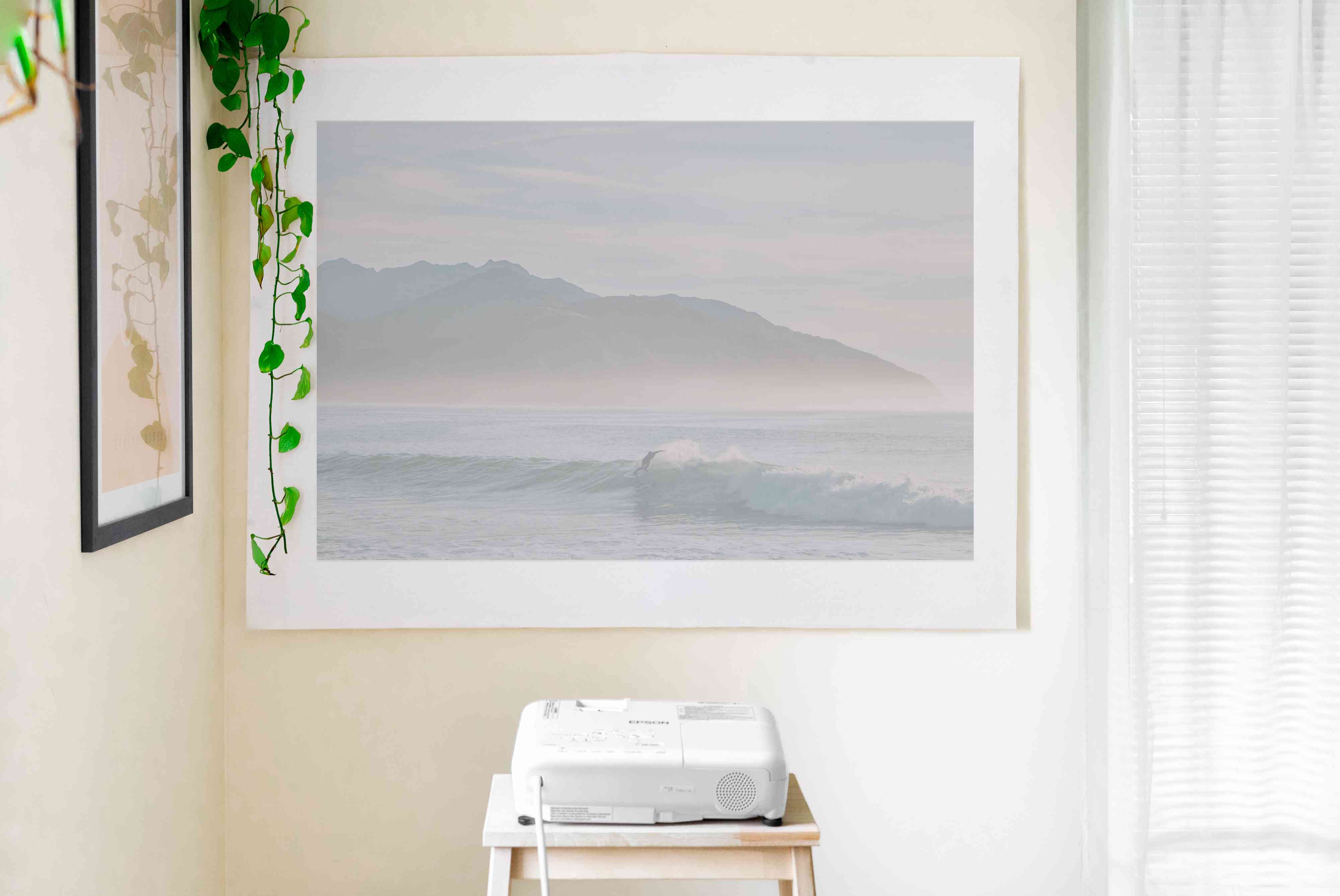
Every time I move into a new apartment, I tell myself I am going to become a normal, mature adult and buy a sensible TV. Something bright, flat, predictable, and easy to mount. Then I imagine dragging a giant black rectangle through a stairwell, negotiating with wall studs, hiding cables like a magician with shame, and designing my entire living room around one glowing slab. Suddenly, I am back online comparing projectors at midnight like a person who has opinions about throw ratio and blackout curtains.
And honestly? I have no regrets. I keep choosing a projector over a TV in every apartment because it gives me something a television rarely can: flexibility. A projector lets a small room feel bigger, turns a blank wall into a movie screen, disappears when I am not using it, and makes even a Tuesday night pasta dinner feel like a tiny private cinema event. It is not the perfect choice for everyone, and yes, sunlight is still the projector’s sworn enemy. But for apartment living, especially when space, design, portability, and mood matter, a projector can be a surprisingly practical upgrade.
This is not an anti-TV manifesto. Modern TVs are excellent. They are brighter, sharper in daylight, easier to set up, and generally better for casual all-day viewing. But after living with both, I keep coming back to the same conclusion: in apartments, the best screen is not always the one with the most nits, the most ports, or the fanciest spec sheet. Sometimes it is the one that gets out of the way when the movie is over.
The Big Reason: A Projector Gives Me a Huge Screen Without Taking Over the Room
The first time I projected a 100-inch image on an apartment wall, I understood why people become annoying about home theater. A 55-inch TV suddenly felt like watching a movie through a microwave door. With a projector, screen size becomes flexible. I can go modest for a weeknight sitcom, then stretch the image for a movie, game, concert film, or sports night.
That flexibility matters in an apartment because most living rooms are doing at least four jobs. Mine has been a dining room, office, guest room, yoga corner, laundry-folding arena, and occasional emotional support snack station. A big TV demands permanent visual real estate. Even when it is off, it sits there like a dark window to nowhere. A projector, on the other hand, can sit on a shelf, a media console, a tripod, or even a small side table. When it is off, the room looks like a room again.
Cost Per Inch Is Where Projectors Shine
Large TVs have become more affordable, but once you start wanting a truly cinematic size, the price climbs quickly. A projector can create an image well over 100 inches without requiring a piece of hardware that is physically 100 inches wide. That is the magic. You are not buying a giant screen panel; you are buying the ability to cast a giant image.
For renters, this is especially useful. I do not want to own a TV so large it requires a logistics plan, two strong friends, and a silent prayer every time I move. A compact projector is easier to pack, easier to carry, and far less likely to make me question my life choices while standing in an elevator with a box the size of a door.
Projectors Make Small Apartments Feel Less Cluttered
Apartment design is often a battle between what you want and what the floor plan allows. A traditional TV setup usually means a screen, a console, cables, maybe a soundbar, maybe a mount, and possibly a landlord who suddenly becomes very interested in the phrase “wall damage.” A projector setup can be much lighter.
In one apartment, I used a plain white wall. In another, I used a pull-down screen mounted with renter-friendly hardware. In a third, I projected onto a portable screen that folded away when guests came over. None of these setups looked like a showroom, but all of them worked. More importantly, they let the apartment breathe.
The Screen Can Disappear
This is the quiet luxury of using a projector: the screen does not have to dominate the room. If you use a retractable projector screen, it can roll up when not in use. If you use a wall, there is nothing to hide. If you use a portable screen, it can go behind a couch or inside a closet. A TV is always there. A projector only appears when invited, like a polite vampire with HDMI.
This matters because apartments are personal spaces, not electronics warehouses. I like art on the wall. I like plants. I like the option to rearrange furniture without feeling chained to a fixed screen. With a projector, the room can be designed around living, not around watching.
The Movie-Night Feeling Is Hard to Beat
There is a reason theaters still use projection. A projected image has a different feeling from a TV. It is softer, bigger, and more atmospheric. The light bounces off a wall or screen rather than blasting directly from a panel, which can make long movies feel easier on the eyes in a dark room.
That does not mean every projector beats every TV. A premium OLED TV can deliver deep blacks, excellent contrast, and dazzling HDR highlights that most projectors cannot match. If you watch a lot of bright daytime sports or want the punchiest possible picture straight out of the box, a TV may be the better fit. But when I dim the lights, pull the curtains, and project a huge image across the room, the experience feels more immersive than simply turning on a TV.
Projectors Turn Ordinary Nights Into Events
A projector changes the ritual of watching. You close the blinds. You adjust the angle. You make popcorn because suddenly popcorn feels legally required. Friends come over and immediately say, “Wait, that’s your screen?” The whole thing feels intentional. A TV is convenient; a projector is a little ceremony.
That ceremony is one reason I keep choosing a projector over a TV. In apartment life, where space is limited and routines can become repetitive, small upgrades to atmosphere matter. A projector can make a living room feel like a cinema, a bedroom feel like a cozy screening room, and a blank wall feel like the most useful design feature in the entire lease.
Modern Projectors Are Much Easier Than They Used to Be
If your last experience with a projector involved a noisy classroom cart, a blue error screen, and someone named Mr. Daniels asking who stole the VGA cable, it is time to update the mental picture. Modern home projectors are far more user-friendly. Many include auto focus, auto keystone correction, built-in streaming platforms, Bluetooth audio support, Wi-Fi, compact designs, and better brightness than older portable models.
Ultra-short-throw projectors are especially interesting for apartments. Instead of placing the projector across the room, you set it close to the wall or screen. That means fewer placement problems, fewer cables running across the floor, and less chance of someone walking through the beam during the dramatic final scene.
Portable Projectors Are Great for Renters
A portable projector is not always the best choice for pure image quality, but it can be the most apartment-friendly option. You can move it from the living room to the bedroom, bring it to a friend’s place, use it for outdoor movie night, or pack it easily when your lease ends. Some models even have built-in speakers and batteries, though I still prefer pairing a projector with a decent Bluetooth speaker or compact soundbar when possible.
The best projector for an apartment is not necessarily the most expensive one. It is the one that fits your room, your lighting, your viewing habits, and your patience level. A brilliant projector that takes 25 minutes to align every night is not a lifestyle upgrade. It is a small appliance with trust issues.
Where TVs Still Win: Brightness, Sharpness, and Simplicity
Let’s be fair. TVs win in several important categories. A modern 4K TV is bright, sharp, and easy to use in almost any lighting. You can watch morning news with the curtains open, play games with low input lag, and enjoy HDR content without turning your living room into a cave. TVs also have higher pixel density at common sizes, which means text, menus, and fine details often look crisper.
Projectors are more sensitive to room conditions. Ambient light can wash out the image. A white wall may work, but a proper screen usually looks better. Placement matters. Brightness matters. Throw distance matters. The darker the room, the happier the projector. If your apartment has giant sunny windows and you mainly watch during the day, a TV may save you from a lot of squinting.
Brightness Is the Spec You Cannot Ignore
Projector brightness is usually measured in ANSI or ISO lumens. In simple terms, more lumens generally help a projector create a more visible image, especially on a larger screen or in a room with some ambient light. But brightness is not the only thing that matters. Contrast, color brightness, resolution, screen quality, and room lighting all shape the final image.
For a dark bedroom or controlled living room, a lower-brightness projector may be perfectly enjoyable. For a bright living room with windows, you will want a brighter model and probably better light control. Blackout curtains are not glamorous, but neither is watching a washed-out movie where every scene looks like it was filmed inside a glass of milk.
Why a Projector Works So Well With Apartment Life
The biggest advantage of a projector is not just size. It is adaptability. Apartments change. Furniture changes. Roommates change. The location of the only usable outlet changes in ways that feel personally offensive. A projector can adapt to all of that better than a big TV.
If I move to a larger space, I can create a bigger image. If I move to a smaller one, I can scale down. If the wall is awkward, I can use a screen. If the room layout changes, I can move the projector. If I want a bedroom movie night, I can carry it there. A TV is more fixed. A projector is more like a tool.
It Is Easier to Move
Anyone who has moved apartments knows that the fantasy of “minimalism” usually collapses around the third box of kitchen items. A projector helps. Instead of wrapping a large TV in blankets and hoping the screen survives the truck ride, I pack a projector in a bag or box. The screen, if I use one, is usually light and manageable.
This portability has saved me more than once. It also means I am not locked into one entertainment setup forever. I can upgrade the screen later, change the audio system, or reposition everything without needing to rethink the whole room.
How I Set Up a Projector in an Apartment
My apartment projector setup usually starts with the wall. Is there a clean, flat surface? Is it white or close enough? Are there windows nearby? Can I control light with curtains? If the wall is textured, colored, or interrupted by doors and artwork, I consider a screen.
Next, I think about placement. A standard long-throw projector needs distance, so it works best if the room allows a clear line from the projector to the wall. A short-throw or ultra-short-throw projector works better when space is tight. Then I test image size from my normal seating position. Bigger is exciting, but too big can become uncomfortable. A screen should feel immersive, not like the movie is trying to climb into your lap.
My Basic Apartment Projector Checklist
- Light control: Curtains, blinds, or evening viewing make a major difference.
- Wall or screen: A smooth white wall can work, but a screen improves consistency.
- Throw distance: Match the projector type to the room size.
- Audio: Built-in speakers are convenient, but external sound is usually better.
- Streaming: Built-in apps are nice, but a streaming stick can be more reliable.
- Noise: Check fan noise if the projector will sit near your head.
- Gaming needs: Look for low input lag if you play fast games.
The Hidden Benefit: A Projector Helps Me Watch More Intentionally
This may sound strange, but using a projector changes my relationship with screen time. A TV is easy to leave on. It becomes background noise. A projector asks for a bit more intention. I turn it on when I actually want to watch something. I turn it off when I am done. That small friction is useful.
In a world where every device is begging for attention, I like that my projector does not always sit there glowing, waiting, and silently judging my productivity. It is entertainment on demand, not entertainment as furniture. That makes my apartment feel calmer.
The Room Feels More Like Mine
Without a permanent TV dominating the wall, I can decorate differently. I can keep the room lighter. I can use the wall for art, shelves, or nothing at all. When guests come over, the first thing they see is not a screen. When I want the screen, it appears. When I do not, it disappears. That balance is hard to give up once you get used to it.
Who Should Choose a Projector Over a TV?
A projector makes the most sense if you love movies, want a huge screen, watch mostly in the evening, care about flexible room design, or move often. It is also great for people who want a cinematic experience without buying a massive TV. If you rent, dislike wall mounting, or want your entertainment setup to feel less permanent, a projector can be a smart choice.
A TV makes more sense if you watch during the day, want the brightest image, need the sharpest possible picture, play competitive games, or prefer instant simplicity. Families who keep the screen on for news, sports, cartoons, and background viewing may also prefer a TV. A projector can replace a TV, but it works best when your habits match its strengths.
My Honest Verdict
I keep choosing a projector over a TV in every apartment because it fits the way I live. It gives me a huge screen without making my home feel smaller. It moves with me. It adapts to weird layouts. It makes movies feel special. It lets my living room be a living room first and a home theater second.
No, it is not perfect. I have battled daylight, adjusted angles, moved furniture, cursed at streaming apps, and learned that not all “white walls” are created equal. But the trade-offs are worth it. For apartment dwellers who value flexibility, atmosphere, and big-screen fun, a projector is not just an alternative to a TV. It may be the better match.
Extra Experience Notes: What I Learned After Living With Projectors in Multiple Apartments
After using projectors in different apartments, I have learned that the room matters almost as much as the projector. The best setup I ever had was not the most expensive. It was a simple 1080p projector, a smooth wall, blackout curtains, and a small speaker placed near the couch. The room was narrow, but the wall was perfect. At night, it felt like a private theater. During the day, it looked like a normal apartment. That balance made the setup feel effortless.
The worst setup was in a bright apartment with windows directly facing the projection wall. I tried to be optimistic. I told myself the projector would “probably be fine.” It was not fine. At noon, the image looked like a ghost trying to describe a movie from memory. That apartment taught me the most important projector rule: control the light or lower your expectations. A brighter projector helps, but curtains are often the real hero.
I also learned that audio matters more than beginners think. A huge image with tiny sound feels unfinished, like wearing a tuxedo with flip-flops. Built-in projector speakers are useful for quick viewing, but a compact soundbar or Bluetooth speaker makes the whole experience better. You do not need a giant surround system in an apartment, especially if your neighbors already know too much about your schedule. A simple speaker upgrade can make dialogue clearer and movies more satisfying.
Another lesson: do not obsess over maximum screen size. Bigger is fun, but the best image is the one that feels comfortable from your couch. In one apartment, I made the screen enormous because I could. It was impressive for five minutes, then exhausting. Subtitles required neck movement. Action scenes felt like cardio. Eventually, I made the image smaller, and everything looked sharper and easier to watch. Projector ownership teaches humility, mostly through your own bad decisions.
Placement is another detail that separates happiness from nightly irritation. If the projector is hard to set up, you will use it less. I prefer setups that stay mostly ready: a fixed shelf, a marked tripod spot, or an ultra-short-throw unit on a console. The fewer adjustments required, the more the projector feels like a normal part of daily life instead of a science project.
Streaming devices also matter. Built-in projector apps can be convenient, but they are not always fast or updated as reliably as dedicated streaming sticks. In my experience, using an external streaming device often makes the projector feel smoother and more familiar. It also makes upgrading easier. If the projector still looks good but the smart platform feels old, the streaming stick can be replaced without replacing the entire projector.
The biggest surprise is how social a projector feels. People react differently to a projected image. A movie night becomes more memorable. A game feels more dramatic. Even casual YouTube videos become oddly theatrical, which is dangerous if you are watching cooking videos while hungry. Guests always ask about the setup, and the conversation usually turns into a mini apartment design discussion.
Would I recommend a projector to everyone? No. If someone wants a screen that looks great at 2 p.m. with every curtain open, I would point them toward a TV. If someone wants the cleanest, brightest, simplest all-purpose display, a TV is still the safer answer. But for the way I use a screenmostly movies, shows, and relaxed evening viewinga projector makes apartment life feel more flexible and more fun.
That is why I keep choosing one. A projector gives me the big-screen experience without the big-screen burden. It lets my apartment transform when I want entertainment and return to normal when I do not. In a small space, that kind of disappearing act is not a gimmick. It is the whole reason the setup works.
Conclusion
Choosing a projector over a TV is not about rejecting modern televisions. It is about choosing a different kind of home entertainment experience. A TV is dependable, bright, and simple. A projector is flexible, cinematic, and apartment-friendly. For renters, frequent movers, movie lovers, and anyone who wants a huge screen without sacrificing an entire wall forever, a projector can be the smarter and more enjoyable choice.
The key is knowing the trade-offs. You need decent light control, thoughtful placement, and realistic expectations. You may want a screen, better speakers, or blackout curtains. But once the setup works, it changes the feeling of the room. The screen appears when you need it and disappears when you do not. That is why, apartment after apartment, I keep choosing a projector over a TV.