A kitchen scale may not look like the most glamorous tool in your kitchen. It does not hiss like a cast-iron skillet, shine like a chef’s knife, or make heroic blender noises while pulverizing frozen fruit. It just sits there, quietly waiting to tell the truth. And that, dear home cook, is exactly why you need one.
If you have ever baked cookies that spread into sad little pancakes, made bread that could double as a doorstop, or guessed whether “one medium onion” means golf ball, baseball, or emotional support softball, a digital kitchen scale can rescue your recipes from the land of culinary mystery. Measuring ingredients by weight is faster, cleaner, more accurate, and surprisingly freeing. Once you start using grams and ounces, measuring cups begin to feel like tiny buckets of chaos.
This article explains why a kitchen scale deserves permanent counter space, how it improves baking and cooking, what features matter, and how real-life home cooks can use it beyond fancy pastry projects. Spoiler: it is not just for sourdough people with linen aprons and strong opinions about hydration percentages.
What Is a Kitchen Scale?
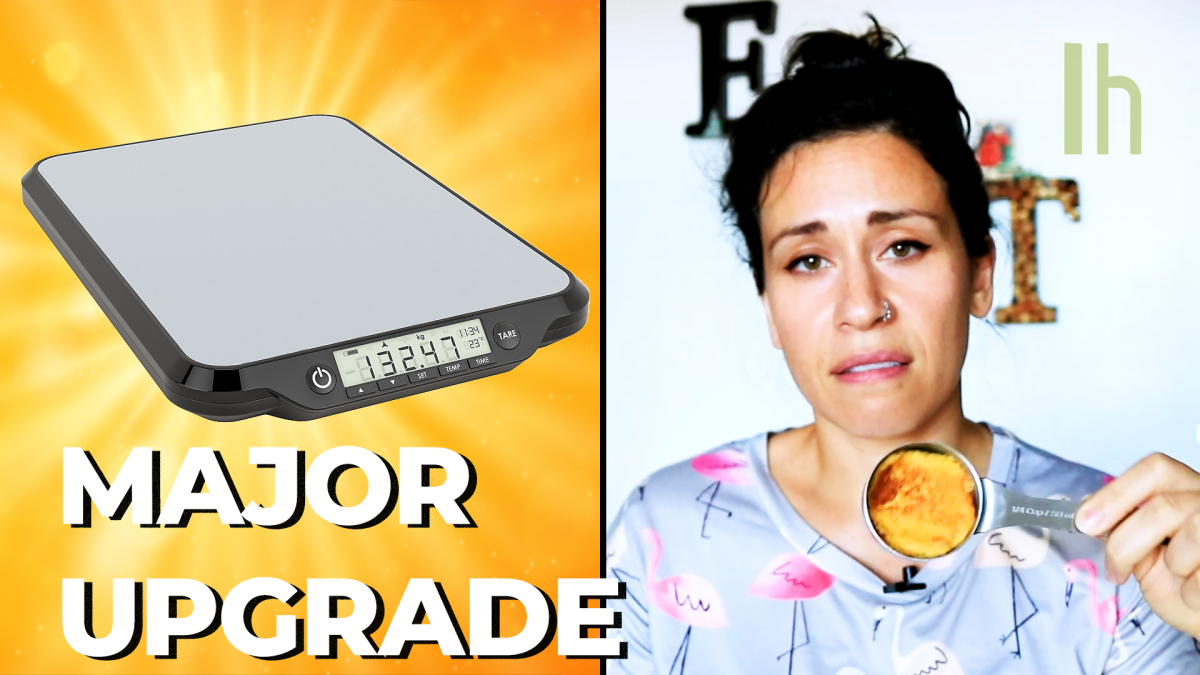
A kitchen scale is a small device used to measure the weight of food, ingredients, and portions. Most modern home cooks use digital kitchen scales because they are compact, affordable, easy to read, and usually accurate to small increments such as 1 gram or 0.1 ounce. Many models switch between grams, ounces, pounds, and milliliters, although weight-based units are the most useful for recipe accuracy.
The star feature is the tare button. Tare lets you place a bowl, plate, pan, or container on the scale, reset the display to zero, and weigh only what you add. This means you can pour flour, press tare, add sugar, press tare, add cocoa powder, press tare, and continue building a recipe in one bowl. It is like giving your sink the day off.
Why Measuring by Weight Beats Measuring by Volume
Measuring cups are familiar, but familiar does not always mean precise. A cup of chopped nuts, a cup of flour, and a cup of brown sugar do not behave the same way. Flour can be packed, fluffed, scooped, spooned, or compressed into a measuring cup, and each method can produce a different amount. That difference may seem harmless until your cake comes out dry enough to qualify as office furniture.
Weight solves the problem. One hundred twenty grams of all-purpose flour is always 120 grams, whether it is fluffy, clumpy, sifted, or being emotionally difficult. A scale removes the guesswork and gives you a repeatable measurement every time.
Example: The Flour Problem
Flour is the classic reason bakers fall in love with kitchen scales. A recipe may say “1 cup flour,” but depending on how you fill that cup, you could accidentally add much more than intended. Too much flour can make muffins dense, pancakes tough, cookies dry, and bread heavy. Measuring flour by weight gives you a clear target and prevents the silent sabotage of over-scooping.
For example, many baking references use about 120 grams as the weight of 1 cup of all-purpose flour. Once you know that number, you can skip the scoop-and-level routine and simply pour until the scale says 120 grams. No flour snowstorm on the counter. No suspicious mountain above the measuring cup. Just accuracy.
A Kitchen Scale Makes Baking More Reliable
Baking is chemistry wearing an apron. Flour, sugar, fat, liquid, salt, and leavening need to stay in balance. A little creativity is charming when decorating cupcakes; it is less charming when you casually double the baking soda and create muffins that taste like regret.
Using a digital kitchen scale helps you follow recipes with precision. This is especially important for:
- Bread dough
- Pizza dough
- Cakes
- Cookies
- Macarons
- Pastry
- Homemade pasta
- Coffee brewing
When you weigh ingredients, you can reproduce successful results. If your chocolate chip cookies turn out perfectly chewy on Tuesday, you can make them the same way on Saturday. Without a scale, you may spend the weekend wondering whether your flour scoop got too enthusiastic.
It Speeds Up Cooking and Reduces Cleanup
A kitchen scale sounds like a precision tool, but it is also a convenience tool. Instead of using separate measuring cups for flour, sugar, oats, rice, and oil, you can measure everything directly into one bowl. Put the bowl on the scale, press tare, add the first ingredient, press tare again, and keep going.
This “weigh as you go” method is beautifully simple. It also reduces dishes. Measuring cups and spoons love to multiply in the sink like tiny kitchen gremlins. A scale helps keep the counter cleaner and the dish pile smaller, which is great news for anyone who has ever finished baking and discovered their kitchen now looks like a powdered-sugar crime scene.
It Helps With Portion Control Without Guessing
A kitchen scale is useful beyond baking. It can help you understand portion sizes more clearly, especially because nutrition labels often list serving sizes with both household measures and metric weights. A label might say a serving is “about 1 cup” and also provide the gram amount. The gram amount is usually the more reliable way to know what you are actually eating.
This does not mean you need to weigh every lettuce leaf like a tiny accountant. But when you are learning portions, tracking nutrition, preparing meals, or trying to divide food evenly, a food scale can be extremely helpful. It turns “a handful” into useful information.
Practical Portion Examples
Here are a few everyday ways a kitchen scale helps with portions:
- Divide cooked rice into equal meal-prep containers.
- Measure coffee beans for a consistent morning brew.
- Portion cookie dough so every cookie bakes evenly.
- Split ground beef or turkey into equal patties.
- Measure snacks according to the serving size on the package.
- Weigh pasta before cooking to avoid accidentally feeding a marching band.
For families, meal preppers, athletes, and anyone trying to cook more intentionally, a kitchen scale brings clarity. It does not judge. It simply reports. Honestly, that is more than we can say for some relatives at Thanksgiving.
It Saves Money and Reduces Food Waste
Food waste often starts with overestimating. You cook too much pasta, scoop too much cereal, prep too much chicken, or make a double batch of something because “more is safer.” Then the leftovers migrate to the back of the fridge, where they become a science project with a lid.
A kitchen scale helps you cook closer to what you need. When a recipe calls for 8 ounces of pasta, you can weigh 8 ounces instead of eyeballing half a box and hoping for the best. When you buy bulk ingredients, you can measure exact amounts for recipes instead of using extra “just in case.” Over time, that precision can save money, especially with expensive ingredients like nuts, chocolate, cheese, meat, seafood, spices, and specialty flours.
It Makes Recipe Scaling Much Easier
Have you ever tried to halve a recipe that calls for 3/4 cup plus 2 tablespoons of something? That is when cooking becomes less “relaxing hobby” and more “middle school fraction quiz.” A scale makes recipe scaling easier because grams divide cleanly.
If a recipe uses 240 grams of flour, half is 120 grams. If it uses 100 grams of sugar, 75 percent is 75 grams. No odd measuring spoon gymnastics required. This is especially useful when you want to:
- Make a smaller batch of cookies.
- Double a bread recipe.
- Adjust recipes for a different pan size.
- Test a new recipe without wasting ingredients.
- Convert recipes from international cookbooks.
Weight measurements are also helpful when using recipes from outside the United States, where grams are more common than cups. Instead of searching for conversion charts every five minutes, you can follow the recipe as written and feel wildly sophisticated while doing it.
It Improves Coffee, Too
Coffee people were early kitchen-scale adopters, and for good reason. Coffee brewing depends heavily on the ratio of grounds to water. Too many beans and your coffee may taste harsh. Too few and it may taste like warm disappointment. Measuring coffee by weight helps you repeat a good cup every morning.
For pour-over, French press, espresso, AeroPress, and cold brew, a small digital scale can bring consistency. You do not need to become a coffee wizard who says “mouthfeel” before 8 a.m. Just weigh your beans and water, make notes, and adjust until your cup tastes right.
How to Use a Kitchen Scale Correctly
Using a kitchen scale is easy, but a few habits make it even better.
1. Place It on a Flat Surface
Use the scale on a stable, level counter. Avoid balancing it on a towel, cutting board edge, or stack of cookbooks. Your scale is helpful, not acrobatic.
2. Choose the Right Unit
Most baking recipes with weight measurements use grams because grams are precise and simple. For larger items, ounces and pounds may be convenient. Just make sure you are not confusing ounces by weight with fluid ounces by volume. They are not always interchangeable.
3. Use the Tare Button Often
Place your bowl on the scale, press tare, and then add ingredients. Press tare between ingredients when measuring multiple items into the same bowl. This keeps each measurement clean and accurate.
4. Add Ingredients Slowly
When you are close to the target weight, slow down. It is much easier to add two more grams of flour than to remove flour after it has mingled with cocoa powder like they are at a tiny baking party.
5. Keep It Clean
Wipe the scale after use, especially if you spill oil, flour, sugar, or sauce. Avoid running water over the device unless the manufacturer specifically says it is waterproof. Most kitchen scales prefer a damp cloth and a peaceful life.
What to Look for When Buying a Kitchen Scale
You do not need a luxury scale with Bluetooth, dramatic lighting, or the ability to text your refrigerator. A basic digital kitchen scale is enough for most home cooks. Look for these features:
- Accuracy: A good scale should measure small changes reliably, ideally in 1-gram increments.
- Tare function: This is essential for weighing ingredients in bowls and containers.
- Easy-to-read display: The screen should remain visible even when a large bowl is on top.
- Unit conversion: Grams, ounces, pounds, and milliliters are useful options.
- Capacity: An 11-pound capacity is enough for most household cooking and baking.
- Auto-off timing: A scale that turns off too quickly can be annoying mid-recipe.
- Compact design: It should fit easily in a drawer or cabinet.
Some cooks also like scales with pull-out displays, rechargeable batteries, or waterproof surfaces. Those features are nice, but the basics matter more: accuracy, readability, and a tare button that behaves itself.
Common Kitchen Scale Mistakes to Avoid
A kitchen scale is simple, but a few mistakes can create confusion.
Using the Wrong Unit
Always check whether the recipe calls for grams, ounces, or pounds. Accidentally measuring 8 ounces instead of 8 grams is not a small mistake. That is how recipes develop trust issues.
Forgetting to Tare
If you do not zero out the container, your measurement includes the bowl. Unless your recipe calls for “150 grams flour plus one ceramic mixing bowl,” press tare.
Overloading the Scale
Every scale has a maximum capacity. Do not place a giant stockpot on a tiny scale unless you enjoy error messages and mild kitchen drama.
Ignoring Battery Life
Keep spare batteries nearby, especially before holiday baking. A dead kitchen scale during pie season is a plot twist nobody requested.
Do You Still Need Measuring Cups?
Yes, but you may use them less. Measuring cups are still convenient for quick cooking, especially when precision is not critical. Soup, salad dressing, smoothies, and casual weeknight meals can often tolerate a little flexibility. But for baking, portioning, meal prep, coffee, and recipe testing, a kitchen scale is usually better.
Think of measuring cups as friendly old bicycles and a kitchen scale as a reliable GPS. Both can get you somewhere, but one is far less likely to send you into a ditch made of dry biscuits.
Real-Life Experiences: What Changes After You Start Using a Kitchen Scale
The first thing many people notice after buying a kitchen scale is how quickly it becomes normal. At first, it feels like a professional move, as if you should suddenly start saying things like “mise en place” and wearing clogs. Then, after a few recipes, it becomes as ordinary as grabbing a spoon.
One of the biggest changes is confidence. Imagine making banana bread and knowing exactly how much flour went into the bowl. If the loaf is perfect, you can repeat it. If it is too dense, you can troubleshoot intelligently. Maybe the bananas were extra wet. Maybe the oven runs cool. But at least you know the flour was not guessed by vibes alone.
The second change is speed. This surprises people. A kitchen scale sounds slower because it feels more technical, but it often saves time. Instead of searching for measuring cups, leveling flour, washing sticky honey out of a tablespoon, and wondering whether peanut butter counts as a liquid or a lifestyle, you can weigh ingredients directly into the bowl. Sticky ingredients are especially satisfying. Put the jar on the scale, press tare, scoop out the amount you need, and the negative number tells you how much you removed. Fewer tools. Less mess. More dignity.
Meal prep becomes calmer, too. If you cook lunch for several days, weighing portions helps you divide food fairly and consistently. No container gets all the chicken while another receives three lonely grains of rice and a motivational speech. Each portion can be balanced, which makes weekday meals easier to plan.
Another real-life benefit is recipe honesty. Some recipes say they serve four, but apparently those four people are either very tiny or eating before a seven-course dinner. A scale helps you understand what a recipe actually produces. You can weigh the finished food, divide it by the number of servings you want, and portion it accordingly. This is useful for casseroles, soups, dough, cooked grains, and snacks.
A kitchen scale also makes cooking with kids or beginner cooks less chaotic. Instead of explaining the difference between a packed cup, a heaping cup, a scant cup, and “please stop shaking flour directly over the floor,” you can give a number. Add flour until the screen says 240 grams. That is clear, simple, and less likely to end with the dog looking like a powdered doughnut.
Perhaps the best experience is the quiet upgrade in everyday cooking. You start weighing pasta and stop making enough spaghetti for your entire zip code. You weigh coffee and finally understand why yesterday’s cup was amazing and today’s tasted like brown weather. You weigh cookie dough and get cookies that bake evenly instead of a tray containing twelve sizes of dessert planets.
Over time, the scale teaches intuition. You begin to recognize what 100 grams of oats looks like, how much 4 ounces of salmon really is, and why recipes sometimes fail when measured casually. The goal is not to become obsessive. The goal is to cook with better information. A kitchen scale gives you that information in seconds.
Final Thoughts: Small Tool, Big Kitchen Upgrade
A kitchen scale is one of the most useful tools a home cook can buy. It improves accuracy, saves time, reduces dishes, supports better portion control, helps prevent food waste, and makes baking far more consistent. It is affordable, compact, and easy to use. Most importantly, it removes guesswork from recipes that deserve better than “close enough.”
If you bake often, meal prep regularly, brew coffee carefully, follow nutrition labels, or simply want your recipes to behave, a digital kitchen scale is worth it. It may not be flashy, but it is quietly powerful. Like a good editor, a loyal friend, or a refrigerator magnet that actually holds the school calendar, it makes everyday life smoother.
So yes, you really need a kitchen scale. Your cookies will thank you. Your sink will thank you. Your future self, standing in a cleaner kitchen with better muffins, will absolutely thank you.