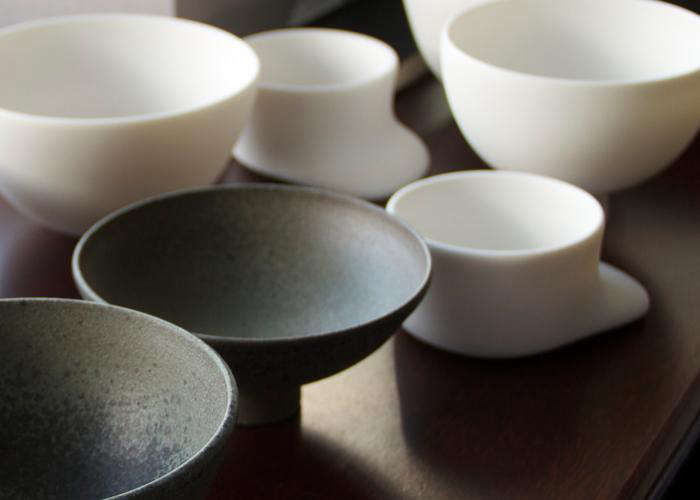
Some objects announce themselves with gold trim, polished symmetry, and the visual equivalent of a brass band. Organic ceramics from Japan take another route. A tea bowl leans slightly to one side. A vase carries a scar left by flame. Ash gathers across a jar like moss on an old garden stone. Nothing shouts, yet the room somehow rearranges itself around the object.
This is the quiet storm of Japanese pottery: clay, fire, geography, ritual, and human touch working together without sanding away every surprise. From ancient Jōmon vessels and medieval stoneware jars to expressive contemporary sculpture, Japanese ceramic traditions repeatedly demonstrate that an object does not need to be flawless to be complete. In fact, perfection can be a little suspicious. It often looks as though nobody had any fun making it.
What Makes Japanese Ceramics Feel Organic?
The word organic can easily become design-store confetti, sprinkled over anything beige and vaguely lumpy. In Japanese ceramics, however, it describes something more substantial: a close relationship among local clay, natural firing processes, hand-shaped forms, useful functions, and the unpredictable behavior of heat.
Clay Is Allowed to Behave Like Clay
Many organic Japanese ceramics preserve evidence of their materials. Coarse grains remain visible. Iron in the clay produces warm reds and browns. Wood ash settles on a vessel and melts into a glassy green or amber surface. A pot placed near the firebox may emerge dark and heavily marked, while another from the same kiln develops softer flashes of color.
Bizen ware offers a classic example. Produced in Okayama Prefecture for centuries, traditional Bizen pottery is generally unglazed. Its color and pattern emerge from the clay, ash, flame, placement in the kiln, and the long firing itself. LACMA describes Bizen vessels whose surfaces carry firing marks, reddish areas, and sesame-like spots created through reactions inside the kiln. The decoration is not painted onto the finished form; it is an atmospheric record of what happened in the fire.
Shigaraki stoneware follows a similarly earthy logic. The area has produced pottery since the medieval period, and its jars are known for rugged clay bodies and naturally occurring ash effects. Seattle Art Museum examples show how ash glazing can soften and animate an otherwise robust storage form, making the vessel appear almost geological.
Asymmetry Is Not an Manufacturing Error
The irregular rim of a Japanese tea bowl is often intentional, but that does not mean every wobble deserves a philosophical documentary. Skilled asymmetry requires control. The potter must understand balance well enough to disturb it without making the vessel awkward, weak, or unpleasant to use.
A well-made chawan, or tea bowl, is experienced through both sight and touch. Its foot affects how it rests on the mat. Its rim changes how the drinker sips. Its weight, texture, and changing profile encourage the hands to rotate it. The Cleveland Museum of Art notes that certain tea bowls were carefully designed to be pleasurable when held in two hands, demonstrating that irregularity can be deeply ergonomic rather than merely decorative.
Ancient Roots and the Rise of the Japanese Ceramic Landscape
From Jōmon Energy to Regional Kilns
Japan’s ceramic history reaches back thousands of years. Jōmon pottery is especially recognizable for forceful surfaces, cord impressions, sculptural rims, and clay that may retain small stones, shells, or other natural inclusions. A vessel in the Museum of Fine Arts, Houston collection demonstrates how early Japanese potters worked with comparatively unrefined clay, preserving its physical character instead of disguising it beneath a perfectly smooth skin.
Over time, ceramic production became associated with particular regions, materials, kilns, and communities. Japan’s celebrated Six Ancient Kilns are Bizen, Echizen, Seto, Shigaraki, Tamba, and Tokoname. Their traditions developed around local geology and practical needs, producing storage jars, cooking vessels, serving pieces, and agricultural containers before many examples were treated as collectible art.
This geographic identity remains essential to Japanese pottery. A Shigaraki jar should not look exactly like a Bizen jar wearing a fake mustache. Different clays respond differently to forming and firing, while local customs shape preferred forms, tools, kiln designs, and surface treatments.
Tea Changed the Meaning of Imperfection
Japanese tea culture profoundly influenced the development and appreciation of ceramics. Early tea practitioners admired imported Chinese wares for their refinement and prestige. By the late sixteenth century, however, influential tea masters increasingly valued domestic and Korean-derived objects with quieter colors, irregular forms, and tactile surfaces.
The concept commonly called wabi-sabi is frequently used to explain this shift, although it should not be reduced to “anything cracked looks spiritual.” Within tea culture, modest surroundings and imperfect utensils could focus attention on time, material, hospitality, and the temporary nature of the gathering. The Metropolitan Museum of Art explains that tea ceramics eventually embraced many styles, including the milky glaze and painted decoration of Shino ware and the dramatically shaped forms associated with Mino production.
Raku ware brought the relationship between body and vessel even closer. Traditional Japanese Raku bowls were hand-formed rather than wheel-thrown and developed in direct association with tea. Smithsonian exhibitions emphasize the intimate relationship between these low-fired bowls and the culture of drinking powdered green tea. This Japanese tradition should not be confused with the modern Western firing process that is also called raku, which typically involves rapid removal from the kiln and post-firing reduction.
Not every tea room was a festival of brown. Oribe ware, introduced in the early seventeenth century, brought glossy black, brilliant green, playful geometry, and boldly distorted shapes to serving dishes and tea utensils. It proves that Japanese ceramic aesthetics include humor, color, and theatricality alongside restraint. Even quiet storms occasionally wear green pants.
Mingei, Utility, and the Beauty of Everyday Work
Organic Japanese ceramics are closely connected with function. Bowls, bottles, plates, jars, and cups were made to serve food, hold flowers, store grain, pour sake, or support tea practice. Use was not an embarrassing phase that an object had to overcome before entering a museum.
During the twentieth century, the Mingei movement helped elevate appreciation for ordinary crafts made with honest materials and skilled labor. Associated with thinker Yanagi Sōetsu and artists such as Hamada Shōji and Kawai Kanjirō, the movement drew attention to useful objects whose beauty emerged through repetition, regional tradition, and practical design. Seattle Art Museum describes Mingei as an approach that recognized simplicity, function, labor, and sometimes anonymity as meaningful artistic qualities.
This legacy still matters. A handmade rice bowl can be visually modest yet reveal careful decisions in its curve, foot, glaze thickness, and balance. Contemporary interiors often display such pieces as sculptural objects, but their fullest character may appear only after they enter daily life. Soup warms the clay. Tea darkens fine crackles in a glaze. A vase acquires mineral rings. The object becomes less pristine and more personal.
The Contemporary Quiet Storm
When the Vessel Became Sculpture
Japanese ceramics did not remain confined to traditional tableware. In the years after World War II, artists increasingly explored clay as a sculptural medium. Members of the influential Sōdeisha group rejected the expectation that ceramics must function as containers, developing nonfunctional forms that emphasized volume, mass, surface, and conceptual expression. LACMA identifies artists such as Akiyama Yō and Hoshino Satoru with this move toward autonomous ceramic sculpture.
Contemporary Japanese ceramic art now moves freely between vessel and sculpture. A work may still contain an opening, foot, or bowl-like interior, but these familiar elements become starting points for abstraction. Brooklyn Museum characterizes Japan as a continuing center of ceramic innovation, with artists simultaneously drawing on and resisting centuries of pottery history.
Artists Digging Into Place
Some contemporary makers intensify the organic qualities of Japanese pottery by using self-dug clay, wood firing, rough forming, and natural surfaces. Ceramics Monthly has discussed artists Kazunori Hamana, Yuji Ueda, and the Otani Workshop, whose work connects rural life, historical forms, local materials, and an acceptance of imperfection. Their vessels may resemble excavated objects, weathered agricultural tools, seedpods, or fragments of an architecture designed by a very patient beetle.
Tsujimura Shirō is another powerful example. His broad practice revisits Shino, Iga, Karatsu, Oribe, and Korean-inspired forms without treating tradition as a locked display case. His bowls can look spontaneous and ancient, yet their apparent wildness rests on extensive knowledge of clay and firing. Museum collections describe his ability to engage historical styles while creating distinctly original work.
Women Expanding the Language of Clay
The history of professional Japanese ceramics was long shaped by male-dominated workshops and hereditary lineages. Women artists, however, have dramatically expanded the medium through sculpture, installation, porcelain, unconventional construction, and technically ambitious surfaces.
The Art Institute of Chicago’s research on contemporary women ceramicists highlights dozens of artists whose work has challenged traditional studio structures since the postwar period. Artists such as Fujikasa Satoko transform stoneware into sweeping, folded volumes that seem to twist like fabric or moving air. Her work is technically precise, but the result feels less manufactured than grown.
This broader contemporary field includes highly refined porcelain as well as coarse stoneware. The Kondō family, for example, demonstrates how a multigenerational Kyoto lineage can preserve technical knowledge while continually reinventing porcelain surfaces and forms. Exhibitions in Brooklyn and Seattle have presented the family’s work as a century-long conversation between inheritance and experimentation.
Why Organic Japanese Ceramics Feel So Relevant Now
Modern life is full of seamless surfaces. Phones are glass rectangles. Appliances hide their screws. Furniture arrives with hardware named only by letters, as though it is participating in witness protection. Against this polished environment, handmade Japanese ceramics provide texture, variation, and visible evidence of process.
The global popularity of wabi-sabi-inspired interiors and Japandi design has encouraged interest in natural materials, neutral colors, restrained spaces, and organic shapes. Architectural Digest describes Japandi as a meeting of Japanese and Scandinavian ideas centered on simplicity, craftsmanship, function, and connections with nature. Ceramics fit comfortably into this setting because they provide visual warmth without demanding decorative chaos.
Dwell has similarly noted the influence of contemporary Japanese ceramics on utilitarian pottery that allows natural colors and textures to remain visible. Meanwhile, Japan House Los Angeles connects renewed interest in ceramics with home design, artisanal tea and coffee, indoor plants, and a wider appreciation for handmade objects.
There is also a sensory reason for the appeal. Organic ceramics reward slowness. A rough cup feels different at every point around its wall. A wood-fired vase changes as daylight moves across it. A pale glaze reveals pinholes, runs, and cloudy areas only at close range. These objects do not deliver their entire personality in a product thumbnail.
How to Live With and Collect Japanese Pottery
Begin With Use, Not Investment
For a first purchase, consider an object connected with an existing ritual: a morning coffee cup, rice bowl, sake cup, flower vase, or serving plate. A functional piece provides repeated contact with the clay and helps develop an eye for proportion, texture, and glaze.
Hold the object whenever possible. Check whether the foot is stable, the rim is comfortable, and the weight suits its purpose. Handmade does not mean badly balanced. A bowl can be irregular without behaving like it wants to escape the table.
Learn the Difference Between Patina and Damage
Natural glaze variation, kiln marks, crazing, small inclusions, and asymmetry may be intentional characteristics. Structural cracks, unstable repairs, flaking glaze, or sharp edges are different matters. When purchasing older or expensive ceramics, ask for condition details and provenance rather than assuming every flaw is a premium feature called “meditative distressing.”
Respect Regional and Artistic Context
Terms such as Bizen, Shigaraki, Hagi, Mino, Oribe, Shino, Karatsu, and Raku refer to distinct histories rather than interchangeable rustic styles. Reliable galleries and dealers should identify the maker, region, material, firing method, approximate date, and intended function when that information is available.
American museums increasingly display Japanese ceramics as both daily objects and major works of art. The Museum of Fine Arts, Boston, Portland Art Museum, and Museum of Fine Arts, Houston have all built significant presentations of modern and contemporary Japanese clay, helping audiences see that refinement and earthiness are not opposing categories.
Conclusion: Power Without Noise
The quiet storm of organic ceramics from Japan begins with a simple material and refuses to simplify its story. Clay remembers where it came from. Flame leaves evidence. The hand introduces variation. Use adds another chapter.
Whether the object is an ancient storage jar, a hand-molded Raku bowl, a rugged Bizen vase, or an abstract contemporary sculpture, its power comes from the conversation among intention and accident, discipline and freedom, beauty and utility. Organic Japanese ceramics do not ask us to admire perfection from a safe distance. They invite us to pick up the bowl, feel the uneven rim, and join the story.
Experiencing the Quiet Storm: An Immersive Reflection
The most revealing way to encounter organic Japanese ceramics is not to scan twenty pieces on a crowded shelf. It is to spend time with one object. Place a single cup or bowl on a plain wooden table near a window. Remove the stack of mail, the charging cable, and the promotional pen that has somehow survived three household moves. Give the object enough space to have a presence.
At first, you may notice its silhouette. Perhaps one side rises slightly higher than the other. The mouth is nearly circular but refuses to submit the final paperwork. The glaze is gray at the rim, cream across the body, and faintly orange near the foot. What looked monochromatic in a photograph turns out to contain an entire weather system.
Pick it up. A factory-made cup generally tells the same tactile story from every angle. An organic ceramic vessel changes as it rotates. One patch may be smooth where ash melted across the surface. Another feels dry and stony. A shallow finger mark remains near the base, not as a dramatic signature but as evidence that the object passed through a specific pair of hands.
Pour in hot tea. Temperature activates the experience. The wall warms gradually, and the heavier clay encourages a slower grip. Steam rises against the irregular rim. Suddenly the bowl is no longer an isolated art object. It is performing the task for which bowls have been made for thousands of years, and its beauty becomes inseparable from usefulness.
A similar experience occurs in a museum gallery, although touching is understandably discouraged unless you enjoy being followed by security. Viewed behind glass, a medieval Shigaraki jar may initially appear blunt and brown. Stay with it, and the surface begins to open. Ash has pooled in one area and skipped another. The shoulder carries a flash of green. The clay contains small stones that distorted the skin during firing. What seemed plain becomes extraordinarily eventful.
Contemporary sculpture produces a different reaction. A folded stoneware form by an artist such as Fujikasa Satoko can appear soft enough to flutter, despite being made from fired earth. A fractured or encrusted vessel may resemble volcanic rock, coral, or industrial debris. The mind knows it is ceramic, but the eyes keep proposing alternative materials.
Living with these objects also changes the experience over time. A favorite cup becomes associated with early mornings. A vase looks severe when empty and generous when holding one crooked branch. A serving bowl disappears beneath food at dinner, then reappears gradually as guests eat. Small changes in light, season, and use reveal qualities that cannot be captured in a single image.
The lesson is not that every home needs to become a silent beige sanctuary guarded by one extremely expensive bowl. Organic Japanese ceramics work just as well beside colorful books, contemporary furniture, inherited tableware, or a cheerful amount of clutter. Their calm comes from material integrity, not from enforcing a lifestyle.
Spending time with such pottery encourages a different form of attention. Instead of asking whether the object perfectly matches the room, you begin asking how it was shaped, where the clay originated, what the kiln contributed, and how it feels in use. The ceramic becomes a small landscapeone that can sit in the palm of your hand while carrying traces of earth, fire, history, and another person’s labor.