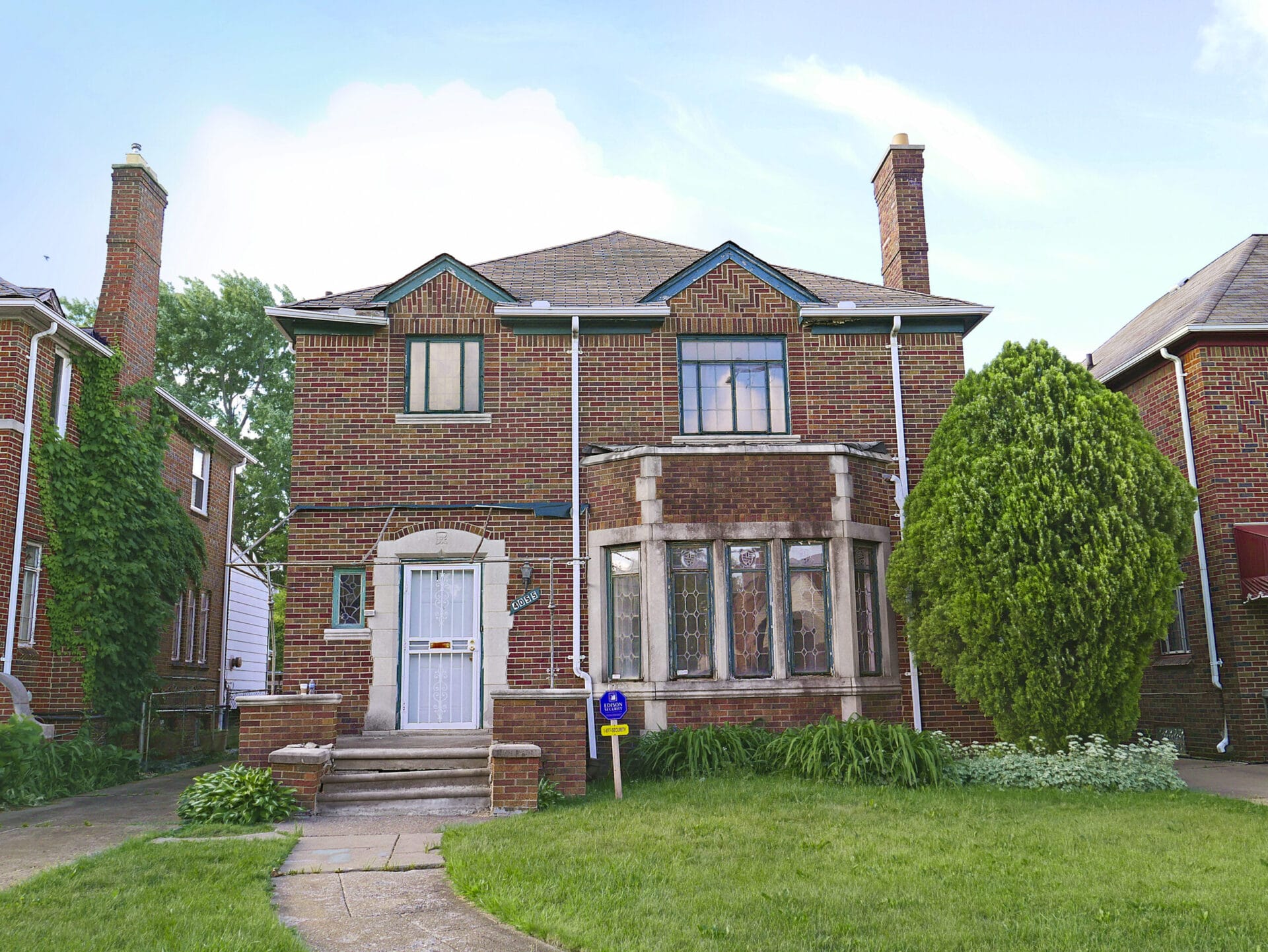
Before a house becomes a comeback story, it usually spends a little time looking like a dare. That is exactly the magic of The Detroit House: Before: a 1939 brick home in Detroit’s historic Russell Woods area, full of original character, weathered problems, and the kind of “where do we even start?” energy that makes renovation fans lean closer to the screen.
Featured as part of This Old House Season 38, the Detroit project followed native Detroiters Frank and Tamiko Polk as they took on a formerly abandoned home purchased through the Detroit Land Bank Authority. On paper, it was a three-bedroom, three-bath house in a neighborhood with deep roots. In real life, it was a serious restoration challenge with plumbing issues, electrical upgrades, exterior repairs, insulation needs, and enough hidden headaches to make a toolbox sweat.
But this story was never just about one old house. It was about Detroit itself: a city too often described through the words “bankrupt,” “deserted,” or “declining,” yet still packed with craftsmanship, resilient neighborhoods, and people willing to put in the work. The “before” stage matters because it shows the honest starting point. No filters. No staged perfection. Just brick, dust, hope, and a very long to-do list.
Why “Before” Matters in a Detroit Renovation Story
Every renovation has a “before,” but not every before carries the weight of a city’s history. The Detroit House was built in 1939, during an era when many Detroit neighborhoods were shaped by solid materials, detailed masonry, stained glass, arched openings, and interior craftsmanship that is expensive to recreate today. These homes were designed with presence. Even when neglected, they often still stand like they know something the rest of us have forgotten.
In the case of the Polk home, the “before” was not simply a collection of broken systems. It was a snapshot of Detroit’s housing paradox: beautiful homes, strong bones, and architectural details sitting beside the reality of vacancy, tax foreclosure, disinvestment, and years of deferred maintenance. A house can be abandoned, but that does not mean it is empty of value. Sometimes it is waiting for the right people to see past the mess.
The House: A 1939 Brick Home With Good Bones
The phrase “good bones” gets thrown around in renovation culture so often it should probably have its own hard hat. But in Detroit, it often means something real. The Detroit House had the kind of features that make old-home lovers whisper dramatically: stained glass, styled archways, brickwork, original proportions, and a sturdy neighborhood presence.
These features gave the house its emotional pull. New construction can be efficient and clean, but a 1939 Detroit home has a certain confidence. It does not beg for attention. It simply sits there, possibly with a few plumbing problems in the basement, and says, “I have survived decades. What have you done today?”
The Polk house represented the appeal of restoring rather than replacing. The goal was not to erase the home’s past and install a personality from a showroom catalog. It was to bring back comfort, safety, and function while respecting what made the house worth saving in the first place.
The Russell Woods Setting
Russell Woods is one of Detroit’s notable residential areas, with roots in early twentieth-century development. The broader Russell Woods-Sullivan area includes homes from the 1920s through the 1940s, with architectural styles such as Colonial Revival, Neo-Tudor, Arts and Crafts influences, and other period designs that reflect Detroit’s middle-class expansion.
That context matters. The Detroit House was not standing alone as an isolated project. It was part of a neighborhood fabric: tree-lined streets, mature residential blocks, and houses built during a time when Detroit’s growth pushed outward with the energy of the auto industry. Renovating one home in this setting is not just a private improvement. It can contribute to the confidence of the block.
In a city like Detroit, where some neighborhoods endured vacancy and neglect while others maintained strong community identity, a restored house can become a small but visible signal. It says someone is investing. Someone is staying. Someone believes this street has a future.
The Detroit Land Bank Connection
The Detroit House began its comeback through the Detroit Land Bank Authority, an agency created to move vacant, abandoned, and deteriorated properties back into productive use. Detroit’s land-bank system became especially important after years of population loss, tax foreclosure, and property vacancy created a huge inventory of distressed homes and lots.
Buying a land-bank home is not like picking up a throw pillow and calling it a lifestyle change. These properties are often sold as-is, and the buyer must be ready for repairs, paperwork, inspections, deadlines, and a realistic budget. The low purchase price can be exciting, but the renovation cost is where the house quietly clears its throat and asks whether you have met your savings account lately.
For Frank and Tamiko Polk, the opportunity was deeply personal. They were native Detroiters stepping into an abandoned home with a plan to restore it themselves, helped by family, friends, local tradespeople, and the This Old House team. That community element made the project feel less like a television makeover and more like a neighborhood barn raising with better cameras.
What the “Before” Revealed
1. The Charm Was Real
The first thing the Detroit House had going for it was character. Stained glass, arched openings, brick detail, and traditional room layouts gave the home a sense of place. These details are not just decorative. They are part of the house’s story, and they help explain why rehabilitation can be more meaningful than demolition.
2. The Repairs Were Serious
The “before” condition also made clear that charm alone does not keep the lights on or the water flowing. The house needed major attention, including work related to plumbing, electrical systems, insulation, exterior repairs, flooring, and general stabilization. Old homes are wonderful, but they are also very good at hiding expensive surprises behind walls.
3. Security and Stabilization Came First
Before design choices could take center stage, the property needed to be protected and made workable. Renovating an abandoned home requires a practical order of operations: secure the structure, stop further damage, address safety concerns, inspect systems, and only then start dreaming about finishes. Choosing cabinet hardware too early is like ordering dessert before checking whether the kitchen has a floor.
4. The House Needed a Team
The Detroit project showed that successful restoration is rarely a solo performance. Homeowners may carry the vision, but tradespeople, neighbors, family members, city programs, inspectors, designers, and community supporters all play roles. In Detroit especially, where restoration can involve old materials and complex property histories, relationships matter.
Detroit’s Bigger Comeback Story
The Detroit House aired in a period when the city was still reshaping its public image after the 2013 municipal bankruptcy, the largest Chapter 9 filing in American history at the time. For years, national coverage had focused on vacancy, blight, and financial crisis. Those issues were real, but they were never the whole story.
Detroit has always been more than its hardest headlines. It is a city of builders, designers, factory workers, musicians, block clubs, churches, small businesses, artists, and families who kept showing up when outsiders were busy writing obituaries. The Polk renovation fit into a broader conversation about how Detroit neighborhoods could recover: not only through big downtown projects, but also through the slower, more intimate work of restoring homes one address at a time.
That phrase, “one house at a time,” is powerful because it refuses to oversell. No single renovation fixes a city. No fresh coat of paint solves decades of structural inequity. But a restored house can matter. A safe home matters to the family inside it. A cared-for property matters to the block. A successful rehab can encourage another neighbor, another buyer, another contractor, another act of belief.
Preservation Versus Demolition
Detroit’s fight against blight has often involved demolition, and in many cases severely damaged buildings truly cannot be saved. But the Detroit House reminds readers that demolition should not be the default answer for every old structure. Preservation can protect architectural value, reduce waste, support traditional trades, and keep neighborhood character intact.
National and local preservation groups have long argued that adaptive reuse and rehabilitation are essential tools for urban revitalization. In Detroit, this idea is especially important because the city contains an extraordinary collection of historic-age residential, commercial, civic, and industrial buildings. Some are grand landmarks. Others are modest homes with handmade details and quiet dignity. Both types matter.
The Detroit House falls into that second category. It was not a mansion with velvet ropes and a gift shop. It was a family home. That is exactly why it resonated. Saving everyday architecture can be just as important as saving famous buildings, because everyday architecture is where people actually live their lives.
The Emotional Reality of Walking Into an Abandoned Home
One of the most honest parts of the Detroit House story is the emotional reaction to the scale of the work. Walking into an abandoned property can be overwhelming. You see damaged surfaces, missing fixtures, outdated wiring, questionable plumbing, and maybe a basement that looks like it has been plotting something.
For many buyers, the first reaction is not inspiration. It is math. Then fear. Then more math. Then a brief fantasy about moving to a condo where someone else handles gutters.
But renovation becomes possible when the project is broken into stages. First, understand the condition. Then protect the structure. Then repair major systems. Then restore character. Then finish spaces in a way that supports modern life. The Detroit House “before” stage teaches an important lesson: a big renovation becomes less scary when it stops being one giant monster and becomes a sequence of manageable tasks.
Design Lessons From the Detroit House Before Renovation
Respect What Is Already There
Old houses often contain design decisions that still work beautifully. The shape of an archway, the pattern in stained glass, the scale of a room, or the texture of brick can guide the renovation. Good restoration does not fight the house. It listens first.
Modernize Without Flattening the Personality
A restored Detroit home still needs modern comfort: safe wiring, reliable plumbing, efficient insulation, functional kitchens, updated bathrooms, and better heating and cooling performance. The trick is to make those improvements without turning the home into a bland box. The best renovations feel current and rooted at the same time.
Prioritize Systems Before Surfaces
Paint is satisfying. Tile is exciting. Light fixtures are fun. But none of those should come before the unglamorous essentials. A beautiful room with bad wiring is not a victory; it is a future emergency wearing a cute outfit. The Detroit House made clear that serious restoration starts with structure and systems.
Let the Neighborhood Influence the Work
In a historic Detroit neighborhood, exterior choices matter. Brick repair, window decisions, front steps, gutters, landscaping, and porch details all affect how the house contributes to the street. A renovation should improve the home while respecting the rhythm of the block.
Why Viewers Connected With the Story
The Detroit House appealed to viewers because it had stakes. This was not a luxury renovation where the biggest crisis was choosing between two nearly identical shades of white. It was a family taking on a difficult property in a city rebuilding its narrative. The project had dust, deadlines, uncertainty, pride, and heart.
Frank and Tamiko Polk were not portrayed as people flipping a house for quick profit. They were homeowners investing themselves in a place. That distinction is important. In neighborhoods facing speculation or displacement, restoration feels different when it is rooted in local commitment.
The show also highlighted the quality of Detroit’s old housing stock. Viewers saw that even a distressed property could contain materials and craftsmanship worth saving. The “before” did not ask for pity. It asked for imagination.
What “The Detroit House: Before” Teaches Homeowners
The first lesson is to look beyond surface damage. Peeling paint and messy rooms can be fixed. What matters more is the foundation, roof, framing, water intrusion, electrical condition, plumbing, and overall structural health. A house with strong bones can often be restored, but buyers need honest inspections and realistic budgets.
The second lesson is to respect the timeline. Renovation television compresses work into digestible episodes, but real restoration takes patience. Permits, inspections, contractor schedules, material delays, and surprise repairs can stretch even the best plan. A sense of humor helps. So does a spreadsheet that does not lie to you.
The third lesson is to value community knowledge. Neighbors often know the history of the street. Local tradespeople understand regional materials. Preservation advocates may help identify original features. City programs may provide rules, requirements, or opportunities. No homeowner has to know everything on day one.
The fourth lesson is that restoration is both practical and emotional. You are not just replacing pipes. You are deciding what to keep, what to repair, and what future the house will have. That can feel heavy, but it is also the reason old-house projects are so rewarding.
Experiences Related to “The Detroit House: Before”
Anyone who has ever stepped into an old house before renovation knows the strange mix of feelings. There is excitement, because every room seems to whisper possibilities. There is fear, because every ceiling stain seems to whisper invoices. And there is curiosity, because older homes always feel as if they are holding back a few stories until you prove you are serious.
A Detroit house before renovation can be especially powerful. You might stand in the entry and notice a stained glass window catching gray afternoon light. Then you look down and see damaged flooring. You glance toward the kitchen and imagine family dinners, only to remember that the plumbing may need a complete overhaul. The house gives and takes in the same breath. It shows you beauty, then hands you a repair list with no apology.
The best experience begins with slowing down. Instead of rushing to judge the home by its worst corner, you walk room by room and separate problems from potential. Water damage is a problem. Original wood trim is potential. Old electrical service is a problem. Brick craftsmanship is potential. A cracked step is a problem. A welcoming front elevation is potential. The renovation mindset is not blind optimism; it is disciplined hope.
There is also a lesson in humility. Old houses do not care about your mood board. They care about gravity, moisture, temperature, and maintenance. Before choosing colors, you learn to ask less glamorous questions. Is the roof sound? Where is water entering? Are the joists solid? Can the windows be repaired? What must be brought up to code? These questions are not as fun as picking a backsplash, but they are the questions that decide whether the project succeeds.
In Detroit, another experience stands out: the connection between one house and the surrounding block. A renovation does not happen in silence. Neighbors notice when a vacant place gets cleaned up. Contractors park outside. Family members stop by. Someone remembers who used to live there. Someone else says the house has looked better already, even before the work is done. That encouragement matters more than outsiders might think.
The “before” stage is also when homeowners discover their own limits and strengths. Some people are great at demolition but terrified of budgets. Some can research historic details for hours but would rather wrestle a raccoon than call another contractor. A successful project requires honesty about what you can do yourself and what needs a professional. Pride is useful; overconfidence is expensive.
What makes The Detroit House: Before memorable is that it captures the courage required to begin. Starting is not glamorous. Starting means standing in a flawed, dusty, possibly freezing house and saying, “This can be home.” It means believing that old brick can be cleaned, rooms can be warmed, systems can be repaired, and a neglected property can become part of a neighborhood’s future again.
That is the real experience behind the title. “Before” is not just the ugly photo used to make the “after” look dramatic. It is the moment of decision. It is where fear meets commitment. It is where a family, a crew, and a community decide that the house is not finished telling its story.
Conclusion: The Beauty of the Beginning
The Detroit House: Before is more than a renovation snapshot. It is a reminder that every comeback starts in an imperfect room. Before the fresh paint, before the repaired floors, before the polished reveal, there is a moment when the work looks too big and the outcome is still uncertain.
That moment is where the Detroit House earns its meaning. The Polk home showed that abandoned does not have to mean forgotten. A 1939 brick house in Russell Woods could become livable again because people saw value where others might have seen only risk. They saw craftsmanship under the wear, neighborhood pride under the headlines, and a future inside a house that needed help.
Detroit’s recovery has never been simple, and it should never be reduced to one cheerful makeover. But stories like this matter because they show the human scale of renewal. A city rebuilds through policy, investment, infrastructure, and jobs, yes. It also rebuilds when a family opens the door of an old house, takes a deep breath, and decides to begin.