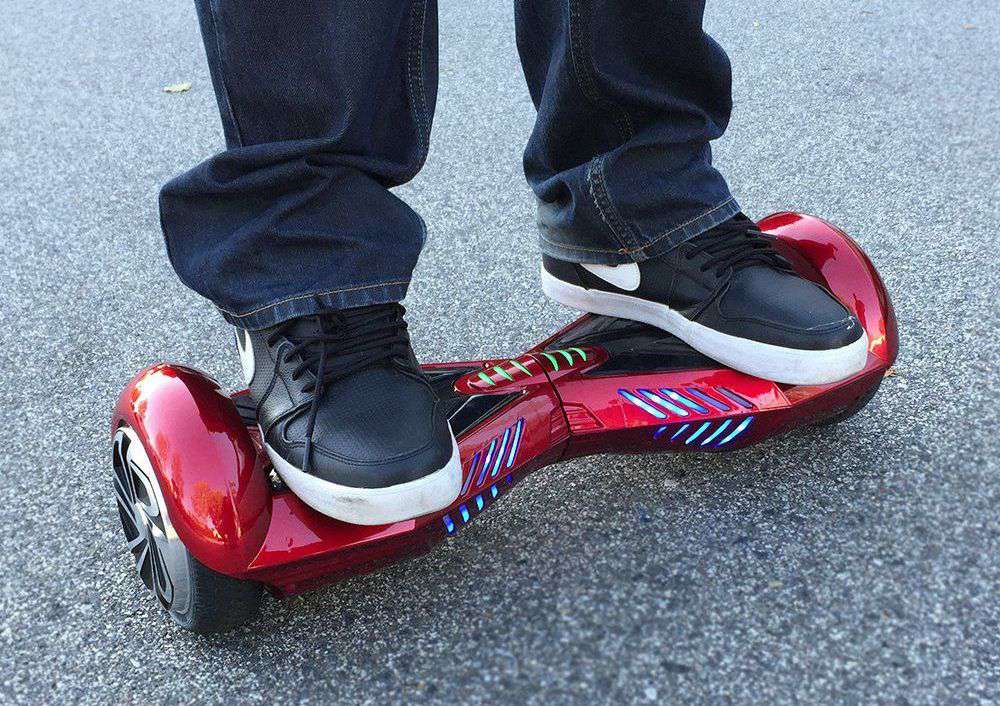
Hoverboards look like the future, if the future involves standing on a glowing plank and trusting two tiny wheels with your dignity. They promise fun, convenience, and that smooth “I’m basically floating” feeling. But before you click “Buy Now” and imagine yourself gliding through the neighborhood like a low-budget superhero, it is worth asking a less flashy question: should you buy a hoverboard at all?
For many people, the honest answer is no. Hoverboards can be entertaining, but they also come with real downsides: lithium-ion battery risks, recalls, falls, fractures, local restrictions, airline problems, poor long-term value, and a learning curve that is less “cool futuristic commute” and more “surprise meeting with the carpet.”
This does not mean every hoverboard is a tiny disaster with Bluetooth speakers. Some models are better designed than others, and safety standards have improved. Still, if you are weighing the pros and cons, there are plenty of great reasons you should not buy hoverboardsespecially if the rider is a child, the model is cheap or uncertified, or your home has stairs, pets, hardwood floors, or relatives who enjoy filming embarrassing moments.
1. Hoverboards Have a Troubled Fire-Safety History
The biggest reason to think twice about buying a hoverboard is not that you might look silly. That part is survivable. The larger concern is battery safety.
Hoverboards run on lithium-ion batteries, the same general battery chemistry used in phones, laptops, e-bikes, and electric scooters. When properly designed, tested, charged, and maintained, lithium-ion batteries can work safely. But when they are poorly manufactured, damaged, modified, overcharged, exposed to heat, or paired with the wrong charger, they can overheat. In severe cases, they may smoke, melt, ignite, or trigger a fire.
Hoverboards became famous in the mid-2010s partly because they were funand partly because some caught fire. The U.S. Consumer Product Safety Commission has announced major recalls over the years involving self-balancing scooters and hoverboards due to battery packs that could overheat. One of the most serious examples involved a recall of about 53,000 Jetson Rogue hoverboards after a fire linked to the product was associated with two deaths. That is not a quirky product flaw. That is a sobering reminder that a bargain rideable toy can become a household hazard.
Cheap Models Can Be Especially Risky
One of the problems with hoverboards is that they often look similar on the outside. A high-quality device and a sketchy discount model can both have shiny wheels, LED lights, and a product listing that says “premium,” because apparently the internet has never met an adjective it could not overuse.
The important difference is inside: battery cells, wiring, chargers, battery management systems, heat protection, and electrical design. If a hoverboard does not clearly show certification from a reputable testing lab, especially compliance with UL 2272 for personal e-mobility devices, shoppers should be cautious. UL 2272 evaluates the electrical system of devices such as hoverboards for hazards involving fire, explosion, electric shock, and battery failure. It does not magically make riding risk-free, but it is a meaningful safety checkpoint.
2. Charging a Hoverboard Adds Another Thing to Worry About
Modern life already requires charging phones, laptops, earbuds, watches, tablets, toothbrushes, and that one mystery cable in the drawer that nobody can identify but everyone is afraid to throw away. A hoverboard adds a larger battery-powered device to the listand it needs careful charging habits.
Safety agencies advise users not to charge micromobility devices while sleeping or away from home. They also recommend using only the charger supplied or approved by the manufacturer, unplugging the device when charging is complete, keeping it away from flammable materials, and never using a recalled or damaged product. That means no overnight charging in the hallway, no plugging it in behind a couch, and no “I’ll just use this random charger because it fits.”
For responsible adults, these rules are manageable. For busy families, kids, shared apartments, dorm rooms, or anyone who regularly forgets laundry in the washer until it becomes a science project, the charging discipline may be a hassle. If a product requires you to create a mini fire-safety protocol just so someone can ride in circles for 11 minutes, it is fair to ask whether the fun is worth the effort.
3. Falls Are Common, and They Are Not Always Minor
Hoverboards are marketed as easy to ride, but “easy” is doing a lot of stretching here. The device responds to tiny shifts in balance. Lean forward and it moves. Lean backward and it slows or reverses. Twist your feet and it turns. Panic, stiffen up, and wave your arms like a startled inflatable tube man, and the hoverboard does not politely pause to discuss your feelings.
Falls are one of the most common hoverboard injury risks. Pediatric injury research has found thousands of children treated in emergency departments for hoverboard-related injuries, with fractures, bruises, sprains, wrist injuries, forearm injuries, and head injuries among the concerns. Children’s hospitals have also reported common injuries such as distal radius fractures, often caused when riders instinctively throw out a hand to break a fall.
Your Living Room Is Not a Skate Park
Many hoverboard injuries happen at home. That surprises people, because the home feels safer than a street or parking lot. But indoor riding creates its own problems: rugs, door thresholds, furniture corners, pets, toys, slick floors, stairs, and walls that appear faster than expected. A hoverboard can turn a normal hallway into an obstacle course designed by someone who dislikes wrists.
Protective gear helps. Helmets, wrist guards, elbow pads, and knee pads are smart. But many riders skip them, especially indoors. After all, nobody wants to put on a full safety kit to travel from the kitchen to the sofa. Unfortunately, the floor does not care whether the ride was “just for a second.”
4. They Are Not as Practical as They Look
Hoverboards seem like transportation, but in real life they are often more like entertainment devices wearing a transportation costume. They are not ideal for commuting, errands, rough pavement, steep hills, rain, gravel, crowded sidewalks, or long distances. Most have small wheels, limited ground clearance, and a stance that gives the rider very little recovery time if something goes wrong.
Unlike bicycles or many electric scooters, hoverboards generally do not have handlebars. That makes them compact, but it also removes a major point of stability and steering control. You are balancing with your feet, ankles, hips, and hopes. On a perfectly smooth driveway, that may be fine. On cracked sidewalks, uneven pavement, or a bumpy parking lot, the experience can quickly become less “urban mobility” and more “physics demonstration.”
Carrying One Is Awkward
When the battery dies, the weather changes, or you reach a place where riding is not allowed, you have to carry the hoverboard. Many models are heavy enough to be annoying but not useful enough to justify the weight. Carrying one through a store, school, office, or transit station can feel like lugging around a robotic dumbbell with trust issues.
If your goal is transportation, a bicycle, traditional scooter, walking, or a properly regulated e-scooter may be more practical. If your goal is fun, skates, skateboards, bikes, or backyard games may offer more exercise and fewer charging warnings.
5. Travel Restrictions Can Make Hoverboards a Headache
Hoverboards and airplanes are not best friends. Because they contain lithium-ion batteries, they may be restricted or refused by airlines. FAA guidance notes that recreational lithium-battery-powered vehicles such as hoverboards may require airline approval, and devices with batteries over certain watt-hour limits are prohibited from carry-on and checked baggage.
Even when a hoverboard technically fits under a watt-hour limit, an airline may still choose not to accept it. That means you should not assume you can bring one on vacation, pack it for college, or send it along for a family trip. Nothing adds sparkle to travel day quite like standing at the airport with a rejected hoverboard and a face that says, “So this is how my villain era begins.”
6. Local Laws and Rules Can Be Confusing
Another reason not to buy a hoverboard is that you may not be allowed to ride it where you actually want to ride it. Rules vary by city, state, school, mall, apartment complex, park, and transit agency. Some places treat hoverboards as motorized vehicles. Others restrict them on sidewalks, roads, public transit, campuses, or indoor public spaces.
New York City, for example, has public guidance stating that hoverboards are not allowed on several modes of public transportation and are treated as motorized self-balancing scooters. Other cities may have different rules, but the pattern is clear: public spaces often do not welcome hoverboards with open arms and a confetti cannon.
Private Property Is Not Always a Free Pass
Even on private property, rules can apply. Apartment buildings, schools, shopping centers, offices, hotels, and event venues may ban hoverboards because of fall risks, property damage, or battery concerns. Parents may buy one thinking it will be a neighborhood toy, only to discover it is banned in the school hallway, unwelcome at the mall, unsafe in the driveway, and terrifying near the family dog.
7. They Can Be a Poor Value for the Money
A hoverboard may look affordable at first, especially compared with a bike or electric scooter. But the sticker price is only part of the story. A responsible purchase may also require a helmet, wrist guards, knee pads, elbow pads, a safe charging location, recall checks, possible battery replacement concerns, and enough space to ride without crashing into a lamp that has been in the family longer than the rider.
Then there is the novelty factor. Many hoverboards are exciting for the first few days. Everyone tries it. Someone screams. Someone falls. Someone says, “I got it, I got it,” seconds before proving otherwise. After the initial excitement, the device may spend more time under a bed than under someone’s feet.
For children, interest can fade quickly. For adults, practical use may be limited. If the hoverboard becomes a closet decoration with a charger, it was not a transportation investment. It was an expensive lesson in holiday optimism.
8. Maintenance, Storage, and Disposal Are Annoying
Hoverboards are not maintenance-free. Tires, wheels, footpads, sensors, chargers, battery performance, and internal electronics can all become issues. If the device is dropped, soaked, overheated, or stored poorly, it may become unsafe or unreliable. And if it is recalled, damaged, or dead, disposal is not as simple as tossing it in the trash.
Lithium-ion batteries require proper recycling or hazardous waste disposal according to local rules. Safety agencies warn against putting lithium batteries in regular trash or standard recycling bins. That means the end of a hoverboard’s life can involve more research than the beginning of some college essays.
9. Hoverboards Are Not Ideal for Young Kids
Many hoverboards are marketed to kids, but that does not automatically make them a good children’s product. Young riders may not have the balance, judgment, coordination, or patience needed to ride safely. They may ride too fast, skip protective gear, use the device indoors, attempt tricks, ignore charging rules, or put fingers near wheels and wheel wells.
Children also tend to fall differently than adults and may be more vulnerable to wrist, forearm, and head injuries. Supervision helps, but supervision is not magic. A child can fall in less time than it takes an adult to say, “Careful!”which, as every parent knows, is the official soundtrack of preventable chaos.
10. Better Alternatives Usually Exist
If the goal is outdoor fun, a bike, kick scooter, skateboard, roller skates, or inline skates may be better choices. These options still involve risk, but they often encourage more physical activity, have clearer safety norms, and are easier to use in designated areas. If the goal is transportation, a bicycle or properly selected e-scooter may offer better range, stability, braking, and usefulness.
If the goal is a gift, consider whether the recipient has a safe place to ride, will wear protective gear, understands charging rules, and genuinely wants the device after the novelty fades. A hoverboard may look impressive under the Christmas tree, but so does a giant box of regret if it ends up recalled, banned, broken, or parked permanently next to the vacuum cleaner.
When Buying a Hoverboard Might Still Make Sense
To be fair, this article is not saying that nobody should ever ride a hoverboard. A careful buyer may choose a reputable brand, verify UL 2272 certification, check recall databases, follow charging instructions, wear protective gear, supervise children, avoid public roads, and ride only on smooth, dry, private surfaces. Under those conditions, a hoverboard can be a fun recreational device.
But that is a long list of conditions for something many people buy casually. The main point is simple: hoverboards are not harmless toys. They are battery-powered personal mobility devices with injury risks, fire risks, legal limitations, and practical downsides. If you are not willing to manage those responsibilities, not buying one may be the smartest move.
Experience Notes: What Hoverboard Ownership Is Actually Like
The first experience many people have with a hoverboard is confidence followed immediately by negotiation. You step on with one foot, the board wiggles, your arms shoot out, and suddenly you are making promises to gravity. “Easy to learn” is technically true for some riders, but the first few minutes can be humbling. The board responds to tiny movements, and beginners often overcorrect. Lean too much, and it zips forward. Lean back too hard, and it reverses like it just remembered an appointment.
Families often discover that the safest place to learn is not the living room, even though the living room is where everyone wants to try it first. Furniture becomes a hazard. Door frames become enemies. Rugs behave like traps. Pets become moving speed bumps with opinions. A smooth garage floor, empty driveway, or open paved area is usually better, but even then, protective gear matters. The rider who says “I’m only going slow” is often the rider who learns that slow falls still count.
Another common ownership experience is the charging routine. At first, everyone remembers the rules. The hoverboard gets plugged in properly, watched carefully, and unplugged when ready. After a few weeks, habits can loosen. Someone leaves it charging longer than needed. Someone moves it near shoes, curtains, boxes, or other flammable clutter. Someone misplaces the original charger and wonders whether a look-alike charger will work. That is exactly where safety problems can begin. A hoverboard is not a phone you casually charge on a pillow; it deserves more respect.
Storage also becomes more annoying than expected. Hoverboards are compact compared with bikes, but they are still bulky, heavy, and awkward. They collect dust in corners. They block closet space. They are easy to trip over if left in a hallway. In smaller apartments, dorms, or shared homes, one more battery-powered gadget can feel like one more thing competing for floor space and attention.
Then comes the novelty curve. During week one, everyone wants a turn. During week two, the best rider tries spins. During week three, someone asks where the charger went. By month two, the hoverboard may be used occasionally, mostly when guests visit and someone wants to demonstrate either skill or poor judgment. For many owners, the fun is real but short-lived. That does not make hoverboards useless, but it does make them risky as impulse purchases.
The most practical lesson from real-world hoverboard ownership is this: the device demands more responsibility than its toy-like appearance suggests. You need a safe riding area, protective gear, charging discipline, recall awareness, storage space, and local rule knowledge. If that sounds like too much work for a glowing two-wheeled board, your instincts are probably correct. Sometimes the best hoverboard is the one you admire from a distance, while standing safely on your own two feet like our ancestors intended.
Conclusion: Should You Buy a Hoverboard?
Hoverboards are fun in the same way spicy food is fun: thrilling at first, but not everyone enjoys the consequences. They can be entertaining, futuristic-looking, and exciting for confident riders. But the reasons not to buy hoverboards are strong. Battery fire history, recalls, injury risks, airline restrictions, confusing local laws, limited practicality, and poor long-term value all deserve serious attention.
If you still want one, buy carefully. Choose a reputable brand, verify safety certification, check for recalls, use the correct charger, never charge it unattended, wear protective gear, and ride only where it is legal and safe. But if you are already unsure, that hesitation is useful. A hoverboard is not an essential purchase. For many households, skipping it means fewer risks, fewer rules, less clutter, and fewer chances of becoming the star of a family group chat video titled “Watch This.”
Note: This article is for general consumer education and does not replace official recall checks, manufacturer instructions, medical advice, fire-safety guidance, airline rules, or local laws. Before buying or using any hoverboard, verify current safety information from official sources and follow all applicable rules.