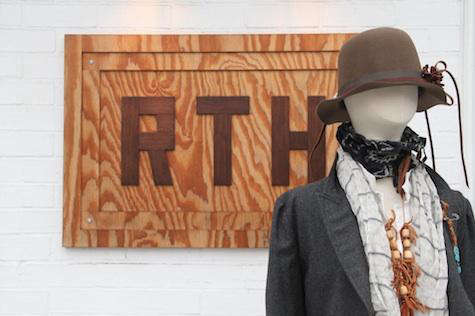
Some stores sell clothes. Others sell a fully developed point of view, complete with a soundtrack, a scent, a mythology, and at least one object you did not know you needed until it was sitting in your hand. RTH Shop in Los Angeles belonged firmly to the second category.
Created by designer and retailer René Holguin, RTH’s original La Cienega Boulevard shop became a cult destination for reworked denim, handmade leather goods, genderless clothing, ceramics, jewelry, scents, and wonderfully mysterious objects. It was not a boutique designed for a five-minute dash. It rewarded lingering, looking twice, and accepting that a scarf, clay vessel, and oddly beautiful pin might suddenly reorganize your personal style.
A Small Los Angeles Shop With an Enormous Personality
The original RTH Shop opened in late 2010 at 537 North La Cienega Boulevard in West Hollywood. The address placed it near polished furniture galleries and expensive design showrooms, but RTH did not behave like its glossy neighbors. Its handmade sign, compact footprint, raw materials, layered displays, and smoky fragrance made it feel more like a remote trading post that had somehow landed in Los Angeles traffic.
That contrast was central to its charm. Outside were luxury cars, showrooms, and the constant theater of La Cienega. Inside were worn textiles, pieces of leather, beads, vintage garments, wooden objects, ceramics, and displays that seemed assembled through instinct rather than a corporate merchandising manual.
The shop could be easy to overlook from the street. Once discovered, however, it was difficult to forget. It offered the retail equivalent of finding a handwritten note inside an old book: personal, unexpected, and much more interesting than the item you originally came to buy.
René Holguin’s Road From El Paso to RTH
RTH’s identity began long before its Los Angeles doors opened. Holguin grew up in El Paso, Texas, where his father made boots. Exposure to leatherwork at an early age helped give him an understanding of materials not as abstract fashion ingredients, but as practical things that could be cut, folded, stitched, repaired, and improved by use.
Before launching RTH, Holguin worked in visual merchandising and fashion for companies including Ralph Lauren, J.Crew, and Levi’s. Those jobs provided experience in presentation, product, and large-scale retail storytelling. They also exposed him to the increasingly standardized look of global shopping.
Traveling from city to city, he encountered many stores carrying variations of the same goods. RTH emerged as an answer to that sameness. Holguin wanted a shop where he could make what he loved, collect what interested him, and offer objects with the emotional pull of old-fashioned souvenirs.
The Souvenir Shop, Reinvented
A conventional souvenir announces a location with a logo. RTH’s souvenirs worked differently. They captured a feeling: a road trip through the Southwest, the smell of cedar, the softness of broken-in denim, the shape of a handmade pouch, or the pleasure of discovering a strange little object with no algorithmically optimized explanation.
This approach made the store feel personal without becoming precious. The products were meant to be worn, carried, touched, and incorporated into everyday life. Nothing needed to remain sealed in collector-grade plastic like an action figure waiting for retirement.
What the RTH Shop Experience Felt Like
RTH was famous for engaging more than the eyes. Visitors regularly described the smell of leather, cedar oil, piñon incense, or campfire-like smoke. The fragrance was not a minor atmospheric detail. It became part of the store’s identity, clinging lightly to garments and turning a shopping bag into an aromatic reminder of the visit.
The interior combined raw wood, vintage textiles, handmade fixtures, art, clothing, found objects, and small collections gathered during Holguin’s travels. Displays were dense but deliberate. A shopper might notice a necklace, then a photograph behind it, then an unusual ceramic vessel, then a pair of customized jeans partially hidden below.
There was no obvious visual command ordering visitors to “SHOP NEW ARRIVALS.” Instead, the room encouraged curiosity. It took time to absorb because the merchandise and the environment were presented as one continuous composition.
A Store That Changed With Its Contents
RTH’s walls, tables, and racks were not treated as permanent scenery. Art rotated. Small objects appeared in clusters. Clothing was layered into expressive outfits. Ceramics and accessories moved in and out of focus. Repeat visitors could return to the same tiny space and discover a different story.
This made the shop feel alive. Many boutiques carefully prevent customers from sensing the labor behind retail. RTH allowed the workbench, the maker, the collector, and the finished product to occupy the same world.
What Shoppers Found at RTH
The early assortment included handmade leather bags, snap wallets, belts, bows, flowers, brooches, colored kilt pins, beaded accessories, scarves, hats, and rotating apparel. Much of the early merchandise was produced by Holguin and collaborators in the workshop behind the store.
Leather goods were especially important. Market totes, egg-shaped bags, pouches, wallets, and decorative pieces reflected Holguin’s El Paso background while avoiding the polished stiffness associated with traditional luxury leather. The surfaces often appeared tactile, irregular, and ready to develop a patina.
Reworked Vintage Denim
Customized denim became one of RTH’s strongest signatures. Vintage jeans and work garments could be reconstructed with altered proportions, dropped rises, wider shapes, cropped lengths, or unexpected details. The results felt familiar and strange at the same time.
This was clothing designed to be understood on the body rather than judged from a hanger. A pair of jeans might initially appear enormous, unusual, or mildly rebellious. Once worn with the right shirt, scarf, or jacket, the proportions made sense. The garment had not lost its history; it had simply started a second career.
The Bandana Tote and the Ponchirt
The bandana tote became one of RTH’s most recognizable accessories. By transforming familiar cotton bandanas into functional bags, RTH elevated an inexpensive everyday textile without removing its relaxed character. Suede or leather handles added structure, but the bag remained casual enough for groceries, books, beach gear, or an unreasonable number of snacks.
Another signature was the “ponchirt,” a hybrid between a poncho and a shirt. Holguin developed the idea by altering utilitarian clothing and exploring the space between a conventional top and a loose outer layer. The concept expressed the central RTH philosophy: categories are useful until they become boring.
Genderless Clothing Before It Became a Retail Buzzword
RTH consistently presented clothing as genderless or unisex. Oversized shirts, loose trousers, shawls, denim, hats, and jewelry were selected according to shape, comfort, texture, and personal expression rather than a rigid men’s-versus-women’s floor plan.
The clothes did not need a lecture to communicate inclusivity. Their proportions invited experimentation. A long shirt could become a tunic, a dress, a jacket, or simply a very long shirt enjoying its freedom. Scarves could be tied, wrapped, belted, or attached to bags. Jewelry could be worn by whoever felt a connection to it.
RTH’s official philosophy describes style as intuitive. That idea helps explain why the shop resisted standardized outfits and seasonal rules. Customers were encouraged to trust their eye, even when their eye was suggesting trousers large enough to host a small dinner party.
RTH Shop 2 Expanded the Story
RTH later opened a second space at 529 North La Cienega Boulevard, only a few doors from the original shop. If the first location resembled a compact modern trading post, RTH Shop 2 gave Holguin more room to turn retail into an art installation.
The second interior featured raw cedar screens and stools, exposed string lights, large ceramic vessels, layered rugs, drawings, photography, jewelry, and collected objects. Raw wood was intentionally allowed to age and change, much like leather and denim. Instead of fighting wear, the design welcomed it as evidence that materials had participated in life.
Photography connected to RTH’s Arcosanti project also appeared in the space. Holguin and photographer Jay Carroll had traveled to the experimental Arizona community intending to produce a lookbook. After meeting residents, the project evolved into portraits that emphasized people and connection rather than a standard fashion campaign.
Why Fashion Insiders Became Devoted to RTH
RTH developed an unusually loyal following among designers, editors, musicians, stylists, and collectors. Its appeal came partly from scarcity, but scarcity alone does not create affection. Customers returned because the shop’s vision remained recognizable while the inventory continued to surprise them.
Musician Erykah Badu became one of RTH’s best-known admirers. She described discovering the small store, being drawn inside by its pottery, fragrance, colors, and atmosphere, and developing a creative friendship with Holguin. Her appreciation reflected what many visitors sensed: entering RTH felt less like walking into a sales environment and more like entering the maker’s imagination.
The store also earned substantial fashion coverage and appeared in guides to Los Angeles shopping. Its reputation grew without sacrificing the offbeat quality that had made it interesting in the first place. RTH was fashionable, but it never seemed desperate to prove that it knew what fashion was doing this week.
Collaborations That Extended RTH Beyond the Shop
Although RTH’s Los Angeles stores were intimate, the brand’s creative reach extended through collaborations and cultural projects. Holguin worked with Union Los Angeles on a special ponchirt, bringing RTH’s hybrid design language to a broader audience.
For LACMA’s Wear LACMA initiative, he drew inspiration from portraits in the museum’s Latin American and American art collections. The project demonstrated how RTH could translate historical imagery into contemporary accessories while maintaining the personal, handcrafted character of the brand.
A later A.P.C. collaboration introduced RTH’s Californian perspective to the French label’s clean wardrobe staples. The partnership made sense because both brands valued useful clothing, understated construction, and pieces that could live beyond a single season. The result was not two logos yelling across a T-shirt. It was a conversation about how clothes serve people.
How to Shop With the RTH Mindset
The original Los Angeles stores are best understood as a documented and highly influential era of RTH. Current official information places RTH’s physical retail presence in Palm Springs, along with its online shop. Still, the principles that defined the La Cienega experience remain useful for anyone shopping the brand or exploring a similarly curated boutique.
Start With Materials
Touch the denim, leather, cotton, ceramic, or wood when appropriate. RTH products often communicate through texture before color or trend. Look for pieces that will become more attractive after repeated use rather than objects that demand permanent protection from ordinary life.
Try the Unfamiliar Shape
Do not dismiss a garment because it looks unusual on the rack. Loose trousers, oversized shirts, poncho-like layers, and unconventional denim often need movement before their proportions become clear.
Buy One Memorable Object
A good RTH-style purchase does not need to transform your entire wardrobe. A leather pouch, scarf, necklace, scent, hat, or ceramic vessel can introduce the shop’s character into what you already own. Personal style usually evolves through small obsessions, not emergency wardrobe demolition.
Extended Shopper’s Diary: Experiencing RTH in Los Angeles
Imagine arriving on La Cienega after crawling through Los Angeles traffic at the speed of a thoughtful tortoise. The surrounding design district offers grand windows, polished furniture, and showrooms that appear capable of rejecting you based on your throw-pillow knowledge. Then you find RTH: smaller, quieter, and less interested in performing conventional luxury.
The entrance does not reveal everything at once. You step inside and first notice the scent. It is woody and smoky, with leather somewhere underneath. Your eyes then begin adjusting to the layers. There are bags, textiles, pins, beads, hats, ceramics, photographs, wood, denim, and objects whose purpose may not be immediately obvious.
A conventional shopper might search for the nearest category sign. There is none. Your first lap around the store is reconnaissance. You notice a leather bag but become distracted by the scarf tied around it. You examine the scarf and discover a wallet beneath it. While looking at the wallet, you spot a ceramic bowl that seems to have been shaped by a very stylish volcano.
The second lap is when the clothing begins to make sense. A long, loose shirt that appeared theatrical now looks practical. A pair of reworked jeans with unfamiliar proportions starts suggesting three outfits. A necklace that seemed too bold when isolated becomes perfectly reasonable next to weathered denim and a plain white top.
The experience encourages conversation. Questions about a garment may lead to its material, where it was found, how it was altered, or why the shape changed. The answer is rarely a generic description copied from a wholesale catalog. Even when an item is simple, it belongs to a larger story about utility, travel, craft, and personal instinct.
You also begin recognizing that the store’s atmosphere is not separate from the merchandise. Raw wood supports the warmth of the leather. Incense changes how the textiles feel emotionally. Ceramics slow down the visual pace. Photographs give the clothing a human context. Nothing is screaming for attention, yet nearly everything is quietly raising its hand.
Eventually, you choose something. Perhaps it is a bandana tote because it is useful and cheerful. Perhaps it is a wallet with an irregular surface that will improve as it ages. Perhaps it is a pair of reconstructed jeans that initially caused concern but now make your normal pants seem disappointingly obedient.
The purchase feels less like acquiring a status symbol and more like carrying away part of an environment. Back outside, Los Angeles resumes immediately: engines, sunlight, traffic, appointments, and somebody turning left long after the arrow has disappeared. Yet the object in your bag still smells faintly of the store.
That lingering sensory memory explains why RTH became more than a shopping recommendation. People did not simply remember what they bought. They remembered how the place made them look at materials, proportions, handmade work, and their own taste. The best retail experiences do not convince customers to become someone else. They give them permission to become more specifically themselves.
Conclusion: A Los Angeles Retail Original
RTH Shop’s Los Angeles era demonstrated what independent retail can accomplish when a store is built around conviction rather than a formula. René Holguin combined lessons from El Paso leatherwork, major American fashion companies, vintage clothing, travel, art, and everyday utility to create a world that could not be reduced to a product category.
The original shop was small, but its influence came from the completeness of its vision. The scent, displays, handmade goods, reconstructed denim, ceramics, photographs, and genderless styling all communicated the same message: useful objects can carry emotion, and personal style does not need permission from a trend forecast.
Whether remembered as a La Cienega destination or encountered through RTH’s continuing work, the shop offers a valuable lesson. Buy fewer things with stronger character. Wear clothes in ways that feel natural. Allow good materials to age. And when a strange pair of pants unexpectedly improves your entire outfit, try not to argue with destiny.