If you have ever looked at a Restoration Hardware dining room and thought, “Why does this table look like it has hosted both a medieval feast and a very expensive candle?” you are not alone. The Restoration Hardware dining table look has become one of the most recognizable styles in American interiors because it feels substantial, timeless, and quietly dramatic all at once. It is grand without being flashy, rustic without looking like a barn exploded, and polished without turning the room into a museum where nobody is allowed to touch anything.
At its core, this look is about weight, texture, and restraint. Think oversized wood tables with visible grain, weathered finishes, strong pedestal or trestle bases, and a room that feels edited rather than crowded. It is the kind of design that makes a weeknight pasta dinner feel a little more important and Thanksgiving feel like it has its own cinematographer. The good news is that you do not need a mansion, a 14-foot ceiling, or an alarming furniture budget to capture the spirit of it. You just need to understand what gives the look its power.
What Defines the Restoration Hardware Dining Table Look?
1. A Table With Real Presence
The first thing that stands out is scale. Restoration Hardware-style tables do not whisper. They arrive. Even in simpler silhouettes, they have visual heft through thick tops, broad legs, generous proportions, and materials that feel grounded. The table is meant to anchor the room, not politely disappear into it. That is why this style works so well in open-concept homes and larger dining spaces. It creates a focal point that tells the eye exactly where the gathering happens.
2. Natural Wood That Looks Like It Has Lived a Life
A major part of the appeal is the wood finish. The Restoration Hardware dining table look usually leans toward oak or reclaimed wood aesthetics with visible knots, grain, plank variation, and softly weathered tones. The finish is rarely shiny or precious. Instead, it looks brushed, matte, aged, or sun-washed. Translation: it looks expensive because it does not try too hard. The beauty comes from texture and character, not a glossy top that reflects your ceiling fan like a disco ball.
3. Classic Shapes With Architectural Energy
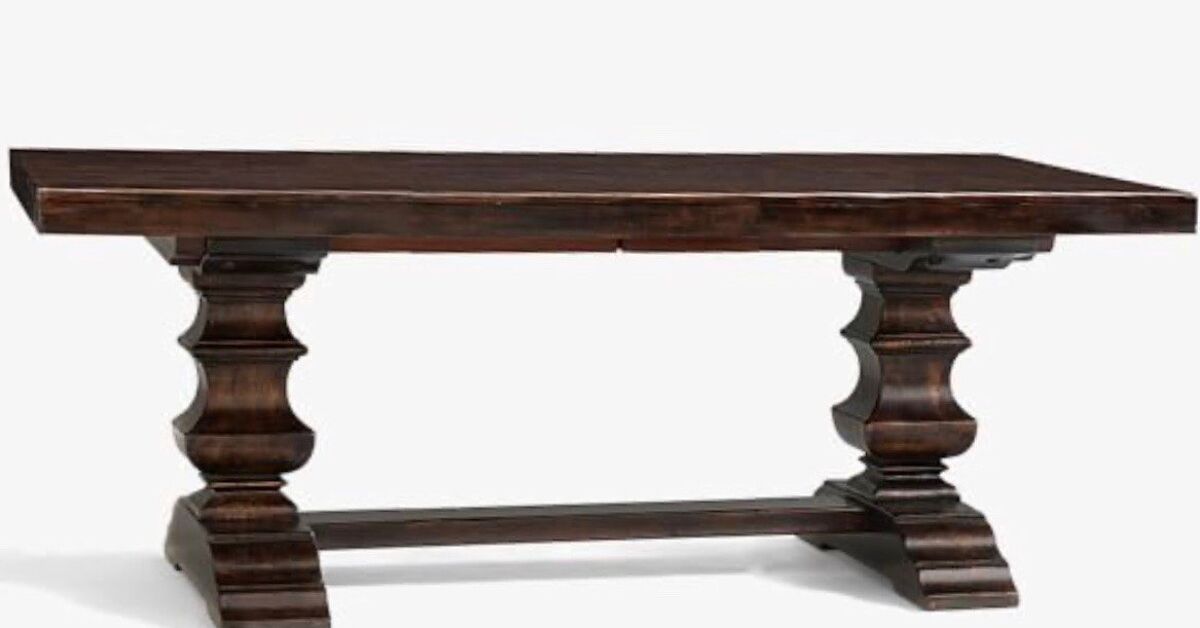
Trestle tables, pedestal bases, monastery-inspired silhouettes, Parsons shapes, and long rectangular plank tops all fit beautifully into this world. What ties them together is structure. Even when a table is simple, the base often has a sculptural quality that makes the piece feel architectural. That is a big reason the RH style feels elevated. It borrows from history, but it is styled in a way that still feels modern and relevant.
4. A Soft, Neutral Supporting Cast
The table may be the star, but the surrounding pieces matter. Upholstered dining chairs in linen-like fabrics, subdued rugs, oversized pendant lighting, and a restrained palette of taupe, greige, ivory, charcoal, brown, and muted black help create the full look. The room is layered, but it is never chaotic. You get warmth, softness, and depth without visual noise.
Why This Style Works So Well
The Restoration Hardware dining table look has staying power because it solves several design problems at once. It adds warmth through wood, elegance through scale, and comfort through texture. It also plays nicely with other popular styles. Love modern organic interiors? This works. Prefer transitional spaces? Still works. Want a little farmhouse influence without going full rooster-and-distressed-sign territory? Also works.
Another reason it is so popular is emotional. This kind of dining table suggests permanence. It feels like the sort of piece that could survive kids doing homework, holiday dinners, coffee rings, dramatic family stories, and one guest who always sets down a glass without a coaster. In a world full of quick trends and furniture that arrives in a suspiciously small box, the RH-inspired table feels reassuringly solid.
How to Get the Look in Your Own Home
Start With the Table, Not the Accessories
If you want the room to feel genuinely inspired by Restoration Hardware, invest your visual energy in the table first. Look for a dining table with one or more of these qualities: a thick top, a weathered oak or reclaimed wood appearance, a trestle or pedestal base, and a generous silhouette. It does not need to be an exact copy. In fact, it should not be. The goal is to capture the mood, not create a showroom tribute act.
Choose Chairs That Soften the Weight
Because the table is often visually heavy, the best companion chairs usually add softness. Upholstered side chairs, slipcovered styles, light oak frames with fabric seats, or even a tailored bench can balance the table beautifully. This contrast matters. If every piece in the room is chunky and dark, the space can start to feel like a castle basement. A little softness keeps the room inviting.
Keep the Color Palette Calm
One of the biggest secrets behind the look is color restraint. RH-inspired dining rooms rarely rely on bold primary colors or loud contrast. Instead, they build richness through layered neutrals. A warm oak table, stone-colored chairs, a muted rug, black metal lighting, and ceramic accessories in cream or gray can go a long way. When in doubt, imagine colors inspired by fog, sand, mushroom, flax, espresso, and old stone walls. Suddenly, everything makes sense.
Use Lighting to Add Drama
Lighting is what takes the look from “nice table” to “oh, this room has opinions.” Oversized chandeliers, iron fixtures, candle-style pendants, or large linear lights all work well. Over a long rectangular table, two matching fixtures can feel especially balanced and intentional. Over a round table, one substantial pendant creates a strong visual center. Good lighting adds mood, scale, and just the right amount of dinner-party theater.
Best Table Shapes for the Restoration Hardware Vibe
Rectangular Trestle Tables
This is probably the signature move. A long rectangular table with a trestle base instantly delivers that RH atmosphere. It feels classic, grounded, and made for gathering. It is especially strong in formal dining rooms, large breakfast areas, and open-concept homes where the table needs enough presence to define the space.
Round Pedestal Tables
If your room is smaller or you want a slightly softer look, a round pedestal table is a smart choice. It still feels sculptural and substantial, but it improves flow and encourages conversation. It is also easier to fit into tighter dining areas without making the room feel cramped. That means you get the mood without needing a banquet hall.
Extension Tables
This is where beauty meets practicality. Extension tables fit the RH-inspired mindset because they combine everyday usability with entertaining potential. You can keep the room feeling open most days and then expand when guests arrive. It is the furniture version of being laid-back and prepared, which is honestly the dream.
How to Style the Table So It Looks Finished, Not Fussy
Styling this kind of table is all about restraint. A large bowl, a row of candlesticks, a sculptural vase with branches, or a linen runner can be enough. Avoid piling on tiny objects that make the table look busy. This style thrives on breathing room.
Texture matters more than quantity. Use ceramics, aged metal, linen, wood, and glass in soft finishes. A slightly imperfect handmade bowl will usually look better here than something shiny and overly decorative. The goal is to make the room feel collected and calm, not like a gift shop staged a hostile takeover.
The rug beneath the table should also support the look rather than compete with it. Flatwoven, low-pile, vintage-inspired, or subtly patterned rugs work especially well. They add softness and definition without stealing the spotlight from the table. If your table is massive and moody, the rug should be the reliable friend who keeps things balanced.
Common Mistakes to Avoid
Going Too Dark Everywhere
Dark wood can be beautiful, but if you pair a heavy dark table with dark chairs, a dark rug, and dark walls, the room may start feeling more dramatic than desirable. Bring in lighter textiles, a softer wall color, or brighter art to keep balance.
Choosing a Table That Is Too Big for the Room
The RH look is about presence, not poor traffic flow. A dining room should still feel comfortable to move through. If the table overwhelms the space, the room loses elegance and gains inconvenience. That is not luxurious. That is just annoying.
Adding Too Many Rustic Elements
Reclaimed wood does not mean every surrounding item needs to look salvaged from a shipwreck. The most successful rooms mix rougher textures with refined shapes and cleaner lines. That contrast is what makes the look feel elevated instead of themed.
Forgetting Comfort
A stunning table means very little if the chairs are stiff and the lighting is harsh. The Restoration Hardware mood is luxurious partly because it suggests lingering. People should want to sit, talk, snack, and stay a while. Comfort is part of the aesthetic.
Budget-Friendly Ways to Recreate the Look
You do not have to buy an actual RH table to get the Restoration Hardware dining table look. Many homeowners recreate it successfully by focusing on the design language instead of the label. A few smart strategies can get you surprisingly close.
First, shop for silhouettes before brand names. A solid-looking oak table with a pedestal or trestle base can deliver the right feel whether it comes from a major retailer, a local furniture maker, or a vintage source. Second, prioritize finish over perfection. Grain variation, wire-brushed texture, and matte surfaces often matter more than a specific designer name.
Third, let the room do some of the heavy lifting. Add linen-look chairs, a large pendant, a muted rug, and a substantial centerpiece, and the entire dining area starts speaking the same design language. Even a simpler table can feel far more expensive when the styling is cohesive.
Finally, consider secondhand pieces. Older farmhouse, monastery, and pedestal tables often have the kind of character newer mass-market furniture tries very hard to imitate. Sometimes the real secret to the RH look is not buying something that looks old. It is buying something that actually is old and then styling it with confidence.
Is the Restoration Hardware Dining Table Look Right for You?
This style is ideal if you love rooms that feel grounded, elegant, and calm. It is a strong fit for homes that lean transitional, modern organic, rustic-luxe, or quietly traditional. It is also excellent for people who want their dining area to feel meaningful rather than merely functional.
That said, it may not be the best match if you prefer bright colors, delicate furniture, ultra-minimal spaces, or fast-changing trend cycles. The RH-inspired dining table look works best when you are willing to let one strong piece set the tone for the room. It is less about constant reinvention and more about creating a lasting foundation.
In other words, this is the look for people who want their dining room to feel like it could host Sunday pancakes, a holiday meal, and a design magazine photo shoot without changing its outfit.
Experiences With the Restoration Hardware Dining Table Look
One of the most interesting things about living with a Restoration Hardware dining table look is how quickly it changes the behavior of a room. People often expect the biggest difference to be visual, but the real shift is emotional. A substantial wood table has a way of making everyday life feel more deliberate. Morning coffee feels less rushed. Takeout feels less temporary. Even a casual dinner with mismatched plates somehow looks intentional when it lands on a table with real texture and presence.
Many homeowners say the first surprise is how much the table becomes the room’s anchor. In homes with open floor plans, an RH-inspired dining table often acts like a visual border between kitchen and living space. Suddenly, the dining area feels like a destination instead of a leftover patch of floor. That can be especially satisfying in newer homes where rooms sometimes blend together a little too politely.
There is also a practical side to the experience. Heavier wood tables tend to hide daily life better than delicate glossy surfaces. Tiny scratches, subtle dents, and the occasional evidence of actual human existence usually blend into the character of the piece rather than ruining it. That gives people permission to use the table without treating it like a museum artifact. Families do homework there. Friends gather there. Someone always sets down a mug without thinking. The table survives, and often looks better for it.
Another common experience is realizing that the surrounding furniture matters more than expected. A massive table can look incredible in a showroom and oddly overwhelming at home if the chairs are too bulky or the lighting is too small. People who are happiest with this look usually balance the table with softer elements: upholstered chairs, natural fabrics, lighter rugs, and warm lighting that keeps the wood from feeling too stern. Once that balance is right, the room starts to feel welcoming instead of formal.
There is also a social effect. A round pedestal version often creates a more conversational, intimate experience, especially in smaller homes or breakfast areas. A long rectangular trestle table creates a different mood. It feels ceremonial in the best way, as if even weeknight dinner deserves a little dignity. The long format also tends to encourage more thoughtful styling, from paired pendants overhead to a row of candles or a low centerpiece that runs the length of the table.
Some people discover that the look improves with time. Freshly styled, it can seem almost too perfect. But after a few months of real use, the room settles in. Linen softens. Wood gains subtle wear. Chairs get lived in. The space loses any stiffness and starts feeling authentic. That may be the biggest reason the Restoration Hardware dining table look continues to resonate. It is attractive on day one, but it becomes more convincing as life happens around it.
And that, really, is the charm. This is not a trend that depends on constant novelty. It is a look built around permanence, texture, and comfort. It asks for a little editing, a little patience, and a willingness to let materials speak for themselves. In return, it gives you a dining room that feels composed, warm, and quietly impressive without begging for attention. Not bad for a table, honestly.
Conclusion
The Restoration Hardware dining table look is more than a furniture trend. It is a design formula built on substantial wood, timeless silhouettes, soft neutrals, and a sense of calm luxury. Whether you choose a grand trestle table, a sculptural pedestal base, or a practical extension design, the goal is the same: create a room that feels grounded, welcoming, and enduring. Get the proportions right, layer in texture, resist the urge to over-style, and your dining room can capture that same polished, lived-in elegance that makes the RH aesthetic so appealing.