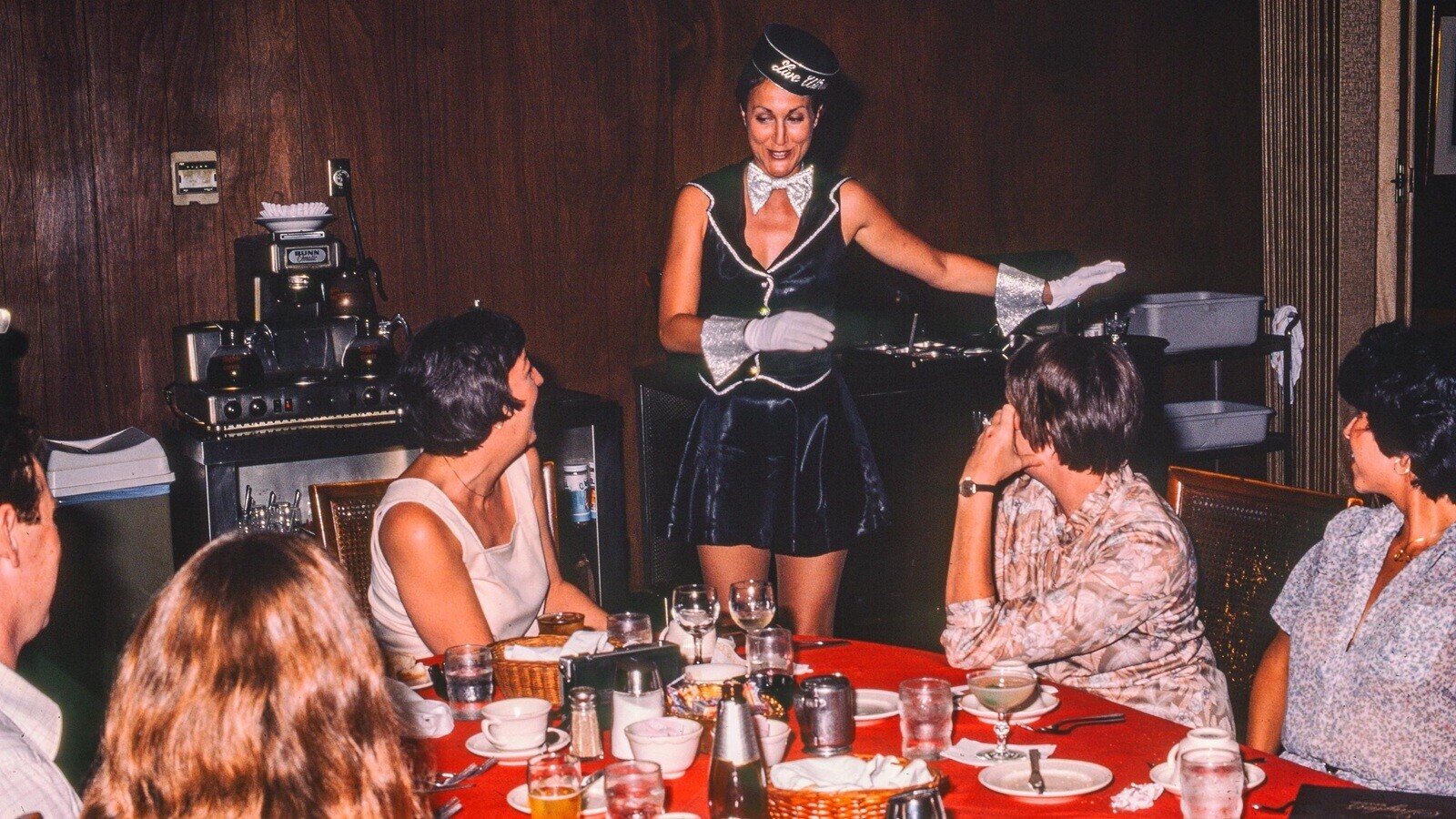
If you want to understand the 1970s, do not start with a textbook. Start with a photo from 1979. Find one with a gas station sign in the background, a station wagon in the foreground, and at least one person wearing denim so committed to the cause it could probably stand on its own. Suddenly, the decade makes sense. The picture will show a country that looked casual, worried, stylish, tired, inventive, and weirdly optimistic all at once.
That is why life in 1979 feels so fascinating today. It was the last full snapshot of the 1970s before the 1980s burst in with shoulder pads, cable expansion, and enough neon to guide aircraft. In photos, 1979 looks like the final act of one cultural mood and the opening scene of another. You still see the easygoing spirit of the early and mid-70s, but you also see signs of change everywhere: long gas lines, more personal technology, sharper political tension, and a public that was learning how to carry anxiety and entertainment in the same hand.
This is what makes photos from life in 1979 so powerful. They are not just vintage images. They are visual evidence of how Americans dressed, worked, waited, danced, commuted, relaxed, and worried near the end of a transformative decade. When we talk about remembering the 70s, 1979 is the year that often says the quiet part out loud.
Why 1979 Feels Like the Last True Frame of the 1970s
Every decade has a closing image. For the 1970s, 1979 is that image. It was a year of contradiction. The culture still had the looseness and experimentation people associate with the era, but the national mood had grown heavier. Inflation was biting. Energy worries were not abstract policy debates; they showed up in everyday routines. News coverage had an edgy, unsettled tone. And yet daily life kept rolling right along, with baseball on TV, shopping malls full of weekend traffic, disco on the speakers, and family snapshots taken in living rooms decorated with wood paneling and heroic amounts of brown.
That tension is exactly what makes 1979 so photogenic. A photo from that year often captures more than a subject. It captures an atmosphere. Even still images seem to hum with background noise: the low buzz of economic uncertainty, the chatter of television news, the hiss of a cassette deck, the clatter of dishes in a family kitchen, and maybe someone in the next room asking whether anyone remembered to turn off the porch light.
Visually, 1979 still belonged to the 70s. Bell-bottoms had not completely surrendered. Denim jackets, flared jeans, wide collars, soft leather, earth tones, tube socks, and feathered hair were still in the picture. But the decade’s look was starting to split into different directions. Some people leaned toward disco glam, others toward punk edge, and many landed in the vast middle of practical American casual: jeans, sneakers, work shirts, and the universal expression of a person who had stood in line longer than expected.
What Photos From 1979 Reveal About Everyday American Life
1. The car was still king, but it was suddenly expensive company
One of the most revealing visual themes in 1979 photos is the automobile. Cars were everywhere, not just as transportation but as a major character in American life. They filled suburban driveways, school parking lots, shopping centers, and city streets. But unlike the earlier part of the decade, the car in 1979 often appears in a story about stress. Gas stations became stages for national frustration. Images of vehicles lined up for fuel came to symbolize the year’s energy crisis and the feeling that ordinary routines had become more complicated than they should be.
That mattered because the American lifestyle of the late 70s depended on driving. Commuting, errands, weekend trips, sports practice, and mall culture all assumed access to a car and affordable fuel. So when gas prices rose and shortages became visible, everyday life did not merely become pricier. It became logistically annoying. The decade’s famous road freedom suddenly had an asterisk.
2. The mall, the diner, and the big-box aisle were social spaces
Photos from 1979 also show how much public life happened in ordinary commercial places. People met at malls, shopped in department stores, lingered in record shops, and gathered at diners that smelled like coffee, grilled onions, and decisions that absolutely should not have been made after midnight. Retail spaces were not just places to buy things. They were part of the social fabric.
That is one reason 1979 images feel so rich today. They preserve analog spaces. Handwritten price signs. Fluorescent-lit checkout lanes. Cash registers with real buttons. Newspaper racks. Magazine stands. Storefront windows packed with sale posters and seasonal displays. A photo from a shopping center in 1979 can say as much about the era as a headline about politics, because it shows what people saw when they lived their regular lives.
3. Home life looked comfortable, practical, and gloriously unfiltered
Family photos from 1979 are a master class in accidental honesty. Nobody was curating a personal brand. Nobody took 47 versions of the same birthday cake photo to find the right angle. People simply took the picture. That is why the details stand out now. The sofa patterns. The stereo cabinet. The rabbit-ear antenna. The ashtray sitting where nobody thought to hide it. The crocheted afghan draped over the couch like it had seniority.
These images show a domestic world that was less polished than modern social media, but often more revealing. They tell us how Americans organized living rooms, what kinds of appliances they lived with, how children dressed at home versus school, and how family rituals looked before digital devices claimed the center of attention. In many 1979 homes, the television was important, but it had not yet conquered every waking minute. Conversation, music, paper calendars, printed newspapers, and radio still held serious territory.
The Style of 1979: Between Bell-Bottom Cool and the Next Big Thing
Fashion in 1979 is one of the best clues that the 70s were ending without fully leaving the party. On one side, you had the familiar 70s silhouettes: flared pants, fitted shirts, suede jackets, platform shoes, and denim doing the heavy lifting of an entire civilization. On the other, you had a shift toward sleeker, more urban looks influenced by disco nightlife, designer jeans, sportswear, and youth scenes that were already nudging fashion into the 1980s.
That visual mix is all over photos from life in 1979. A single street shot can contain three different style universes. One person looks ready for a Saturday Night Fever sequel. Another looks like they build shelving on weekends and trust nobody who says “mood board.” A third appears to have wandered in from the future wearing a sharper, more streamlined look that hints at the next decade.
Jeans mattered especially. By the late 70s, denim was no longer just durable workwear or counterculture casualwear. It had become fashion, status, and mainstream identity rolled together. That helps explain why 1979 photos feel familiar even now. The styling is different, but the logic is modern. Americans were already using clothes to signal lifestyle, tribe, aspiration, and taste.
Music, Nightlife, and the Soundtrack in the Background
If 1979 had a soundtrack, it would not sit still. Disco was still huge, but it was also facing backlash. Rock remained powerful. Punk energy was reshaping youth culture. Early hip-hop was building momentum in urban communities. Country, pop, soul, and soft rock all had loyal audiences. In other words, the culture was not marching to one beat. It was more like a crowded family reunion where everyone insists their playlist should control the speakers.
Photos from nightlife in 1979 capture that diversity beautifully. Some images glow with mirrored balls, satin shirts, and club lighting. Others feel stripped down, gritty, and rebellious. The year’s visual culture tells a bigger story than simple nostalgia. It shows a nation arguing over taste, identity, and who got to define what “real” American culture looked like.
That debate turned visible in famous flashpoints during the year, but it also played out in local bars, rec rooms, roller rinks, cars, and bedrooms where people listened to music on vinyl, radio, or cassette. And then came a small device with enormous symbolic power: the Walkman. Suddenly, music could become personal in a new way. The public world of boomboxes and car radios was now sharing space with a private soundtrack tucked between a pair of foam headphones.
Technology in 1979: Still Analog, Already Changing
One reason remembering the 70s through 1979 feels so compelling is that the technology looks both primitive and oddly elegant. The tools of everyday life were physical. You pressed buttons, turned knobs, inserted tapes, flipped switches, and waited for things to happen. There was friction in the system, but there was also drama. Every object had a mechanism you could hear.
Photographs from 1979 are full of this tactile world. Typewriters on desks. Rotary phones in kitchens. Television sets with woodgrain cabinets. Polaroids drying on countertops. Cassette cases stacked near stereos. Massive cameras brought to birthday parties. Nobody was backing up data to the cloud because the cloud, at that point, was mainly weather.
Yet 1979 also carried unmistakable signs of the future. The Walkman introduced a new relationship between people and media. Cable television was expanding. ESPN launched and pointed toward a future where entertainment would become more specialized, more constant, and more immersive. Looking back, you can see 1979 as a hinge year: still physical, still slow by modern standards, but clearly moving toward a more individualized media culture.
The Uneasy Mood Behind the Smile
Not every 1979 photo is carefree, and that is part of what makes the year so memorable. Behind the family snapshots and summer road-trip pictures, there was real unease. The economy was under pressure. Energy shortages made daily life feel fragile. The Three Mile Island accident intensified fears about technology and public safety. Later in the year, the Iran hostage crisis deepened the sense that the country was entering a harder, more uncertain period.
That does not mean life in 1979 was all doom and gloom. Far from it. People still celebrated holidays, went to concerts, watched sports, took vacations, and posed for awkwardly wonderful family photos. But the year had a more serious undercurrent than the pop-culture version of the 70s sometimes admits. In hindsight, that is why the photos feel so honest. They show joy and strain at the same time.
Even the lighter headlines had a strange edge. When Skylab fell back to Earth in July 1979, it became a global spectacle, half science story and half cosmic prank. It was the kind of event that reminded people the future was arriving, but not always with perfect instructions. That blend of awe and anxiety sits at the heart of many 1979 images.
Why We Still Love Looking at 1979 Photos
We love these photos because they are specific. They do not offer a vague “retro vibe.” They offer evidence. Here is how a neighborhood looked. Here is what people wore to a baseball game. Here is what a gas station looked like when a national problem became local. Here is how a teenager stood in the driveway. Here is what normal looked like before it became history.
There is also something refreshing about the lack of performance. Most people in 1979 were not documenting themselves for strangers. They were preserving birthdays, vacations, first cars, school events, family reunions, and Friday nights. That gives the images a straightforwardness that feels rare now. Even when the poses are stiff, the moments are real.
And perhaps that is the bigger reason these photos endure. They remind us that decades are not only defined by presidents, crises, or headlines. They are defined by ordinary people buying groceries, hanging out after school, waiting in line, dancing, arguing, driving, decorating, and laughing at something just outside the frame. Life in 1979 mattered because daily life always matters. Photos simply make that easier to see.
Experiences That Bring 1979 Back to Life
To really understand photos from life in 1979, it helps to imagine the experiences wrapped around them. Imagine walking into a house on a summer afternoon and hearing a fan humming in the corner while the TV mutters from another room. Someone is flipping through a newspaper. Someone else is adjusting the antenna because the picture went fuzzy at the exact wrong moment. Dinner is still an hour away, and the kitchen smells faintly like coffee, because in that era coffee was less a beverage than a permanent atmospheric condition.
Imagine getting into a car with vinyl seats that are somehow freezing in winter and volcanic in summer. The radio comes on immediately because silence in a moving car feels suspicious. At a stoplight, you glance over and see another driver with oversized sunglasses, a cigarette, and the calm expression of someone who has accepted that traffic is now a lifestyle. On a different day, that same drive might include a stop at a gas station where the line bends around the block and everyone pretends to be patient in the most visible way possible.
Imagine being a teenager in 1979. Music is not background decoration. It is identity. Your album choices say who you are, who you like, and probably who you are trying to impress. A cassette in your hand feels valuable because it is portable emotion. Your jeans matter. Your sneakers matter. Your hair definitely matters, perhaps more than your report card. The mall is not just retail space. It is a runway, a meeting point, a date location, and a low-stakes social laboratory where almost anything important can happen, including heartbreak near the food court.
Imagine a weekend night in the city or the suburbs. Maybe it is disco, maybe rock, maybe a local bar with sticky floors and a jukebox with strong opinions. Maybe it is a living room gathering where people argue about politics, laugh too loudly, and pass around a camera that will produce exactly eight photos, five of which will include someone blinking like they have just seen a ghost. Nobody knows they are making nostalgia. They are just living.
That is the secret of remembering the 70s through 1979. The era survives not only in major events, but in textures: the click of a tape deck, the scratch of denim, the glow of a dashboard at night, the scent of department-store perfume, the static before a favorite song, the look of a family room before minimalism took over and removed all visible personality. When people look at a 1979 photo and say it feels familiar, they are often responding to those textures. The picture does not only show the past. It gives off the atmosphere of it.
So when we revisit 1979, we are not only admiring old clothes, classic cars, or vintage signs. We are looking at a year when America seemed to be standing in a doorway, one hand still on the 70s and the other reaching toward a very different future. And somehow, in the middle of all that change, people still found time to smile for the camera, hold up a birthday cake, lean on a car hood, or dance like the world was not complicated at all. That may be the most memorable image of the year: ordinary people, mid-transition, still making a life.