If your hips feel like rusty door hinges, your lower back complains after sitting, or your stride has started to resemble a cautious penguin shuffle, your psoas muscle may be asking for attention. The psoas is one of the body’s deep hip flexor muscles, and while it is not the villain of every ache and pain, it often plays a starring role in hip stiffness, posture problems, and that “why do I feel 87 after working at a laptop?” sensation.
This psoas stretch guide for psoas release will help you understand what the psoas does, why it gets tight or cranky, and how to stretch and strengthen it safely. The goal is not to attack your hip flexors like you are negotiating with a tiny dragon. The goal is to restore comfortable movement through smart stretching, breathing, posture awareness, and gentle strength work.
What Is the Psoas Muscle?
The psoas major is a deep muscle that runs from the lumbar spine through the pelvis and attaches near the top of the femur. It works with the iliacus muscle to form the iliopsoas, one of the body’s most important hip flexor groups. In plain English, your psoas helps lift your thigh, bend at the hip, walk, climb stairs, run, sit up, and stabilize your lower back.
Because the psoas connects the spine and the leg, it sits at a busy intersection. When it functions well, it supports smooth movement. When it becomes stiff, weak, overworked, or irritated, it can contribute to discomfort in the front of the hip, groin, lower back, or pelvis. That does not mean every backache is “a psoas problem,” but it does mean this muscle deserves more respect than the average office chair gives it.
What Does “Psoas Release” Really Mean?
The phrase “psoas release” sounds dramatic, as if a tiny muscle is being released from prison with a suitcase and a new identity. In reality, psoas release usually means reducing excessive tension, improving hip extension, restoring pelvic control, and helping the nervous system relax around the muscle.
For most people, release does not require aggressive digging into the abdomen or forcing extreme stretches. A safer and more effective approach combines gentle stretching, slow breathing, core control, glute activation, and gradual strengthening. Think of it as convincing the psoas to unclench, not wrestling it into submission.
Common Signs of a Tight or Overworked Psoas
A tight psoas may show up in several ways. You might feel stiffness after long periods of sitting, tightness in the front of the hip, difficulty standing fully upright, or a pulling sensation during lunges. Some people notice lower back tension, shortened stride length, or discomfort when transitioning from sitting to standing.
However, symptoms can overlap with many other conditions, including hip joint irritation, lumbar spine issues, tendon problems, muscle strains, or nerve-related pain. If you have sharp pain, numbness, tingling, weakness, fever, unexplained weight loss, recent trauma, or pain that does not improve, check with a qualified healthcare professional. Your psoas may be involved, but it should not be blamed without evidence. Muscles deserve due process too.
Why the Psoas Gets Tight
Too Much Sitting
Sitting keeps the hips flexed. Over time, the hip flexors may adapt to that shortened position, especially if you spend hours at a desk, in a car, or folded into a couch like a human paperclip. This can make standing tall feel awkward and stretching feel overdue.
Weak Glutes and Core
The psoas does not work alone. If the glutes, deep abdominals, and other stabilizers are underactive, the hip flexors may take on extra work. Stretching may feel good for a few minutes, but tightness often returns if strength and control are ignored.
Training Imbalances
Running, cycling, rowing, heavy lifting, and repetitive sports can overuse the hip flexors if mobility, recovery, and strength are not balanced. Athletes may feel psoas tightness after hard workouts, hill sprints, long rides, or sudden increases in training volume.
Stress and Guarding
Muscles can tighten when the body feels threatened, tired, or stressed. The psoas is deep, postural, and closely tied to trunk movement, so it may become guarded when the body is in “protect mode.” This is why slow breathing can be surprisingly helpful during psoas release exercises.
Before You Stretch: The Golden Rules of Psoas Release
- Do not chase pain. A stretch should feel like mild to moderate tension, not a lightning bolt.
- Keep your pelvis controlled. Many people arch their lower back and think they are stretching the psoas. They are mostly just annoying their spine.
- Breathe slowly. Long exhales help reduce guarding and improve body awareness.
- Use consistency, not intensity. A gentle stretch done regularly beats one heroic stretch that makes you walk funny.
- Strengthen after stretching. Lasting psoas release usually requires better support from the glutes, core, and hip stabilizers.
Best Psoas Stretches for Psoas Release
1. Constructive Rest Breathing
This is a gentle starting point, especially if your hips feel guarded or your lower back feels tense.
- Lie on your back with your knees bent and feet flat on the floor.
- Place one hand on your ribs and one hand on your lower belly.
- Inhale through your nose, letting your ribs expand naturally.
- Exhale slowly and imagine your ribs softening down toward your pelvis.
- Stay here for 2 to 5 minutes.
This position helps calm the nervous system and encourages the hips and spine to settle. It is not flashy, but neither is flossing, and both can save you trouble.
2. Half-Kneeling Psoas Stretch
This is the classic psoas stretch, but technique matters. Done poorly, it becomes a lower-back arching contest. Done well, it targets the front of the hip beautifully.
- Kneel with your right knee on a padded surface and your left foot forward.
- Stack your left knee over your left ankle.
- Gently tuck your pelvis under, as if bringing your belt buckle toward your ribs.
- Squeeze the right glute lightly.
- Shift your body forward just until you feel a stretch in the front of the right hip.
- Hold for 20 to 30 seconds, breathing slowly.
- Repeat 2 to 3 times per side.
For a deeper version, raise the arm on the kneeling side and gently side-bend away from the back leg. Keep the glute engaged so your lower back does not steal the stretch.
3. Couch Stretch
The couch stretch targets the hip flexors and quadriceps. It is powerful, so approach it with manners.
- Place your right knee near a wall, couch, or bench.
- Let your right shin angle upward behind you.
- Step your left foot forward into a lunge position.
- Tuck your pelvis gently and squeeze the right glute.
- Keep your torso tall without forcing a backbend.
- Hold for 20 to 45 seconds, then switch sides.
If this feels too intense, move your knee farther from the wall or lower your back foot. The best stretch is the one your body can actually tolerate without filing a complaint.
4. Supine Hip Flexor Stretch at the Bed Edge
This stretch is useful for people who do not love kneeling or who want a more supported psoas release.
- Lie on your back near the edge of a firm bed or table.
- Hug one knee toward your chest.
- Let the opposite leg relax off the edge.
- Keep your lower back neutral and avoid arching.
- Hold for 20 to 40 seconds, then switch sides.
You should feel the stretch in the front of the hanging-leg hip or thigh. If you feel pinching in the lower back, reduce the range or stop.
5. Standing Hip Flexor Stretch
This is a desk-friendly option for people who want psoas release without getting on the floor in front of coworkers, pets, or judgmental toddlers.
- Stand in a split stance with one foot forward and one foot back.
- Bend the front knee slightly.
- Tuck your pelvis and gently squeeze the glute of the back leg.
- Shift your weight forward until you feel a stretch in the front of the back hip.
- Hold for 20 to 30 seconds per side.
Keep your ribs stacked over your pelvis. If your lower back arches, reset and make the movement smaller.
Psoas Release Strength Exercises
Stretching helps create space, but strengthening helps keep it. If the psoas is weak, irritated, or poorly coordinated, stretching alone may not solve the problem. Add these exercises 3 to 4 times per week.
1. Glute Bridge
- Lie on your back with knees bent and feet flat.
- Exhale, brace gently, and squeeze your glutes.
- Lift your hips until your body forms a straight line from shoulders to knees.
- Pause for 2 seconds, then lower slowly.
- Perform 2 to 3 sets of 8 to 12 reps.
Glute bridges help the body remember that the backside exists. This matters because strong glutes can reduce the hip flexors’ tendency to do everyone else’s job.
2. Dead Bug
- Lie on your back with arms up and knees bent at 90 degrees.
- Gently flatten your ribs down without crushing your lower back.
- Slowly lower one heel toward the floor while extending the opposite arm overhead.
- Return to the starting position and switch sides.
- Do 2 sets of 6 to 10 reps per side.
The dead bug teaches core control while the hips move. It looks easy until your abs start sending formal emails.
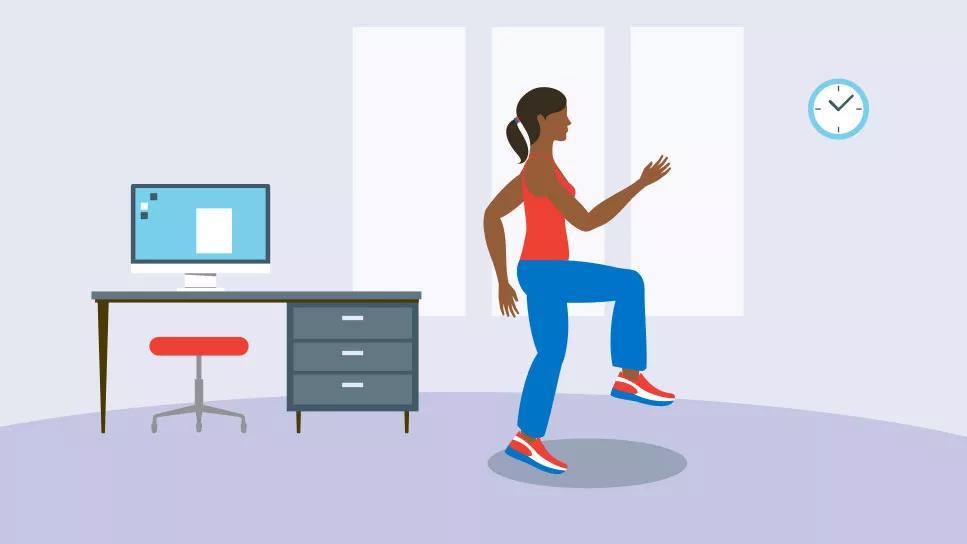
3. Standing March
- Stand tall near a wall or chair for balance.
- Lift one knee toward hip height without leaning back.
- Pause for 2 seconds.
- Lower slowly and switch sides.
- Perform 2 sets of 8 to 12 reps per side.
This strengthens the hip flexors through a controlled range of motion. The goal is smooth movement, not speed.
A Simple 10-Minute Psoas Release Routine
Use this routine after sitting, after a workout, or before bed. Move slowly and keep the intensity comfortable.
- Constructive rest breathing: 2 minutes
- Half-kneeling psoas stretch: 30 seconds per side, 2 rounds
- Supine bed-edge hip flexor stretch: 30 seconds per side
- Glute bridge: 2 sets of 10 reps
- Dead bug: 1 to 2 sets of 6 reps per side
- Standing march: 1 set of 10 reps per side
For best results, do this routine 4 to 6 days per week for two to four weeks. You may feel looser right away, but lasting change usually comes from repeated signals to the body: “We are safe, we are mobile, and we are no longer shaped like a desk chair.”
Common Mistakes During Psoas Stretching
Arching the Lower Back
This is the number one psoas stretch mistake. If your ribs flare and your lower back arches, you may miss the psoas and compress the lumbar spine. Keep your pelvis gently tucked and your ribs down.
Forcing the Stretch
More intensity does not mean better release. Overstretching can create irritation and guarding. A mild stretch held with calm breathing is usually more productive than a dramatic lunge performed with facial expressions usually reserved for dental work.
Ignoring Strength
If your hips always feel tight, the issue may not be simple shortness. The muscle may be weak, tired, or protecting an unstable area. Pair stretching with glute bridges, dead bugs, and controlled marching.
Expecting One Stretch to Fix Everything
The psoas is part of a larger system involving the spine, pelvis, hips, core, glutes, hamstrings, and breathing mechanics. A complete psoas release routine works better than one miracle move from a video titled “Fix Everything in 30 Seconds.” Your body is not a toaster.
When to Be Careful
Avoid aggressive psoas stretching if you have a recent hip flexor strain, hip surgery, severe back pain, a known hip labral injury, nerve symptoms, or pain that worsens with stretching. Pregnant people, older adults with balance concerns, and anyone recovering from surgery should ask a clinician or physical therapist which modifications are appropriate.
Stop immediately if you feel sharp pain, numbness, tingling, dizziness, or pain that travels down the leg. Psoas release should feel relieving or mildly challenging, not alarming.
Experience-Based Notes: What Psoas Release Feels Like in Real Life
The first thing many people notice during a psoas stretch guide for psoas release is that the stretch is not always where they expected it. Someone may set up in a half-kneeling position and feel only the front thigh. Another person may feel a tug near the groin. Someone else may feel nothing until they tuck the pelvis and squeeze the back-leg glute. That “aha” moment is common: the psoas often hides behind poor setup, and the body loves taking shortcuts.
A typical experience after starting psoas release work is immediate but temporary looseness. You may stand up from a hip flexor stretch and feel taller, lighter, or less compressed through the lower back. Then, two hours later, after emails, errands, or a heroic battle with traffic, the tightness returns. This does not mean the routine failed. It means your nervous system and muscles need repeated practice. Mobility is less like flipping a switch and more like teaching a dog a new trick: repetition, patience, and fewer dramatic expectations.
People who sit for long workdays often report that short stretch breaks help more than one long evening session. For example, a 90-second standing hip flexor stretch at lunch, followed by a few glute bridges after work, can feel better than waiting until bedtime to undo ten hours of chair life. Small movement snacks are underrated. They are the trail mix of joint health.
Runners and cyclists often experience psoas release differently. Their hips may not only be tight but also overworked. After a long ride or run, a hard couch stretch can feel tempting, but a gentler routine often works better: breathing, half-kneeling stretch, glute bridge, dead bug, and easy walking. Many athletes discover that their “tight psoas” improves when they strengthen the core and glutes, not just when they stretch more aggressively.
Another real-world lesson is that symmetry is rare. One side may feel tighter, weaker, or harder to control. That is normal, especially if you drive often, cross one leg, carry a bag on one shoulder, play rotational sports, or favor one side during workouts. Instead of forcing both sides to feel identical, use the tighter side as feedback. Move slowly, breathe, and let the body adjust.
The most encouraging experience is gradual improvement in everyday movement. You may notice standing from a chair feels smoother, your stride opens up, your hips feel less pinchy during lunges, or your lower back feels less grumpy after sitting. These wins are not always fireworks. Sometimes progress feels like forgetting you were uncomfortable in the first place, which is the body’s quiet way of saying, “Thanks, finally.”
Conclusion
Psoas release is not about forcing your hip flexors into surrender. It is about helping the psoas move, lengthen, strengthen, and relax as part of a balanced system. The best psoas stretch routine includes smart positioning, slow breathing, controlled hip extension, glute activation, and core stability. Start gently, stay consistent, and remember that your body responds better to cooperation than combat.
If your hips are tight from sitting, training, stress, or daily life, the stretches and exercises in this guide can help you build a practical routine. Use the half-kneeling psoas stretch, couch stretch, supine hip flexor stretch, standing hip flexor stretch, glute bridge, dead bug, and standing march as your foundation. Keep the movement pain-free, repeat it regularly, and give your hips time to remember they were built for more than chair storage.