Note: This article synthesizes current public information from U.S. government water-efficiency guidance, industrial cooling-tower manufacturers, energy-sector reporting, defense water-resilience research, and peer-reviewed engineering literature.
The Cloud Above the Tower Is Not Smoke. It Is Opportunity.
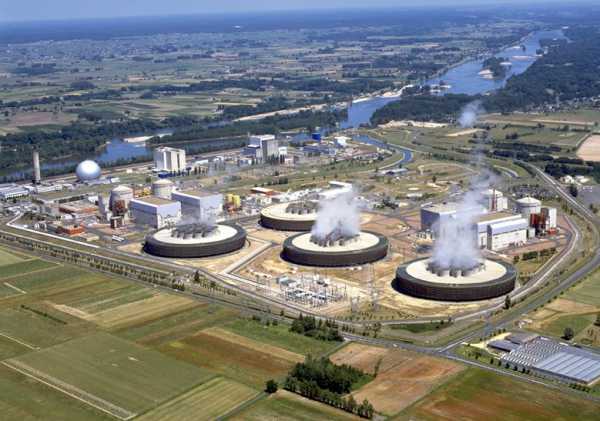
Cooling towers have a talent for drama. Put one near a power plant, refinery, hospital campus, university, factory, or data center, and sooner or later someone will point at the white cloud rising from it and ask, “Is that smoke?” It is not smoke. In most cases, that visible plume is condensed water vapor: tiny droplets formed when warm, humid exhaust air from the cooling tower meets cooler outside air. In other words, it is industrial fog wearing a hard hat.
That fog matters. A traditional evaporative cooling tower removes heat by evaporating a portion of circulating water. The process is wonderfully efficient from an energy standpoint, which is why wet cooling towers remain common in large facilities. But there is a catch: some of the water leaves the system as vapor, some leaves as blowdown, and a tiny amount may escape as drift or leaks. In a world where water costs are rising, drought resilience is no longer optional, and industrial facilities are under more public scrutiny than ever, recovering water from cooling tower plumes is becoming more than an engineering curiosity. It is becoming a serious water-management strategy.
Plume abatement is often discussed as a way to reduce visible clouds, prevent icing, improve permitting, and calm nervous neighbors. But newer plume abatement and plume capture systems also ask a more interesting question: what if the tower could catch part of the water it normally throws into the sky and send it back into service?
What Creates a Cooling Tower Plume?
A cooling tower plume forms because of basic thermodynamics, not because the tower is trying to be mysterious. Warm process water flows through the tower, air moves across or through the falling water, and a small portion of that water evaporates. Evaporation carries heat away. The air leaving the tower is warm and nearly saturated with moisture. When that exhaust mixes with colder ambient air, the water vapor can condense into tiny droplets. Those droplets scatter light, and the result is the familiar white plume.
The amount of visible plume depends on weather and operating conditions. Cold air, high humidity, and high heat load make the plume more obvious. On a warm, dry day, the same tower may look almost invisible. On a chilly morning, it may look like the building is auditioning for a disaster movie. The actual plume is usually harmless water droplets, but it can still cause practical problems: reduced visibility, nearby icing, community complaints, regulatory friction, and concerns about drift droplets carrying treatment chemicals or biological contaminants.
Evaporation vs. Drift: A Crucial Difference
Evaporation is the main cooling mechanism. It is intentional. Drift is not. Drift refers to liquid droplets physically carried out of the tower with the exhaust air. Modern drift eliminators reduce this loss dramatically, but even small drift rates matter when towers are large. Plume capture technologies may target condensed plume droplets, drift droplets, or both. The best systems treat this distinction carefully because recovered condensate is typically much cleaner than recirculating tower water, while drift may contain dissolved minerals, treatment chemicals, or microbes.
What Is Plume Abatement?
Plume abatement refers to methods that reduce or eliminate the visible plume leaving a cooling tower. Traditional plume abatement does not always recover water. In many systems, the goal is simply to prevent the exhaust from reaching the saturation point where fog appears. However, water recovery and plume abatement increasingly overlap, especially in retrofit systems designed to capture condensed droplets after they form.
The main plume abatement approaches include hybrid wet-dry cooling, exhaust-air reheating, air mixing, condensation surfaces, electrostatic droplet capture, and specialized capture panels. Each method has trade-offs involving capital cost, pressure drop, fan energy, maintenance, water savings, winter performance, footprint, and compatibility with existing tower geometry.
Hybrid Wet-Dry Cooling Towers
A hybrid wet-dry cooling tower combines a conventional evaporative section with a dry heat-exchange section. The dry section adds sensible heat to the saturated exhaust air or partially rejects heat without evaporation. This reduces relative humidity at the tower outlet and makes visible condensation less likely. In plain English, the system warms or dries the exiting air enough that it stops making a giant white scarf over the facility.
Hybrid cooling can reduce plume and save water compared with fully wet operation, particularly when ambient conditions allow the dry section to carry part of the heat load. It can also avoid the severe performance penalty of fully dry cooling during hot weather. The trade-off is complexity. Hybrid systems can cost more than standard wet towers, require more controls, and may increase fan power depending on the design.
Condensing and Capture Systems
Condensing plume abatement takes a more direct approach: encourage water vapor to condense, then collect the droplets. Some concepts use cooled surfaces, porous media, heat pipes, thermosyphons, or structured panels placed in or near the exhaust stream. The recovered water can drain to a reservoir and be returned to the cooling system or used as high-quality makeup water elsewhere onsite.
This is the part where the cooling tower starts behaving like a very large, very industrial dehumidifier. The idea sounds simple, but the engineering is not. The capture device must handle high airflow, variable moisture content, mineral exposure, biological-control requirements, freezing risk, wind effects, maintenance access, and pressure drop. A device that saves water but forces the fans to work much harder can quickly turn a water win into an energy bill with an attitude.
Electrostatic Droplet Capture
Electrostatic capture systems use electrical charging to collect small droplets from the plume. Ion emitters charge droplets in the exhaust stream, and collection surfaces attract them. The captured water drains into a collection system. This approach is attractive because it may be retrofitted to some existing towers, targets the droplets that make the plume visible, and can generate relatively clean recovered water.
The beauty of electrostatic capture is that it attacks the plume after condensation has already created droplets. Instead of trying only to reheat the exhaust or redesign the entire tower, the system says, “Fine, make the fog; now let’s catch it.” That is a refreshingly practical attitude for a piece of industrial equipment.
Why Recover Water From Cooling Tower Plumes?
The first reason is obvious: water is money. Facilities pay to withdraw, treat, circulate, chemically condition, discharge, and sometimes replace water. Reducing makeup demand can lower operating costs and improve water resilience. For power plants, refineries, semiconductor facilities, hospitals, and data centers, water security is not a decorative sustainability slogan. It is tied directly to uptime.
The second reason is regulatory and social. Visible plumes can complicate permitting, especially near highways, airports, residential areas, and environmentally sensitive locations. Even when the plume is harmless, perception matters. A clean white plume may still look alarming to the public. Reducing it can improve community relations and help facilities avoid the “what is that cloud?” phone calls that nobody in operations enjoys.
The third reason is operational. Plumes can create icing hazards in cold climates. They may reduce visibility around roads or structures. Drift can deposit minerals and chemicals on nearby equipment. By capturing droplets and controlling plume behavior, facilities can reduce corrosion, slipping hazards, ice buildup, and maintenance headaches.
How Recovered Plume Water Can Be Used
Recovered plume water is often high quality because it has effectively gone through an evaporation-condensation process. That does not mean operators should pour it directly into a coffee machine and celebrate. It does mean the water may have low dissolved solids compared with tower basin water. With proper testing and treatment, recovered water can be returned as cooling tower makeup, used in demineralized water systems, blended with other makeup sources, or routed to non-potable industrial uses.
When recovered water is returned to the cooling tower, it can reduce fresh makeup demand. Because the recovered condensate may contain fewer dissolved minerals, it may also help improve cycles of concentration. Higher cycles mean the system can reuse water longer before blowdown is required. That reduces both makeup water and wastewater discharge. The cooling tower, in this scenario, becomes less of a one-way water highway and more of a recycling loop with better manners.
A Simple Example
Imagine a large industrial cooling tower that evaporates hundreds of thousands of gallons per day during peak operation. If a plume capture system recovered even 10% to 20% of evaporative losses under favorable conditions, the annual savings could be significant. The exact result would depend on climate, tower load, plume density, hours of operation, capture efficiency, water value, discharge costs, and additional energy use. In a water-stressed region, the business case may look strong. In a humid region with cheap water and low discharge costs, the financial case may require more patience.
The Engineering Trade-Off: Water Saved vs. Energy Spent
No serious discussion of plume abatement should pretend that water recovery is free. Fans must overcome pressure drop. Pumps may be needed. Heat exchangers add surfaces that can foul. Collection systems require drainage, freeze protection, and inspection. Controls must adapt to changing wet-bulb temperature, dry-bulb temperature, humidity, wind, load, and water chemistry.
The key performance question is not simply, “How much water can we capture?” It is, “How much usable water can we capture per unit of extra energy, cost, maintenance, and risk?” A beautiful water recovery system that causes tower performance to degrade is like buying a fuel-efficient car and towing a piano everywhere. The math needs to work in real operating conditions, not just in a brochure with perfect weather and suspiciously cheerful arrows.
That is why pilot testing matters. Before a facility commits to a full retrofit, engineers should measure baseline water balance, plume frequency, tower approach temperature, fan power, drift, makeup water quality, blowdown rate, chemical use, and seasonal operating patterns. Then they can evaluate capture performance against real data.
Where Plume Water Recovery Makes the Most Sense
Plume abatement with water recovery is especially promising for facilities with high cooling loads, long operating hours, visible plume problems, expensive makeup water, discharge limitations, drought exposure, or public-perception concerns. Power plants and data centers are obvious candidates. So are refineries, petrochemical plants, district cooling systems, large hospitals, university campuses, food-processing facilities, and advanced manufacturing sites.
Data centers deserve special attention because they are expanding rapidly and often face intense scrutiny over water use. Many facilities choose evaporative cooling because it can reduce electrical demand compared with purely mechanical cooling. However, as water stress increases, operators are looking for ways to keep the energy benefits of evaporative systems while shrinking water consumption. Plume recovery can be part of that toolbox, along with recycled water, air-handler condensate recovery, optimized cycles of concentration, better controls, and hybrid cooling modes.
Cold-Climate Sites
Cold climates often produce the most visible plumes. They also create icing risks. For these sites, plume abatement may be justified even before counting water recovery. If captured water can also reduce makeup demand, that is a bonus with a hard hat and a spreadsheet.
Water-Stressed Regions
In arid or drought-prone areas, recovered plume water can help reduce dependence on freshwater withdrawals. The return on investment improves when water procurement, pretreatment, sewer fees, and discharge compliance costs are high. In these locations, the value of water is not just the utility rate; it is also the value of operational resilience.
Design Considerations Before Installing a Plume Recovery System
Successful plume recovery starts with knowing the tower. Is it counterflow or crossflow? Mechanical draft or natural draft? How much room is available above or around the discharge? What is the fan configuration? Does the site face freezing conditions? What are the plume complaints or permit limits? What is the chemistry of the recirculating water? How often is the tower cleaned? How easy is access for maintenance?
Engineers should also evaluate whether the recovered water will be clean enough for reuse without creating corrosion, biological, or scaling problems. Even high-purity condensate can pick up contaminants from surfaces, airborne particles, or drift. A responsible design includes sampling points, treatment strategy, bypass capability, freeze protection, drainage management, and integration with the existing water-treatment program.
Controls Matter
Plume abatement does not need to run at full intensity every hour of the year. Smart controls can activate the system when plume risk is high, water recovery is valuable, or weather conditions are favorable. During warm dry conditions, visible plume may be minimal, and the system can operate in a lower-energy mode. During cold damp weather, plume control may become the priority. This flexible operation helps balance water savings, energy use, and tower performance.
Plume Abatement Is Not a Replacement for Basic Water Management
Recovering water from the sky is impressive, but it should not distract from ordinary cooling tower housekeeping. Facilities should first understand their water balance: evaporation, blowdown, drift, leaks, overflow, and makeup. Conductivity controllers, properly maintained drift eliminators, leak detection, side-stream filtration, biological control, and optimized cycles of concentration can save large amounts of water without adding futuristic plume-capture hardware.
Think of plume recovery as the advanced class. The prerequisite is still Cooling Tower 101: meter the makeup water, meter the blowdown, track conductivity, inspect the basin, prevent overflow, manage scale and corrosion, and keep biological growth under control. A facility that ignores leaks while installing plume capture is basically trying to mop the ceiling while the sink is overflowing.
Experience-Based Insights: What Real Projects Teach About Recovering Water From Cooling Tower Plumes
In practical facility work, the first surprise is how seasonal plume recovery can be. Operators may expect a constant stream of recovered water, but the plume is a weather-dependent creature. On cool mornings with high humidity and heavy load, capture may be strong. On hot afternoons with lower relative humidity, visible plume may shrink and water capture may fall. This does not mean the system failed. It means the atmosphere read the operating manual and added footnotes.
The second lesson is that baseline data is everything. Before discussing plume abatement, a facility should know how much water the tower actually uses per month, how much is discharged as blowdown, what cycles of concentration are being achieved, how fan energy changes with load, and whether drift or overflow is already causing hidden losses. Without this baseline, water recovery claims float around likeappropriately enougha plume.
The third lesson is that maintenance access can make or break the project. Capture panels, collectors, drains, emitters, coils, or heat exchangers must be reachable. If technicians need acrobatics, heroic patience, and three permits to clean a component, the system will eventually become “that thing nobody wants to touch.” Good plume abatement design respects the people who will maintain it at 6 a.m. in January.
The fourth lesson is water quality deserves respect. Recovered condensate may be low in dissolved solids, but it still needs testing. Operators should check conductivity, pH, biological indicators, metals, treatment-chemical carryover, and any site-specific contaminants. The recovered water should enter the system through a controlled pathway, not a mystery pipe labeled “probably fine.”
The fifth lesson is that plume abatement can improve relationships beyond the fence line. Neighbors rarely care about cycles of concentration, but they do notice clouds, fogging, icing, and wet deposits on cars or equipment. Reducing the visible plume can make a facility look cleaner and better managed. That perception has value, especially during permitting, expansion, or community meetings. Sometimes the best engineering project is the one that prevents a room full of annoyed people from pointing at a photo of your cooling tower.
The sixth lesson is that energy penalties should be measured, not guessed. A plume recovery system may add pressure drop or require power for electrical charging, controls, pumps, or fans. In many cases, the additional energy may be acceptable compared with the value of water saved and plume reduced. But operators should verify this with meters and trend data. Water savings and energy efficiency should be friends, not two departments fighting over the same spreadsheet.
The seventh lesson is that retrofits need careful structural and airflow review. Existing towers were not always designed with extra equipment in the exhaust path. Adding components can affect fan performance, vibration, access, weight loading, and airflow distribution. A good retrofit study includes tower manufacturer input, structural review, computational or empirical airflow analysis when needed, and a clear plan for bypass or shutdown operation.
The eighth lesson is that plume abatement works best as part of a broader water strategy. Pairing recovered plume water with optimized blowdown control, alternate makeup sources, condensate recovery, and recycled water can create a stronger business case. A single technology may save water; a coordinated water-management plan can change the facility’s entire risk profile.
Finally, communication matters. Operators, water-treatment vendors, sustainability teams, finance staff, and local stakeholders should all understand what the system does and does not do. It reduces visible plume. It can recover water under the right conditions. It may improve water resilience. It does not magically eliminate all evaporation, and it does not make cooling tower maintenance optional. The best projects are honest about limits and enthusiastic about measurable gains.
Conclusion: Turning Industrial Fog Into a Water Resource
Recovering water from cooling tower plumes with plume abatement is a smart response to a very modern challenge: how to keep the efficiency of evaporative cooling while reducing water loss, visible emissions, and operational risk. Traditional plume abatement focused mainly on appearance and safety. Newer systems add a more ambitious goal: capture part of the water that would otherwise drift into the atmosphere and put it back to work.
The opportunity is real, but it is not magic. The best results come from matching the technology to the site, measuring baseline performance, understanding seasonal plume behavior, protecting tower efficiency, and integrating recovered water into a disciplined treatment and reuse plan. For power plants, data centers, industrial campuses, and large commercial facilities, plume water recovery can support water conservation, resilience, permitting, and public confidence.
In the end, the humble cooling tower plume is not just a cloud. It is a signal. It tells us where heat, water, energy, and public perception meet. With thoughtful plume abatement, some of that cloud can become a resource instead of a loss. Not bad for something most people used to mistake for smoke.