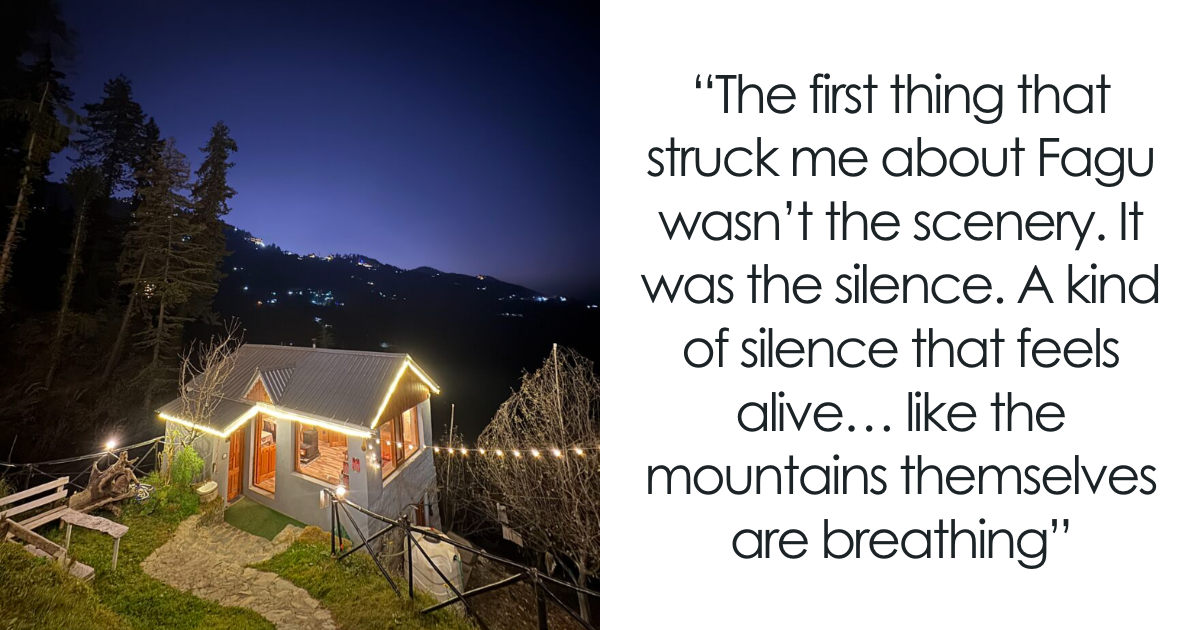
I did not go looking for Fagu. That is probably why Fagu found me.
My original plan was simple: reach Shimla, drink too much tea, take the classic hill-station walk, admire the colonial buildings, and pretend I was the kind of traveler who packs light. Then a driver mentioned a small place beyond Kufri, somewhere wrapped in fog, apple orchards, terraced fields, and mountain silence. “Fagu,” he said, as casually as one might say “left turn.”
That left turn changed the trip.
Fagu, Himachal Pradesh, is a quiet Himalayan hamlet near Shimla, sitting at roughly 2,500 meters above sea level. It is known for apple plantations, potato fields, misty hillsides, deodar forests, and wide views of snow-covered Himalayan peaks. It is close enough to Shimla to reach without heroic planning, yet far enough away to feel as if someone turned the world’s volume knob down to “whisper.”
This is not the kind of destination that attacks you with an itinerary. Fagu does not shout, “Look at me!” It simply stands there in the fog, beautiful and unbothered, like a mountain village that knows it has nothing to prove.
Where Is Fagu, And Why Does It Feel So Different?
Fagu is located in the Shimla district of Himachal Pradesh, India, along the route beyond Kufri and toward Theog. Most travelers reach it from Shimla by road, and the drive can take around 45 minutes to an hour depending on traffic, weather, and how many times you ask the driver to stop because “this view deserves a photo.” Spoiler: all the views deserve a photo.
The village sits high in the mountains, and that elevation changes everything. The air feels sharper. The light feels cleaner. Clouds do not simply pass overhead; they drift across roads, curl around trees, and occasionally walk straight into your face like a dramatic supporting actor. The name Fagu is often associated with fog, and after ten minutes there, you understand why. The mist does not visit. It lives there.
What makes Fagu special is not one single landmark. It is the atmosphere. Apple orchards roll down the slopes. Terraced fields step carefully along the hills. Pine and deodar trees frame the roads. On clear days, the Himalayan backdrop appears like a painted curtain. On misty days, the mountains vanish and reappear with excellent timing, as if they have studied theater.
First Impressions: Fog, Silence, And A Village That Refuses To Rush
My first memory of Fagu is not a monument, a restaurant, or a famous viewpoint. It is the sound of nothing.
After the honking and bustle of busier hill towns, Fagu felt almost suspiciously quiet. No loud crowd pushed past. No market lane demanded that I buy a souvenir keychain shaped like a yak. No travel checklist hovered over my shoulder. Just wind, birds, the occasional vehicle, and the soft crunch of footsteps on a mountain road.
There is a particular kind of peace you only find in places that have not been over-explained. Fagu gives you that. It is peaceful without being empty, remote without feeling unreachable, scenic without becoming showy. Even the fog feels polite, though it may still ruin your hairstyle with the confidence of a professional.
The best way to experience Fagu is to walk. Not power-walk. Not “steps goal” walk. A slow, curious, pocket-your-phone-for-five-minutes walk. Follow the bends in the road. Look over the terraces. Watch sunlight move across the orchards. Stop near a tea stall if you find one. Drink chai like it is an essential travel document.
Why Fagu Is Perfect For Slow Travel
Some places reward movement. Fagu rewards stillness.
You do not need a packed schedule here. In fact, a packed schedule may be the worst way to visit. Fagu is best enjoyed by travelers who like gentle mornings, scenic walks, conversations with locals, and the deep luxury of not checking the time every twelve minutes. It is ideal for couples, solo travelers, writers, photographers, nature lovers, and anyone whose nervous system has been personally victimized by city traffic.
Because Fagu is near Shimla and Kufri, many visitors treat it as a quick stop. That is understandable, but staying longer changes the experience. Morning mist over the orchards, golden evening light on the slopes, and night skies above the hills are not things you can properly absorb in a rushed hour between two tourist spots.
Apple Orchards And Terraced Fields
Fagu is widely known for its apple plantations. Depending on the season, the orchards may be blooming, fruiting, or resting under winter snow. From late spring through autumn, the hillsides become especially photogenic, with green slopes, orchard paths, and fields that seem to fold into the mountains.
Even when the apples are not in season, the landscape has a quiet charm. The trees stand in neat rows along slopes that look hand-carved. Potato fields and other cultivated patches add texture to the scenery. It is farming country, but farming country with Himalayan drama. The vegetables have better views than most hotel balconies.
Deodar Forests And Mountain Walks
Fagu is also popular with trekkers and naturalists because of its forested surroundings and peaceful trails. You do not need to be an extreme trekker to enjoy the area. Short walks through wooded patches, village roads, and orchard paths can be enough to feel connected to the place.
The deodar and pine trees give the landscape its signature Himalayan mood. Their tall, dark silhouettes look especially magical when fog moves between them. It is the kind of scene that makes you lower your voice without knowing why. Even your phone seems embarrassed to ring.
Best Things To Do In Fagu
Fagu is not overloaded with attractions, and that is part of its charm. Still, there are several worthwhile things to do in and around the village, especially for travelers who enjoy nature, culture, and quiet exploration.
1. Watch The Sunrise Or Sunset
If your stay offers a mountain-facing view, set an alarm. Yes, waking up early on vacation sounds like a crime, but Fagu sunrise is a strong defense attorney. When the first light touches the hills and the fog begins to lift, the entire valley feels alive in slow motion.
Sunset is equally beautiful. The light softens over the terraced fields, clouds gather around the ridges, and distant peaks may glow if the sky is clear. It is not loud or flashy. It is the kind of beauty that makes you stop mid-sentence and forget what you were complaining about.
2. Visit Banthia Devta Temple
Banthia Devta Temple is one of the notable cultural stops in Fagu. Dedicated to a local deity, the temple reflects traditional Himachali hill architecture, often associated with woodwork and regional craftsmanship. It is not just a sightseeing point; it is a reminder that these mountains are not merely scenic backdrops. They are lived-in landscapes with local beliefs, customs, and community rhythms.
When visiting, dress respectfully, keep noise low, and treat the space as more than a photo opportunity. Travel becomes richer when we remember that someone else’s “hidden gem” is also someone’s home.
3. Take A Long Walk Through The Village
One of Fagu’s best experiences costs nothing. Walk slowly through the village lanes and orchard edges. Notice the rooftops, the stacked wood, the mountain dogs doing their very serious neighborhood patrols, and the way fog can make an ordinary road look like a scene from a fairy tale.
The village does not need a dramatic caption. It gives you small details: a child walking home, a farmer working a field, a kettle steaming near a roadside stall, a cluster of houses clinging to the slope. These are the moments that stay with you after the trip ends.
4. Use Fagu As A Base For Kufri And Nearby Hill Spots
Fagu is close to Kufri, one of the most popular tourist areas near Shimla. Kufri offers more commercial attractions, adventure activities, and family-friendly stops. If you want a mix of activity and peace, staying in or near Fagu can be a smart choice. You can visit busier places during the day and return to quiet hills in the evening.
Depending on your schedule, you can also explore Theog, Narkanda, Hatu Peak, Mashobra, or Shimla. Roads in the hills are beautiful but can be slow, so avoid planning too much in one day. Mountain travel has its own clock, and that clock has never cared about your spreadsheet.
5. Photograph The Foggy Landscapes
Fagu is a dream for photographers, especially those who love mood, texture, and soft light. The fog creates depth. The orchards add structure. The hills provide layers. Even a simple road curve can look cinematic when clouds are moving through the trees.
Bring a lens cloth, because mist will happily decorate your camera. If you are using a phone, shoot during early morning or late afternoon for softer light. And remember to put the camera down sometimes. The best view is not always the one saved to your gallery.
Best Time To Visit Fagu
Fagu can be visited in different seasons, but each season gives the village a different personality.
Spring And Early Summer: March To June
This is a wonderful time for pleasant weather, greenery, and comfortable walks. If you are escaping heat from the plains, Fagu feels refreshing without being brutally cold. Days are usually good for exploring, though evenings may still require a jacket.
Monsoon: July To September
The monsoon brings lush scenery and dramatic fog, but it can also bring landslides, slippery roads, delays, and low visibility. The mountains look gorgeous in the rain, but practical travelers should check road conditions and avoid unnecessary risk. Waterproof shoes become less of a fashion choice and more of a survival strategy.
Autumn: September To November
Autumn is one of the best times to visit Fagu. Skies can be clearer, the weather is crisp, and the orchard landscapes remain beautiful. This season is excellent for photography, walking, and soaking in wide Himalayan views without peak-summer crowds.
Winter: December To February
Winter turns Fagu into a snow-kissed Himalayan retreat. Travelers looking for snowfall often visit during this period, though snow conditions vary each year. Winter roads can be tricky, so check weather updates, carry warm layers, and avoid driving without mountain-road experience. Fagu in winter may look like a postcard, but postcards do not mention icy bends and frozen fingers.
How To Reach Fagu
Most travelers reach Fagu by road from Shimla. Shimla is connected to major North Indian cities by road, and many visitors come via Chandigarh or Kalka. Chandigarh Airport is a common access point for travelers flying in, while the smaller Shimla airport at Jubbarhatti may have limited operations depending on conditions. Kalka is a major railhead, and the Kalka-Shimla toy train remains one of India’s most scenic rail journeys.
From Shimla, taxis and local vehicles can take you toward Fagu via Kufri. The road distance is not huge, but mountain roads reward patience. Traffic around Shimla and Kufri can slow the journey, especially during holidays, snow season, or weekends. Leave early if you want a quieter drive and better light for photography.
Where To Stay In Fagu
Accommodation in Fagu ranges from government tourism properties to private hotels, resorts, and homestays in the surrounding area. The Himachal Pradesh Tourism Development Corporation operates accommodation in Fagu, including Apple Blossom, a property known for views and a peaceful setting. Private stays may offer orchard views, bonfire spaces, simple meals, and a more local experience.
When booking, check three things carefully: road access, heating, and food options. A room with a dreamy mountain view is lovely, but if the road is difficult after dark or the heating is weak in January, the dream may develop plot complications. Also ask whether meals are available on-site, because Fagu is not a late-night food-delivery destination. Your pizza app may stare into the mountains and quietly give up.
What To Eat In And Around Fagu
Food in Fagu is usually simple, warming, and satisfying. Expect North Indian staples, local Himachali flavors where available, tea, parathas, rice, dal, vegetables, and seasonal produce. Some resorts and homestays may serve traditional Himachali dishes if requested in advance.
Do not underestimate the joy of chai in the hills. Tea tastes different when your hands are cold and clouds are passing over the road. Add a plate of pakoras or a hot paratha, and suddenly you understand why mountain people do not need motivational podcasts.
Travel Tips For Visiting Fagu
Pack Layers, Even In Warmer Months
Because of the elevation, Fagu can feel cooler than Shimla, especially in the morning and evening. Carry a jacket, socks, and comfortable walking shoes. In winter, bring serious woolens, gloves, and thermal layers.
Check Weather And Road Conditions
Fog, rain, and snow can affect visibility and travel time. Always check local updates before driving, especially in monsoon and winter. Mountain weather is charming until it decides to become a personality test.
Respect Local Life
Fagu is peaceful because it is not overrun by loud tourism. Keep music low, avoid littering, ask before photographing people, and be mindful around orchards and temples. The best travelers leave places feeling respected, not exhausted.
Do Not Try To Do Everything In One Day
The Shimla-Fagu-Kufri belt has enough to keep you busy, but Fagu itself is best experienced slowly. Stay overnight if possible. A short visit shows you the scenery; a longer stay lets you feel the rhythm.
Why Fagu Feels Magical
Fagu’s magic is subtle. It is not the magic of grand palaces, huge waterfalls, or dramatic cliffside temples. It is the magic of a place that makes you breathe differently.
It is in the fog slipping between trees. It is in the apple orchards standing quietly on steep slopes. It is in the mountain dogs sleeping like retired philosophers. It is in the way strangers nod on village roads. It is in waking up and realizing that the loudest thing around you is a bird arguing with another bird about what I assume is real estate.
What I loved most about Fagu was that it asked very little from me. It did not demand excitement. It did not require a perfect outfit, a drone shot, or a carefully curated adventure caption. It simply offered stillness, and stillness turned out to be exactly what I needed.
Extra Travel Reflections: The Fagu Experience That Stayed With Me
The longer I think about Fagu, the more I realize that the best part of the journey was not discovering a new place. It was rediscovering an older version of myselfthe one who could sit quietly, stare at clouds, and not feel guilty for doing “nothing.” Modern travel often turns into a productivity contest. We count attractions, restaurants, viewpoints, reels, reviews, and steps. We return home needing a vacation from the vacation. Fagu quietly disagreed with that entire philosophy.
One afternoon, I remember sitting near a roadside bend with a cup of tea that was far too hot and absolutely perfect. The fog was thick enough to hide the valley, and for a few minutes, the world reduced itself to steam, pine trees, and the sound of a distant vehicle climbing the road. There was no dramatic moment. No cinematic soundtrack. No life-changing speech from a wise stranger in a shawl. Just a small, ordinary pause. Yet that pause felt like the whole reason I had traveled.
That is the strange gift of peaceful places. They do not entertain you every second. They give your own thoughts enough room to stretch. In Fagu, I noticed how tired I had beennot physically, but mentally. The kind of tired that comes from constant notifications, crowded plans, and the pressure to make every experience look impressive. In the mountains, none of that mattered. The fog did not care whether I had posted that day. The orchards did not ask for engagement. The road simply curved ahead, inviting me to keep walking.
I also loved how Fagu made ordinary activities feel meaningful. Walking to get tea felt like an outing. Watching clouds move became entertainment. Seeing apple trees on a slope felt more memorable than visiting a crowded attraction where everyone was trying to take the same photo. Even silence had texture. Sometimes it was soft and misty; sometimes it was crisp and bright; sometimes it was broken by laughter from a nearby home or the bark of a dog who clearly believed he was in charge of the entire district.
Travelers often search for “hidden gems,” but that phrase can be dangerous. The moment a place becomes a gem, everyone wants to polish it, package it, and sell it with a breakfast buffet. Fagu deserves attention, but it also deserves care. Its charm depends on quiet roads, clean hillsides, respectful visitors, and local life continuing at its own pace. If you go, go gently. Spend money locally. Choose responsible stays. Carry your trash back. Do not treat orchards like a free photo studio. Let the village remain a village.
Would I recommend Fagu to everyone? Not exactly. If you want nightlife, shopping streets, luxury malls, or a jam-packed attraction list, Fagu may feel too quiet. But if you want a peaceful retreat near Shimla, a romantic mountain escape, a slow travel experience, or a place where fog and orchards do most of the storytelling, Fagu may surprise you in the best possible way.
I discovered Fagu by chance, but chance has excellent taste. Some destinations impress you immediately and fade quickly. Fagu did the opposite. It settled in slowly. It stayed. And every now and then, when life gets too loud, I think of that quiet Himalayan road, the mist moving through the trees, and the small village that reminded me peace does not always need to be found at the end of the world. Sometimes it is only a left turn away.
Conclusion
Fagu is one of those rare places where beauty does not feel manufactured. It is peaceful, misty, green, and deeply restorative. Located near Shimla and Kufri, this quiet Himachal Pradesh village offers apple orchards, terraced fields, forest walks, cultural stops like Banthia Devta Temple, and unforgettable mountain views. It is not a destination for rushing. It is a destination for slowing down.
For travelers searching for a peaceful place near Shimla, Fagu is a wonderful choice. Come for the views, but stay for the silence. Come for the fog, but stay for the feeling it leaves behind. And if you discover it by accident, consider yourself lucky. Some of the best journeys begin when the plan politely falls apart.
Note: Before planning your trip, check current weather, road conditions, local advisories, and accommodation availability, especially during monsoon and winter snow periods.