Note: Replace the placeholder image paths below with your original photographs before publishing.
Some people unwind with yoga. Some bake sourdough. I apparently looked at a stack of cardstock, a pair of tiny scissors, and a long list of spooky movies and thought, “Yes, this needs more monsters.”
What began as one little paper vampire quickly became a full-blown miniature horror movie marathon. Before long, my desk was covered with tiny capes, suspiciously small knives, miniature haunted houses, paper balloons, and enough black glitter to make my vacuum cleaner file a formal complaint.
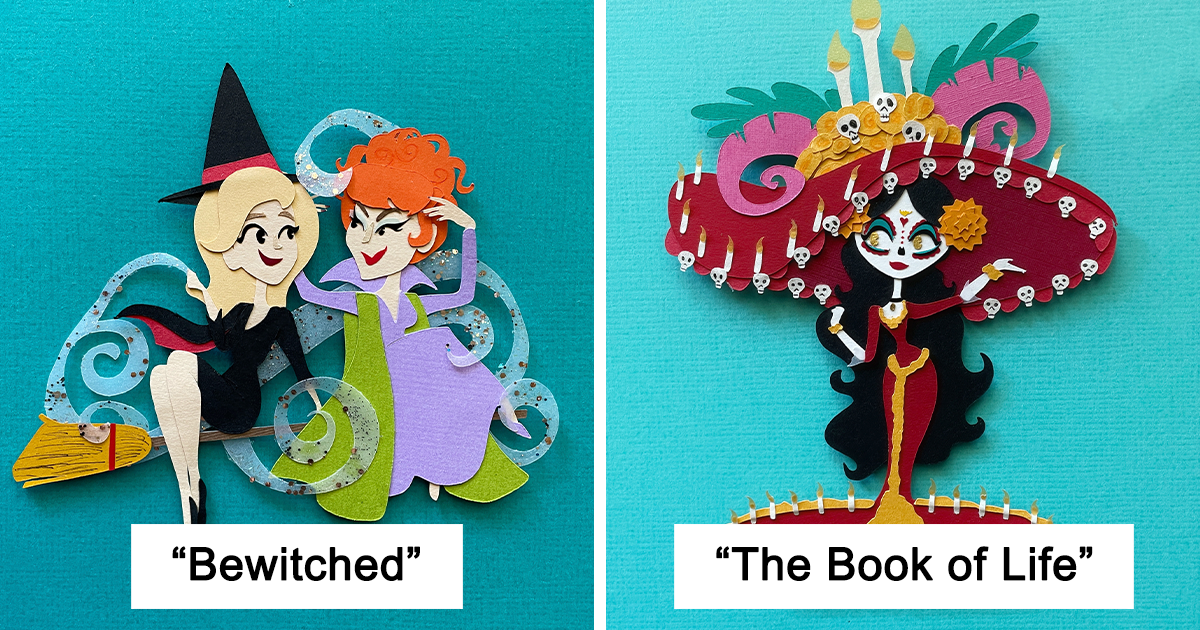
For this project, I turned some of my favorite spooky movie characters into small paper art pieces. Each design was built with cut paper, layered shapes, hand-drawn details, folds, glue, and the occasional moment of panic when a character’s tiny head disappeared into the carpet. The goal was not to recreate every costume stitch-for-stitch. Instead, I wanted each miniature paper character to feel instantly recognizable through silhouette, color, posture, and mood.
Here are 35 tiny paper art creations inspired by horror legends, creepy cult favorites, gothic icons, and movie monsters that have been living rent-free in my brain for years.
Why Tiny Paper Art and Spooky Movies Are a Perfect Match
Paper art may look delicate, but it is surprisingly dramatic. A sharp black silhouette can turn into a haunted hallway. One crooked paper hand can suggest danger. A bright red balloon can suddenly make an innocent-looking clown feel like the worst possible person to meet near a storm drain.
Spooky movie characters are especially fun to translate into paper because many of them are built around strong visual clues. A striped sweater, a white mask, a long pointed hat, a stitched forehead, or a wildly dramatic hairstyle can tell the viewer exactly who they are looking at before the character even says a word.
Working at a tiny scale also forces every design decision to count. I cannot rely on elaborate textures or complicated facial expressions when a character’s face is smaller than a cookie crumb. Instead, I focus on the details that matter most: shape, contrast, color, props, and a little bit of theatrical shadow.
That limitation became one of my favorite parts of the project. Horror is often about suggestion. The shadow behind the door can be scarier than what is actually behind it. In tiny paper art, the same rule applies. A dark corner, a tilted head, or a single red paper drop can do a lot of storytelling.
35 Tiny Paper Art Creations Inspired by Spooky Movie Characters
1. Nosferatu and His Extremely Unfriendly Shadow

2. Dracula in a Cape Bigger Than His Entire Body

3. Frankenstein’s Monster

4. The Bride of Frankenstein

5. The Mummy

6. The Creature From the Black Lagoon

7. Mother From Psycho

8. The Birds

9. The Shark From Jaws

10. Regan From The Exorcist

11. Michael Myers

12. Leatherface

13. Freddy Krueger

14. Jason Voorhees

15. Pinhead

16. Beetlejuice

17. Jack Skellington

18. Ghostface

19. Chucky

20. Candyman

21. Sam From Trick ’r Treat

22. Samara From The Ring

23. The Babadook

24. Pennywise and the Red Balloon

25. The Xenomorph

26. The Thing

27. Black Phillip From The Witch

28. The Grady Twins

29. The Invisible Man

30. The Pale Man

31. The Blair Witch Stick Figure

32. The Creepy Dollhouse Guest

33. The Midnight Witch

34. The Haunted House Host

35. The Full Tiny Paper Horror Movie Lineup

How I Designed Each Tiny Paper Horror Character
Every character started with a simple question: what is the one visual detail people would recognize first? For some, it was a mask. For others, it was a hairstyle, a silhouette, a striped sweater, a claw, or a dramatic cape that had clearly been given more screen time than the character’s actual personality.
Once I had that main feature, I built the rest of the design around it. I used cardstock for sturdy shapes, thinner paper for loose clothing and hair, metallic paper for blades and shiny details, and scraps of textured paper when a character needed bandages, rough fabric, or something that looked like it had spent a long time in a haunted basement.
Layering was essential. A flat piece of paper can become surprisingly cinematic when it has depth. Raising a hand slightly above the body, placing a moon behind a character, or creating several overlapping waves can make a small scene feel much more alive. Or undead. Paper is flexible that way.
I also learned to embrace imperfections. A crooked edge can make a haunted house feel older. A torn paper shape can make a monster feel rougher. A slightly uneven shadow can make a ghost appear more mysterious. In horror paper art, perfection is overrated. A little chaos is part of the charm.
What I Learned While Making 35 Tiny Spooky Movie Characters
Making tiny paper art of spooky movie characters taught me that small projects can take up a surprisingly large amount of emotional space. At first, I thought each piece would be quick. Cut a few shapes, glue them together, take a photo, move on. That was adorable of me. Every little character became a miniature production with its own casting department, costume department, lighting crew, and occasional emergency surgery performed with tweezers.
The biggest lesson was patience. Paper does not care that you have a deadline, a coffee getting cold, or a pile of laundry silently judging you from across the room. Glue needs time to dry. Tiny pieces need steady hands. One misplaced cut can turn a terrifying monster into a confused vegetable. I learned to slow down, test shapes before attaching them, and keep a backup sheet of paper nearby for the moments when the scissors and I stopped agreeing on the creative direction.
I also became much more aware of how powerful movie character design can be. When you remove dialogue, music, special effects, and dramatic camera angles, some characters still remain recognizable because their visual identity is so strong. A black-and-white suit, a red balloon, a hockey mask, a striped sweater, or a giant round head can carry an entire memory of a film. That is impressive design. It is also excellent news for anyone trying to make fan-inspired paper art without building a full-size movie set in their living room.
Another unexpected part of the process was how funny some of the characters looked before they were finished. A vampire without a cape looked like a stern potato. A masked slasher without a mask looked like he was waiting for a bus. A spooky doll without hair looked less cursed and more like it had just received a very unfortunate haircut. The half-finished stage was often ridiculous, but it reminded me not to take the project too seriously.
Photography was its own adventure. Tiny art needs big lighting. I used simple backgrounds, soft shadows, and small props to make the characters feel like they belonged in miniature movie scenes. A scrap of black paper became a night sky. Torn white paper became snow. A blue sheet became stormy water. A few shadows turned a cheerful craft table into a tiny horror studio.
Most of all, this project reminded me why I love spooky movies in the first place. They are full of bold designs, strange worlds, dramatic emotions, and characters that stay with us long after the credits roll. Turning those ideas into tiny paper art let me celebrate the creepy, the campy, the classic, and the wonderfully weird side of horror.
Now I have 35 little paper characters staring at me from a shelf. They are cute. They are creepy. They are impossible to dust properly. And honestly, I would make them all again.
FAQ About Tiny Paper Art Inspired by Spooky Movies
What materials are best for tiny paper art?
Cardstock, colored craft paper, a precision knife, tiny scissors, glue, tweezers, and a cutting mat are enough to start. Metallic, textured, and translucent papers can add extra personality to miniature horror art.
How do you make paper characters look recognizable?
Focus on the strongest visual clue first. A mask, hairstyle, costume color, prop, or silhouette can make a tiny character readable even when the facial details are very small.
Is tiny paper art good for Halloween decor?
Absolutely. Small paper monsters look great in shadow boxes, on shelves, in framed mini scenes, as party decorations, or as part of a spooky movie-night display.