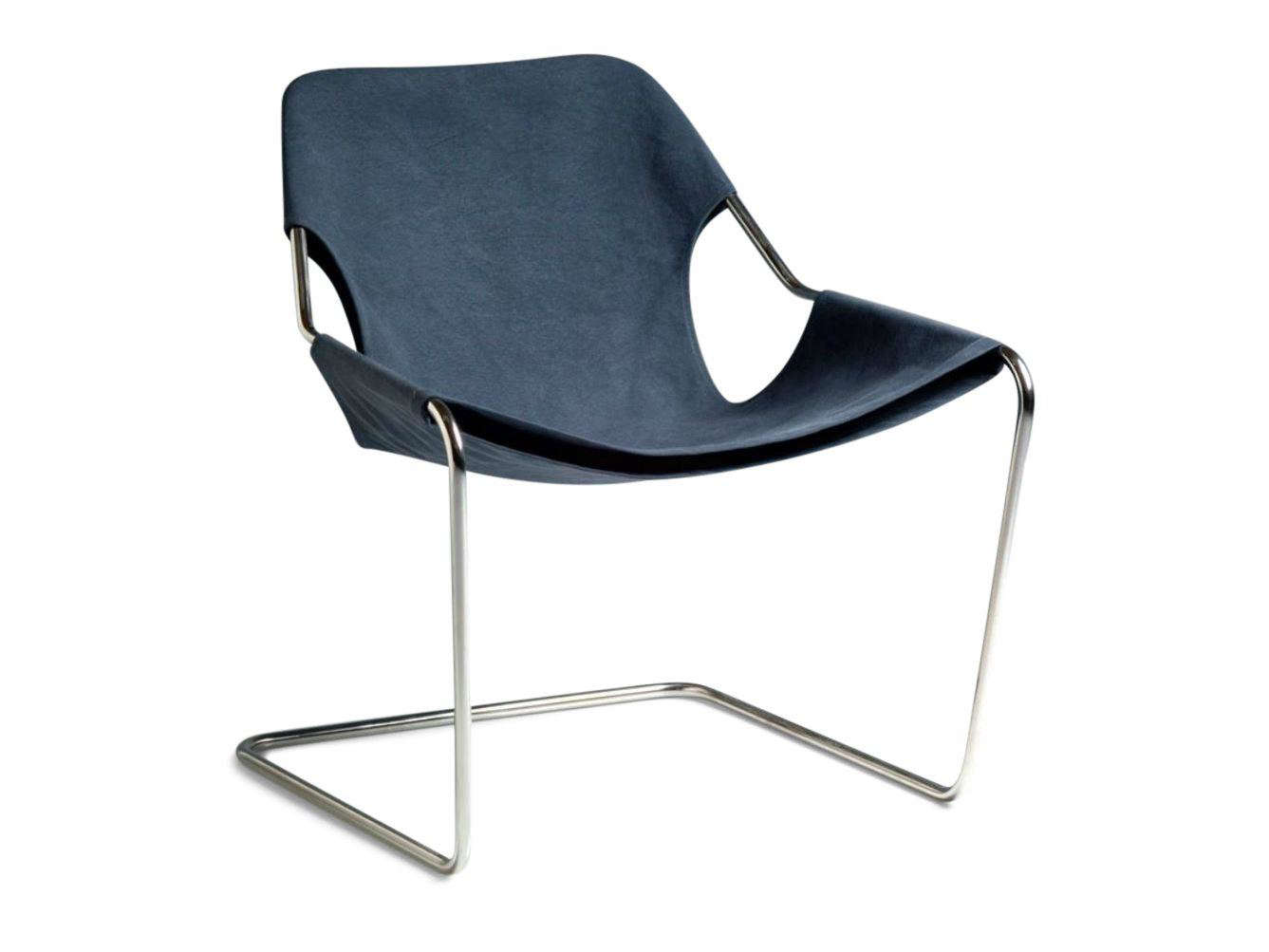
The Paulistano Arm Chair is one of those rare pieces of furniture that looks as if it was sketched in a single breath and then somehow decided to become a legend. It is light, sculptural, slightly rebellious, and far more comfortable than its minimal frame has any right to be. At first glance, it may seem like a simple lounge chair: a bent steel frame, a suspended sling seat, and a low-slung posture that practically whispers, “Cancel your plans and sit down.” But behind that relaxed silhouette is a sharp piece of modern design history.
Designed in 1957 by Brazilian architect Paulo Mendes da Rocha, the Paulistano Arm Chair was originally created for the lounges of the Club Athletico Paulistano in São Paulo. What began as functional seating for a social and athletic club became an international design classic, admired by architects, collectors, interior designers, and anyone who believes a chair should do more than politely hold your body upright.
Today, the Paulistano chair is known for its clean steel structure, hammock-like comfort, and effortlessly cool Brazilian modernist attitude. It has appeared in design collections, high-end interiors, architectural conversations, and plenty of rooms where people pretend they bought it casually, as if a museum-worthy chair just wandered in from brunch.
What Is the Paulistano Arm Chair?
The Paulistano Arm Chair is a modern lounge chair built around a continuous bent steel frame and a removable sling seat, traditionally made from leather, canvas, cotton, or metal mesh depending on the version. Its design is deceptively simple. There are no bulky cushions, no decorative carving, no extra legs trying to look important. Instead, the entire experience comes from balance, tension, material honesty, and the slight flex of the frame.
The chair belongs to the world of Brazilian modernist furniture, but it does not feel trapped in the 1950s. In fact, that is part of its charm. It looks equally at home beside a concrete wall, a mid-century walnut cabinet, a white minimalist sofa, or a chaotic book stack that says, “I read serious architecture books, but also cannot find my TV remote.”
The Paulistano Arm Chair is especially famous for its sling construction. Rather than forcing the body into a rigid position, the seat adapts gently. It feels more like a suspended fabric bridge than a traditional armchair. That relaxed support gives the chair a casual ease, while the steel frame gives it visual sharpness. The result is a piece that feels both athletic and elegant, which makes sense given its original club setting.
The Designer: Paulo Mendes da Rocha
Paulo Mendes da Rocha was one of Brazil’s most influential architects and a major figure in modern architecture. Born in 1928, he became closely associated with the Paulista School and Brazilian Brutalism, a movement known for bold concrete structures, social purpose, and a deep interest in public space. His buildings often used raw materials with confidence and restraint. They were powerful without being fussy, monumental without being theatrical.
In 2006, Mendes da Rocha received the Pritzker Architecture Prize, one of architecture’s highest honors. His work included major civic, cultural, and private projects, but the Paulistano Arm Chair remains one of his most recognizable furniture designs. It condenses many of his architectural ideas into one object: structure, honesty, economy, and human use.
That is what makes the chair special. It is not simply “designer furniture” in the glossy-magazine sense. It is architecture at sitting height. The frame behaves like a tiny structural experiment. The sling acts like a flexible plane. The user completes the composition by actually sitting in it, which is very generous of the user, considering most chairs do not need human participation to look good.
The 1957 Origin Story
The Paulistano Arm Chair was designed for the Club Athletico Paulistano in São Paulo, a project closely connected to Mendes da Rocha’s early architectural career. The chair was meant to serve real people in a real social environment, not merely sit on a pedestal looking expensive and emotionally unavailable.
Its original context matters. A club lounge needed furniture that was practical, durable, comfortable, and visually aligned with the architecture around it. The Paulistano chair answered with an ingenious structural solution: one continuous steel frame supporting a suspended cover. It was not overdesigned. It was not trying to impress through decoration. It impressed through clarity.
Over time, the chair moved from club interiors into the broader design world. Collectors admired it. Museums recognized it. Retailers and design galleries introduced it to new audiences. Its reputation grew because it managed to feel both specific to Brazilian modernism and universal in its appeal. It is a chair from São Paulo that speaks fluent international design.
Why the Paulistano Arm Chair Looks So Simple
The Paulistano chair looks simple because almost everything unnecessary has been removed. That does not mean it was easy to design. Minimalism often looks effortless only after someone has wrestled with engineering, proportion, materials, and gravity until everything behaves.
The chair’s frame is typically described as a single bent steel element. This continuous line creates the arms, legs, back support, and base. The seat is not a separate stuffed cushion but a sling that wraps around or attaches to the frame. The body rests in tension between material and structure.
This is why the Paulistano Arm Chair has such a memorable silhouette. The eye follows the metal line around the chair almost like a drawing in space. The open sides make it feel light. The low seat gives it a relaxed lounge posture. The sling adds softness without hiding the structure. It is a chair that shows its work, like the smart kid in math class who also has excellent taste in leather.
Materials and Versions
The classic Paulistano Arm Chair is most commonly associated with a steel frame and a leather or canvas sling. Contemporary versions produced by Objekto have expanded the range with different finishes, covers, and outdoor-friendly options. Depending on the model, buyers may find leather, cotton, canvas, or stainless steel mesh variations.
Leather Version
The leather Paulistano Arm Chair is perhaps the most iconic for residential interiors. Leather adds warmth, texture, and a sense of aging gracefully. Over time, a quality leather sling can develop a patina, giving the chair more character rather than making it look tired. In design terms, this is called “aging beautifully.” In everyday terms, it means the chair gets wrinkles before you do and somehow looks better for it.
Canvas and Cotton Versions
Canvas and cotton covers give the chair a lighter, more casual feel. They can be excellent choices for bright interiors, relaxed lounges, studios, and spaces where leather might feel too formal. These versions emphasize the hammock-like character of the design and can make the chair feel especially approachable.
Steel Mesh Version
The Paulistano Mesh version takes the idea in a more industrial direction. With a stainless steel mesh sling, the chair becomes even more architectural. It feels crisp, modern, and slightly futuristic, while still preserving the flexible lounge quality of the original concept. The mesh version can work beautifully in contemporary spaces, galleries, offices, and interiors where texture matters as much as shape.
Comfort: Is the Paulistano Chair Actually Comfortable?
Yes, the Paulistano Arm Chair is widely admired for comfort, though it is a different kind of comfort from a big overstuffed recliner. This is not the chair that swallows you like a marshmallow with legs. Instead, it cradles the body through suspension and gentle flex.
The sling seat supports the sitter in a relaxed, slightly reclined posture. The frame has enough give to avoid feeling stiff, while the cover adjusts naturally under body weight. The chair is especially good for reading, conversation, listening to music, or pretending to read while actually admiring the chair across the room.
However, comfort is personal. People who prefer high backs, thick padding, or very upright ergonomic support may find it better as a lounge chair than a task chair. The Paulistano is not meant for eight hours of spreadsheet combat. It is meant for slowing down, leaning back, and enjoying a beautifully engineered seat that does not need twelve knobs and a lumbar dial to prove its worth.
How to Style the Paulistano Arm Chair
One reason the Paulistano Arm Chair remains popular is its versatility. It has a strong personality, but it does not dominate a room like furniture with something to prove. Because the frame is visually light, the chair can fit into smaller spaces without making them feel crowded.
In a Modern Living Room
Place the Paulistano chair beside a low sofa, a stone coffee table, or a simple wood side table. Its open structure helps break up heavier furniture. A leather version can warm up a minimalist room, while a mesh or canvas version can keep the look airy and architectural.
In a Reading Corner
The chair works beautifully as a reading chair when paired with a floor lamp and a small side table. Add a textured rug beneath it to soften the space. The chair’s reclined posture encourages slower moments, which is exactly what a reading corner should do unless your book is a tax manual, in which case no chair can save you.
In an Office or Studio
In a creative office, architecture studio, or design-forward workspace, the Paulistano Arm Chair sends a clear message: this is a place where ideas matter. It is refined without being corporate. It can serve as guest seating, lounge seating, or a visual anchor in a meeting area.
In an Outdoor-Inspired Space
Outdoor-compatible versions or canvas models can connect indoor rooms with terraces, patios, and garden views. Because the chair has a hammock-like spirit, it naturally suits spaces that blur the line between inside and outside.
Why Designers Love It
Interior designers often love the Paulistano Arm Chair because it solves several problems at once. It adds a recognizable design icon without feeling clichéd. It provides lounge seating without adding bulk. It introduces metal, leather, or fabric texture in a clean, intentional way. It also photographs beautifully, which matters more than designers like to admit and less than Instagram would suggest.
The chair also has historical depth. It is not a generic accent chair dressed up with a fancy name. It has a clear author, a clear origin, and a clear structural idea. That gives it credibility. In a room full of trends, the Paulistano chair behaves like the person at a party who does not need to raise their voice because everyone already wants to hear what they have to say.
Paulistano Arm Chair vs. Other Lounge Chairs
Compared with many mid-century lounge chairs, the Paulistano is lighter and more structural. It does not rely on thick upholstery or heavy wooden frames. Compared with classic leather club chairs, it feels more open, flexible, and modern. Compared with Scandinavian lounge chairs, it has a stronger architectural edge and a distinctly Brazilian sense of ease.
The closest comparison may be to sling chairs and campaign chairs, but the Paulistano elevates the idea through continuous steel construction and refined proportions. It has the casual comfort of a hammock, the visual discipline of modern architecture, and the confidence of a chair that knows it has been discussed in design circles for decades.
Buying Considerations
Before buying a Paulistano Arm Chair, consider the version, material, finish, and intended use. A leather model may be ideal for a living room or office. A canvas option may suit a brighter, more casual interior. A mesh version can create a bold contemporary statement.
It is also important to consider authenticity. Because the Paulistano chair is a famous design, look for authorized production, accurate materials, and reputable sellers. Authentic versions are associated with Objekto, which has produced the chair in partnership with the design legacy of Paulo Mendes da Rocha. A legitimate piece should reflect the chair’s engineering quality, not just imitate its silhouette.
Dimensions can vary by version and listing, but the Paulistano generally occupies the footprint of a lounge chair rather than a compact dining chair. It is low, relaxed, and wide enough to feel generous. Measure your space before buying, especially if your apartment already contains ambitious furniture, oversized plants, and one mysterious box you keep meaning to unpack.
Care and Maintenance
Maintaining the Paulistano Arm Chair depends on the material. Leather should be kept away from harsh sunlight and cleaned with products appropriate for high-quality upholstery leather. Canvas or cotton covers may require gentle cleaning according to manufacturer guidance. Metal frames can usually be wiped with a soft cloth, avoiding abrasive cleaners that might damage the finish.
Because the cover is removable or replaceable on many versions, the chair has practical longevity. That is one of its underrated strengths. A chair that allows part replacement is more sustainable than one that must be discarded when a single surface wears out. The Paulistano was modern before “sustainable design” became a phrase printed on recycled hangtags.
Why the Paulistano Arm Chair Still Matters
The Paulistano Arm Chair remains relevant because it does not chase novelty. Its beauty comes from proportion, structure, and use. It belongs to a design philosophy where every element has a job. The steel frame supports. The sling holds. The open form lightens. The materials age. Nothing is decorative in the empty sense, yet the whole object is deeply beautiful.
In an era of fast furniture and disposable trends, the Paulistano chair offers a different kind of value. It asks us to look at how something is made, why it is shaped that way, and how it feels over time. It is not merely a seat; it is a lesson in restraint. It proves that comfort does not require visual heaviness and that elegance does not require ornament.
Experience Notes: Living With the Paulistano Arm Chair
The first experience many people have with the Paulistano Arm Chair is visual. Before anyone sits down, they usually stare. The chair has that effect. It looks familiar and surprising at the same time, like a classic song played on an instrument you cannot identify. The steel line catches the eye immediately, while the sling seat softens the whole composition. In a room, it becomes a quiet focal point. It does not shout, but it does make other furniture sit up straighter.
Sitting in it is a different experience from sitting in a conventional armchair. At first, you may expect the thin frame to feel fragile. Then the chair responds with a gentle flex and a suspended support that feels calmer than expected. The sensation is closer to settling into a hammock than dropping onto a cushion. There is a slight give, a small movement, and then the body finds its place. That tiny moment of adjustment is part of the charm.
In daily use, the Paulistano Arm Chair works best in moments of pause. It is excellent for morning coffee, evening reading, casual conversation, or listening to a record while pretending your living room is an architecture magazine spread. The low seat encourages relaxation. The arms are present but not bulky. The open frame makes the chair easy to place near windows, beside bookshelves, or across from a sofa without visually blocking the room.
The leather version tends to become more personal over time. Small marks, soft creases, and subtle changes in tone can make it feel lived-in rather than worn-out. Canvas versions feel lighter and more informal, especially in sunny rooms. The mesh version has a cooler, more industrial personality and can feel almost like a piece of functional sculpture. Each material changes the mood, but the essential experience remains the same: relaxed, balanced, and unusually graceful.
One practical advantage is that the chair does not visually overwhelm a space. In apartments, studios, and compact living rooms, bulky lounge chairs can make the room feel smaller. The Paulistano avoids that problem because so much of it is air. You see through it, around it, and under it. That openness gives the room breathing space while still offering a proper place to sit.
The chair also has a conversational quality. Guests often ask about it. Some recognize it immediately; others simply sense that it is not ordinary. Either way, it becomes a natural starting point for talking about design, travel, architecture, Brazil, or why your other chairs suddenly look like they need a career coach.
Living with the Paulistano Arm Chair is ultimately about appreciating a slower kind of luxury. It is not luxury based on excess. It is luxury based on intelligence, proportion, and touch. The chair rewards attention. The more you look at it, the more you notice how little it needs to be complete.
Conclusion
The Paulistano Arm Chair is a masterpiece of modern furniture because it turns a simple idea into a lasting design icon. Paulo Mendes da Rocha created a chair that reflects the same principles found in his architecture: structural clarity, material honesty, and respect for human experience. Its bent steel frame and suspended sling create a balance of strength and softness that still feels fresh decades after its 1957 debut.
Whether placed in a modern apartment, a design-focused office, a reading corner, or a curated lounge, the Paulistano chair brings more than seating. It brings history, elegance, and a little Brazilian swagger. It is proof that a chair can be practical, beautiful, and quietly brilliant all at once. Not bad for something whose main job is letting you sit down.
Note: This article is based on synthesized information from reputable design, museum, manufacturer, architecture, and modern furniture references, rewritten in original American English for web publication.