Few interview questions look as harmless as “Tell me about yourself”. It sounds friendly. It sounds casual. It sounds like the hiring manager is inviting you to chat over coffee and maybe compare favorite snacks. But make no mistake: this is one of the most important moments in the entire interview.
Your answer sets the tone. It tells the interviewer whether you can communicate clearly, stay relevant, and connect your background to the job without wandering into a dramatic retelling of your entire existence. In other words, this is not the time to begin with, “Well, I was born on a Tuesday…”
If you have ever frozen, rambled, or accidentally given a summary so long it needed chapters, you are not alone. The good news is that this question is very learnable. Once you understand what interviewers actually want, you can build an answer that sounds natural, confident, and memorable without sounding rehearsed or robotic.
In this guide, you will learn exactly how to answer “Tell me about yourself” in an interview, what employers are really listening for, what mistakes to avoid, and how to build a response that feels polished but still sounds like you. We will also walk through examples for experienced professionals, recent graduates, and career changers so you can stop improvising and start answering with intention.
Why Interviewers Ask “Tell Me About Yourself”
At first glance, the question seems vague. That is on purpose. Interviewers use it to see how you organize information, how well you understand your own professional value, and whether you can quickly connect your story to the role.
They are usually trying to learn a few things at once:
- How you describe your professional background
- What you choose to emphasize
- Whether you understand the job you are applying for
- How clearly and confidently you communicate
- What direction they should take with follow-up questions
That means the best answer is not a personal biography. It is a focused professional introduction. Think of it as your highlight reel, not your director’s cut.
What Interviewers Actually Want to Hear
When a hiring manager says, “Tell me about yourself,” they are not asking for random facts, your full resume, or a list of hobbies unless those hobbies are directly relevant and strategically useful. They want a clear, engaging explanation of who you are professionally and why you make sense for this particular opportunity.
A strong answer usually does three things:
- Explains where you are now in your career
- Connects your past experience to the position
- Shows why you are interested in this next step
That is why so many career coaches recommend a simple structure instead of pure improvisation. Structure keeps you from rambling, and rambling is the sworn enemy of a strong first impression.
The Best Structure: Present, Past, Future
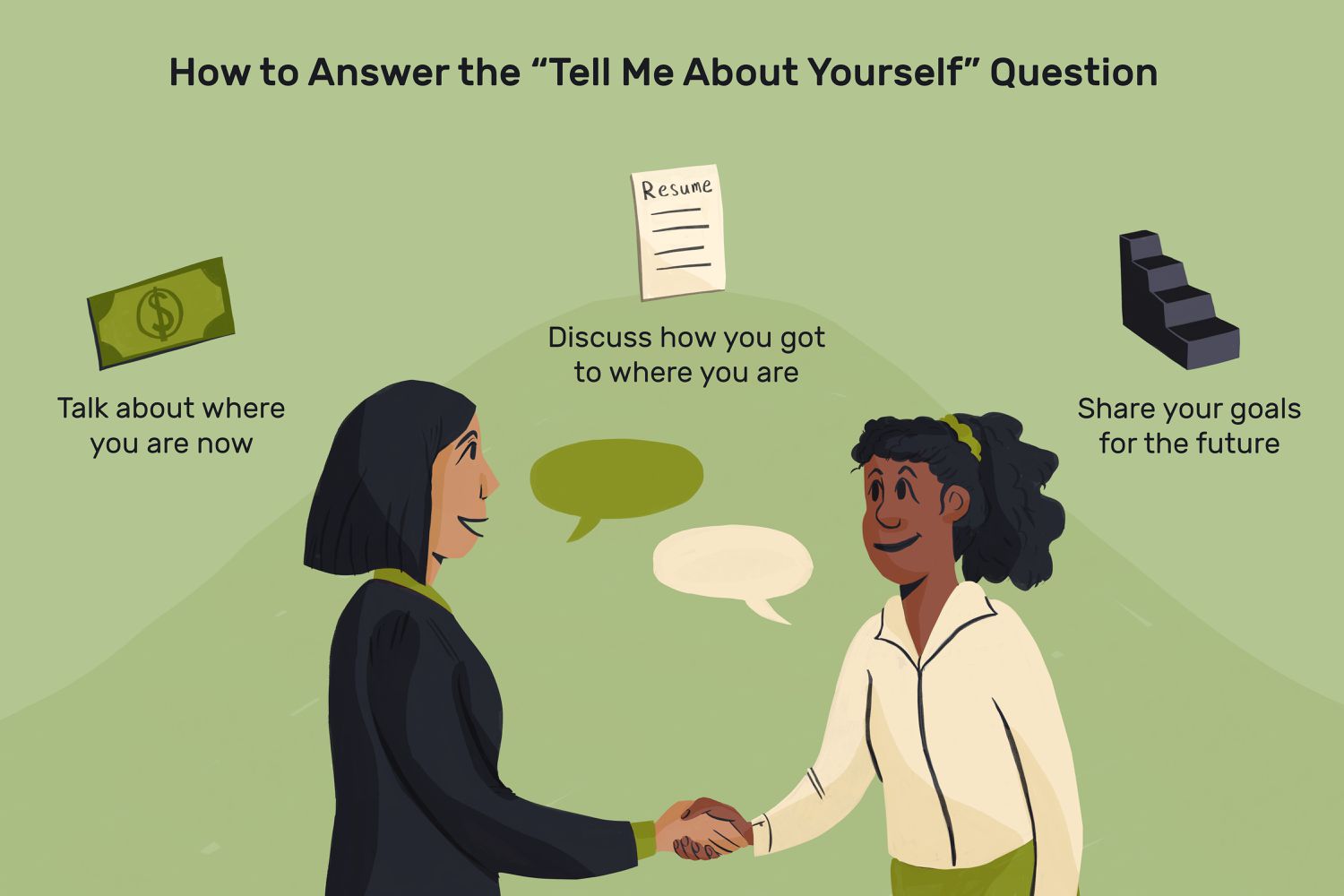
If you remember only one thing from this article, make it this: the easiest way to answer “Tell me about yourself” is to organize your response around present, past, and future.
1. Start with the present
Begin by describing what you do now. Mention your current role, your level of experience, and one or two responsibilities or strengths that matter for the job.
Example:
“I’m currently a customer success specialist with four years of experience helping SaaS clients improve adoption and retention. A big part of my work involves onboarding new accounts, troubleshooting issues, and partnering with sales and product teams to improve the customer experience.”
2. Move to the past
Next, explain how you got here. Mention relevant past experience, achievements, or a turning point that helped shape your career. Keep it selective. This is not the moment to narrate every internship, every side quest, and every time you touched a spreadsheet.
Example:
“Before that, I worked in technical support, which taught me how to solve customer problems quickly and communicate clearly under pressure. Over time, I realized I was especially strong at building relationships and helping clients succeed long-term, which led me into customer success.”
3. Finish with the future
Close by explaining why this role interests you. This is where you connect your experience to the company’s needs and show that your next move makes sense.
Example:
“Now I’m looking for a role where I can bring that mix of relationship management and problem-solving to a growing team, which is why this opportunity stood out to me.”
Together, those three parts create a short, relevant story. Clean. Professional. No unnecessary detours into your childhood love of dinosaurs unless you are interviewing at a museum.
How Long Should Your Answer Be?
A good answer is usually around 60 to 90 seconds. In some cases, it can stretch closer to two minutes if you have substantial experience and every part of the answer stays relevant. The goal is to be concise without sounding rushed.
If your answer is so short that it feels abrupt, add a bit more context. If it is so long that the interviewer starts blinking like a laptop on 2% battery, trim it down.
How to Customize Your Answer for the Job
The biggest mistake candidates make is using the exact same answer for every interview. A polished answer is great. A generic answer is forgettable.
Before your interview, study the job description and identify these three things:
- The most important skills the role requires
- The problems the company needs this person to solve
- The accomplishments from your background that best match those needs
Then adjust your response so the interviewer can easily see the connection.
For example, if the role is heavy on project management, highlight leadership, coordination, and execution. If it is client-facing, emphasize communication, relationship building, and measurable outcomes. If it is analytical, spotlight data, process improvement, or decision-making.
The rule is simple: do not just tell them who you are; tell them who you are in relation to this job.
What to Include in a Strong Answer
Here are the ingredients that make your response stronger:
- Your professional identity: What you do and how you add value
- Relevant experience: Roles, industries, or skills that fit the opportunity
- One or two specific wins: A result, achievement, or strength you can point to
- A logical next step: Why this role makes sense for you now
- A human tone: Professional, but not stiff or over-scripted
Specificity matters. Saying “I’m a hard worker” is fine, but it sounds like wallpaper. Saying “I recently led a process update that cut onboarding time by 20%” is much more convincing because it gives the interviewer something real to remember.
What to Avoid
Now for the land mines. Here is what tends to weaken an answer:
Giving your life story
Interviewers do not need a chronological recap starting in middle school. Stay focused on the professional version of yourself.
Reciting your resume line by line
They can read. Your goal is to interpret your experience, not read it aloud like an audiobook nobody requested.
Being too vague
If your answer is filled with broad phrases and no evidence, it will not stick. Use concrete details when possible.
Talking too much about personal details
A brief touch of personality is fine. A ten-minute detour into your fantasy football strategy is not.
Sounding memorized
Practice enough to sound smooth, but not so much that you sound like you are reading from invisible cue cards.
Skipping the connection to the role
If you do not explain why your background matters here, your answer becomes a speech instead of a strategy.
Sample Answers for Different Situations
Example 1: Experienced professional
“I’m currently a marketing manager with seven years of experience in digital campaigns, brand strategy, and content performance. In my current role, I lead multi-channel campaigns for a B2B software company, and over the past year I’ve helped improve qualified lead volume by 28%. I started my career in content, which gave me a strong foundation in messaging and audience behavior, and over time I moved into broader campaign strategy and team leadership. At this point, I’m looking for an opportunity where I can bring both hands-on marketing expertise and cross-functional leadership to a company that’s growing quickly, which is what drew me to this role.”
Example 2: Recent graduate
“I recently graduated with a degree in finance, and during school I focused heavily on data analysis, presentation skills, and team-based projects. I also completed an internship with a regional bank, where I supported the team with market research, client reporting, and Excel-based analysis. That experience confirmed that I enjoy turning information into practical recommendations and working in fast-paced environments. I’m now looking for an entry-level analyst role where I can keep building those skills while contributing to a team from day one.”
Example 3: Career changer
“I spent the first part of my career in education, where I developed strong communication, organization, and problem-solving skills while managing classrooms, lesson plans, and parent communication. Over time, I became especially interested in instructional technology and process design, which led me to complete a UX certification and build a small portfolio of user research and wireframing projects. What excites me about this role is the chance to combine my experience understanding people’s needs with the technical and design skills I’ve been building.”
How to Answer if You Have Little or No Experience
If you are a student, recent graduate, or someone re-entering the workforce, do not panic. You do not need decades of experience to give a strong answer. You just need relevant evidence.
You can draw from:
- Coursework and academic projects
- Internships
- Volunteer work
- Leadership roles in clubs or organizations
- Freelance work or side projects
- Transferable skills from another field
The key is to frame those experiences professionally. A class project can become evidence of teamwork, research, and presentation ability. A part-time retail job can demonstrate customer service, reliability, and communication. A volunteer role can show initiative and leadership. Experience is broader than many people think.
How to Practice Without Sounding Scripted
Yes, you should practice. No, you should not sound like a voicemail greeting.
Here is a better approach:
- Write out a full draft
- Trim it down to the most relevant points
- Turn it into bullet points instead of a full script
- Practice out loud until it feels natural
- Record yourself and listen for rambling, filler words, or awkward transitions
You want to know your key beats, not memorize every syllable. That way, if the interviewer reacts, interrupts, or asks a follow-up, you can stay flexible and conversational.
A Quick Formula You Can Use Today
If you want an easy template, try this:
“I’m currently a [current role or area of focus], where I [key responsibility or strength]. Before that, I [relevant past experience or achievement], which helped me build [relevant skills]. Now I’m looking for [next step], and I was excited about this role because [specific reason connected to the company or job].”
Use that as a base, then swap in your own details. The goal is not to sound like everyone else. The goal is to organize your message so your best points actually land.
Final Thoughts
The best answer to “Tell me about yourself” is not the fanciest one. It is the clearest one. It gives the interviewer a sharp, relevant snapshot of your background, your strengths, and your direction. It sounds confident without sounding rehearsed. It feels human without drifting off-course.
So the next time that question appears at the top of an interview, do not treat it like small talk. Treat it like your opening statement. Because in many ways, it is. Nail this part, and the rest of the conversation gets much easier.
Experience in the Real World: What Candidates Learn After a Few Interviews
One of the most interesting things about the “Tell me about yourself” question is that almost everyone thinks they can answer it until they are actually sitting in the interview chair. Then suddenly, perfectly smart people forget how timelines work, lose all sense of relevance, and begin speaking in strange loops. That is not a character flaw. It is just pressure meeting a broad question.
Many candidates discover the same lesson the hard way: the answer that feels most natural in your head is often too long out loud. Someone starts with their current job, remembers an old internship, jumps to college, circles back to a promotion, tosses in a fun fact about being a “people person,” and before they know it, the interviewer is nodding politely while mentally searching for an exit ramp.
But with practice, people usually notice a turning point. Once they stop trying to say everything and start choosing the most relevant pieces, their answer gets stronger fast. They sound calmer. They make better eye contact. They stop apologizing. Most importantly, they begin to sound like someone who understands their own value.
Experienced candidates often realize they do not need to summarize every job they have ever held. What works better is selecting a few defining themes: maybe leadership, client service, technical depth, or growth across bigger responsibilities. Entry-level candidates usually learn a different lesson: they have more to talk about than they think. A class project, campus leadership role, internship, or part-time job can become a strong part of the story when it is framed around skills and outcomes instead of just tasks.
Career changers often have the most powerful transformations. At first, they may feel they need to defend the pivot. Later, they learn to present it as a strength. Instead of sounding uncertain, they show how their previous field gave them transferable skills, perspective, and credibility that other candidates may not have. That shift in framing can completely change the tone of the interview.
Another common experience is realizing that authenticity matters more than perfection. The strongest answers are polished, but they still sound human. They do not feel like a speech delivered by a customer service robot who recently learned confidence. They feel like a thoughtful professional who knows what they bring to the table and can explain it clearly.
That is usually the real breakthrough. Candidates stop treating the question like a trap and start using it as an opportunity. Once that happens, “Tell me about yourself” becomes less of a nerve-wracking mystery and more of a chance to steer the interview in the right direction from the very beginning.