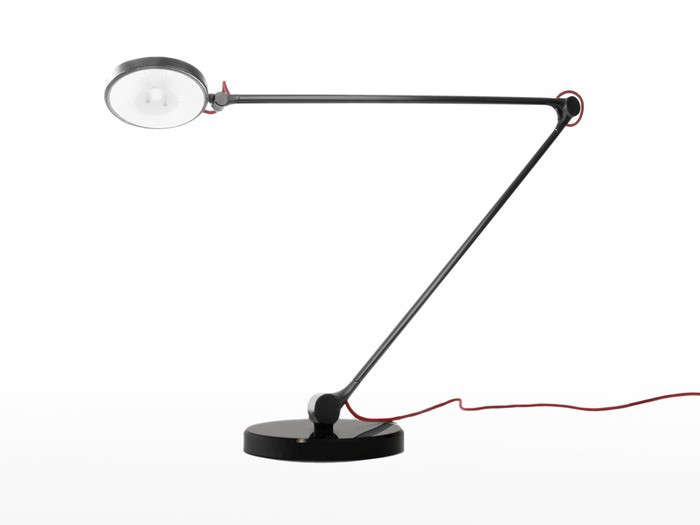
The Harvey LED Task Lamp is the kind of desk lamp that makes ordinary lighting look like it showed up to work in sweatpants. Designed by David Oxley and introduced through a successful Kickstarter campaign, Harvey became known for a clever mix of bright LED performance, smooth adjustability, aluminum construction, and rare-earth magnetic joints. In plain English, it was not just a lamp. It was a small piece of industrial design with a job to do: make workspaces brighter, cleaner, and easier on the eyes without taking over the whole desk like an overly confident office printer.
Task lighting matters more than many people realize. A good LED desk lamp can help reduce glare, focus light where it is needed, support reading and writing, improve detail work, and make late-night productivity feel less like a punishment. The Harvey LED Task Lamp entered the conversation at a time when LED lighting was moving from “interesting tech” to “serious design material.” Its appeal came from the way it treated light, movement, and form as one connected experience.
What Is the Harvey LED Task Lamp?
The Harvey LED Task Lamp is an adjustable LED desk lamp originally presented as a modern lighting project by designer David Oxley. Its key idea was simple but smart: combine a super-bright LED light source with smooth-moving aluminum joints and rare-earth magnets. Instead of relying on bulky springs or stiff mechanical arms, Harvey used a more refined joint concept that allowed the lamp to move with a light twist, push, or pull.
That design choice gave the lamp a clean, architectural look. Many traditional task lamps are excellent workers, but they can look like tiny construction cranes parked beside your keyboard. Harvey took a sleeker route. Its thin arm, weighted base, and minimalist head made it suitable for home offices, studios, reading corners, drafting tables, and creative workspaces where function and style both matter.
Why Harvey Still Feels Relevant
Although the Harvey LED Task Lamp emerged as a Kickstarter-era design product, the ideas behind it still fit modern work habits. People now spend long hours at desks for remote work, studying, design, gaming, crafting, writing, and video calls. Good lighting is no longer a luxury accessory. It is part of a healthy, productive setup.
Modern lighting guidance consistently points toward the same priorities Harvey emphasized: adjustability, focused illumination, energy-efficient LED technology, and glare control. A lamp that can move easily is especially useful because no single angle works for every task. Reading a paperback, sketching a layout, typing beside a monitor, and repairing a tiny gadget all require different lighting positions. Harvey’s magnetic joint concept made that flexibility the star of the show.
Design and Build: Minimal, Mechanical, and Clever
Aluminum Joints with Magnetic Movement
The most distinctive feature of the Harvey LED Task Lamp was its joint system. Rather than using the familiar spring-loaded arm found on many architect lamps, Harvey used smooth aluminum joints held with rare-earth magnets. This gave the lamp a futuristic mechanical personality without adding visual clutter. The joints were designed to move freely while still holding the lamp in place during use.
This matters because adjustability is one of the biggest differences between a decorative table lamp and a real task lamp. A decorative lamp says, “I set the mood.” A task lamp says, “Point me at the spreadsheet. We are going in.” Harvey belonged firmly in the second category, but it managed to look elegant while doing it.
Weighted Base for Stability
A lightweight adjustable arm needs a stable foundation. Harvey’s design used a heavier base to balance the slim arm and lamp head. That contrast between a light moving structure and a solid base helped the lamp feel deliberate. The base was not just there to sit pretty. It was the anchor that made the movement practical.
Clean Industrial Aesthetic
The Harvey LED Task Lamp fits the tradition of architect-style lighting, but with a more contemporary profile. Instead of celebrating exposed springs, thick hinges, and visible tension systems, it leaned into a stripped-back form. Its look pairs well with modern desks, minimalist interiors, studio spaces, and industrial-inspired rooms.
In a home office, that matters. A desk lamp is not hidden in a closet. It lives in the middle of the visual field, right beside laptops, notebooks, coffee mugs, and the occasional snack plate pretending to be “brain fuel.” A lamp that looks calm and intentional can make the whole workspace feel more organized.
Lighting Performance: Bright, Focused, and Softer Than Bare LEDs
One of Harvey’s strongest selling points was its bright LED output. Reports about the lamp noted Philips Luxeon LEDs and a brightness level around 370 lumens. That level is suitable for focused desk work, especially when paired with a design that directs light efficiently onto the work surface.
However, brightness alone is not the whole story. A harsh bare LED can feel uncomfortable because LEDs are small, intense light sources. Harvey addressed that problem by directing light toward a frosted glass disc and reflecting it through a curved metal reflector. The goal was softer, more even illumination rather than a sharp beam that makes your notebook look like it is being interrogated.
Why Diffusion Matters
Diffused light helps reduce visual discomfort. For desk work, the best light is usually focused but not glaring. It should make the task easier to see without bouncing off a monitor, shining directly into the eyes, or creating hard shadows across paper. Harvey’s reflected lighting approach was an important design detail because it showed attention to real-world use, not just showroom drama.
Dimming for Different Tasks
The Harvey LED Task Lamp also included dimming, which is one of the most useful features in any desk lamp. Bright light can be helpful for detailed work, drawing, reading small print, or sorting materials. Lower light may be better for computer use, evening reading, or background support in a room that already has ambient lighting.
A dimmer gives control back to the user. That sounds simple, but it is the difference between “this lamp works for my life” and “this lamp has one personality, and apparently it is a police spotlight.”
LED Efficiency: Why the Technology Matters
LED lighting has become the standard for modern task lamps because it is efficient, long-lasting, compact, and versatile. Compared with traditional incandescent bulbs, LEDs use far less energy and typically last much longer. For a lamp used daily, that efficiency can matter over time.
LEDs also work especially well in task lighting because they are directional. Instead of throwing light in every direction, they can be engineered to send illumination exactly where it is needed. That makes them a natural fit for desk lamps, reading lights, and workbench lighting. Harvey’s design used that LED advantage and paired it with a reflector system to make the light more comfortable.
Harvey LED Task Lamp vs. Traditional Desk Lamps
Compared with Spring-Arm Lamps
Traditional spring-arm lamps are beloved for a reason. They are adjustable, durable, and practical. But they can also be visually busy. Their springs, knobs, and thick arms create a more mechanical look. Harvey offered an alternative: a lamp that still moved freely but looked lighter and more refined.
For users who enjoy classic workshop style, a spring-arm lamp may still be perfect. For users who want task lighting with a cleaner design language, Harvey’s magnetic joint idea feels more sophisticated.
Compared with Basic Table Lamps
A basic table lamp can create a cozy atmosphere, but it is not always ideal for focused work. Many table lamps spread light broadly around a room rather than directing it onto a notebook, keyboard, book, or drawing surface. Harvey was built specifically as a task lamp, so its value came from targeted illumination and adjustability.
Compared with Modern Smart Desk Lamps
Today’s LED desk lamps often include touch controls, USB ports, wireless charging, color temperature settings, timers, and app-connected features. Harvey did not compete by piling on digital extras. Its charm came from physical design: smooth motion, quality materials, strong light, and a memorable joint system.
That distinction is important. Not every great product needs to charge your phone, monitor your mood, and send a motivational quote at 3 p.m. Sometimes a lamp should simply move beautifully and light the desk well.
Best Uses for the Harvey LED Task Lamp
Home Office Work
For home office users, a lamp like Harvey can provide focused light beside a laptop or monitor. The key is positioning. The light should illuminate the desk surface without reflecting directly onto the screen. For right-handed writers, placing the lamp on the left side often reduces shadows; for left-handed users, placing it on the right side usually works better.
Reading and Studying
Harvey’s focused LED light and dimming ability make it suitable for reading and studying. A brighter setting can help with dense textbooks, printed documents, or handwritten notes. A lower setting can create a more relaxed evening reading environment.
Creative Studio Work
Designers, artists, model makers, and crafters often need light that can be moved quickly. A lamp with flexible joints is useful when switching between sketching, measuring, cutting, assembling, or reviewing details. Harvey’s inspiration from surgical lighting makes sense here: precision tasks need precision lighting.
Bedside or Lounge Reading
Although designed as a task lamp, Harvey’s soft reflected light could also work near a reading chair or bedside table. Its design is more technical than cozy, but in the right room that can be a strength. It brings a polished, design-forward feel without becoming decorative fluff.
How to Position a Task Lamp Like Harvey
Good placement can make even a great lamp perform better. Position the lamp so the beam falls across the work surface rather than straight into your eyes. If you use a monitor, angle the lamp so it does not create screen glare. If the room has a window, keep the screen at a right angle to daylight when possible and use blinds or curtains to manage reflections.
For paperwork, place the lamp close enough to brighten the page evenly. For computer work, reduce brightness and focus the beam away from the screen. For drawing or crafting, adjust the arm to reduce hand shadows. The lamp should support the task, not start a wrestling match with your eyeballs.
What to Look for in an LED Task Lamp
Adjustability
A good task lamp should move easily and stay where you put it. Adjustable arms, rotating heads, pivoting joints, or clamp bases can all help. Harvey’s magnetic joint system was an inventive answer to this need.
Brightness Control
Dimming is extremely valuable because different tasks need different light levels. A lamp that is perfect for detailed paperwork may be too bright for evening computer use. Adjustable brightness makes one lamp useful in more situations.
Comfortable Light Quality
Look for diffused or reflected light rather than exposed, harsh LEDs. The goal is clarity without glare. Harvey’s frosted glass and reflector approach made this a central part of the design.
Energy Efficiency
LED lamps are generally more efficient than incandescent lighting and produce less heat. For anyone who keeps a desk lamp on for hours, that can help with comfort and energy use.
Size and Desk Fit
A lamp should match the size of the workspace. Large desks need wider light coverage or a longer reach. Small desks benefit from compact bases, clamp mounts, or slim designs. Harvey’s slim arm helped it feel lighter on the desk, while its base provided needed stability.
Style Notes: Where Harvey Looks Best
The Harvey LED Task Lamp works best in spaces that appreciate modern design. It suits walnut desks, white minimalist tables, black metal shelving, studio benches, and clean home office setups. It can also add a technical contrast to softer interiors, especially when paired with warm wood, textured fabric, or matte accessories.
Because the lamp has an industrial-design personality, it does not need many supporting pieces. A simple desk pad, a notebook, a laptop stand, and a tidy cable setup can let the lamp stand out. Overcrowd the desk and Harvey may still perform well, but visually it deserves a little breathing room. Even lamps like personal space.
Potential Drawbacks to Consider
No lamp is perfect. Harvey’s exposed cable routing was noted by some observers as a small design compromise. The magnetic joint system was visually and mechanically interesting, but unusual construction can also make long-term repairs or replacement parts more challenging compared with standard desk lamps.
Another consideration is availability. Since Harvey began as a Kickstarter-funded product, it may not be as easy to find as mainstream desk lamps from large retailers. Buyers interested in the Harvey LED Task Lamp may need to look for archived listings, secondhand options, design marketplaces, or similar modern LED task lamps inspired by the same principles.
Who Should Consider the Harvey LED Task Lamp?
The Harvey LED Task Lamp is best for people who care about both performance and design. It is especially appealing for designers, architects, writers, students, remote workers, and anyone who wants a desk lamp with more personality than a plastic bargain-bin light.
It is also a good reference point for understanding what makes a task lamp worth attention. Even if you cannot easily buy the original Harvey today, its features offer a smart checklist: efficient LED light, adjustable movement, dimming, glare-conscious design, stable construction, and a shape that looks good in a real room.
Experiences with the Harvey LED Task Lamp
Using a lamp like the Harvey LED Task Lamp changes the feel of a workspace in a surprisingly direct way. The first thing you notice is not just the brightness. It is the control. A fixed lamp forces you to move your notebook, tilt your book, rotate your chair, or perform some awkward desk yoga just to get the light in the right place. Harvey’s adjustable structure solves that problem with a much more civilized approach: move the lamp, not your entire life.
For writing, the experience is especially pleasant. A focused LED task lamp helps define the work zone. The pool of light creates a visual boundary around the page or keyboard, which can make it easier to concentrate. There is something psychologically useful about that. When the desk is evenly lit but not overlit, the brain seems to understand that this is the “get things done” area. The coffee helps too, but the lamp is doing honest work.
For reading, the dimming feature becomes more important than expected. During the day, a brighter level can cut through ambient shadows and make text crisp. At night, a lower setting feels more comfortable and less aggressive. Nobody wants to end a long day by staring into a miniature sun attached to an aluminum arm. A good dimmer allows the lamp to shift from productivity mode to calm mode without changing fixtures.
For creative work, Harvey’s movement is the real hero. Sketching, model building, hand lettering, electronics repair, and craft projects all require constant changes in angle. A lamp that can be nudged into position quickly saves time and reduces frustration. The magnetic joint idea gives the lamp a tactile quality that ordinary lamps often lack. It feels less like adjusting hardware and more like positioning a tool that wants to cooperate.
In a home office, the biggest benefit is glare control. Many people rely only on overhead lighting, which can create reflections on screens and shadows on the desk. A task lamp lets you use lower room lighting while adding brightness exactly where it is needed. When placed beside a monitor and angled away from the screen, Harvey-style lighting can make computer work feel more balanced. The eyes are not forced to jump between a bright screen and a dark desk, which is a small comfort that becomes a big deal after several hours.
The lamp also affects the mood of the room. Its clean industrial form makes a desk feel more intentional, almost like a small studio setup. That may sound dramatic for a lamp, but objects we use every day shape how we feel about our routines. A wobbly, harsh, ugly lamp says, “Good luck, champ.” A well-designed LED task lamp says, “Let’s make this easier.” That difference matters when the to-do list is long and your motivation has quietly moved to another ZIP code.
Of course, the Harvey LED Task Lamp is not the best choice for everyone. Someone who wants built-in wireless charging, color-changing modes, or app control may prefer a newer smart desk lamp. Someone who wants a soft decorative glow may prefer a fabric-shade table lamp. But for people who appreciate mechanical elegance, focused light, and clever design, Harvey remains an interesting example of what a task lamp can be when it is treated as more than a bulb on a stick.
Conclusion
The Harvey LED Task Lamp stands out because it combines practical illumination with thoughtful industrial design. Its bright LED source, dimming capability, reflected soft light, aluminum build, and rare-earth magnetic joints give it a memorable place among modern task lamps. More importantly, it demonstrates what good desk lighting should do: reduce visual strain, improve focus, adapt to different tasks, and make the workspace feel better organized.
Whether you are studying, writing, sketching, reading, or working from home, the lessons from Harvey are still useful. Choose a lamp that moves easily, controls glare, provides adjustable brightness, and fits your desk both physically and visually. A great task lamp will not answer emails for you, sadly. But it can make the work in front of you clearer, calmer, and a little more enjoyable.