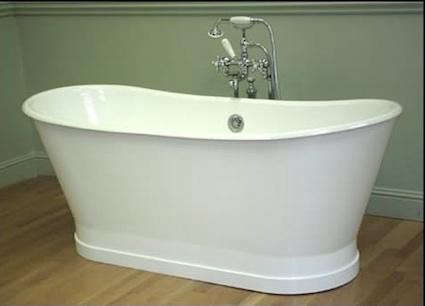
The Sunrise Specialty Piedmont Skirted Tub is the kind of bathroom fixture that refuses to be background furniture. It does not merely sit in a room and politely hold water. It arrives with the visual confidence of a vintage roadster parked inside a boutique hotel: heavy, glossy, dramatic, and very aware that people will stare.
Originally offered as a 68-inch cast-iron bathtub with a white porcelain interior and a steel skirt, the Piedmont blends old-world bathhouse charm with a cleaner, more tailored silhouette than a classic clawfoot tub. Its generous proportions, rolled rim, and freestanding form make it an unforgettable focal point in a traditional, transitional, cottage, or even modern bathroom.
There is one important reality check before anyone starts measuring tile samples: the original Sunrise Specialty Piedmont Skirted Tub has been discontinued. That does not make it irrelevant. Quite the opposite. It makes the tub a useful reference point for homeowners restoring historic spaces, designers hunting for a similar statement piece, and buyers considering a pre-owned or showroom model. Think of it as a beautiful retired athlete. It may no longer be on the active roster, but it still has plenty to teach the league.
What Makes the Sunrise Specialty Piedmont Skirted Tub Special?
The Piedmont is not a lightweight acrylic soaking tub pretending to be vintage. Its identity begins with cast iron, a material long appreciated for durability, heat retention, and substantial presence. The tub’s porcelain enamel interior creates the clean white bathing surface most homeowners expect, while the skirted exterior gives the tub a more finished and architectural appearance than exposed claw feet.
Unlike a traditional clawfoot tub, the Piedmont’s skirt helps conceal much of the lower structure. That creates a neater visual line while preserving the romance of a freestanding bath. It can read as Edwardian, cottage-inspired, European country manor, or quietly luxurious depending on the finishes around it. Pair it with polished nickel and marble, and it feels refined. Pair it with unlacquered brass and beadboard, and it starts telling stories about antique soap dishes and handwritten letters.
Documented Piedmont Characteristics
- Length: Approximately 68 inches
- Construction: Porcelain enamel over cast iron
- Exterior: Steel or metal skirt, depending on the version
- Interior finish: White porcelain enamel
- Faucet drillings: Original white version commonly listed with no faucet drillings
- Dry weight: Approximately 360 pounds
- Water capacity: Approximately 57 gallons
- Status: Discontinued, so availability varies by resale, salvage, or showroom inventory
Some historic Piedmont versions also appeared with more decorative metal finishes, including copper-leaf detailing. That flexibility explains why the design can work in both a restrained white bathroom and a more theatrical room with dark floors, dramatic wallpaper, or antique-inspired plumbing fixtures.
Why a Skirted Cast-Iron Tub Still Has Serious Design Appeal
Bathroom trends can move at the speed of a group chat. One year everything is matte black and moody. The next year everyone wants warm brass, limestone, and a towel ladder that appears to have been found in a French barn. Yet cast iron remains remarkably difficult to date because it has genuine material presence.
The Sunrise Specialty Piedmont Skirted Tub works because it balances softness and structure. The rounded basin and rolled rim feel inviting, while the skirt gives the exterior a crisp profile. Instead of looking like a separate object dropped into the room, the tub can look intentional and grounded.
That balance is especially useful in bathrooms where a standard built-in tub would feel too predictable. A freestanding skirted tub creates visual breathing room around the fixture. It lets flooring continue beneath the tub, exposes more of the wall plane, and gives designers room to play with tile, windows, wall-mounted lighting, and art.
Best Bathroom Styles for a Piedmont-Inspired Tub
Historic restoration: The Piedmont’s period-style shape makes it a natural fit for Victorian, Colonial Revival, Craftsman, and early twentieth-century homes. The key is not to overdo every detail. One romantic tub is charming; a bathroom that looks like it requires a top hat for entry can become a little exhausting.
Modern traditional: Use the tub with simple white walls, clean-lined cabinetry, and a restrained floor tile pattern. The contrast between a traditional tub and modern architecture creates a polished, collected look.
Cottage or coastal: Beadboard, pale wood, soft blue-gray paint, linen curtains, and polished chrome fixtures make the silhouette feel relaxed rather than formal.
Luxury hotel-inspired bathroom: Choose stone flooring, a floor-mounted tub filler, oversized sconces, and a small side table for towels or bath essentials. The Piedmont shape earns its spotlight in this setting without needing a dozen competing accessories.
Size, Space, and the “Will This Actually Fit?” Question
A 68-inch tub is generous. That is wonderful for a long soak and less wonderful when someone discovers the bathroom doorway is narrower than the tub’s delivery path. Before falling in love with any Piedmont-style skirted tub, measure more than the final bathroom floor plan. Measure hallways, stair landings, door openings, turns, elevators, and the front door. The tub must travel through your home before it can become the star of it.
A freestanding tub also needs visual and practical clearance. It should not be wedged against a wall like a sofa in a studio apartment. Leave enough room to clean around it, access the plumbing, and step in and out safely. A bathroom may technically fit a large tub, but “technically” is not the same thing as “pleasantly.”
For a room with both a tub and shower, maintain clear walking paths and avoid placing the tub where it blocks the natural flow between the vanity, toilet, shower, and door. A comfortable bathroom feels calm because the layout works before the decorative details arrive.
Check the Floor Before You Order
The Piedmont’s weight is not a minor footnote. At roughly 360 pounds empty, plus about 57 gallons of water, the tub can weigh more than 835 pounds before a bather enters the picture. Add an adult, and the total load can easily exceed 1,000 pounds.
That does not automatically mean the tub is unsuitable. It means the floor structure deserves a professional review, especially in older homes, upstairs bathrooms, and renovations involving damaged or altered framing. A qualified contractor or structural professional can evaluate joists, spans, support conditions, and any reinforcement that may be needed.
Cast iron has a charmingly old-fashioned personality, but it does not possess old-fashioned manners. It will not politely become lighter because the bathroom looks small.
Faucet Planning for a No-Drilling Tub
The original white Sunrise Specialty Piedmont Skirted Tub was commonly listed without faucet drillings. That design gives the tub a clean rim, but it also means plumbing must be planned intentionally. A floor-mounted tub filler is often the most natural companion because it can stand beside the tub without disturbing the porcelain edge.
A wall-mounted filler may also work in the right layout, provided the spout reaches well into the basin and local plumbing requirements are met. The essential point is coordination: select the tub, faucet, rough-in valve, drain, and overflow system before walls and flooring are finished. Freestanding tub plumbing is not an area where guessing produces cute results.
Questions to Ask Before Rough-In
- Where will the faucet stand in relation to the tub rim?
- Will the spout reach far enough into the basin to avoid splashing?
- Does the filler include a hand shower, and where will its hose rest?
- Can the drain and overflow be accessed later if service is needed?
- Does the faucet’s finish coordinate with lighting, cabinet hardware, and the tub’s exterior?
- Has the installer reviewed the actual tub and filler, not merely a sketch?
For a bathtub with no deck-mounted faucet holes, a floor-mounted filler can look wonderfully sculptural. It can also look like a confused metal flamingo if it is placed too far away or at an awkward angle. Exact layout matters.
How to Style a Sunrise Specialty Piedmont Skirted Tub
The Piedmont does not need a complicated design scheme. Its form already carries enough visual weight. The best styling approach is usually to choose a few supporting elements that reinforce the tub’s character rather than competing with it.
Classic White-and-Black Bathroom
Use white subway tile, black-and-white mosaic flooring, polished chrome fixtures, and a simple framed mirror. The result feels timeless without becoming museum-like. A dark painted vanity adds enough contrast to keep the room from floating away in a cloud of white grout.
Warm Traditional Bathroom
Pair a skirted tub with brass fixtures, warm white walls, natural oak cabinetry, and honed stone flooring. Add a linen Roman shade or a woven pendant for texture. This combination feels elevated but lived-in, which is the goal unless you enjoy bathrooms that make guests afraid to touch the hand towel.
Minimalist Spa Bathroom
Place the tub against a simple plaster wall or in front of a large window with privacy treatment. Use a restrained palette of white, taupe, soft gray, or pale wood. The tub becomes the sculpture in the room, while the rest of the space quietly handles the supporting role.
Care and Maintenance for Porcelain-Enamel Cast Iron
One reason cast-iron tubs remain beloved is that porcelain enamel can stay beautiful for years when treated with basic respect. The surface is durable, but it is not invincible. Avoid steel wool, wire brushes, abrasive scouring pads, harsh powders, and aggressive cleaners that can dull the finish or damage surrounding metal components.
For routine care, rinse the tub after use and wipe it dry with a soft cloth. A mild, nonabrasive cleaner and soft sponge are usually sufficient for soap residue and everyday grime. Mineral-heavy water may leave deposits, so regular gentle cleaning is much easier than waiting for a small geology exhibit to form around the drain.
Protect the exterior skirt as carefully as the interior. If the tub has a painted, metallic, or decorative finish, follow the appropriate care recommendations for that finish. Avoid storing wet bottles, metal cans, or abrasive bath accessories on the rim, especially if they can leave marks or trap moisture.
When Buying a Used or Vintage Piedmont Tub
Because the original model is discontinued, buyers may encounter secondhand listings. Inspect the porcelain carefully in bright light for chips, cracks, rust staining, repairs, and discoloration. Check the skirt for dents, corrosion, loose fasteners, or finish damage. Confirm the drain location, overflow configuration, dimensions, and included hardware before arranging transport.
Ask for close photographs of the interior, rim, drain area, exterior skirt, and underside. A vague listing that says “excellent vintage condition” can mean anything from “museum-ready” to “a squirrel has been living in it since 1997.” Specific documentation is better than optimism.
Is the Sunrise Specialty Piedmont Skirted Tub Worth Chasing?
For the right bathroom, absolutely. The Piedmont offers a rare combination of serious material quality, period-inspired elegance, and a cleaner silhouette than many clawfoot tubs. It has the visual romance of a historic fixture without making the entire room feel costume-like.
Still, it is not a casual purchase. Its size, weight, installation demands, and discontinued status mean buyers should approach it as a design investment rather than an impulse click. Verify the exact version, condition, dimensions, finish, drain setup, and delivery route before committing.
Homeowners who want the Piedmont look but cannot find the original should search for a 66- to 68-inch freestanding cast-iron tub with a skirted base, porcelain enamel interior, rolled rim, and floor-mounted filler compatibility. The goal is not to copy every millimeter. It is to capture the same calm, substantial, beautifully tailored feeling.
Living With a Piedmont-Style Skirted Tub: A Composite Ownership Experience
A Piedmont-style skirted tub changes the rhythm of a bathroom in a way photos do not fully explain. At first, it is mostly visual. You walk in and notice the curve of the rim, the quiet gleam of the porcelain, and the fact that the tub occupies the room with the confidence of a grand piano. It makes even a normal weekday bathroom feel a little less ordinary.
Then comes the practical side. The first time a homeowner fills a deep cast-iron tub, the sound is different from a lightweight tub. There is less hollow echo and more of a solid, grounded sense that the fixture was built for long soaks rather than quick pit stops. The iron body also helps the bath feel substantial underfoot. It is not necessarily flashy in use; it simply feels secure.
Many owners discover that the tub encourages slower routines. A standard shower is efficient, sensible, and sometimes all anyone has time for before school, work, or the mysterious daily disappearance of clean socks. A large freestanding bathtub suggests something more deliberate. It asks for a clean towel, warm water, perhaps a book, and ideally a household rule stating that nobody may knock unless the building is actively on fire.
Its exterior matters, too. A skirted tub feels more finished than a clawfoot model in rooms where exposed feet might look too ornate. The base visually anchors the tub, so it can work beside traditional tile, contemporary plaster walls, or a simple painted wainscot. In a well-designed bathroom, the tub does not feel like an antique prop. It feels like the room’s most intentional piece of furniture.
There are a few realities, of course. Cleaning around a freestanding tub requires a little effort. Dust is a highly motivated creature, and it will eventually find the narrow gap between the tub and wall. A slim cleaning tool, soft microfiber cloth, and a small amount of patience solve the problem. It is also wise to keep bath products edited. Ten colorful plastic bottles scattered around a beautiful cast-iron tub can make the space look less like a retreat and more like a pharmacy aisle after an earthquake.
Another practical observation is that tub fillers become part of the experience. A floor-mounted faucet beside a skirted tub can look incredibly elegant, especially in polished nickel, chrome, brass, or a warm living finish. But placement needs to be exact. When the spout lands neatly inside the basin and the hand shower rests where it should, the setup feels effortless. When it is off by a few inches, every bath becomes an awkward lesson in splash management.
For families, a large tub can become a flexible feature. It may serve as a place for a long soak, a child’s bath with supervision, or a practical spot to rinse oversized textiles and awkward household items. For couples, a double-ended shape feels more comfortable because neither person is assigned the unfortunate role of “the one sitting by the drain.” For solo bathers, it becomes a small luxury that feels surprisingly meaningful after a difficult day.
The strongest long-term impression is not that a Piedmont-style tub is extravagant. It is that it makes the bathroom feel permanent. It has weight, literally and visually. It suggests that the room was designed for comfort instead of assembled from temporary decisions. That quality is hard to quantify, but easy to notice. A well-chosen skirted cast-iron tub does not just hold water. It gives a bathroom a center of gravity.
Final Thoughts
The Sunrise Specialty Piedmont Skirted Tub remains a memorable example of how a freestanding cast-iron bathtub can combine vintage character with polished, practical design. Its 68-inch length, porcelain-enamel interior, steel skirt, and no-drilling configuration create a fixture that feels both historic and adaptable.
Whether you find an original Piedmont through a resale source or choose a comparable skirted cast-iron tub, plan carefully. Confirm the floor structure, delivery route, plumbing layout, faucet reach, and maintenance expectations before installation begins. Do that work upfront, and the reward is a bathroom centerpiece that feels luxurious every day, not merely impressive in photographs.