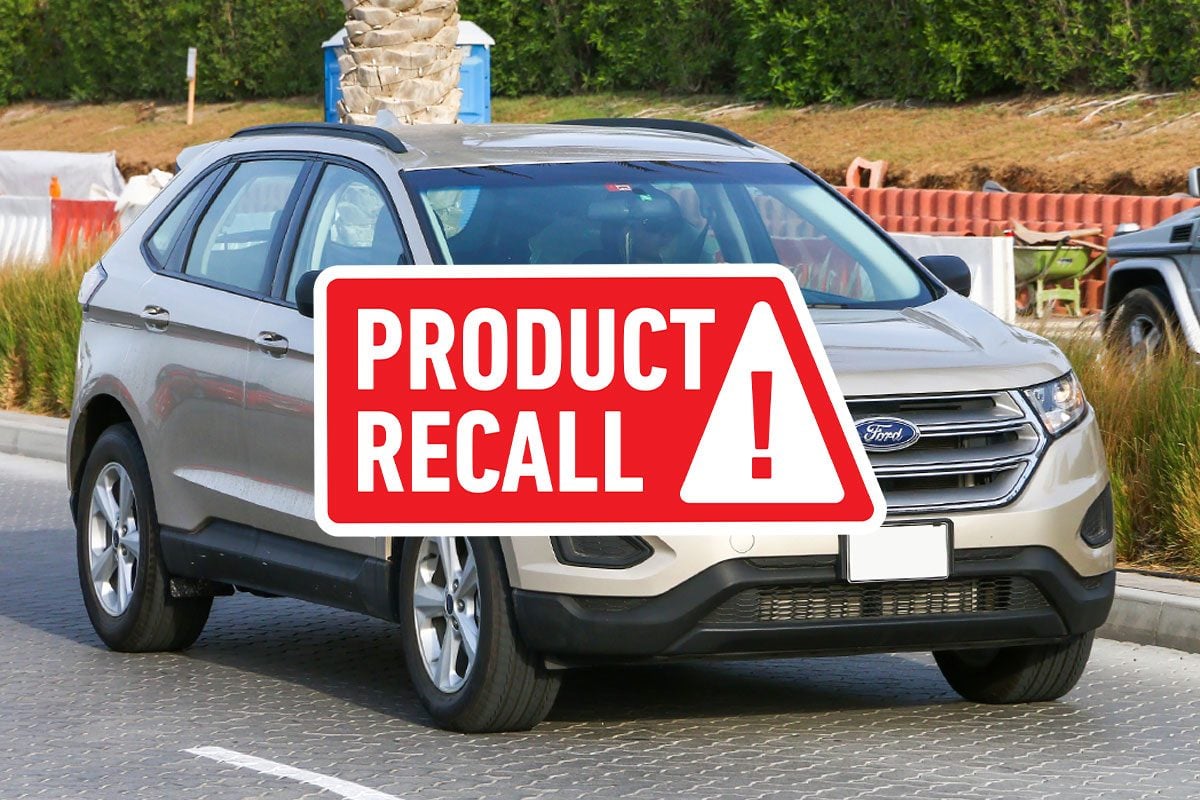
Note: This publish-ready article is based on public Ford, NHTSA, and major U.S. automotive/news reporting available through April 2026.
Ford owners have had a busy year, and unfortunately, not the fun kind of busy where you discover a secret button that makes your truck dispense coffee. The automaker has issued a series of major safety recalls affecting Ford and Lincoln vehicles across several popular model lines, including the F-150, Bronco, Explorer, Escape, Mustang, Expedition, Transit, Super Duty trucks, Lincoln Aviator, Lincoln Navigator, Lincoln Nautilus, and others.
The headline-grabber was a massive Ford recall involving more than 1 million vehicles because of a rearview camera software problem. But that was only one chapter in a much larger recall story. Other safety issues involved fuel pumps, cracked fuel injectors, instrument panel failures, trailer light problems, braking concerns, and vehicle systems that can make everyday driving riskier than it should be.
For drivers, the key takeaway is simple: a recall is not a suggestion, a rumor, or a “maybe I’ll get to it after reorganizing the garage” situation. It is a safety notice. The good news is that recall repairs are typically free, and in several Ford cases, software-based fixes may be completed through a dealership or over-the-air update. The less good news? Some remedies take time, and owners should check their VIN regularly instead of assuming a letter will magically appear before trouble does.
Why Ford’s Recall Wave Matters
Ford is one of America’s most recognizable automotive brands, and its vehicles are everywhere: school pickup lines, construction sites, grocery store parking lots, muddy driveways, long highway commutes, and the neighbor’s driveway where someone is always polishing an F-150 like it owes them money. When Ford recalls a large number of vehicles, the impact is not niche. It affects families, workers, fleet owners, contractors, commuters, and anyone sharing the road with those vehicles.
Modern vehicles are more advanced than ever. That is both impressive and slightly terrifying. A pickup truck today can tow a trailer, warn you about blind spots, stream music, display navigation, monitor tire pressure, help brake in emergencies, and sometimes update itself while parked overnight. But the more complex the vehicle becomes, the more a small software or hardware defect can ripple through major safety systems.
That is the thread connecting many of Ford’s recent recalls: cameras, digital displays, fuel systems, body control modules, brake boosters, and electronic communication between vehicle systems. In plain English, the car is not just metal, rubber, and cup holders anymore. It is a rolling computer with wheels, and when one piece of that system misbehaves, safety can be affected quickly.
The 5 Major Safety Issues Behind Recent Ford Recalls
While the recall details vary by model year and vehicle, five broad safety issues stand out: rearview camera failure, fuel pump failure, cracked fuel injectors, instrument cluster failure, and trailer lighting or related electronic control problems. Each one affects drivers differently, but all share the same basic concern: they can increase the risk of a crash, fire, or injury if ignored.
1. Rearview Camera Problems
The biggest Ford recall in this group involved more than 1 million Ford and Lincoln vehicles because the rearview camera image could delay, freeze, go dark, or fail to display when the vehicle is in reverse. That may sound like a convenience issue at first, but it is a serious safety concern. A rearview camera helps drivers see children, pedestrians, shopping carts, pets, posts, low walls, and other vehicles behind them.
Affected vehicles included a wide range of model years and nameplates, such as the Bronco, F-150, Edge, Escape, Expedition, Transit, Mustang Mach-E, Ranger, Mustang, Lincoln Nautilus, Lincoln Navigator, and Lincoln Corsair. The recall demonstrated how a software issue in an infotainment or display system can become a real-world crash risk.
The problem is especially frustrating because drivers may not get a dramatic warning. You shift into reverse expecting the camera to behave, and instead the screen may freeze, lag, or stay blank. That is not the ideal moment to play “guess what is behind me.” Ford’s remedy involves software updates, with some vehicles eligible for over-the-air fixes and others requiring dealer service.
2. Low-Pressure Fuel Pump Failure
Another major recall affected more than 850,000 Ford and Lincoln vehicles because the low-pressure fuel pump could fail. When a fuel pump stops doing its job, the engine may not receive enough fuel. That can lead to rough running, reduced power, misfires, a check engine light, or in more serious cases, an engine stall while driving.
Models tied to this issue included certain Ford Bronco, Explorer, F-150, Mustang, Expedition, Super Duty trucks, Lincoln Aviator, and Lincoln Navigator vehicles. Ford indicated that fuel pump failure could be more likely in low-fuel or warm-weather conditions, which is exactly the kind of detail drivers should not ignore. Running on fumes may already be a bad habit; in affected vehicles, it could add extra risk.
An engine stall on a quiet residential street is annoying. An engine stall on a highway, during a left turn, or while merging into traffic can be dangerous. That is why fuel-system recalls deserve immediate attention, even if the vehicle “seems fine” today.
3. Cracked Fuel Injectors and Fire Risk
Ford also recalled hundreds of thousands of Bronco Sport and Escape SUVs because fuel injectors could crack and leak fuel inside the engine compartment. Fuel plus hot engine parts is not a mystery novel; it is a fire risk. Affected vehicles included certain 2021–2024 Bronco Sport and 2020–2022 Escape models equipped with 1.5-liter engines.
Drivers might notice a fuel smell, warning lights, smoke, or unusual engine behavior, but the best plan is not to wait for symptoms. Fire-related recalls should be treated with urgency. Even when the estimated defect percentage is relatively small, the consequence can be severe.
Ford’s interim repair strategy has included engine control software designed to detect a cracked injector and reduce the chance of ignition by changing engine behavior. However, many owners understandably want a permanent fix, not just a software safety net. Until that remedy is available, checking recall status and following official guidance is the smartest move.
4. Instrument Panel Cluster Failure
One recall affecting more than 355,000 Ford F-Series trucks involved the instrument panel cluster. In affected 2025 F-150 and 2025–2026 Super Duty trucks, the display may fail at startup. That means drivers could lose access to critical information such as speed, warning lights, and other safety alerts.
At first glance, a blank screen may seem less dramatic than a fire risk or engine stall. But imagine driving without knowing your speed, whether your vehicle is warning you about a system fault, or whether another safety alert is active. That is not minimalist design; that is a problem.
The fix is software-based and may be completed by a dealer or over the air. This is one of the clearest examples of how recall repairs are changing. Not every repair now involves a wrench, a lift, and a mechanic with a flashlight. Sometimes the most important tool is a software update.
5. Trailer Taillight and Electronic Control Problems
Ford also recalled more than 213,000 Explorer and Lincoln Aviator SUVs because trailer taillights may fail to illuminate when towing. The issue was linked to an improperly manufactured body control module. For drivers who tow, this is a serious problem. Trailer lights are not decorative holiday accessories; they tell other drivers when you are braking, turning, or simply present on the road at night.
If trailer taillights do not work, the vehicle and trailer become harder to see, especially in poor weather, heavy traffic, or low light. That increases the risk of rear-end collisions and other crashes. Some vehicles may need a body control module replacement, while others may require inspection and functional testing.
This recall also highlights a broader point: owners should not assume an SUV is unaffected simply because the issue only appears while towing. A vehicle may be perfectly normal during daily commuting and still have a serious defect that appears when towing a boat, utility trailer, camper, or cargo trailer.
Which Ford and Lincoln Models Are Involved?
The exact list depends on the recall, but recent Ford safety campaigns have included some of the company’s best-known vehicles. The F-150 appears frequently because it is one of Ford’s highest-volume products. Super Duty trucks are also involved in several recalls, especially where towing, fuel systems, instrument clusters, or heavy-duty use are part of the equation.
Ford SUVs are also heavily represented. The Bronco, Bronco Sport, Escape, Explorer, Expedition, Edge, Mustang Mach-E, and Transit have all appeared in major recall reports. On the Lincoln side, the Aviator, Navigator, Nautilus, and Corsair have been included in related recalls.
This does not mean every Ford owner should panic. It does mean every Ford or Lincoln owner should check their VIN instead of relying on general model information. Two vehicles may look nearly identical, but only one may fall within a specific production range, software version, engine configuration, or supplier batch.
How Drivers Should Respond to a Ford Recall
The first step is to check the vehicle identification number, commonly called the VIN. The VIN is a 17-character code usually located near the lower corner of the windshield on the driver’s side, on the driver’s door frame, insurance documents, or registration paperwork. Entering that VIN into Ford’s recall lookup tool or the NHTSA recall database will show whether the vehicle has an open recall.
Second, read the recall notice carefully. Some recalls have an immediate remedy. Others have an interim notice followed by a second letter once parts or software become available. If the recall involves fire risk, engine stalling, loss of braking assistance, steering problems, or missing visibility systems, treat it as more urgent than a cosmetic issue.
Third, call a Ford or Lincoln dealer and schedule service. Recall repairs are usually free. Even if the vehicle is out of warranty, the recall repair should still be covered because recalls are safety actions, not routine maintenance upsells.
Fourth, ask whether the repair can be performed through an over-the-air update. Some Ford recalls involve software that may not require a dealership visit if the vehicle supports remote updates. However, owners should confirm that the update was completed successfully. A half-finished update is like half a seat belt: not exactly reassuring.
Why Software Is Becoming a Bigger Recall Issue
For decades, recalls often involved physical parts: a weak bolt, faulty latch, leaking hose, defective airbag, or bad wiring harness. Those still happen. But today’s vehicles depend heavily on software, sensors, modules, cameras, and digital displays. When software fails, the consequences can feel strange. The engine may run fine, the tires may be perfect, and the vehicle may look showroom-ready, yet a camera, cluster, brake booster module, or trailer-control system may still be unsafe.
Software-based recalls are not automatically “less serious.” A blank backup camera can reduce rear visibility. A failed instrument cluster can hide speed and warnings. A brake booster module problem can increase stopping distance. A trailer communication issue can disable brake lights or turn signals. These are not small annoyances when the vehicle is moving.
The upside is that software recalls can sometimes be fixed faster than mechanical recalls. Over-the-air updates may reduce repair time and dealership congestion. The downside is that owners may underestimate them because no broken part is visible. That is a mistake. If a recall says a software issue increases crash risk, take it seriously.
What This Means for Ford’s Reputation
Ford has publicly emphasized efforts to improve quality, identify defects faster, and fix issues more aggressively. That matters because recalls can cut two ways. On one hand, a high number of recalls can make consumers nervous. Nobody buys a new truck hoping to become pen pals with the service department. On the other hand, finding and fixing defects is exactly what a safety system is supposed to do.
The real test is not whether a manufacturer ever issues recalls. Every large automaker does. The real test is how quickly problems are identified, how clearly owners are notified, how effective the repair is, and whether the same kind of issue keeps coming back. Ford’s repeated rearview camera recalls, for example, show how complicated modern vehicle electronics can be and why long-term quality control matters.
For shoppers, recalls should be part of vehicle research, not the entire decision. A recalled vehicle can still be a good vehicle if the repair is completed properly. But a vehicle with multiple open recalls deserves extra caution, especially if you are buying used. Before signing paperwork, ask the seller for recall documentation and verify the VIN yourself.
Used Ford Buyers Should Be Extra Careful
Used vehicle shoppers should never assume that a recall was fixed just because the vehicle looks clean, drives well, or comes with a shiny “fully inspected” sticker. Some used cars sit on lots with open recalls. Private sellers may not know about them. Fleet vehicles may have missed notices. And sometimes a previous owner simply ignored the letter because life got busy.
Before buying a used Ford or Lincoln, check the VIN. Then check it again after purchase. If the vehicle has an open recall, ask whether the repair is available and whether the dealer can complete it before delivery. If the remedy is not yet available, understand the risk and decide whether you are comfortable waiting.
This is especially important for vehicles used by families, teen drivers, workers who tow, or anyone who drives long distances. A recall involving rear visibility, braking, fuel delivery, fire risk, steering, or warning displays is not something to shrug off.
Experience-Based Lessons for Ford Owners
Here is the part of the recall story that does not always show up in official notices: the owner experience. A recall may look simple on paper, but in real life it lands in the middle of work schedules, school pickups, weekend trips, and that one day when the dog has a vet appointment and the truck decides to display a warning light like it is auditioning for a drama series.
Many owners first learn about a recall through a letter, an email, a dashboard alert, a news story, or a dealership call. The first reaction is often confusion. Is my exact vehicle affected? Is it safe to drive? Do I need to stop towing? Can I wait until my next oil change? These are normal questions. The best response is to move from guessing to verifying. The VIN lookup is the owner’s best friend here because it cuts through the noise and tells you whether your specific vehicle has an open safety recall.
One common experience is discovering that the vehicle feels completely normal even though a recall exists. That can make the repair feel less urgent. But recalls are often about risk before failure, not failure after disaster. A fuel pump may work today and fail later under heat or low-fuel conditions. A rearview camera may work nine times and freeze on the tenth. A trailer lighting issue may not appear until the first time you hitch up a trailer. Waiting for proof can be a very expensive way to learn how safety defects behave.
Another common experience is appointment frustration. Dealers can be busy, parts can be delayed, and software updates may roll out in phases. The practical approach is to call early, ask clear questions, and document everything. Ask whether the vehicle is safe to drive until the appointment. Ask whether there is interim guidance. Ask whether the repair requires parts, software, inspection, or a full module replacement. If towing is involved, ask whether towing should be avoided until the fix is completed.
Owners who rely on their Ford vehicles for work have an extra challenge. If your F-150, Super Duty, Transit, or Explorer is part of your job, downtime costs money. In that case, schedule recall repairs strategically. Try to combine the recall with regular maintenance, request the earliest available appointment, and ask whether mobile service or over-the-air updates are available. Ford’s increasing use of software updates can make some repairs less disruptive, but not every recall can be fixed from your driveway.
For families, the experience is more emotional. A rearview camera issue may not sound terrifying until you think about backing out of a driveway where children, bikes, pets, and trash cans move around like tiny chaos agents. A seat belt, brake, or warning display issue feels different when your passengers are people you love. That is why recall awareness should be part of basic family-car maintenance, right next to tire pressure, oil changes, and cleaning mysterious crumbs from the back seat.
The smartest Ford owners treat recalls as a routine safety habit. Check the VIN twice a year. Save repair records. Turn on vehicle app notifications. Do not ignore dashboard warnings. Keep enough fuel in the tank, especially if your vehicle is connected to a fuel pump recall. If you tow, test trailer lights before every trip. And if your backup camera ever freezes, delays, or goes blank, do not treat it as a quirky personality trait. Report it and schedule service.
In the end, the experience of dealing with a recall is annoying, but it is also manageable. A recall notice is not the end of the world. It is a chance to fix a known problem before it becomes your problem on the road.
Conclusion: Check the VIN, Fix the Recall, Keep Driving Smarter
Ford’s recent recalls show how modern vehicle safety depends on more than engines and brakes. Cameras, fuel pumps, injectors, instrument clusters, software modules, and trailer-light systems all play a role in keeping drivers safe. When any one of those systems fails, the risk can move quickly from inconvenience to danger.
The most important action for Ford and Lincoln owners is simple: check your VIN. If your vehicle has an open recall, schedule the repair as soon as possible and follow any interim safety guidance. Recall repairs are generally free, and ignoring them does not make the problem disappear. It only gives the problem more time to become dramatic, and cars are already dramatic enough without adding fuel leaks and blank dashboard screens to the plot.
For current owners, used-car shoppers, and fleet managers, the lesson is clear. Stay informed, keep records, and take recall notices seriously. Ford may be working to improve quality, but safety also depends on owners completing the repairs. A fixed recall is a closed chapter. An ignored recall is a cliffhanger nobody asked for.