Balance is one of those quiet superpowers you only notice when it goes missing. You reach for a sock, step off a curb, turn too quickly in the kitchen, or try to stand on one leg while tying a shoeand suddenly your body files a complaint with management. The good news? Balance is trainable. You do not need circus skills, fancy machines, or the flexibility of a yoga instructor named Sky. You need a safe space, a stable chair, a few minutes, and a little patience.
Easy balance exercises can improve stability by strengthening the feet, ankles, legs, hips, and core while also training your brain and body to work together. Balance is not just one muscle doing one job. It is a team project involving vision, inner-ear signals, joint awareness, reaction time, posture, and strength. When these systems communicate well, you move with more confidence. When they get lazy, everyday movement can feel like crossing a frozen pond in dress shoes.
This guide covers simple balance exercises for beginners, seniors, active adults, and anyone who wants steadier movement. You will find practical instructions, progression tips, safety reminders, and real-life examples that make balance training easier to fit into daily life.
Why Balance Exercises Matter More Than Most People Think
Balance is not only about avoiding falls, although that is a major benefit. Good balance helps you climb stairs, carry groceries, step around pets, walk on grass, get out of a chair, recover from a stumble, and move confidently during workouts. It also supports athletic performance, because running, hiking, dancing, tennis, pickleball, and even brisk walking all require controlled weight shifts.
As people age, balance can decline because of changes in muscle strength, joint mobility, eyesight, reaction speed, and sometimes medication effects or health conditions. But age is not the only factor. Sitting too much, wearing unsupportive shoes, recovering from an injury, or avoiding movement because of fear can also make stability worse. The body is efficient: if you never challenge balance, it quietly cancels the subscription.
The best balance exercises are simple, progressive, and repeatable. You start with support, practice good posture, then slowly make the movement more challenging. The goal is not to wobble dramatically for entertainment. The goal is controlled challenge: just enough difficulty that your body learns, but not so much that your living room becomes a stunt scene.
Before You Start: Safety First, Heroics Later
Balance training should feel challenging, not reckless. Choose a clutter-free area with good lighting. Stand near a countertop, wall, sturdy table, or heavy chair that will not slide. Wear supportive shoes or go barefoot only if the surface is safe and you are comfortable. Avoid slippery socks unless your goal is to meet the floor socially.
If you have frequent dizziness, recent falls, numbness, severe joint pain, a neurological condition, recent surgery, osteoporosis concerns, or a heart condition, speak with a healthcare professional or physical therapist before starting. Stop any exercise that causes chest pain, sharp pain, spinning dizziness, shortness of breath beyond normal effort, or a feeling that you may fall.
For most beginners, a smart starting point is 5 to 10 minutes of balance work, two to four days per week. You can add it after a walk, before strength training, or during a daily routine such as brushing your teeth. Tiny sessions count. Balance improves through consistent practice, not one heroic workout that leaves your calves writing angry emails.
How Balance Works: The Body’s Stability System
Balance depends on three major information systems. Your eyes tell your brain where you are in space. Your inner ear helps detect head movement and orientation. Your muscles and joints send feedback about pressure, position, and movement, a sense often called proprioception. Add core strength, ankle mobility, hip control, and quick reaction time, and you have the recipe for stability.
This is why the best balance exercises often look simple. Standing on one foot teaches your ankle, foot, hip, and core to communicate. Heel-to-toe walking trains coordination. Sit-to-stand drills build the strength needed for daily movement. Step-ups teach controlled weight transfer. Calf raises strengthen the lower legs and improve ankle stability. None of these moves require dramatic music, though dramatic music is allowed.
Easy Balance Exercises To Improve Stability
Try the following exercises in order. Beginners can hold a chair or countertop with both hands. As you improve, use one hand, then fingertips, then no support if safe. Keep your breathing steady and your posture tall.
1. Weight Shifts
Best for: beginners, warm-ups, body awareness, gentle balance practice.
Stand with your feet hip-width apart. Keep your knees soft, not locked. Slowly shift your weight to your right foot while keeping both feet on the floor. Hold for 3 to 5 seconds, then shift to the left. Repeat 10 to 15 times per side.
To progress, lift the opposite heel slightly as you shift. Then try lifting the opposite foot an inch from the floor. This exercise teaches your body how to move weight from side to side, which is the foundation of walking, stair climbing, and recovering from small stumbles.
2. Single-Leg Stand
Best for: ankle stability, hip control, fall prevention, everyday confidence.
Stand behind a sturdy chair and hold the back for support. Lift one foot slightly off the floor and balance on the other leg for 10 seconds. Switch sides. Repeat 3 to 5 rounds per leg.
Keep your standing knee slightly bent and your hips level. Imagine a string gently lifting the crown of your head. If you wobble, that is not failure; that is your nervous system practicing. If you need to tap the lifted foot down, tap it down. Balance training is not a courtroom. No one is judging.
To progress, increase the hold to 20 or 30 seconds. Then use less hand support. Advanced beginners can try turning the head slowly side to side while balancing, but only when near support.
3. Heel-to-Toe Walk
Best for: walking stability, coordination, posture, narrow-base balance.
Stand tall near a wall or countertop. Place the heel of one foot directly in front of the toes of the other foot, as if walking on a straight line. Take 10 slow steps forward. Turn carefully and repeat.
Look ahead rather than staring at your feet the whole time. Your eyes can glance down briefly, but posture matters. This move trains tandem balance, which helps when you walk through tight spaces or step carefully on uneven ground.
To make it easier, leave a small gap between heel and toe. To make it harder, slow down or pause for two seconds with each step.
4. Sit-to-Stand
Best for: leg strength, daily mobility, balance confidence, getting out of chairs.
Sit near the front of a sturdy chair with your feet flat and hip-width apart. Lean slightly forward from the hips, press through your feet, and stand up. Slowly sit back down with control. Do 8 to 12 repetitions.
This exercise is secretly powerful because it strengthens the quads, glutes, hips, and core. It also trains balance during one of the most common daily movements. If standing up feels hard, use your hands on the chair arms. As you improve, use less arm support.
Common mistake: collapsing into the chair on the way down. Lower slowly. Your legs should do the work, not gravity acting like an unpaid assistant.
5. Marching in Place
Best for: hip strength, rhythm, single-leg balance, warm-ups.
Stand tall near support. Lift your right knee toward hip height or as high as comfortable. Lower it, then lift the left knee. Continue marching slowly for 30 to 60 seconds.
Keep your torso upright. Avoid leaning backward as the knee rises. This exercise teaches your body to stabilize on one leg while the other leg moves, which happens with every step you take.
To progress, pause for two seconds at the top of each march. For a coordination challenge, swing the opposite arm naturally as you march.
6. Calf Raises
Best for: ankle strength, lower-leg stability, walking power, stair confidence.
Stand behind a chair with your feet hip-width apart. Rise onto the balls of your feet, lifting your heels. Pause for one second, then lower slowly. Do 10 to 15 repetitions.
Your calves and ankles help control small corrections when you stand and walk. Stronger calves can make your steps feel more secure. Keep the movement smooth. Do not bounce like you are auditioning for a pogo-stick commercial.
To progress, try a slower lower or perform the movement with more weight on one leg while still using support.
7. Side Steps
Best for: hip stability, lateral movement, knee control, fall prevention.
Stand tall with feet hip-width apart. Step to the right with your right foot, then bring the left foot in. Take 5 to 10 steps right, then 5 to 10 steps left. Keep toes facing forward and knees soft.
Side steps strengthen the muscles around the hips, especially the muscles that help keep the pelvis steady. These muscles matter when you change direction, walk around furniture, or catch yourself after a sideways stumble.
To progress, add a mini squat with each step or use a light resistance band around the thighs if you already have good form.
8. Step-Ups
Best for: stair climbing, leg strength, weight transfer, dynamic balance.
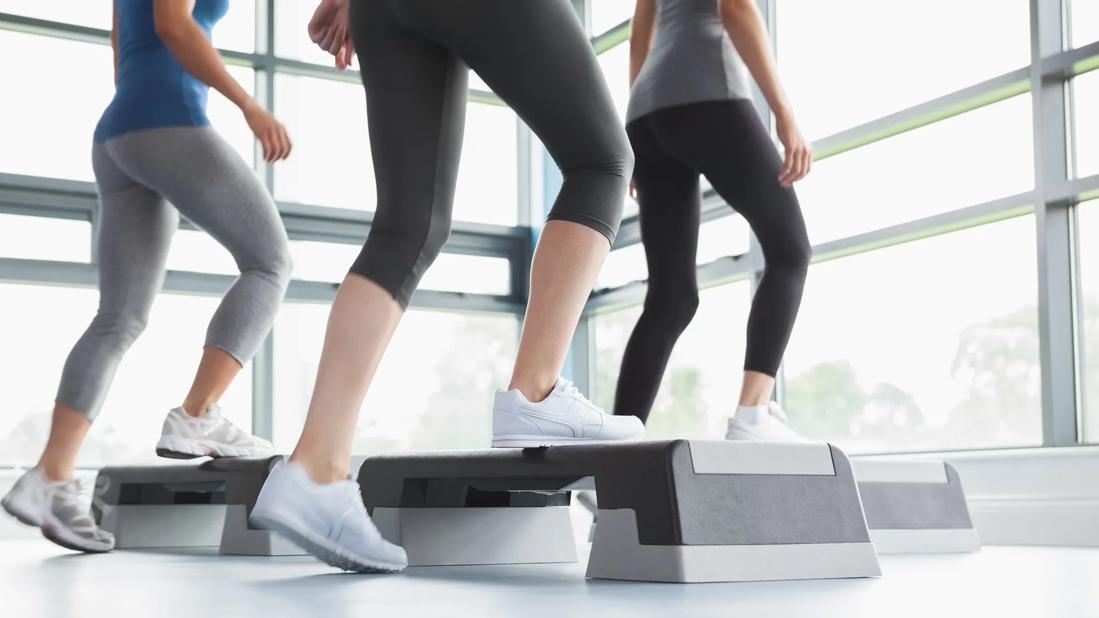
Use a low step or the bottom stair. Hold a railing or wall for support. Step up with your right foot, bring the left foot up, then step down carefully. Repeat 8 to 10 times, then switch the leading leg.
Step-ups are practical because life contains stairs, curbs, porches, buses, and mysterious parking-lot edges. Keep your whole foot on the step and press through the heel. Move slowly enough that you remain in control.
To progress, reduce hand support or use a slightly higher step, but only if your knees and balance tolerate it well.
9. Standing Hip Abduction
Best for: outer hips, pelvis control, walking stability.
Stand behind a chair. Keep your body tall and lift your right leg out to the side without leaning your torso. Lower slowly. Do 10 repetitions, then switch sides.
This move strengthens the side hip muscles, which help keep you steady when standing on one leg. That makes it useful for walking, hiking, climbing stairs, and avoiding the classic “oops, the rug moved” moment.
To progress, pause at the top for two seconds or add a light ankle weight after you have mastered control.
10. Clock Reach
Best for: coordination, reaction control, advanced beginner balance.
Stand on your left leg near support. Imagine you are standing in the center of a clock. Reach your right foot forward to 12 o’clock, lightly tap the floor, then return to center. Tap to 3 o’clock, then 6 o’clock if comfortable. Repeat 3 rounds, then switch legs.
The clock reach trains your standing leg to stabilize while the moving leg explores different directions. It is useful because real life does not always challenge balance in a straight line. Sometimes the cat appears. Sometimes the laundry basket blocks your path. Sometimes both happen, because comedy has timing.
A Simple 10-Minute Balance Routine
Here is an easy routine you can do at home. Move slowly and rest as needed.
- Minute 1: Weight shifts, side to side.
- Minutes 2–3: Sit-to-stand, 8 to 12 repetitions.
- Minutes 4–5: Single-leg stands, 10 to 20 seconds per side.
- Minutes 6–7: Heel-to-toe walk, 2 to 4 passes.
- Minute 8: Calf raises, 10 to 15 repetitions.
- Minute 9: Marching in place.
- Minute 10: Side steps or gentle stretching.
Do this routine two or three times per week at first. If it feels easy and safe, increase to four or five short sessions per week. Balance exercises are low-drama but high-value. They fit nicely into small pockets of time, which means fewer excuses and more progress.
How to Make Balance Exercises Harder Without Making Them Dangerous
Progression is important, but balance training should never turn into a dare. Make only one change at a time. For example, do not close your eyes, stand on a pillow, hold weights, and recite the alphabet backward all at once. That is not fitness; that is a game show.
Safe ways to progress include increasing hold time, reducing hand support, narrowing your stance, slowing the movement, adding controlled head turns, or combining balance with light strength exercises. You can also move from static balance, such as standing still on one foot, to dynamic balance, such as marching or step-ups.
Unstable surfaces like wobble boards can be useful for some people, but they are not required for beginners. Master stable-ground exercises first. A floor, a chair, and consistency can take you surprisingly far.
Common Balance Training Mistakes
Holding Your Breath
Breath-holding makes your body tense. Breathe naturally and keep your jaw relaxed. If your face looks like you are opening a pickle jar, soften up.
Moving Too Fast
Fast movement can hide poor control. Slow practice teaches stability. Think smooth, steady, and boring in the best possible way.
Ignoring Foot Position
Your feet are the foundation. Spread your toes, press evenly through the foot, and avoid rolling onto the outer edge. Better foot awareness often leads to better balance.
Skipping Strength Work
Balance and strength are best friends. Strong legs, hips, ankles, and core muscles make it easier to stay upright and recover from unexpected movement.
Practicing Only When You Feel Unsteady
Balance improves with regular practice. Do not wait until you feel wobbly. A few minutes several times per week works better than occasional panic-training after tripping over a shoe.
Who Benefits From Easy Balance Exercises?
Almost everyone can benefit. Older adults may use balance exercises to reduce fall risk and maintain independence. Office workers can use them to wake up sleepy hips and ankles after long sitting. Athletes can improve coordination and control. People returning to exercise can rebuild confidence. Even active adults may discover that strength does not automatically equal stability. You can squat heavy and still wobble like a newborn deer during a single-leg stand.
Balance training is especially helpful if you notice hesitation on stairs, difficulty walking on uneven surfaces, trouble standing from low chairs, reduced confidence after a fall, or ankle instability. These are signs your body may need more practice controlling weight shifts and responding to movement.
Experience-Based Tips: What Balance Training Feels Like in Real Life
One of the most encouraging things about easy balance exercises is how quickly they become part of normal life. At first, a single-leg stand may feel awkward. You may grip the chair like it owes you money. Your ankle may wobble, your hip may drift, and your lifted foot may keep tapping the floor. That is normal. In fact, those small wobbles are information. Your body is learning where center is and how to return to it.
A practical experience many beginners report is that balance improves faster when exercises are attached to existing habits. For example, standing on one leg while brushing your teeth can turn a forgettable drill into a twice-daily routine. You do not need to hold the pose perfectly. You might start with five seconds on each side, one hand on the sink, and a very serious expression in the mirror. After a couple of weeks, those five seconds may become 15 or 20. The win is not looking graceful. The win is feeling steadier.
Another useful experience is learning that balance changes from day to day. Sleep, stress, hydration, footwear, lighting, and fatigue can all affect stability. Some days you will feel like a statue. Other days you will feel like a shopping cart with one bad wheel. Do not panic. Use support, reduce the difficulty, and keep the habit alive. Balance training is a conversation with your nervous system, and some days your nervous system is still having coffee.
People also tend to underestimate how much the hips matter. Many beginners assume balance lives only in the feet and ankles. Then they try side steps, standing hip abduction, or step-ups and realize the hips are the quiet managers of upright movement. When the side hips get stronger, walking can feel more controlled, knees may track better, and single-leg exercises often become less wobbly. This is why a complete balance routine should include lower-leg strength, hip strength, and core control.
Balance exercises can also build confidence in ordinary situations. Carrying laundry down a hallway, stepping into a shower, walking through a crowded store, or crossing a patch of grass may feel less intimidating when your body has practiced controlled movement. That confidence matters. Fear of falling can sometimes make people move less, and moving less can make balance worse. Gentle practice helps interrupt that cycle.
For the best experience, keep balance training small and consistent. A 10-minute routine done three times per week is more useful than a complicated plan you abandon after two sessions. Track simple milestones: how long you can hold a single-leg stand, how many sit-to-stands you can do with good control, or whether heel-to-toe walking feels smoother. These little markers are motivating because they show progress you can feel in daily life.
Finally, remember that balance training does not need to be boring. Put on music during side steps. Practice heel-to-toe walking down a hallway like you are on a very low-budget fashion runway. Celebrate when you use less chair support. Laugh when you wobble safely. Stability is serious, but the process does not have to be. A steadier body gives you more freedom, and freedom is worth a few funny-looking practice sessions in the living room.
Conclusion
Easy balance exercises to improve stability are simple, practical, and surprisingly powerful. Moves like weight shifts, single-leg stands, heel-to-toe walking, sit-to-stands, marching, calf raises, side steps, and step-ups train the body to stay steady during real-life movement. They strengthen the ankles, legs, hips, and core while sharpening coordination and confidence.
You do not need advanced equipment or long workouts. Start near support, move slowly, practice consistently, and progress only when you feel safe. With a few minutes several times per week, balance training can help you move better, reduce fall risk, and feel more secure in daily activities. Your future selfthe one carrying groceries, climbing stairs, or dodging a surprise pet toywill be very grateful.
Note: This article is for general educational purposes and is not a substitute for medical advice. If you have dizziness, frequent falls, severe pain, recent surgery, or a medical condition that affects movement, consult a qualified healthcare professional before beginning balance exercises.