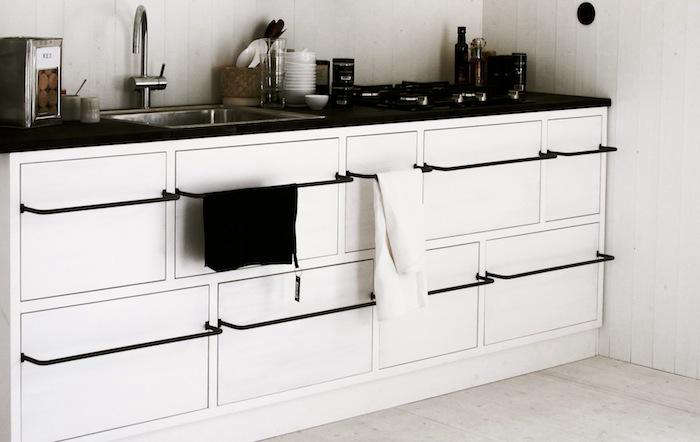
Some of the best design ideas arrive when someone looks at an ordinary object and asks, “What if you had a second job?” A towel bar is business. But place one on a drawer front, and suddenly it becomes a dramatic cabinet pull, a practical towel holder, and the kind of tiny detail that makes visitors squint approvingly at your kitchen.
Using towel bars as drawer pulls is not a gimmick when it is done with intention. It can make a kitchen island feel custom, give a bathroom vanity a hotel-inspired finish, or help a laundry room look less like a place where socks go to disappear. The trick is knowing when the idea is genuinely useful, when it is merely decorative, and when a normal cabinet pull would save you from a future argument with a drill.
Why Towel Bars Make Surprisingly Good Drawer Pulls
Traditional cabinet hardware is often treated as an afterthought. Cabinets get the grand reveal, countertops get the glamorous lighting, and drawer pulls are expected to stand politely in the corner like wallflowers at a wedding. A towel bar changes that equation because it is longer, more architectural, and far more noticeable.
The visual appeal comes from scale. A long, slim bar running across a drawer front creates a clean horizontal line that can make cabinetry feel wider and more deliberate. On a large island drawer, it can look almost like built-in furniture rather than standard kitchen cabinetry. On a vanity, it can create the polished, tailored appearance of a boutique hotel bathroom without requiring a full renovation budget.
There is also a practical bonus: the bar can hold a dish towel, tea towel, or hand towel exactly where it is needed. Instead of installing a separate towel ring, hook, or wall-mounted rail, the drawer handle does double duty. It is the home-design version of wearing sneakers that work for both errands and dinner: efficient, stylish, and suspiciously satisfying.
The Design Appeal of an Oversized Pull
Long cabinet pulls have become popular because they create stronger lines than small knobs or short handles. Towel bars take that idea one step further. Their larger scale works especially well on wide drawers, deep drawers, appliance panels, or large vanity fronts where a tiny pull can look like it got lost on the way to the cabinet.
A towel-bar drawer pull can also make a plain slab-front cabinet look more expensive. Flat-front cabinetry already has a modern, minimalist personality. Add a thin tubular bar in matte black, brushed nickel, polished chrome, aged brass, or bronze, and the cabinet suddenly has a little more confidence. It has put on a blazer, basically.
Where This Hardware Idea Works Best
Kitchen Islands
A kitchen island is one of the best places to use towel bars as drawer pulls. Island drawers tend to be wider than standard cabinet drawers, which means a longer handle looks proportional instead of theatrical. The towel bar can hold a kitchen towel near prep space, making it useful for quick hand drying, wiping spills, or dramatically slinging over your shoulder while pretending you host a cooking show.
This approach is especially effective on the seating side or working side of an island. A long bar can visually anchor a row of drawers and create a repeating rhythm across the cabinetry. For a streamlined look, use one matching towel bar on each large drawer. For a more relaxed, collected effect, use towel bars only on the main island and regular cabinet pulls on surrounding cabinetry.
Bathroom Vanities
Bathroom vanities are another natural match. A drawer pull that also holds a hand towel makes sense near a sink, particularly in powder rooms where wall space is limited. Instead of crowding the room with a separate towel ring, you can place the towel on the vanity drawer front and keep the walls cleaner.
For a single-sink vanity, a towel bar on the top drawer can provide an easy place for a hand towel. In a double vanity, consider using matching bars on both sides or placing them symmetrically on two large drawers. The look feels intentional when the scale and finish coordinate with the faucet, mirror frame, sconces, or shower hardware.
Laundry Rooms
Laundry rooms deserve better than being treated like a utility closet with emotional baggage. A towel bar used as a drawer pull can hold a damp cleaning cloth, a lint-free towel, or a garment that needs a momentary resting place before it is folded, hung, or accidentally adopted by the chair in the bedroom.
Try this idea on a wide drawer beneath a folding counter or on a cabinet beside the washer and dryer. In a laundry room, a stainless steel or matte black finish tends to feel practical and unfussy, while brass can warm up painted cabinetry and make the room feel less chore-adjacent.
Pantries, Mudrooms, and Utility Cabinets
A towel-bar pull can also work beautifully on mudroom cabinetry, pantry drawers, or built-in storage. Long bars give larger drawers better leverage, especially when they are loaded with dog food, cleaning supplies, sports gear, or the mysterious pile of reusable bags that multiplies overnight.
For utility spaces, durability matters more than decorative flourish. Choose a simple bar shape with sturdy mounting points and a finish that can tolerate frequent handling. Textured or brushed finishes tend to hide fingerprints better than highly polished metal, which is useful if your household includes children, pets, or one adult who somehow leaves a fingerprint on every surface they encounter.
How to Choose the Right Towel Bar for Drawer Hardware
Start With the Shape, Not the Finish
The most successful towel-bar drawer pulls are usually simple. Look for straight bars, slim cylinders, squared rails, or gently rounded profiles. Decorative towel bars with elaborate backplates, heavy scrollwork, or ornate finials can work in a traditional room, but they need enough visual breathing room. On a busy cabinet front, too much decoration can make the drawer look like it is wearing costume jewelry before breakfast.
Minimal tubular bars work well in Scandinavian, modern, transitional, and industrial spaces. Square bars feel sharper and more contemporary. Rounded brass rails can soften painted cabinetry and add warmth to a vintage-inspired kitchen or bathroom.
Consider Projection and Hand Clearance
A pull should be comfortable to grab. Before buying anything, hold your hand behind the bar in the same way you would open a drawer. Can your fingers fit without scraping your knuckles against the cabinet front? Can you comfortably grip it when the drawer is heavy? Does the bar stick out so far that it will catch on clothing, hips, or passing toddlers?
This is where “looks great online” meets “why did I bruise my hip again?” A towel bar with generous clearance can be easy to use, but too much projection may become annoying in a narrow kitchen or compact bathroom. Low-profile bars are safer in tight walkways, while deeper bars can work well on a large island or vanity with room to spare.
Measure Center-to-Center Spacing
Cabinet hardware is usually sized by center-to-center spacing, meaning the distance between the centers of the mounting holes. Towel bars are often measured by overall width or by the usable length of the bar, which can make shopping slightly more confusing than it needs to be.
Measure the drawer front first. Then decide whether the towel bar should span most of the drawer width, sit centered with generous margins on both sides, or align with other details in the room. A wide drawer generally looks balanced with a longer pull or two evenly spaced pulls. On a large drawer, a very short handle can look timid; on a narrow drawer, a giant bar can feel like it is trying to file for a leadership role.
Match the Material to the Room
Finish matters, but perfect matching is not always required. Brushed nickel, polished chrome, matte black, bronze, and brass can all work beautifully when repeated elsewhere in the room. The goal is coordination, not a hostage situation where every metal must be identical.
For example, matte black towel-bar pulls can connect black window frames, pendant lights, or faucet details. Brushed brass can echo warm lighting, wood tones, or vintage fixtures. Polished chrome feels crisp in classic bathrooms. Unlacquered brass develops character over time, while coated brass stays more consistent. Neither choice is wrong; one simply ages like a leather jacket, and the other prefers to keep its passport photo forever.
Installation: The Part Where Measuring Twice Becomes a Lifestyle
Using a towel bar as a drawer pull requires more thought than replacing a standard handle. Many towel bars are designed for wall mounting, with brackets, concealed fasteners, and hardware intended for drywall or studs. Drawer pulls, by contrast, are typically mounted through the cabinet front with screws that tighten from the inside of the drawer.
That difference matters. A towel bar may look perfect, but its mounting system might not be suitable for a drawer front without modification. Before buying, inspect the installation method carefully. The best option is a bar that can be securely through-bolted to the drawer face or adapted by a qualified cabinetmaker or hardware professional.
Use a Mockup Before Drilling
Painter’s tape is your best friend here. Tape a paper template or the actual bar in place, step back, and look at the cabinetry from several angles. Open the drawer. Stand at the counter. Walk past it. Pretend you are carrying a stack of plates. This may sound theatrical, but hardware placement affects how a room feels every day.
Check whether the towel will hang comfortably without dragging against the floor, catching on adjacent drawers, or blocking a cabinet door. In a bathroom, make sure the towel will not brush against the toilet, shower, or damp floor. In a kitchen, confirm that a hanging towel will not sit too close to a hot oven handle or cooking surface.
Choose Strong Fasteners
Heavy drawers need strong mounting. The hardware should be attached through solid drawer fronts using screws, bolts, washers, or mounting hardware appropriate for the material. Thin or hollow cabinet fronts may need reinforcement on the inside so repeated pulling does not loosen the mounting points over time.
Do not assume that a towel bar designed for a wall can handle the same load when used as a drawer pull. A wall-mounted bar is typically supported by brackets and anchors; a drawer pull experiences repeated forward force every time the drawer opens. The hardware needs to be stable, aligned, and firmly attached before it becomes a daily workhorse.
Use a Template or Jig
A cabinet hardware template or drilling jig helps keep holes level and evenly spaced. This is particularly valuable when installing multiple towel bars across several drawers. A bar that is off by a few millimeters may not seem dramatic at first, but once installed in a row, it can become the visual equivalent of a crooked picture frame you cannot stop noticing.
Mark carefully, drill pilot holes where appropriate, and double-check the measurements before committing. Cabinet holes are surprisingly permanent for something made by a tool that looks so innocent.
When Towel Bars as Drawer Pulls Are Not the Best Idea
This is a clever design move, not a universal solution. Skip it when the drawer front is too thin, the bar cannot be properly secured, or the drawer is so heavy that it needs hardware engineered specifically for high-load use.
It may also be less practical on drawers directly below a sink if the towel will constantly absorb splashes, drip onto the cabinet, or interfere with opening the drawer. In high-traffic kitchens, a towel hanging from a drawer pull can become a magnet for crumbs, cooking splatters, and the occasional mystery substance. Towels are brave, but they have limits.
For paneled appliances, use appliance-rated pulls rather than ordinary towel bars unless the product is specifically designed for that use. Refrigerator, dishwasher, and pantry appliance panels can require stronger hardware and specialized mounting. This is not the place to improvise because a cabinet handle looked charming on a mood board.
Design Combinations That Make the Look Feel Intentional
Scandinavian Simplicity
Pair pale oak, white oak, ash, or warm painted cabinetry with slim brushed stainless steel, matte black, or brass towel bars. Keep the rest of the room quiet: simple pendants, open shelving, neutral tile, and minimal clutter. The goal is calm, useful, and slightly smug in the best possible way.
Warm Modern Brass
Use unlacquered or brushed brass towel bars on deep green, charcoal, navy, cream, or natural wood cabinetry. Add warm lighting and a simple stone countertop. This combination works especially well in bathrooms and kitchens that need a little glow without becoming overly formal.
Industrial Utility
Choose black, bronze, or stainless steel bars with a tubular profile. Pair them with dark cabinetry, concrete-look counters, white tile, or open shelving. This version feels sturdy, practical, and ready to survive a family breakfast, a baking project, and a small apocalypse.
Classic Painted Cabinetry
For Shaker cabinets or traditional painted cabinetry, choose a towel bar with softly rounded ends or subtle mounting plates. Brass, polished nickel, and aged bronze can all work beautifully. Keep the bar proportional to the drawer front so the look feels tailored rather than accidental.
Design Sleuth Experience: What This Detail Teaches You About Good Interiors
There is a particular kind of satisfaction that comes from spotting a familiar object used in an unfamiliar way. You see a towel bar on a drawer and your brain needs a second to catch up. It is not loud. It is not gimmicky. It simply makes sense after you notice it. Those are often the best design details because they reward attention without demanding applause.
In one imagined kitchen, picture a long white oak island with broad drawers facing the cooking area. Instead of ordinary cabinet pulls, each drawer has a thin brushed brass towel bar. A striped linen towel hangs from the center drawer. The brass repeats in the faucet and pendant lights, but not obsessively. The room feels warm, clean, and quietly expensive. The towel bar is doing more than opening a drawer; it is creating a rhythm across the cabinetry and making a practical object part of the room’s visual language.
In another setting, imagine a compact powder room with a floating vanity. There is not enough wall space for a hand towel ring without making the room feel crowded. A slim polished nickel bar stretches across the vanity drawer, holding a neatly folded hand towel. The solution saves wall space, keeps the towel within reach, and makes the vanity feel like a custom piece. It is a small change, but small changes are often what separate “nice bathroom” from “someone made thoughtful choices in here.”
The experience of using towel bars as drawer pulls also reveals how important touch is in home design. A cabinet is not only viewed; it is opened, leaned against, wiped down, bumped into, and used while someone is holding a baby, a mixing bowl, or three grocery bags they absolutely should have carried in two trips. Hardware becomes part of the daily choreography of a room.
A beautiful bar that feels awkward in the hand will eventually become annoying. A perfectly sized bar that gives you a solid grip, keeps a towel handy, and makes the drawer easy to open becomes invisible in the best way. It works so well that you stop noticing it, which is often the final test of functional design. The hardware has graduated from decoration to trusted teammate.
There is also something refreshing about letting one element perform two jobs. Homes are full of single-purpose objects that consume visual space: towel rings, hooks, rails, pulls, handles, racks, holders, organizers, and the occasional mysterious basket whose only role is to hold other baskets. A towel-bar drawer pull reduces some of that clutter by merging function. It gives you a place to grip the drawer and a place to hang the towel, without adding another object to the wall.
That does not mean every drawer should suddenly wear a towel bar. The charm comes from restraint. One or two well-placed bars can feel clever and architectural. Ten may make your cabinetry look as though it joined a gym and became very passionate about pull-ups. The best approach is to identify the drawers where a towel genuinely belongs: near a sink, prep area, laundry counter, or utility zone.
Ultimately, this design idea is a reminder to look beyond labels. A towel bar does not have to live in a bathroom. A drawer pull does not have to be small. A practical detail can still be beautiful. When you start looking at your home this way, you notice opportunities everywhere: hooks that could become handles, rails that could become organizers, vintage hardware that could become wall storage, and ordinary objects that might have a more interesting second act.
That is the real joy of being a design sleuth. You are not simply shopping for something prettier. You are noticing how objects behave, how people move through a room, and how a small adjustment can make a space feel more useful, more personal, and more alive. Sometimes the answer is a major renovation. Sometimes it is a towel bar with a new job description.
Final Thoughts
Towel bars as drawer pulls are a clever way to create custom-looking cabinetry while adding real everyday function. They work best on wide drawers, kitchen islands, bathroom vanities, laundry counters, and utility cabinets where a towel is genuinely useful. Choose a simple profile, test the grip and projection, verify the mounting system, and measure carefully before drilling.
The result can be elegant, useful, and unexpectedly memorable: a small hardware decision that turns ordinary cabinetry into a design feature. Not bad for something that started life expecting to hold a towel.