Locks are small machines with a very large job. They protect homes, offices, bicycles, cabinets, storage units, and the kitchen drawer where someone hides the good chocolate. Yet many buyers choose hardware mainly by finish, as though matte black alone can stop a determined intruder.
users, the environment, and emergency-exit needs. This comprehensive guide to locks explains common mechanisms, major lock types, ratings, smart-lock safety, installation, maintenance, and practical lessons from real-world situations.
Hon method with a physical barrier. A key, code, card, fingerprint, or phone proves permission; the mechanism then moves a latch, bolt, cam, shackle, or locking bar.
Keyway and Cylinder</h3 key aligns them at the shear line, allowing the plug to rotate and operate the bolt. Other designs use wafers, discs, sidebars, or proprietary elements, but the principle is similar: only the correct credential permits movement.
Latch Bolt and Deadbolt
Latch Bolt and Deadbolt
A late automatically. A deadbolt moves deliberately by key, thumbturn, code, or motor. Because it is not spring-loaded, it generally offers stronger exterior-door security. The latch handles daily closing; the deadbolt does the serious work.
Strike, Door, and Fra in the door frame. A premium deadbolt in a weak jamb with tiny screws is like hiring a bodyguard and giving that person a chair made of crackers. Door material, hinges, frame strength, fasteners, nearby glass, and wall construction all affect real performance.
Common Types of Locks
Knob and Lever Locks
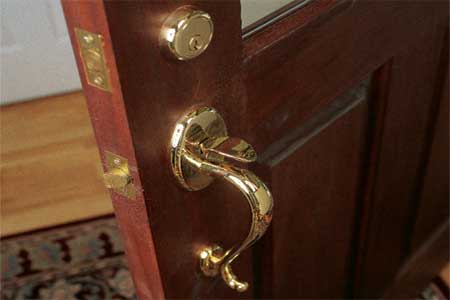
Keyed knobs and levers contain a cylinder in the handle and use a spring latch. They are convenient, but they should not be the only protection on a primary exterior door. Pair them with a deadbolt. Lever handles are often easier for children, older adults, and people with limited hand strength.
Deadbolts
A single-cylinder deadbolt uses a key outside and a thumbturn inside. A double-cylinder model requires a key on both sides. Double cylinders can complicate emergency escape and may be restricted by local rules, so fast, key-free interior operation is usually preferable in occupied homes.
For exterior use, look for a substantial bolt throwcommonly about one incha reinforced strike, and smooth full extension. If you must push, pull, or lift the door to lock it, fix the alignment rather than treating the nightly shoulder workout as a feature.
Mortise Locks
A mortise lock fits inside a rectangular pocket cut into the door edge. Its case may combine a latch, deadbolt, and specialized functions. Mortise hardware is common in commercial buildings, apartments, older homes, and high-use openings. It can be durable and serviceable, but installation is more demanding than replacing a standard bored lockset.
Rim and Multipoint Locks
Rim locks mount on the inside surface of a door. Traditional versions suit historic properties, while jimmy-resistant rim deadbolts can help where conventional installation is difficult. Multipoint systems secure a door at several locations with one operation and are common on patio, French, tall, and insulated doors. They improve sealing and distribute force, though adjustment and parts may be specialized.
Padlocks
Padlocks protect gates, lockers, toolboxes, storage units, trailers, and equipment. Choose body material, shackle diameter, clearance, and weather resistance for the job. A long shackle may fit an awkward hasp but exposes more metal. Shrouded shackles reduce exposure, while brass or stainless components can perform better in wet or corrosive environments. The hasp must be at least as strong as the padlock.
Cam and Cabinet Locks
Cam locks rotate a metal arm behind a panel and commonly secure mailboxes, cabinets, drawers, and display cases. Many provide privacy or basic access control rather than high security. For medicine, chemicals, confidential files, or valuable equipment, use hardware designed for that specific risk.
Combination, Electronic, and Smart Locks
Combination locks replace keys with a sequence or PIN. Mechanical models need no batteries; electronic keypads may provide temporary codes, audit trails, and automatic relocking. Avoid obvious codes and change shared credentials when access ends.
Electronic locks may accept PINs, cards, fobs, fingerprints, or phones. Smart locks add networking, remote control, alerts, schedules, access logs, geofencing, or home-automation integration. Full-replacement models replace most of the existing lock, while retrofit units often retain the outside cylinder and replace the interior thumbturn assembly. Judge both the mechanical hardware and the digital security.
Understanding Lock Grades and Certifications
ANSI/BHMA standards test hardware for factors such as operating cycles, strength, security, materials, dimensions, and finish. Traditional architectural grades commonly use Grade 1, Grade 2, and Grade 3, with Grade 1 representing the highest performance in that system. Some residential standards use A, B, and C levels.
A rating only makes sense when tied to the named product category and test standard. Recognized certification is more meaningful than advertising phrases such as “ultimate fortress security,” especially when the fortress is hanging from thin cardboard. For many home exterior doors, a certified residential deadbolt or suitable Grade 1 or Grade 2 product is a sensible target. Fire-rated, commercial, institutional, and emergency-egress doors may require specific listed hardware.
How to Choose the Right Lock
Match Security to the Risk
A bathroom needs privacy, not a bank-vault cylinder. A shed holding expensive tools needs more than a luggage lock. Identify what is being protected, how often the opening is used, the likely entry methods, and the consequences of failure. Prioritize exterior doors, attached-garage access, vulnerable gates, and storage containing valuable or hazardous items.
Inspect the Entire Opening
Check the door, frame, hinges, strike area, sidelights, mail slots, pet doors, and nearby windows. A reinforced strike with appropriate long screws reaching solid framing can improve practical resistance more than a fancy cylinder installed in a weak jamb. Sliding doors also need suitable locks and anti-lift or track protection.
Measure Before Buying
Confirm door thickness, bore size, backset, latch face, strike dimensions, hole spacing, and handing when necessary. Ten minutes with a tape measure can prevent the traditional hardware-store ritual of buying the same lock twice.
Decide Whether to Rekey or Replace
Rekeying changes the lock’s internal coding so old keys stop working while the hardware remains. It is useful after moving, tenant turnover, staff changes, or a lost key. Replace the lock when it is worn, damaged, poorly rated, incompatible, unsupported, or due for a functional upgrade.
Protect Emergency Egress
Occupants must be able to leave quickly during a fire or other emergency. Avoid systems that require searching for a key in the dark. Keep exits clear, ensure doors open smoothly, and consider children, guests, older adults, and people with disabilities. Security that traps authorized occupants has failed.
Smart Lock Security Checklist
- Use unique credentials: Do not reuse passwords from email, banking, or social media.
- Enable multifactor authentication: Protect both the lock account and its recovery email.
- Install updates: Enable automatic updates when available and check how long the manufacturer promises support.
- Secure home Wi-Fi: Change router defaults, use current encryption, update firmware, and consider a separate smart-device network.
- Assign individual codes: Use temporary or scheduled access for guests, cleaners, contractors, and deliveries.
- Review alerts and logs: Watch for failed attempts, unexpected unlocking, or a door reported open.
- Prepare for outages: Understand low-battery warnings, backup power, mechanical-key access, and offline operation.
- Reset during ownership changes: Remove users, transfer accounts, revoke codes, and confirm remote access has ended.
Installation and Maintenance
Poor alignment is a frequent problem. A bolt rubbing the strike makes keys harder to turn, forces smart-lock motors to work harder, drains batteries, and encourages users not to lock the door fully. Correct sagging hinges, weatherstripping pressure, jamb movement, or strike position instead of forcing the mechanism.
Use the manufacturer’s reinforcement and appropriate fasteners. Do not blindly drive long screws near glass sidelights, wiring, or hidden building components. Avoid overtightening screws until the lock binds, installing the latch backward, using indoor hardware outdoors, or pairing a strong padlock with a weak hasp.
Twice a year, tighten loose hardware, clean exposed surfaces, check weather seals, test keys and codes, and inspect batteries. Use only manufacturer-recommended lubricant; the wrong oily spray can collect dust and create a tiny grit smoothie. If a lock works with the door open but not closed, alignment is the likely culprit. Replace hardware after forced-entry damage, severe corrosion, repeated failure, or loss of software support.
Practical Experiences and Real-World Lessons
The following composite scenarios reflect common homeowner, renter, landlord, and property-manager experiences. They show why the best security result usually comes from compatible hardware, correct installation, and disciplined access managementnot simply the most expensive product.
The Strong Deadbolt and Weak Frame
A homeowner upgraded to a highly rated deadbolt but reused the original strike because it aligned perfectly. Unfortunately, the small strike was attached only to soft jamb material with short screws. The lock itself was strong, but the structure receiving its bolt was not.
The homeowner later added an appropriate reinforced strike anchored into solid framing, tightened the hinges, and corrected a slight sag. The upgrade was less exciting than buying the lock, but the door felt more solid and the bolt moved smoothly. The experience proved that the opening must be treated as a system.
The Smart Lock That Ate Batteries
A family installed a keypad lock so children, relatives, and a dog walker could have separate codes. Soon, batteries seemed to vanish faster than road-trip snacks. The lock was not defective. Seasonal door movement made the bolt scrape the strike, forcing the motor to fight through every cycle.
After adjusting the strike and tightening hinges, battery life improved. The family created individual codes, scheduled temporary access for service providers, enabled alerts, and stored the backup key securely instead of hiding it under the world’s least secret flowerpot.
The Rental With Mystery Keys
A landlord took over a property with good hardware but no record of who held key copies. Rekeying invalidated unknown keys without wasting serviceable locks. Current occupants received controlled keys, and authorized access was documented.
Later, one worn cylinder continued sticking despite alignment and maintenance, so it was replaced. The lesson was clear: rekeying solves a credential problem; replacement solves a hardware, performance, compatibility, or support problem. The landlord also stopped labeling keys with full property addresses.
The Heroic Padlock and Tiny Hasp
A shed owner installed a heavy weather-resistant padlock on a thin hasp held by exposed screws. The padlock looked ready to secure a shipyard; the hasp looked ready to secure a lunchbox. Strengthening the hasp, protecting fasteners, and improving the door attachment balanced the system.
The owner also chose a shorter, better-protected shackle and hardware suited to outdoor exposure. Periodic cleaning and approved maintenance prevented rain, dust, and corrosion from turning the lock into an accidental sculpture.
The Double-Cylinder Decision
A household considered a double-cylinder deadbolt because glass was near the door. However, family members would need a key to exit, raising concerns about children, guests, and emergency evacuation. After checking local requirements and consulting a professional, they prioritized quick interior release and addressed the glass vulnerability through other compatible measures.
This experience captured the central challenge of lock selection: balancing burglary resistance with fire safety, accessibility, convenience, and human behavior. A system that depends on everyone remembering a special step during a crisis is rarely as dependable as one that works naturally under stress.
The Best Upgrade Was a Routine
Across these examples, the biggest improvement came from habits: lock exterior doors consistently, correct alignment, reinforce weak strikes and hasps, remove outdated access, update smart devices, test backup entry, and make sure everyone can exit quickly. Hardware creates capability; routines determine whether that capability is used.
Conclusion
Choose locks by purpose, tested performance, compatibility, and safe operationnot appearance alone. Exterior doors benefit from certified deadbolts, reinforced frames, smooth alignment, and disciplined key control. Smart locks add useful codes, alerts, and remote management, but they require secure accounts, supported software, reliable batteries, and protected networks.
Mechanical or electronic, every lock must work with the entire opening and the people using it. Install carefully, maintain periodically, and remember the golden rule of security hardware: the lock should be the least dramatic part of your day.