Note: This article is written for web publishing and summarizes real, publicly reported information about the Titan submersible recovery, investigation, and lessons learned.
The recovery of debris and presumed human remains from the Titan submersible marked one of the most sobering chapters in modern deep-sea exploration. What began as a high-profile search for a missing vessel near the Titanic wreck site ended as a forensic investigation into a catastrophic implosion, five deaths, and a troubling question: how did an ambitious private expedition become a global maritime tragedy?
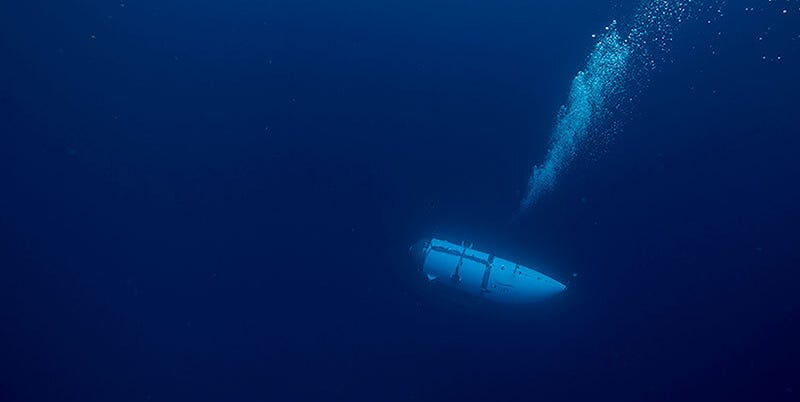
The Titan submersible, operated by OceanGate, disappeared on June 18, 2023, during a descent to the wreck of the RMS Titanic in the North Atlantic. On board were OceanGate CEO Stockton Rush, British adventurer Hamish Harding, French Titanic expert Paul-Henri Nargeolet, British-Pakistani businessman Shahzada Dawood, and his 19-year-old son, Suleman Dawood. The vessel lost contact with its support ship, Polar Prince, less than two hours into the dive. For several days, the world watched as search teams scanned a remote, hostile stretch of ocean where hope and physics were not exactly holding hands.
Days later, remotely operated vehicles discovered debris on the seafloor near the Titanic wreck. Officials concluded that Titan had suffered a catastrophic implosion. Later recovery operations brought pieces of the submersible to shore, along with presumed human remains found within the wreckage. The discovery shifted public attention from rescue to accountability, from oxygen estimates to engineering evidence, and from dramatic headlines to the difficult work of understanding what failed.
What Was Recovered from the Titan Submersible?
The first major recovery of Titan debris took place after the vessel’s remains were located on the ocean floor. Pieces of the submersible were brought to St. John’s, Newfoundland, where investigators received debris and evidence recovered from the site. The recovered material included parts of the vessel’s structure, landing frame, tail cone components, titanium end pieces, electronics, and other fragments that could help investigators reconstruct the sequence of failure.
The U.S. Coast Guard also announced that presumed human remains had been carefully recovered from within the wreckage. Those remains were turned over to U.S. medical professionals for formal analysis. In a disaster involving an implosion at extreme depth, recovery is not like a typical shipwreck investigation. The pressure near the Titanic site is immense, the environment is dark and cold, and the debris field can be scattered in ways that make every piece of evidence valuable.
A follow-up salvage mission later recovered additional debris and more presumed human remains from the North Atlantic seafloor. This second recovery included what officials described as remaining evidence from Titan, which was transferred to a U.S. port for cataloging and analysis. Investigators from multiple agencies, including U.S. and international partners, reviewed the evidence to determine what further forensic testing would be needed.
Why the Debris Mattered So Much
In a deep-sea implosion, the wreckage tells a story that no witness can. Titan was not destroyed by a slow leak or a dramatic movie-style crack with warning music in the background. Investigators later concluded that the pressure hull failed, causing the vessel to implode almost instantly. That means the physical remains of the submersible became the primary source of truth.
Debris analysis can reveal whether a pressure vessel failed at a joint, along a material layer, around an opening, or because of accumulated structural damage. With Titan, particular attention centered on its carbon fiber composite pressure vessel, its titanium end caps, adhesive bonds, real-time monitoring data, prior dive history, and whether warning signs had been properly understood.
The recovered parts helped investigators compare design expectations with real-world damage. In plain English: engineers needed to know whether Titan failed because the ocean did something surprising, or because the submersible was never as strong and durable as it needed to be. Spoiler alert: the ocean was behaving exactly like the ocean. At Titanic depth, it applies pressure with the patience of a tax auditor and the mercy of a hydraulic press.
The Human Remains Recovery: A Difficult but Important Process
The phrase “presumed human remains” is clinical, but the reality behind it is deeply human. Five people died aboard Titan. Each had a family, a story, and a reason for being there. The recovery and analysis of remains served several purposes: identification, documentation, closure for families, and support for the broader investigation.
Authorities handled the remains carefully and transferred them for professional medical analysis. In maritime investigations, especially those involving extreme conditions, such analysis can be difficult, limited, and emotionally heavy. The goal is not spectacle. It is respect, accuracy, and evidence preservation.
For the families, the recovery of remains could not undo the tragedy, but it offered a formal acknowledgment that their loved ones were found, identified where possible, and treated with dignity. In a story often dominated by engineering diagrams and courtroom-style questions, that human element should never be pushed into the footnotes.
How the Titan Disaster Unfolded
Titan’s final dive began as part of an expedition to view the Titanic wreck, located roughly 12,500 feet below the ocean surface. The submersible was designed to carry five people and was marketed as a way for paying “mission specialists” to participate in deep-sea exploration. The journey was expensive, rare, and risky.
When Titan lost communication, search teams from the United States, Canada, and other partners mobilized aircraft, ships, sonar equipment, and deep-sea remotely operated vehicles. Early reports focused on the vessel’s estimated oxygen supply, which created a tense countdown. But acoustic data and the later discovery of debris suggested the implosion occurred around the time contact was lost.
On June 22, 2023, search crews found a debris field near the Titanic. Officials said the debris was consistent with a catastrophic loss of the pressure chamber. The announcement ended the rescue phase and began the investigation phase. The ocean had given up enough evidence to confirm the worst, but not enough to answer every question.
What Investigators Later Found
Official investigations later focused on Titan’s design, testing, maintenance, and operational decisions. The National Transportation Safety Board found that the pressure vessel likely sustained damage after an earlier dive and that additional damage worsened its condition before the fatal dive. Investigators concluded that local buckling of the pressure vessel led to the implosion.
The NTSB also found that OceanGate’s engineering process was inadequate. Titan’s carbon fiber composite pressure vessel contained multiple anomalies and did not meet the strength and durability requirements needed for safe operations at extreme depth. Because the vessel was not adequately tested, OceanGate did not fully understand its actual durability or the implications of storage, towing, and repeated dives.
The Coast Guard’s Marine Board of Investigation described the tragedy as preventable. Its findings pointed to inadequate design, certification, maintenance, and inspection processes. The report also cited weak regulatory frameworks, problems with safety culture, and failures to properly investigate earlier warning signs. In other words, this was not simply a freak accident. It was a chain of decisions, assumptions, and missed opportunities.
The Role of Carbon Fiber in the Titan Submersible
One of the most discussed aspects of Titan was its carbon fiber composite hull. Carbon fiber is strong, light, and useful in many industries, including aviation and motorsports. But deep-sea pressure creates a very different challenge. At Titanic depth, the hull must withstand crushing external pressure over and over again.
Traditional deep-sea crewed submersibles often rely on materials such as titanium or steel for pressure hulls. Titan’s hybrid design, which combined carbon fiber with titanium components, was unconventional. Critics had raised concerns about whether carbon fiber was appropriate for repeated deep dives under compression. After the disaster, those concerns became central to the investigation.
The issue was not simply that carbon fiber exists. It was whether this specific pressure vessel was designed, manufactured, tested, monitored, maintained, and independently reviewed with enough rigor for human life at extreme depth. The answer from investigators was painfully clear: no.
Why the Recovery Was Technically Difficult
Recovering debris from the Titan submersible was not as simple as sending down a hook and hoping for the best. The Titanic wreck lies in a remote part of the North Atlantic, more than two miles beneath the surface. At that depth, humans cannot simply dive down. Specialized remotely operated vehicles must do the work.
These machines operate in darkness, cold temperatures, crushing pressure, and complex terrain. They must locate debris, document its position, assess whether pieces can be moved, and bring evidence back without damaging it further. The process requires coordination among ship crews, engineers, investigators, medical professionals, and maritime authorities.
Every recovered fragment mattered. A section of hull, an end cap, a ring, wiring, or a piece of composite material could help reveal the direction of forces during implosion. The debris was not just wreckage; it was testimony written in metal, carbon fiber, and fracture patterns.
What the Titan Case Means for Deep-Sea Tourism
The Titan tragedy forced a hard conversation about private exploration. Adventure tourism has expanded into places once limited to national programs, scientific institutions, or heavily regulated industries. People can now pay to climb dangerous peaks, fly near space, or descend toward historic shipwrecks. The question is not whether humans should explore. We absolutely should. Curiosity is one of our better features, right up there with coffee and the ability to invent snacks.
The real question is how exploration should be governed when paying passengers are involved. When a company sells access to extreme environments, it must do more than inspire awe. It must prove competence. It must welcome independent review. It must treat safety concerns as warnings, not personal insults. Innovation is exciting, but innovation without verification is just a gamble wearing a nice brochure.
The Coast Guard and NTSB recommendations pointed toward stronger oversight, clearer standards, improved emergency planning, and better rules for pressure vessels carrying humans. The Titan case may become a turning point for the submersible industry, especially for private operators working beyond traditional regulatory boundaries.
Lessons from the Titan Submersible Recovery
1. Extreme environments do not forgive shortcuts
The deep ocean is not impressed by confidence, branding, or bold mission statements. At extreme depth, engineering must be proven, tested, inspected, and independently challenged. If a pressure vessel has known anomalies, the correct response is not optimism. It is removal from service until the issue is fully understood.
2. Real-time monitoring is useful only if people act on it
Titan reportedly used monitoring systems intended to track the hull’s condition. But data does not save lives by merely existing. Someone must interpret it correctly and respond decisively. A warning ignored is not a safety feature; it is a receipt for future regret.
3. Culture can be as dangerous as hardware
Investigators and former insiders raised concerns about workplace culture, oversight avoidance, and the treatment of safety criticism. In high-risk industries, a culture that discourages dissent can become part of the failure mechanism. The strongest hull in the world cannot compensate for leadership that refuses to listen.
4. Families deserve dignity, not spectacle
The recovery of human remains was an important part of the investigation, but it should be discussed respectfully. Public curiosity is natural, yet the people aboard Titan were not characters in a disaster drama. They were human beings whose families had to absorb an unimaginable loss under the glare of global attention.
Experiences and Reflections Related to the Titan Submersible Tragedy
For many people, the Titan disaster became one of those rare news events that felt impossible to look away from. The story combined mystery, technology, wealth, risk, the Titanic, and the terrifying scale of the deep ocean. It was a modern tragedy wrapped around a historic tragedy, which is probably why it lodged itself so firmly in public memory.
One experience many readers shared was the strange emotional shift during the search. At first, people followed updates with cautious hope. Maybe the vessel had surfaced and could not communicate. Maybe it was trapped but intact. Maybe the passengers were conserving oxygen. News outlets showed maps, countdowns, and diagrams. Social media turned into a giant, anxious waiting room where everyone suddenly had opinions about sonar, ballast systems, and underwater rescue logistics.
Then the discovery of debris changed everything. The story moved from suspense to grief. The idea of rescue was replaced by the reality of implosion. That shift was emotionally jarring because people had spent days imagining survival scenarios. Once officials confirmed the debris was consistent with catastrophic failure, the public had to process that the passengers were likely gone almost from the beginning.
Another powerful experience was the way the Titan case made ordinary people think about engineering ethics. Most of us use technology every day without questioning every bolt, battery, adhesive, or software system behind it. We board planes, ride elevators, cross bridges, and trust that somebody, somewhere, tested the important parts. The Titan disaster pulled back the curtain and reminded people that safety is not magic. It is a system built from standards, inspections, humility, and people willing to say, “Stop, this is not ready.”
The tragedy also changed how many people view adventure tourism. There is nothing wrong with wanting extraordinary experiences. Humans have always climbed higher, sailed farther, and dived deeper. But Titan showed the difference between brave exploration and poorly controlled risk. A waiver does not replace engineering. A high ticket price does not guarantee safety. A charismatic founder does not become a certification body just because he speaks confidently.
For families watching from home, one of the most relatable parts of the story was the father-son presence aboard Titan. Shahzada and Suleman Dawood became symbols of the personal stakes behind the headlines. Many parents could not help imagining the fear of losing a child, while many young people saw in Suleman someone close to their own age who had joined a once-in-a-lifetime journey. That emotional connection made the disaster feel less like an abstract maritime case and more like a family tragedy.
There is also a lesson in how the public talks about disasters. The internet reacted quickly, sometimes compassionately and sometimes cruelly. Memes appeared before families had answers. Hot takes arrived before evidence did. The Titan case is a reminder that curiosity should be paired with restraint. It is possible to discuss engineering failure, corporate accountability, and regulatory gaps without forgetting that five people died.
In the end, the recovery of Titan’s debris and human remains did more than close a search. It opened a broader conversation about trust. We trust innovators to test their ideas. We trust companies to be honest about risk. We trust regulators to keep pace with new industries. And when that trust breaks under pressure, the consequences can be irreversible. The deep sea is beautiful, mysterious, and scientifically important. But it is not a stage for wishful thinking. Titan’s wreckage reminds us that exploration deserves courage, yesbut courage must travel with discipline, evidence, and respect for the forces waiting in the dark.
Conclusion
The recovery of debris and presumed human remains from the Titan submersible was a grim but necessary step in understanding one of the most significant maritime disasters of recent years. The evidence recovered from the ocean floor helped investigators examine how the submersible failed, why warning signs may have been missed, and what must change before private deep-sea expeditions continue carrying people into extreme environments.
The Titan story is not only about a failed vessel. It is about engineering responsibility, regulatory gaps, safety culture, and the human cost of unchecked confidence. The ocean did not need to be dramatic to be deadly. It only needed pressure, time, and a weakness that should have been found before five people stepped inside.