Note: This is an original, SEO-optimized article written in standard American English. It is inspired by real public reporting about Jenny-Jinya’s animal-welfare comics and does not reproduce the original comic panels.
Some artists make you laugh. Some make you think. Jenny-Jinya has built a reputation for doing both things and then, right when your guard is down, politely handing your heart to a tiny cartoon Grim Reaper. The German illustrator, also known as Jenny Hefczyc, became widely recognized for emotional animal-welfare comics such as “Good Boy” and “Black Cat,” stories that turned simple panels into full-blown tissue emergencies.
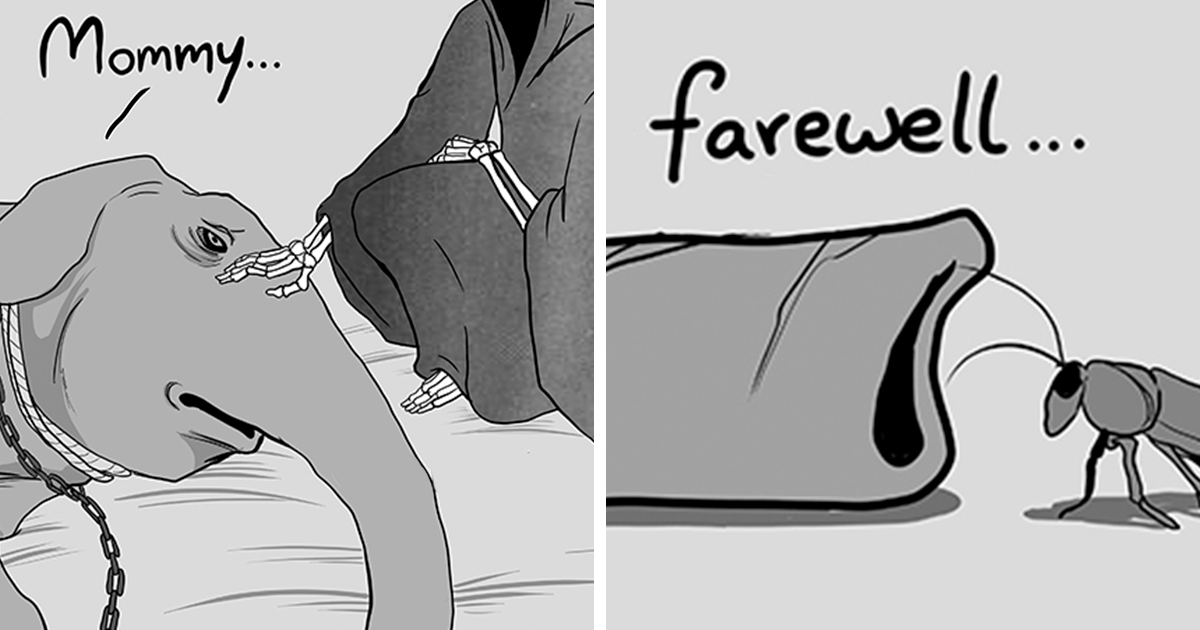
Now, one of her most discussed tearjerkers turns toward elephants, specifically the hidden suffering behind elephant rides and tourist entertainment. The comic follows an elephant used for rides, placing readers inside a story that is sweet, devastating, and impossible to shrug off with a casual “well, that was sad” before scrolling to sandwich photos. It asks a simple question: if tourists knew what often happens before an elephant becomes calm enough to carry strangers, would they still buy the ticket?
That question is why this elephant comic matters. It is not only a sad webcomic. It is a compact lesson in empathy, ethical travel, and the uncomfortable truth that many animal attractions look charming from the vacation brochure but very different from the animal’s point of view.
Who Is Jenny-Jinya, the Artist Behind the Viral Animal Comics?
Jenny-Jinya is best known as the creator of “Loving Reaper,” a webcomic series where a gentle, hooded Reaper guides animals through their final moments. That might sound gloomy, and yes, emotionally speaking, it does arrive wearing steel-toed boots. But the series is not built around shock. It is built around compassion.
Her work often focuses on animals affected by neglect, abandonment, cruelty, pollution, captivity, and human misunderstanding. In her universe, Death is not a monster waiting in a corner with dramatic lighting. Death is a quiet companion who listens. That creative choice is the reason her comics land so hard. The sadness is not cheap. It feels tender, deliberate, and strangely comforting.
The “Good Boy” comic helped introduce many readers to Jenny-Jinya’s signature emotional style. The story of a dog meeting the Reaper became memorable because it used innocence rather than spectacle. “Black Cat” struck a similar nerve by addressing prejudice against black cats and the way superstition can turn a harmless animal into an unwanted one. Both comics made readers cry because they treated animals not as props, but as beings with fear, confusion, loyalty, and love.
Why the Elephant Comic Hit So Hard
The elephant comic continues that same formula: simple art, soft pacing, and a final emotional punch that sneaks through the ribs like a ninja with excellent timing. This time, the focus is not a pet in a home but a wild animal forced into entertainment. The elephant is presented not as a majestic attraction but as an individual with memories, pain, and a stolen life.
What makes the comic especially powerful is its restraint. It does not need pages of exposition to explain animal tourism. A few carefully chosen moments do the work: a young elephant separated from a natural life, a training process built on fear, a tourist ride that looks harmless to the customer, and the quiet tragedy of an animal performing obedience that was never freely given.
That is the genius of Jenny-Jinya’s animal-welfare comics. They make large issues feel personal. “Elephant captivity” can sound like a policy topic. “A baby elephant who does not understand why people are hurting him” is much harder to file away under “things to read later.”
The Real Issue Behind Elephant Rides
For many travelers, elephant riding once seemed like a bucket-list experience. The photos looked magical: a giant animal, a tropical trail, a smiling tourist, maybe a caption about adventure. But animal-welfare groups have spent years warning that the cheerful surface often hides a painful reality.
Elephants are not born wanting to carry tourists, paint pictures, perform tricks, or pose for endless selfies. To make such close-contact entertainment possible, young elephants may be separated from their mothers and subjected to harsh training designed to make them submissive. This process is often described by welfare advocates as “the crush” or “breaking,” because the goal is to break the animal’s resistance to human control.
Even after training, the problems do not magically disappear like a magician’s rabbit. Captive elephants used in tourism may face chaining, limited social contact, repetitive routines, poor living conditions, inadequate veterinary care, and stress from constant human interaction. The animal may appear calm, but calm is not always the same as content. Sometimes it is exhaustion. Sometimes it is fear. Sometimes it is an elephant who has learned that resistance makes life worse.
Why Elephants Are Especially Vulnerable
Elephants are deeply social, intelligent animals. They form complex relationships, communicate in subtle ways, care for young, and depend on family structures that are nothing like the quick meet-and-greet setup of a tourist attraction. Asian elephants, the species most commonly associated with ride tourism in parts of Asia, normally live in social groups where females and young animals form important bonds.
That social nature is exactly why captivity can be so damaging. Taking a young elephant away from its mother is not a small inconvenience. It can be a profound trauma. Restricting a large, intelligent, social animal to repetitive work and limited space is not “traditional charm.” It is a welfare concern wearing a souvenir hat.
Jenny-Jinya’s comic works because it understands this emotional reality. It does not portray the elephant as a machine with tusks. It portrays him as someone whose story deserves to be heard.
Why Sad Comics Can Change How People Think
There is a reason readers share Jenny-Jinya’s work so widely: sadness, when used honestly, can be a powerful teacher. A long report may explain elephant tourism in detail, but many readers will never open it. A comic, however, can slip through the noise. It takes one minute to read, but the feeling may linger for days.
That emotional aftertaste matters. People rarely change behavior because someone scolds them with a clipboard. They change when information becomes personal. Jenny-Jinya’s comics do not shout, “You are terrible!” They whisper, “Look closer.” That is much harder to ignore.
The elephant comic also avoids turning tourists into cartoon villains. Many people who have ridden elephants did so because they loved animals and did not know the backstory. They saw an activity offered by a travel company, assumed it was regulated, and trusted the smiling brochure. The comic invites those people not to drown in guilt, but to learn and make better choices next time.
The Rise of Ethical Wildlife Tourism
Public attitudes toward animal attractions have changed dramatically in recent years. Major travel companies and review platforms have adjusted policies around wildlife experiences, and many tour operators now avoid elephant rides altogether. This shift reflects a growing understanding that “once-in-a-lifetime” travel experiences should not cost an animal its entire life.
Ethical wildlife tourism does not mean never seeing animals. It means seeing them in ways that respect their needs. In the case of elephants, responsible options usually avoid riding, performing, bathing sessions staged for tourists, or forced close contact. Better experiences focus on observation from a respectful distance, genuine sanctuary care, habitat protection, and education that does not require the animal to become a photo booth with ears.
How to Spot a More Responsible Elephant Experience
A responsible elephant venue should prioritize the elephant over the tourist’s selfie ambitions. Look for places that do not offer rides, tricks, painting shows, or forced bathing. Be cautious of any attraction that allows constant touching, uses hooks or chains as routine control tools, or schedules animals into repeated performances. A true sanctuary should be transparent about where its elephants came from, how they are cared for, and how visitor money supports long-term welfare.
One useful rule is simple: if the experience requires the elephant to do something unnatural for your entertainment, step back. Watch elephants forage, roam, socialize, and splash around on their own terms. You will still have a memorable experience, and the elephant will not have to clock in like a theme-park employee with a trunk.
What Makes “Good Boy,” “Black Cat,” and the Elephant Comic So Effective?
Jenny-Jinya’s comics are emotionally effective because they use innocence as a mirror. The animals in her stories are not arguing legal points. They are confused, kind, frightened, or hopeful. That simplicity strips away the excuses people often use to avoid uncomfortable topics.
“Good Boy” is not only about a dog. It is about loyalty and the heartbreak of animals who trust humans completely. “Black Cat” is not only about one cat. It is about how superstition, bias, and neglect can shape an animal’s fate. The elephant comic is not only about tourism. It is about the gap between what humans call entertainment and what animals may experience as suffering.
Her art style helps, too. The drawings are approachable and almost gentle, which makes the serious themes more surprising. There is no need for graphic exaggeration. The emotional clarity does the heavy lifting. By the time the Reaper appears, readers are usually already making the face people make when they say, “No, I’m fine,” while absolutely not being fine.
Why the Elephant Story Matters for Travelers
The elephant comic matters because tourism is powered by choices. Every ticket, booking, review, and recommendation sends a message to the market. When travelers buy elephant rides, the industry sees demand. When travelers refuse them and choose ethical alternatives, the market has to listen.
This is where a small personal decision becomes part of a larger cultural shift. One tourist saying no may not change an entire industry overnight, but thousands of tourists saying no can change what tour companies offer. Social media has already helped expose questionable animal attractions. Comics like Jenny-Jinya’s add emotional urgency to that information.
In other words, you do not need to become a full-time conservation expert to make better travel choices. You can start by asking better questions: Does this attraction allow riding? Are the elephants chained? Do they perform tricks? Are visitors allowed to touch them all day? Does the venue support conservation, or does it simply market captivity as kindness?
The Internet’s Role in Animal-Welfare Awareness
The internet can be a chaotic place. One minute it is teaching you about wildlife ethics; the next minute it is showing you a raccoon stealing cat food like a tiny masked landlord. But social platforms have also become powerful spaces for animal-welfare education. Viral comics, short videos, rescue stories, and investigative posts can reach people who might never seek out formal reports.
Jenny-Jinya’s work fits perfectly into this environment. Her comics are short enough to share, emotional enough to remember, and clear enough to spark conversation. Readers tag friends, confess past mistakes, debate tourism choices, and share resources about better alternatives. That ripple effect is part of the work’s impact.
Of course, emotion alone is not enough. Feeling sad for five minutes and then booking the same ride is not progress. But emotion can open the door. Facts can then walk in, take off their shoes, and stay awhile.
How Readers Can Respond Without Feeling Helpless
One challenge with animal-cruelty stories is that they can leave readers feeling overwhelmed. The elephant comic is heartbreaking, and heartbreak can sometimes freeze people rather than move them. The key is to turn that feeling into practical action.
Travelers can avoid elephant rides and performances. They can research venues before booking. They can support organizations that work on elephant welfare, habitat protection, and rescue. They can leave thoughtful reviews explaining why they chose ethical alternatives. They can talk to friends and family before vacations, especially when someone says, “Wouldn’t it be cute to ride an elephant?” That is your cue to gently become the fun police, but in a charming way.
Parents can also use stories like this to teach children about empathy. Kids often understand animal suffering quickly because they have not yet built the adult habit of explaining away discomfort. A comic can become the beginning of a meaningful conversation about kindness, responsibility, and the difference between loving animals and using them.
Experience Section: What This Comic Feels Like as a Reader and Animal Lover
Reading Jenny-Jinya’s elephant comic feels a little like walking into a room expecting a cute animal story and discovering that the room is actually a courtroom, and your vacation choices have been called to the witness stand. It is not loud. It does not wag a finger. It simply shows the emotional cost of an attraction many people once accepted without question.
For readers who grew up seeing elephant rides advertised as harmless adventure, the comic can trigger an uncomfortable memory. Maybe you remember a zoo show, a circus act, a travel brochure, or a childhood photo where everyone smiled because nobody knew enough to ask what happened before the performance. That is one of the most valuable parts of the story. It creates space for regret without turning regret into shame. We all inherit ideas from the culture around us. The important thing is what we do when new information arrives.
The comic also captures the strange helplessness many animal lovers feel online. You see a painful story, your chest tightens, and for a moment you want to rescue every elephant, dog, cat, duck, lion, and suspiciously emotional pigeon on the planet. Then reality returns, usually along with emails and laundry. But the feeling does not have to disappear. It can become a small habit: researching before booking, refusing animal rides, donating when possible, sharing credible information, or choosing wildlife experiences that do not require domination disguised as entertainment.
There is also a quieter experience inside the comic: the feeling of being seen as a person who cares. Jenny-Jinya’s readers often respond strongly because the comics validate grief for animals. Some people still treat animal sadness as “too much,” as though compassion has a strict monthly limit. But for many readers, these stories say, “No, you are not silly for caring.” That matters. Empathy is not a weakness. It is a signal that your moral wiring still works.
The elephant story also changes how people look at travel photos. After reading it, a picture of an elephant ride may no longer look like adventure. It may look like a question: What did this animal have to endure to make this moment possible? That shift in perception is powerful. Once you see the animal instead of the attraction, it is difficult to unsee.
In the end, the experience of reading the comic is sad, yes, but not hopeless. The sadness has a job. It asks readers to choose better, speak up sooner, and remember that animals do not exist to decorate human memories. A truly beautiful travel experience should leave both the traveler and the animal unharmed. Anything less is not magic. It is marketing.
Conclusion: A Comic That Turns Tears Into Better Choices
Jenny-Jinya’s elephant comic proves that a few illustrated panels can do what many long lectures cannot: make people stop, feel, and reconsider. Like “Good Boy” and “Black Cat,” this story uses tenderness to expose cruelty. It reminds readers that elephants are not rides, props, or vacation accessories. They are intelligent, social animals whose lives matter far beyond the frame of a tourist photo.
The best response to the comic is not simply crying, although crying is very much on-brand here. The best response is awareness followed by action. Avoid elephant rides. Choose ethical wildlife experiences. Support real sanctuaries and conservation work. Ask questions before booking. Share stories that help others understand what is hidden behind the performance.
That is the lasting power of Jenny-Jinya’s work. Her comics break hearts, but they do not leave them broken for no reason. They turn sadness into attention, attention into empathy, and empathy into choices that can make the world a little less cruel. Not bad for a comic that arrives quietly, draws a small elephant, and somehow manages to rearrange your entire afternoon.