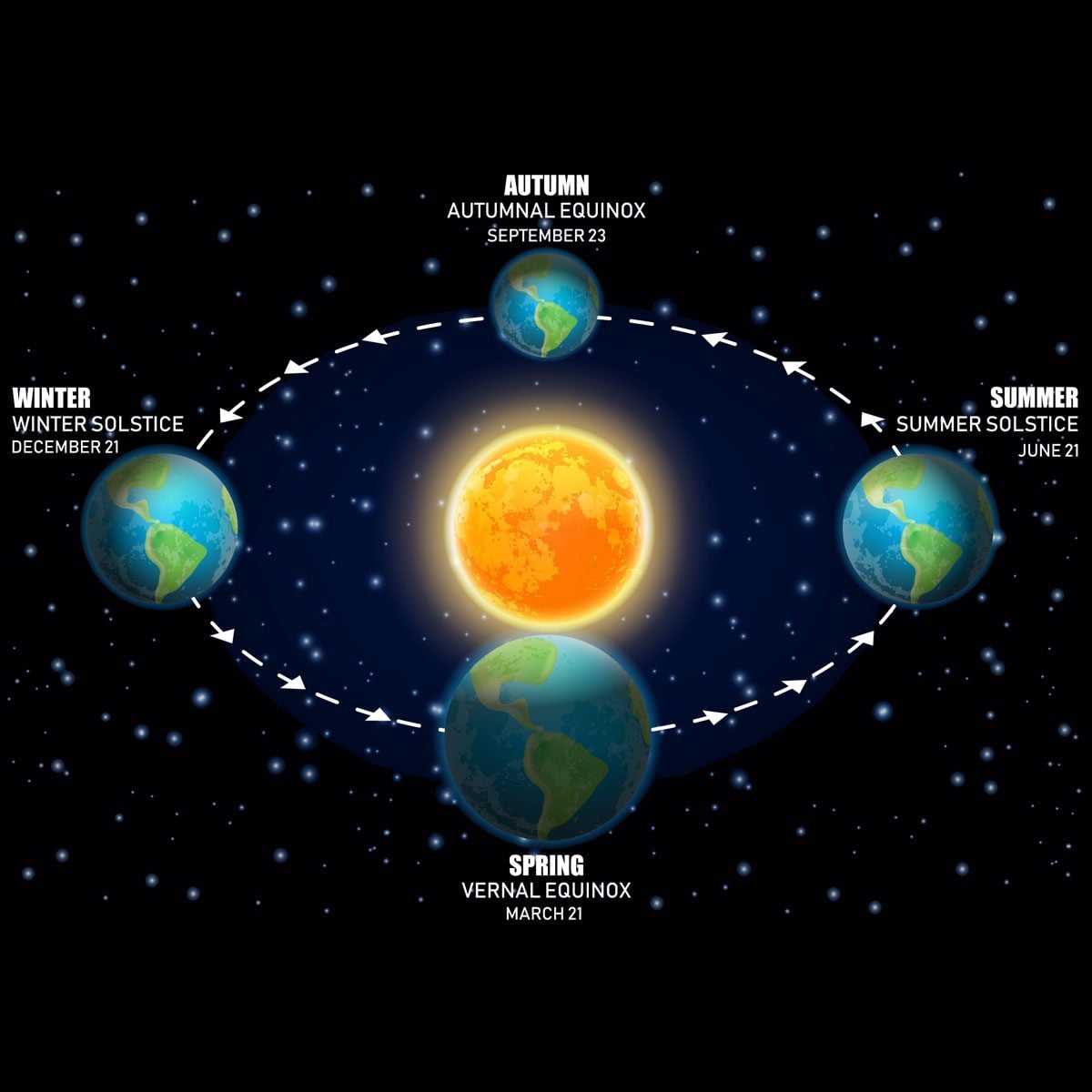
The winter solstice arrives every December with the quire fireworks, a red carpet, or a complicated streaming subscription. Instead, Earth tilts, the Sun traces its lowest path across the Northern Hemisphere’s sky, and millions of people suddenly realize it is dark before they have finished their afternoon coffee.
Commonly called the shortest day of the year, the winter solstice is both a scientific event and a cultural milestone. It marks the beginning of astronomical winter north of the equator, while people in the Southern Hemisphere welcome summer. For thousands of years, societies have observed this turning point with monuments, ceremonies, feasts, fires, dances, and a great deal of understandable enthusiasm about the returning daylight.
Yet some familiar winter solstice “facts” are not entirely accurate. The solstice is not caused by Earth moving farther from the Sun. It is not necessarily the day with the earliest sunset. It is not a 24-hour event, either. The actual solstice happens at one precise momenteven if the cold weather seems determined to remain for several geological eras.
Here are eight fascinating winter solstice facts that explain the astronomy, seasonal changes, cultural traditions, and persistent myths surrounding the longest night of the year.
1. The Winter Solstice Is a Precise Moment, Not an Entire Day
Although calendars usually label one date as the winter solstice, the astronomical event itself occurs at a specific instant. At that moment, the Northern Hemisphere reaches its maximum tilt away from the Sun, and the Sun appears at its southernmost position relative to Earth’s equator.
During the December solstice, the Sun is directly overhead at solar noon along the Tropic of Capricorn, approximately 23.5 degrees south of the equator. Everywhere north of the equator experiences its shortest seasonal path of the Sun across the sky. South of the equator, the same event is the summer solstice and produces the year’s longest period of daylight.
The date generally falls on December 21 or December 22 in the United States, although its exact time shifts from year to year. Time zones can even place the same solstice moment on different calendar dates in different parts of the world. Astronomy, apparently, refuses to simplify itself for our wall calendars.
The word solstice comes from Latin roots commonly interpreted as “Sun stands still.” This description refers to the way the Sun’s noontime height and sunrise or sunset positions change very slowly for several days around the solstice before reversing direction. n>
2. Earth’s Tilt Causes Winter, Not Its Distance From the Sun
One of the most persistent seasonal myths says winter occurs because Earth moves farther away from the Sun. It sounds reasonable until you remember that the Northern and Southern Hemispheres experience opposite seasons at the same time. Earth cannot be both dramatically closer to and farther from the Sun depending on which side of the equator is checking the weather.
The real cause is Earth’s axial tilt. Our planet’s rotation axis is tilted by roughly 23.5 degrees relative to its orbital plane. As Earth travels around the Sun, this tilted axis continues pointing in nearly the same direction. During December, the Northern Hemisphere leans away from direct sunlight.
That orientation creates two important changes. First, sunlight reaches northern locations at a lower angle, spreading the same solar energy over a larger surface area. Second, the Sun remains above the horizon for fewer hours. Less direct sunlight combined with shorter days means less solar heating.
Here is the fun part: Earth is actually close to its nearest annual point to the Sun during Northern Hemisphere winter. Perihelion, the planet’s closest approach, typically occurs in early January. Aphelion, when Earth is farthest away, occurs in early July. If distance controlled the seasons, people in Chicago would be planning beach parties in January instead of attempting to negotiate with frozen car doors. n>
3. It Is the Shortest Day, but Daylight Depends on Latitude
Calling the winter solstice the “shortest day” does not mean clocks suddenly remove several hours from the schedule. A day still lasts approximately 24 hours. The phrase refers to the shortest period between sunrise and sunset in the Northern Hemisphere.
The amount of daylight varies enormously by latitude. Communities near the equator experience relatively small seasonal changes, with days remaining close to 12 hours throughout the year. Farther north, the difference between summer and winter daylight becomes much more dramatic.
Many cities in the continental United States receive roughly eight to ten hours of daylight around the December solstice, depending on their latitude. Alaska experiences much more extreme conditions. Locations north of the Arctic Circle can enter polar night, a period during which the Sun does not rise above the horizon.
At the North Pole, winter darkness extends far beyond a single date. The solstice marks the deepest part of the dark season, but the Sun remains below the horizon until the gradual return of spring daylight. Meanwhile, Antarctica is enjoying continuous or nearly continuous summer sunlight. Earth is remarkably efficient at creating vacation envy on a planetary scale.
The changing daylight pattern is therefore not uniform. The solstice is a global astronomical moment, but the way it looks and feels depends strongly on where an observer is standing. n>
4. The Solstice Date Changes Because Calendars Are Imperfect
The winter solstice does not occur at exactly the same clock time every year. Earth takes approximately 365.24 days to complete one orbit around the Sun, while an ordinary calendar year contains 365 days. That fractional difference causes astronomical events to shift by several hours from one year to the next.
Leap years help keep the calendar aligned with Earth’s orbit by adding February 29 approximately every four years. Without this adjustment, solstices and equinoxes would gradually migrate through the calendar. After enough centuries, people could be celebrating astronomical winter while shopping for summer sandals.
Because of the accumulated difference and the leap-year correction, the December solstice usually occurs on December 21 or 22. The exact local date depends on the solstice’s universal time and the observer’s time zone.
This is why reputable astronomical sources publish an exact date and time for each year rather than simply saying, “It happens every December 21.” The seasonal event is determined by Earth’s position and orientation in spacenot by what is printed beside a snowflake illustration on a desk calendar. n>
5. The Earliest Sunset Usually Happens Before the Solstice
The winter solstice has the least total daylight of the year, so it seems logical that it should also have the earliest sunset and latest sunrise. In many mid-latitude locations, however, those three events occur on different dates.
Across much of the United States, the earliest sunset arrives days or even a couple of weeks before the solstice. The latest sunrise often occurs after the solstice, sometimes in early January. The shortest total daylight falls between them.
This apparent mismatch results from a combination of Earth’s axial tilt, its elliptical orbit, and the difference between clock time and apparent solar time. The length of the solar daythe interval measured by the Sun’s positionchanges slightly throughout the year. Our clocks, which are admirably stubborn, continue dividing every day into equal 24-hour periods.
Consequently, sunrise and sunset times do not move symmetrically around noon. Before the solstice, sunsets may begin getting later while sunrises continue getting later too. Total daylight can still shrink briefly because the morning change is greater than the evening change.
This also explains why people sometimes notice brighter evenings before they notice brighter mornings. The returning light has already begun its comeback tour, but sunrise is still backstage looking for its gloves. n>
6. Winter Solstice Shadows Are the Longest of the Year
During the Northern Hemisphere’s winter solstice, the Sun follows its lowest and shortest daily arc across the sky. Even at solar noon, when the Sun reaches its highest point of the day, it remains lower than it does at any other season.
A low Sun produces long shadows. Stand outdoors near local solar noon on a clear solstice day, and your shadow will generally be longer than your noon shadow on any other date. The effect becomes more noticeable at higher latitudes, where the winter Sun remains especially close to the horizon.
This simple observation helped ancient societies track seasonal cycles long before smartphones began providing sunrise notifications. A vertical post, pillar, or stickknown as a gnomoncan reveal the Sun’s changing height by the length and direction of its shadow. Recording those shadows throughout the year creates a visible calendar written in sunlight.
Modern observers can repeat the experiment by marking the tip of a shadow at the same time on several dates. The winter solstice measurement should be near the annual maximum. No advanced telescope is needed, although a ruler, clear weather, and a willingness to stand outside in December are highly recommended. n>
7. The Solstice Starts Astronomical Winter, Not Meteorological Winter
In the United States, the December solstice marks the beginning of astronomical winter. Astronomical seasons are based on Earth’s position relative to the Sun, with solstices and equinoxes defining their boundaries.
Meteorologists use a different system. Meteorological winter begins on December 1 and includes December, January, and February. Dividing the seasons into complete three-month blocks makes it easier to organize climate records, calculate monthly averages, and compare weather patterns from year to year.
The winter solstice is also rarely the coldest day of the season. Even though daylight begins increasing immediately afterward, the atmosphere, soil, lakes, and oceans continue losing more heat than they receive. This delayed response is known as seasonal lag.
In much of the United States, the coldest average temperatures arrive several weeks after the solstice. Large bodies of water and other parts of Earth’s surface release stored warmth slowly, delaying the seasonal temperature minimum. A similar lag occurs during summer, when the hottest weather typically arrives after the June solstice.
So yes, daylight is returning in late December. No, that does not mean you should immediately place your winter coat into storage. The atmosphere has not yet read the optimistic memo. n>
8. Humans Have Celebrated the Returning Light for Thousands of Years
Long before modern astronomy explained Earth’s axial tilt, people carefully observed the Sun’s seasonal movement. The winter solstice carried enormous practical importance. It helped communities track the year, organize agricultural activities, prepare food supplies, and anticipate the gradual return of longer days.
Ancient monuments demonstrate how precisely some cultures followed the Sun. Newgrange, a prehistoric passage tomb in Ireland, was designed so that the rising solstice Sun illuminates its inner passage and chamber. Scotland’s Maeshowe is aligned with the winter solstice sunset. Stonehenge is also associated with important solstice alignments, although researchers continue debating exactly how different parts of the site were used.
In the American Southwest, ancestral Puebloan communities incorporated astronomical knowledge into architecture and landscape features. The Sun Dagger site at Fajada Butte in Chaco Canyon is believed to have marked solstices and equinoxes through patterns of sunlight and shadow. Other structures and sight lines in the region may also have helped observers identify important seasonal dates.
Living traditions remain equally significant. The Hopi Soyal ceremony in the American Southwest marks the winter solstice season and the return of increasing daylight. Around the world, winter celebrations have used candles, fires, evergreen plants, shared meals, music, and community gatherings as symbols of endurance and renewal.
The customs are diverse and should not be treated as interchangeable, but many share an understandable theme: the darkest point of the annual cycle is also the moment when the light begins to return. That is a powerful idea whether you are an ancient sky watcher, a modern astronomer, or someone who is simply tired of turning on the living-room lights at 4:30 p.m. n>
What the Winter Solstice Really Represents
The winter solstice is more than a date announcing the beginning of a new season. It is a visible result of Earth’s tilt, a useful marker in the planet’s orbit, and a reminder that natural cycles rarely follow the tidy assumptions people make about them.
The shortest day does not necessarily bring the earliest sunset, and the start of astronomical winter does not bring the coldest weather. Earth is close to the Sun rather than far away, and the solstice itself lasts only a moment. Yet that moment changes the direction of the daylight cycle. From then until the June solstice, Northern Hemisphere days generally become longer.
Perhaps that reversal explains the event’s lasting cultural appeal. The winter solstice acknowledges darkness without treating it as permanent. The night may be long, the air may be cold, and the driveway may require heroic levels of scraping, but the balance has already begun to shift toward light.
Experiencing the Winter Solstice for Yourself
Reading winter solstice facts is useful, but observing the event outdoors makes the astronomy feel surprisingly real. You do not need to travel to Stonehenge, reserve a place inside Newgrange, or build an observatory in the backyard. A familiar outdoor location and a few minutes of attention can reveal how dramatically the Sun changes with the seasons.
Watch the Solstice Sunrise
Begin by checking the local sunrise time and choosing a safe location with an unobstructed southeastern horizon. Arrive early enough to notice the gradual change from darkness to twilight. The experience is not always cinematic. There may be clouds, traffic, cold fingers, and one neighbor wondering why you are staring intensely at a row of trees before breakfast.
Still, the slow return of color can be memorable. Instead of appearing high and energetic, the winter Sun rises along a shallow path. It seems to slide across the horizon rather than climbing quickly into the sky. Mark its rising position against a building, hill, tree, or other fixed landmark. Repeat the observation several weeks later, and the sunrise point will have moved gradually northward.
Measure Your Noon Shadow
A second experiment requires only a sunny location, a measuring tape, and an upright object. Place a stick vertically in level ground or use a permanent post. Near local solar noon, measure the shadow from the base of the object to its tip.
Record the date, time, object height, and shadow length. Return around the spring equinox and again near the summer solstice. The changing measurements provide a simple but powerful demonstration of the Sun’s seasonal elevation. The winter shadow will be dramatically longer than the summer one, particularly in northern locations.
Children can turn the activity into a seasonal science project, while adults can use it as an excellent excuse to spend ten minutes outside instead of answering another email marked “quick question.”
Notice How Daylight Returns
The increase in daylight immediately after the solstice can be difficult to notice. At first, the change may amount to only seconds or a minute from one day to the next. Sunrise may also continue getting later, making it seem as though winter has ignored the astronomical announcement.
Track local sunrise and sunset times for four weeks. A small notebook works well, but a spreadsheet can reveal the pattern more clearly. Focus on total daylight rather than sunrise alone. By January, the accumulating difference becomes easier to see, especially in the afternoon.
This gradual progress can change how the season feels. Instead of viewing winter as one motionless block of darkness, you begin noticing that every day has a slightly different relationship with the Sun.
Create a Thoughtful Solstice Tradition
A personal winter solstice observance does not need to imitate a sacred or historical ceremony from another culture. It can be simple, respectful, and connected to the natural event itself.
Take an evening walk, prepare a seasonal meal, turn off unnecessary electric lights, watch the sunset, light a candle, or spend time reflecting on the previous year. Families might share one thing they want to leave behind and one thing they hope to encourage as the daylight returns.
For a more social experience, invite friends to a meal served near sunset. Use warm lighting, winter foods, and a brief explanation of why the night is astronomically significant. This gives the gathering substance without requiring everyone to deliver a lecture on orbital mechanics before dessert.
Spend Time Under the Longest Night
The solstice’s extended darkness also creates an opportunity for stargazing. Choose a place away from bright city lights, dress more warmly than you think necessary, and allow your eyes time to adjust. Winter skies can offer striking views because several bright stars and recognizable constellations dominate the Northern Hemisphere’s evening sky.
Even when clouds hide the stars, standing outside on the longest night creates a direct connection with the seasonal cycle. The experience is quiet rather than spectacular. Nothing visibly snaps into place at the exact solstice moment. Earth keeps rotating, the air keeps moving, and the Sun remains below the horizon.
Yet the direction of the year has changed. The longest night has reached its limit, and each coming day will reclaim a little more light. Knowing that can make an ordinary December evening feel less like an ending and more like the first nearly invisible step toward spring.