Note: This is an original editorial feature inspired by the design themes and projects highlighted in Remodelista’s green-bathroom archive. It is independently written and does not reproduce the archive’s text or images.
For years, bathrooms played it suspiciously safe. White subway tile, gray walls, a mirror with enough backlighting to guide an airplane toward the sinkyou know the drill. Then green came along and politely ruined everyone’s neutral-only plans.
Green bathrooms are having a deserved moment, but the best examples are not simply “bathrooms with green stuff in them.” They use color to create atmosphere: a mossy retreat, a glossy Italian hideaway, a sun-soaked tropical powder room, or a quiet little space that feels like it has been inhaling expensive eucalyptus for years.
The Remodelista archives offer a particularly useful lesson in making green work. The featured spaces range from inky Studio Green walls to mint fixtures, handmade zellij, pale terrazzo, and tile that looks as though it was rescued from a very stylish old hotel. Together, they prove that green can be calm, dramatic, historical, playful, or all four before breakfast.
Why Green Works So Well in a Bathroom
Green sits in an unusually flexible spot on the color spectrum. Soft sage and gray-green shades behave almost like neutrals, while olive, forest, emerald, jade, and mint bring more personality without immediately turning the room into a cartoon jungle. In a bathroom, where hard surfaces such as porcelain, chrome, glass, and stone can feel a bit chilly, green adds softness and visual warmth.
It also works with nearly every material worth inviting into a bathroom. Green looks rich next to brass, fresh beside white ceramic, elegant with marble, earthy with oak, and pleasantly eccentric with terrazzo. The secret is not choosing the “right” green in isolation. It is choosing the green that makes your tile, fixtures, lighting, and daily toothpaste tube look like they were introduced properly.
13 Favorite Green Bathroom Ideas Inspired by the Remodelista Archives
1. The Deep Studio Green Master Bath
One of the most memorable archive examples is a master bath in an Italianate row house painted in Farrow & Ball’s Studio Green. This nearly black green is proof that dark walls do not automatically make a bathroom feel cramped. Used with balanced lighting, pale fixtures, and reflective surfaces, a saturated shade can make the room feel cocoon-like rather than cave-like.
This is a strong choice for homeowners who want a moody bathroom with real presence. Pair deep green walls with warm metal hardware, white marble, or a creamy limestone floor. The goal is drama, not the sensation that you have wandered into a moss-covered basement.
2. Glossy Forest Green Tile with Italian Energy
Glossy forest green tile has a certain cinematic confidence. In the archive, guest bathrooms at Villa La Madonna use rich green tile to create a luxurious, old-world mood. The shine matters here: glossy tile catches light and keeps a dark shade from feeling flat.
For a similar effect, use forest green subway tile or square ceramic tile around a vanity, tub surround, or shower wall. Keep the rest of the room quiet with ivory walls, a simple white sink, and minimal accessories. A crowded countertop can make even beautiful tile look like it is begging for help.
3. Handmade Green Moroccan Tile and Brass Faucets
A London pied-à-terre in the archives pairs handmade Moroccan tile in varied green tones with polished brass wall-mounted faucets. It is an excellent reminder that green does not need to be perfectly uniform. Slight variation in handmade tile creates depth, movement, and the kind of visual texture that makes a small bathroom feel collected rather than assembled from a catalog.
Brass is a natural partner for green because it introduces warmth. The combination works especially well with olive, moss, bottle green, and soft jade. Choose one focal tile wall, then let the brass fixtures act as jewelry instead of recruiting every available metal surface into the same party.
4. Palm-Print Wallpaper in a Brooklyn Powder Room
Not every green bathroom requires a tile contractor, grout samples, and three weekends of emotional instability. A Brooklyn powder room in the Remodelista collection uses leafy “Palm Jungle” wallpaper to create a lush, theatrical moment.
Powder rooms are ideal places to experiment because they are small, enclosed, and used in short bursts. A botanical wallpaper can make a tiny room feel intentional and memorable. Balance a busy print with a simple pedestal sink, restrained lighting, and a mirror that does not compete for lead actor status.
5. Institutional-Chic Green for an Edwardian Bath
One archive bathroom leans into an institutional-chic look inside an Edwardian home. This style is less about decorative fuss and more about shape, proportion, and strong materials. Think painted surfaces, practical fixtures, plain tile, and a slightly utilitarian edge.
To bring this idea home, use muted green paint with white wall tile, a medicine cabinet, exposed plumbing details, or a vintage-inspired sink. The result can feel historic without becoming a museum exhibit where everyone is afraid to touch the hand towel.
6. Retro Mint Fixtures by the Seaside
A guest bath at England’s Rose hotel features a mint sink and matching toilet, proving that retro green fixtures can be charming when handled with confidence. Mint is cheerful, nostalgic, and surprisingly easy to style when paired with warm white walls, chrome details, or pale wood.
If you do not want to replace major fixtures, borrow the mood with a mint vanity, seafoam tile, or painted beadboard. A mint bathroom should feel fresh and breezy, not like a 1950s appliance showroom that has gained consciousness.
7. Jewel-Box Zellij in a Brooklyn Townhouse
Architect Elizabeth Roberts used green zellij in a Brooklyn townhouse powder room, drawing inspiration from handcrafted Moroccan tile. Zellij works beautifully in compact spaces because its imperfect surface catches light differently from one tile to the next.
Use this look in a backsplash, niche, vanity wall, or full powder room. Keep grout close to the tile color so the surface reads as one shimmering field. It is a practical way to make a small room feel more expensive without adding more furniture, which is usually a terrible idea in a room already negotiating with a toilet.
8. Cheery Green Tile in a Budget Bathroom
A Barcelona bath in the archive combines an Ikea vanity with bright green tile. This is one of the most useful reminders in the collection: a strong color choice can do more for a modest bathroom than an expensive vanity ever will.
For a budget-friendly green bathroom remodel, concentrate your investment on one memorable surface. Tile behind the sink, refresh the walls in a washable bathroom paint, replace tired cabinet pulls, and add a good mirror. Green becomes the design feature, while straightforward fixtures quietly do their job.
9. A Happy Tropical Cottage Green
The bathroom in a Bahamian cottage owned by decorator Tom Scheerer uses an unapologetically happy green. It is bright, spirited, and miles away from the cautious gray-beige palette that has dominated many remodels for far too long.
Bright green works best when the room has a little daylight and a clear supporting palette. White trim, woven shades, pale wood, and simple ceramic accessories stop the color from becoming overwhelming. This approach is for people who want their bathroom to greet them before their coffee does.
10. Soft Green-Gray Paint for a Quiet Guest Bath
At London’s High Road House, a soft gray-green paint creates a subtle, misty background. This kind of shade is ideal for homeowners who love green but do not want guests to announce, “Wow, that bathroom is extremely green,” before they have even found the soap.
Green-gray paint works beautifully with nickel, aged brass, natural oak, white porcelain, and stone. It is especially effective in small bathrooms because the color feels cohesive rather than high-contrast. Use it on walls, cabinetry, or both for a calm, tailored finish.
11. Handmade Storage and Green Heath Ceramics Tile
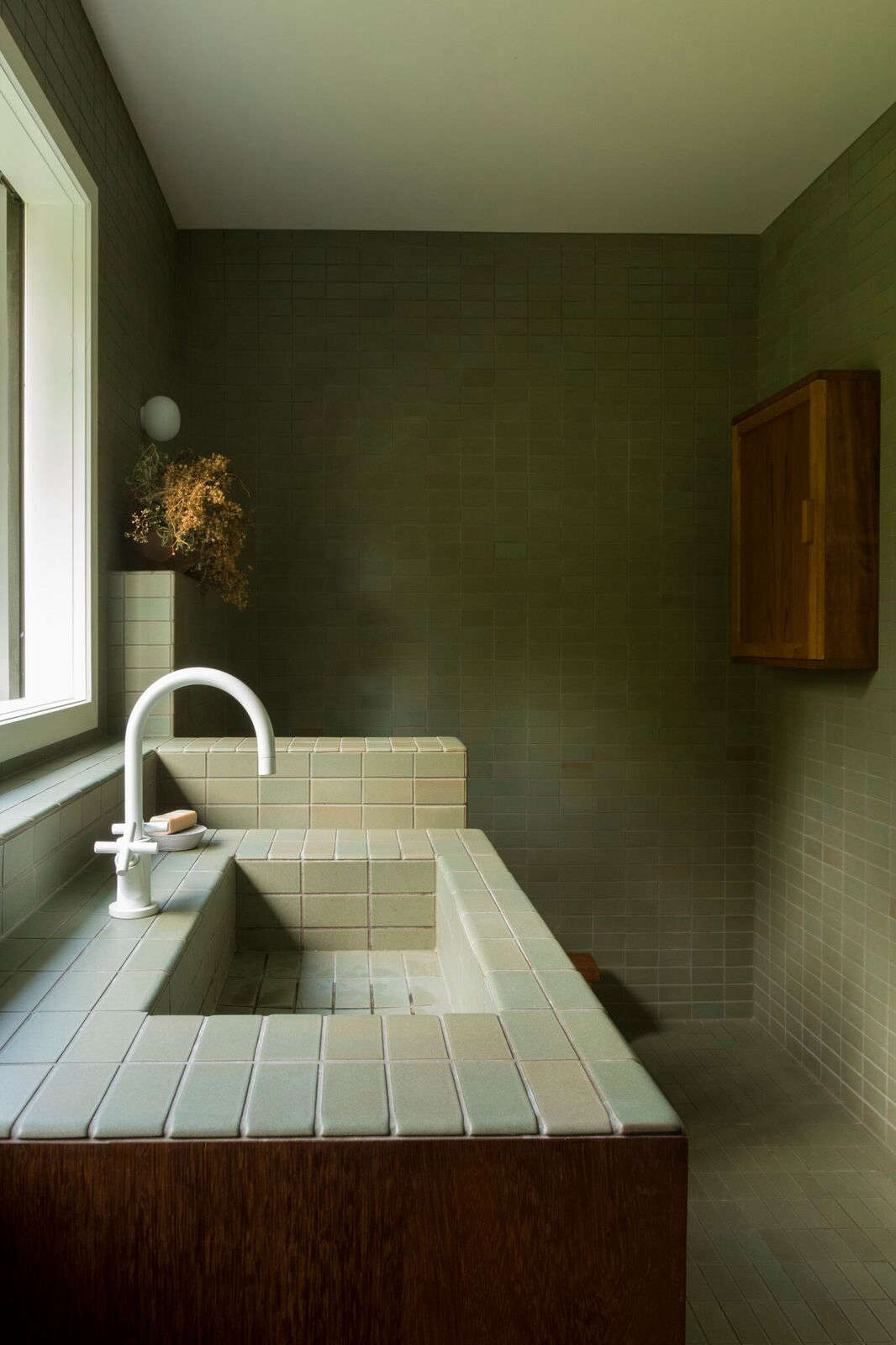
An Auckland bathroom combines green Heath Ceramics tile, handmade cabinetry, and matte white fixtures. The lesson is all about material balance. Green tile becomes more sophisticated when paired with tactile wood storage and plain fixtures that do not compete with it.
Try a green tiled shower wall with a warm oak vanity and matte white sink. The combination feels contemporary but not sterile, which is useful because nobody has ever described a beloved bathroom as “pleasantly sterile.”
12. Pale Green Terrazzo in a Hotel Guest Bath
The Siren Hotel in Detroit offers another direction: pale green terrazzo. Terrazzo is naturally lively because its chips create pattern without requiring a bold graphic print. In green, it feels cheerful, slightly retro, and surprisingly refined.
A pale green terrazzo floor can anchor a bathroom while allowing the walls to remain white or cream. Repeat one fleck color in towels, cabinetry, or a small lamp to make the room feel intentional. The visual effect is playful, but the palette remains grown-up.
13. Green-Tinged Glass, White Tile, and a Wooden Bench
Another archive space uses green-tinted frosted glass, oversized white tile, and a George Nelson wooden bench to create a spa-like retreat. It shows that green does not have to dominate the room to be effective. Sometimes the color can arrive through glass, reflected light, or a subtle material accent.
This approach works well for minimalist bathrooms. Use a soft green glass panel, a green shower curtain, tinted sconces, or a muted painted ceiling. A single green element can make a mostly white room feel considered instead of unfinished.
How to Build a Green Bathroom That Lasts
Start by deciding whether green should be the background, the focal point, or the supporting character. Sage paint is an easy background. Emerald tile is a focal point. Green towels are supporting characters, though they may still demand applause if they are especially fluffy.
For a small bathroom, keep contrast controlled. A light green wall, green tile, and a vanity in a similar tone can make the room feel more continuous. Large-format tile also reduces visual interruption, while a close grout match creates a calmer surface. If you want the tile pattern to stand out, choose more contrast in the grout.
Material selection matters as much as color. Use properly rated tile for wet zones, choose a shower floor with suitable slip resistance, and make sure waterproofing happens behind the tile rather than becoming an expensive surprise later. Green paint should be formulated for humid rooms, and a functioning exhaust fan is not optional just because it sounds like a tiny helicopter.
Ventilation protects paint, grout, cabinetry, and indoor air quality. Run the fan during and after showers, repair leaks quickly, and avoid covering every surface with moisture-sensitive materials. A beautiful green bathroom should feel like a forest retreat, not an actual damp forest.
Extended Experience Notes: What It Is Like to Live With a Green Bathroom
Living with a green bathroom is different from admiring one in a photograph. In a photo, the color is always perfectly lit, the towels are folded with military precision, and there is never a damp bath mat sulking in the corner. Real life is messier. That is exactly why green can be such a smart choice.
First, green tends to be forgiving. Soft sage, olive, and muted moss shades are kinder to daily life than bright white walls. They do not advertise every splash mark, fingerprint, or mysterious toothpaste incident with the enthusiasm of a crime-scene investigator. Darker green tile can also hide minor water spots better than glossy black, while patterned green surfaces make ordinary bathroom clutter appear slightly more intentional.
Second, the mood changes throughout the day. In morning light, pale sage can look airy and fresh. At night, the same walls may become warmer and quieter under sconces or a dimmed vanity light. Deep forest green behaves even more dramatically: it can feel elegant and grounded in daylight, then turn into a moody little hotel suite after sunset. This makes green especially rewarding in bathrooms used for both rushed weekday routines and slow evening baths.
The practical side matters, too. A painted green bathroom is flexible; you can repaint when your tastes change or when your relationship with a certain shade of olive reaches its natural conclusion. Green tile is more of a commitment, but it often rewards that commitment by becoming the room’s identity. Guests may not remember the faucet model, but they will remember the emerald shower wall or the mint sink that made them smile.
There is also a psychological benefit to choosing a color that feels connected to nature. Even in a windowless hall bath, green can soften the hard, reflective materials that define the room. Add a wood stool, woven basket, stone soap dish, or a small plant that enjoys humidity, and the bathroom begins to feel more like a retreat than a utility closet with plumbing.
Of course, green requires a little discipline. Too many competing shades can make the space feel busy. Forest tile, lime wallpaper, emerald cabinetry, mint towels, and a jade rug may sound exciting in theory, but in practice they can resemble a very fashionable salad. Pick one main green, one supporting neutral, and one accent material. White, cream, oak, brass, black, marble, and terrazzo all work beautifully as supporting players.
The best green bathrooms are not trendy because they are green. They last because they use color with purpose. Whether you choose a soft green-gray wall, handmade tile, a bold tropical wallpaper, or a retro mint fixture, the room should still feel like yours after the novelty wears off. That is the real test of good design: you walk in six months later, carrying a laundry basket and half awake, and still think, “Yes. This was a very good idea.”
Conclusion: Green Is the New Bathroom NeutralWith Better Stories
The Remodelista archives show that there is no single formula for a green bathroom. Green can be dark and glamorous, pale and calming, tropical and joyful, handcrafted and historic, or clean-lined and modern. The strongest designs use color to support the room’s architecture, materials, and everyday function.
Start small with paint or accessories, go bold with tile when the budget allows, and remember the unglamorous essentials: waterproofing, ventilation, safe flooring, and durable finishes. A successful green bathroom is not just pretty in a photograph. It should survive hot showers, hurried mornings, questionable skincare experiments, and the occasional guest who thinks your fancy hand soap is decorative.