Some TV shows ask viewers to remember seven timelines, three secret twins, and a prophecy whispered by a haunted goat. Procedural shows are kinder. They hand you a problem, introduce the people trained to solve it, and usually wrap things up before your snacks disappear. That dependable rhythm is exactly why the best procedural shows of all time keep finding new fans across generations.
Procedural TV shows are built around process: detectives follow clues, doctors chase diagnoses, lawyers prepare arguments, forensic teams test evidence, and first responders run toward emergencies while the rest of us bravely remain on the couch. The format can be comforting, but it is not simple. The greatest procedural dramas combine a strong case-of-the-week structure with memorable characters, moral tension, clever mysteries, and just enough ongoing personal drama to make viewers say, “Fine, one more episode,” at 1:13 a.m.
This fan-minded guide looks at the 50+ best procedural shows across police procedurals, crime dramas, medical mysteries, legal dramas, forensic series, detective comedies, and hybrid thrillers. It is not only about ratings or awards. It is about the shows people rewatch, quote, defend in comment sections, and recommend with the confidence of someone handing over a family recipe.
What Makes a Great Procedural Show?
A great procedural needs three things: a repeatable engine, a compelling team, and a reason to care after the case closes. The engine is the formula: a crime, diagnosis, legal puzzle, emergency, or mystery. The team is the reason viewers return. The emotional hook is what separates background TV from a long-term obsession.
Fans often love procedurals because they offer order in a chaotic world. A clue matters. A question gets answered. A professional knows what to do. Even when the episode ends with ambiguity, there is usually a sense that effort, logic, teamwork, and persistence counted for something. That is TV comfort food with a badge, a lab coat, a legal pad, or occasionally a very suspicious trench coat.
The 50+ Best Procedural Shows Of All Time, Ranked By Fan Appeal
1. Law & Order
Law & Order is the procedural blueprint: half police investigation, half courtroom drama, all “dun-dun.” Its ripped-from-the-headlines style made it feel both familiar and freshly urgent. Fans admire its clean structure, rotating cast, and ability to turn legal procedure into weekly moral debate.
2. Law & Order: Special Victims Unit
SVU became a landmark because of Olivia Benson, the show’s emotional center and one of TV’s most enduring characters. Its cases are often sensitive and serious, but fans return for the empathy, persistence, and long-running character relationships.
3. NCIS
NCIS is comfort procedural royalty. It blends military investigations, team banter, forensic work, and found-family warmth. The reason fans keep coming back is simple: the cases matter, but the squad room chemistry matters more.
4. Criminal Minds
Criminal Minds focuses on behavioral analysis and psychological profiling. Fans love the intellectual puzzle, the team loyalty, and the way each episode turns motive into mystery. It is intense without losing its emotional core.
5. CSI: Crime Scene Investigation
CSI changed the procedural game by making forensic science feel dramatic, stylish, and oddly glamorous. The show turned lab work into prime-time spectacle and helped launch a long-running franchise.
6. Columbo
Columbo flips the whodunit into a “how will he catch them?” format. Peter Falk’s rumpled detective seems harmless until the suspect realizes the cardigan has teeth. Fans still adore its clever structure and unforgettable lead performance.
7. Hill Street Blues
Hill Street Blues brought realism, ensemble storytelling, and moral complexity to police drama. It helped push the procedural beyond simple good-guy-versus-bad-guy stories and toward richer character-driven television.
8. Homicide: Life on the Street
Gritty, thoughtful, and deeply character-focused, Homicide gave police work a raw, grounded texture. Fans value it as one of the shows that made the modern prestige crime drama possible.
9. The Wire
The Wire is not a traditional case-of-the-week procedural, but its investigative DNA is undeniable. It studies systemspolice, schools, politics, media, laborwith rare patience. Fans rank it among the greatest dramas ever because it treats procedure as part of a much larger social machine.
10. Monk
Monk is proof that a detective procedural can be funny, tender, and brilliantly constructed. Adrian Monk notices what everyone else misses, usually while worrying about something no one else noticed either. Fans love the mysteries, but they adore the character.
11. The Mentalist
The Mentalist gives viewers Patrick Jane, a fake psychic with real observational superpowers. The cases are satisfying, but the long-running Red John arc gave the series extra momentum and fan obsession fuel.
12. Bones
Bones mixes forensic anthropology, character comedy, and romantic tension. Fans came for the unusual science and stayed for Brennan, Booth, and the Jeffersonian team’s wonderfully nerdy case-solving rhythm.
13. Castle
Castle understands that chemistry can be as addictive as mystery. A novelist assisting a detective sounds like a gimmick, but the show’s charm, humor, and case variety made it a fan favorite.
14. Blue Bloods
Blue Bloods combines police procedure with family drama. Its famous Reagan family dinners became as important as the investigations. Fans responded to its tradition, loyalty, and multi-generational point of view.
15. The X-Files
Part paranormal procedural, part conspiracy thriller, The X-Files made monster-of-the-week storytelling iconic. Mulder and Scully’s partnership remains one of television’s great investigative duos.
16. House
House is basically a detective show where the culprit is a disease and the interrogation room is a hospital. Hugh Laurie’s sharp performance, medical puzzles, and prickly humor made it one of the most memorable medical procedurals ever.
17. ER
ER brought urgency, technical detail, and emotional intensity to medical drama. Its fast pace and ensemble cast helped define what viewers expect from hospital procedurals.
18. St. Elsewhere
St. Elsewhere influenced later medical dramas with its naturalistic style, humor, and willingness to explore difficult life-and-death issues. Fans of serious hospital storytelling still treat it as essential viewing.
19. NYPD Blue
NYPD Blue pushed network police drama toward more adult, emotionally complicated territory. Its shaky-camera style, flawed characters, and intense performances left a major mark on the genre.
20. The Closer
Kyra Sedgwick’s Brenda Leigh Johnson made The Closer stand out. The show built its cases around interrogation strategy, personality, and pressure. Fans loved watching Brenda quietly take control of a room.
21. Major Crimes
A successful continuation of The Closer, Major Crimes shifted focus to team dynamics and legal negotiation. It rewarded fans who wanted smart cases and familiar characters with room to evolve.
22. Without a Trace
This missing-persons procedural gave each episode a ticking-clock structure. Fans appreciated its emotional stakes and the way it explored lives through absence, memory, and investigation.
23. Cold Case
Cold Case solved old crimes with a strong emotional hook. Its use of period music and flashbacks helped each case feel like a small time capsule. Bring tissues. Maybe two.
24. CSI: Miami
Stylish, sun-drenched, and meme-ready, CSI: Miami gave the franchise a louder personality. Horatio Caine’s sunglasses deserve their own supporting actor nomination.
25. CSI: NY
CSI: NY brought a cooler, moodier flavor to forensic investigation. Fans liked its New York atmosphere, strong ensemble, and more grounded tone compared with its flashier sibling.
26. FBI
Dick Wolf’s FBI offers polished, high-stakes federal investigations with a modern network-procedural pace. It is built for viewers who enjoy clear missions, team professionalism, and weekly momentum.
27. FBI: Most Wanted
This spinoff leans into fugitive tracking and field operations. Fans who like pursuit-driven episodes find plenty to enjoy in its direct, urgent structure.
28. Chicago P.D.
Chicago P.D. adds serialized character drama to police cases. Its fan base responds to the intensity, moral conflict, and connections across the larger One Chicago universe.
29. Chicago Fire
Although it is a first-responder drama rather than a crime procedural, Chicago Fire thrives on weekly emergencies, team loyalty, and workplace family. It brings the procedural format into the firehouse.
30. 9-1-1
9-1-1 is the roller coaster of modern procedurals. The emergencies can be wild, the emotions sincere, and the pace relentless. Fans love that it can be outrageous and heartfelt in the same hour.
31. The Rookie
The Rookie has become a major cross-generational favorite, especially among younger streaming viewers. Its mix of police cases, humor, character growth, and social-media-friendly cast chemistry gives it fresh procedural energy.
32. SWAT
SWAT focuses on tactical team operations while also exploring leadership and community responsibility. Fans like its action-forward style and ensemble camaraderie.
33. JAG
Before NCIS became a giant franchise, JAG blended military law, investigation, and courtroom drama. It remains a key title for fans of legal-military procedurals.
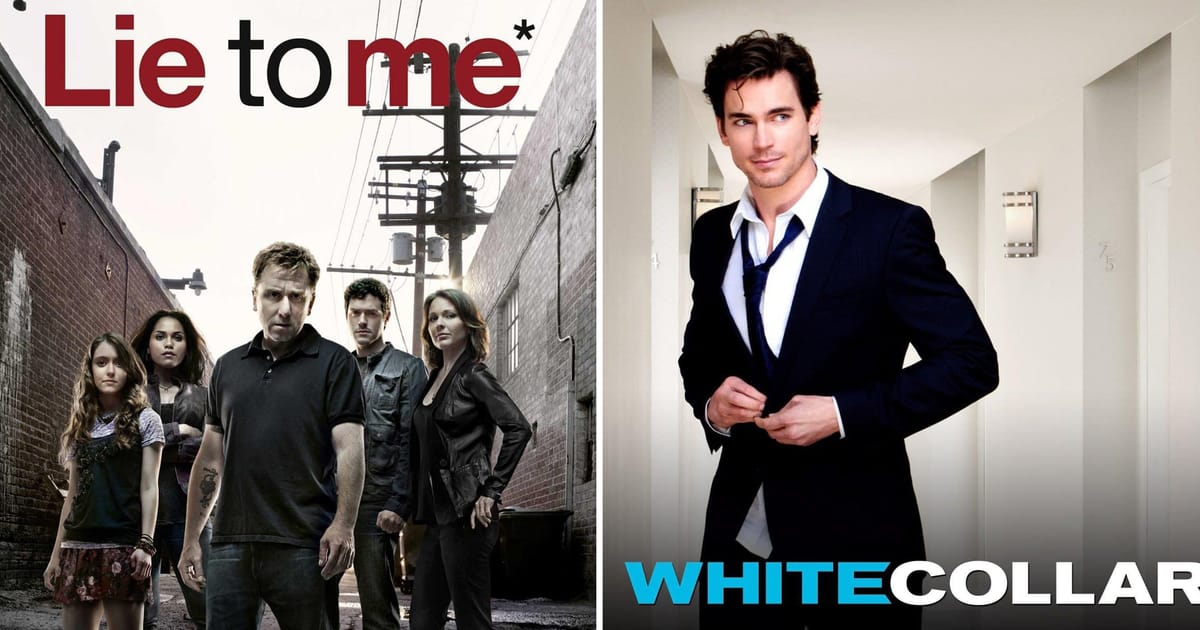
34. White Collar
White Collar pairs an FBI agent with a charming con artist, creating one of TV’s smoothest buddy-procedural setups. It is clever, stylish, and unusually breezy for a crime show.
35. Burn Notice
Burn Notice turns spycraft into a procedural engine. Each episode offers missions, tradecraft, narration, and Miami heat. Fans love the practical problem-solving and cool-with-a-smirk tone.
36. Person of Interest
Person of Interest begins with a case-of-the-week structure and grows into a larger science-fiction crime thriller. Fans admire how it balances procedural satisfaction with big questions about surveillance and artificial intelligence.
37. Lie to Me
Lie to Me builds cases around microexpressions and deception detection. Tim Roth’s performance gives the show bite, and fans enjoy the unusual investigative method.
38. Elementary
Elementary refreshes Sherlock Holmes as a modern procedural with sharp cases and a superb Holmes-Watson partnership. It respects the detective tradition while building its own identity.
39. Psych
Psych is a sunny detective comedy disguised as a fake-psychic procedural. The mysteries work, but the jokes, friendship, and pop-culture riffs are the real treasure chest.
40. Magnum, P.I.
Both the classic and modern versions of Magnum, P.I. understand the pleasure of a charismatic investigator, a beautiful setting, and cases that mix action with personality.
41. Hawaii Five-0
Hawaii Five-0 offers island scenery, task-force action, and buddy-cop banter. Fans enjoy its high-energy cases and franchise-friendly familiarity.
42. Quincy, M.E.
Quincy, M.E. helped popularize the medical examiner as TV detective. Its forensic focus paved the way for later science-driven procedurals.
43. Matlock
Matlock is a legal procedural comfort classic. Andy Griffith’s charm, courtroom reveals, and steady mystery structure made it a favorite for viewers who like justice served with Southern manners.
44. Perry Mason
Perry Mason is foundational legal TV. Its courtroom confessions and sharp defense strategy helped define what many viewers still expect from legal procedurals.
45. The Good Wife
The Good Wife combines legal cases with political and personal serialization. Fans praise it because it proves a procedural can be elegant, topical, funny, and emotionally layered.
46. Boston Legal
Boston Legal is part legal procedural, part workplace comedy, part philosophical soapbox. Its bold speeches and eccentric characters made it a fan favorite with personality to spare.
47. Bull
Bull centers on trial science and jury consulting, giving legal procedure a psychological twist. Fans who like courtroom strategy enjoy its focus on perception and persuasion.
48. Rizzoli & Isles
Rizzoli & Isles succeeds on the strength of its central friendship. The detective-medical examiner pairing gives fans both case-solving and character comfort.
49. Body of Proof
Body of Proof gives the medical examiner role a strong lead and a brisk case structure. It is a good pick for viewers who like forensic clues with character attitude.
50. Numbers
Numbers brings mathematics into federal investigations. The premise sounds like homework wearing a badge, but the show makes patterns, probability, and logic surprisingly watchable.
51. Diagnosis: Murder
Diagnosis: Murder is a light medical mystery classic with old-school charm. Dick Van Dyke’s presence gives the show warmth, making it easy to rewatch without emotional whiplash.
52. Murder, She Wrote
Jessica Fletcher may not carry a badge, but Murder, She Wrote is procedural comfort at its finest. Every episode is a puzzle, and Angela Lansbury makes intelligence look effortless.
53. The Blacklist
The Blacklist mixes criminal-of-the-week plotting with a larger mythology. James Spader’s Raymond Reddington gives the series its magnetism, turning exposition into theater.
54. Fringe
Fringe starts as a science-fiction procedural before expanding into a bigger mythology. Fans love its weird cases, emotional heart, and commitment to beautifully strange ideas.
55. Elsbeth
Elsbeth brings the inverted-detective spirit into a modern legal-crime format. Its quirky lead, colorful cases, and lighter tone make it a fresh entry for procedural fans who like brains with bounce.
Why Fans Keep Returning to Procedural TV Shows
The best procedural shows are not just about solving cases. They are about competence. Watching a great team work through a problem is deeply satisfying. In real life, paperwork multiplies, chargers vanish, and nobody knows why the printer is angry. On a procedural, someone examines the evidence, asks the right question, and moves the story forward.
Another reason fans love these shows is accessibility. You can drop into many episodes without needing a corkboard full of character connections. That makes procedurals perfect for syndication, streaming marathons, and casual rewatching. A viewer can enjoy one episode of Monk, NCIS, or Law & Order without studying a wiki first. The format respects busy people, tired people, and people who accidentally started episode seven before episode six and decided destiny wanted it that way.
At the same time, the strongest procedural dramas reward long-term loyalty. Criminal Minds builds affection for the BAU team. Bones turns scientific partnership into emotional investment. The Good Wife uses weekly cases to reveal institutional power games. Person of Interest starts with individual missions and grows into something more ambitious. The formula becomes the doorway, not the ceiling.
Police, Medical, Legal, and Hybrid Procedurals: Which Type Wins?
Police procedurals dominate fan lists because crime creates immediate stakes and clear investigative movement. Shows like Law & Order, NCIS, Blue Bloods, and Chicago P.D. give viewers clues, suspects, interviews, and confrontations. They are built like narrative machines.
Medical procedurals work differently. The mystery is not always a person; sometimes it is a symptom, a test result, or a diagnosis hiding behind another diagnosis. House, ER, and St. Elsewhere show how the procedural format can turn medicine into suspense.
Legal procedurals offer a third kind of pleasure: argument. Perry Mason, Matlock, Boston Legal, and The Good Wife make conflict verbal, strategic, and ethical. The courtroom becomes an arena where facts are not enough; presentation matters.
Hybrid procedurals may be the most flexible. The X-Files adds the paranormal. Fringe adds speculative science. Psych adds comedy. White Collar adds con-artist charm. These shows prove that the procedural format can wear almost any costume and still be recognizable.
Personal Viewing Experience: Why Procedurals Feel Like TV Home Base
There is a particular comfort in starting a procedural after a long day. You do not need to emotionally prepare for a twelve-episode betrayal arc involving a royal cousin and a secret map. You can simply sit down, meet the problem, follow the clues, and trust that the writers have built a path through the fog. That trust is underrated. Procedurals are like reliable diners: maybe you are not getting molecular gastronomy, but the coffee is hot, the booth is familiar, and the pancakes understand you.
One of the best experiences with procedural shows is discovering how different they feel despite sharing a structure. Watch Columbo, and the pleasure comes from patience. You know who did it; the fun is watching the suspect slowly realize that the polite man in the raincoat is not going away. Watch CSI, and the pleasure is forensic momentum: tiny details become big answers. Watch Monk, and the case is almost secondary to the character’s beautifully specific way of seeing the world. Watch Law & Order, and the real drama often arrives when the legal system has to decide what justice can actually prove.
Procedurals also make great shared viewing. Families can argue over suspects. Friends can rank detectives. Someone will always say, “It’s obviously the spouse,” and somehow be both annoyingly predictable and annoyingly correct. These shows invite participation. They let viewers play along without needing a badge, a medical degree, or access to a suspiciously advanced TV crime lab.
Streaming has made the experience even more interesting. Older fans may have discovered NCIS, ER, or CSI through weekly broadcasts, while younger fans now find The Rookie, Criminal Minds, or 9-1-1 through clips, recommendations, and binge-watching. The format survives because it adapts. A procedural can be old-fashioned, modern, funny, dark, romantic, scientific, legalistic, or wildly dramatic. As long as there is a question to answer and a character worth following, fans will show up.
The best part is that procedural loyalty rarely feels casual. People do not merely “like” Psych; they quote it. They do not simply “watch” SVU; they have opinions about eras. They do not just “remember” House; they can still hear the sarcasm. Great procedurals become routines, and routines become memories. That is why these shows last far beyond their original air dates. They give viewers puzzles, yes, but also people to revisit. In the end, the case closes, the credits roll, and somehow the team feels ready for tomorrow. Honestly, that is more than most of us can say for our email inbox.
Conclusion
The 50+ best procedural shows of all time prove that formula is not the enemy of creativity. In the right hands, a familiar structure becomes a playground. From Dragnet-era foundations and Columbo cleverness to Law & Order precision, NCIS comfort, House medical mystery, and The Rookie streaming-era popularity, procedural TV continues to evolve without losing its core appeal.
Fans love these shows because they deliver satisfying stories, memorable characters, and a weekly reminder that even the messiest problems can be approached one clue, one symptom, one witness, or one argument at a time. That is why procedural dramas remain some of the most rewatchable, recommendable, and beloved shows in television history.