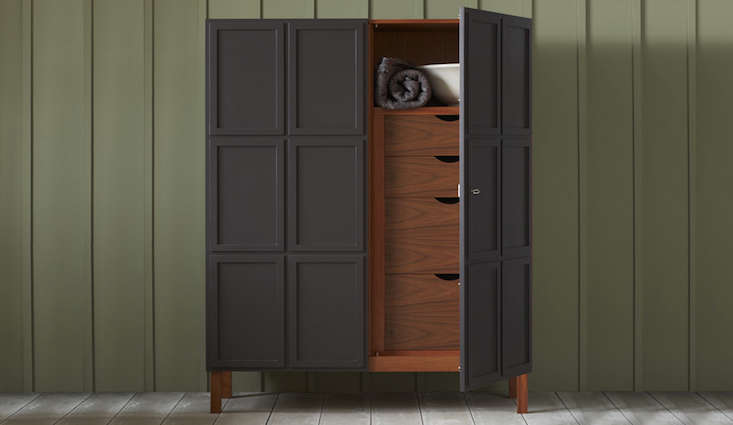
There was a time when the word armoire suggested an enormous carved cabinet inherited from a mysterious great-aunt, possibly containing mothballs, embroidered linens, and at least one object nobody in the family could identify. Modern wood armoires have changed the script.
Today’s best designs are streamlined, architectural, and surprisingly versatile. They can replace a missing closet, organize a guest room, conceal an office, store bedding, or prevent the dreaded bedroom-chair clothing mountain from achieving permanent-landmark status.
Wood is particularly well suited to the modern armoire. Oak brings a relaxed Scandinavian feel, walnut creates instant warmth, and darker stained woods can turn a practical storage cabinet into a dramatic focal point. Meanwhile, contemporary interiors often combine solid wood, carefully selected veneers, discreet hardware, adjustable shelving, and removable hanging rods to make one large piece of furniture perform several jobs.
Below are 10 standout approaches to the modern wood armoire, inspired by current furniture collections and respected American design sources. Rather than chasing temporary sale prices, the focus is on the things that matter after delivery day: construction, storage flexibility, materials, proportions, and whether the cabinet will still make sense when your storage needs inevitably change.
What Makes a Modern Wood Armoire Worth Buying?
A beautiful door front is nice. A beautiful door front hiding a badly planned interior is substantially less nice.
The strongest modern armoires usually combine three qualities: a simple exterior, adaptable interior storage, and construction sturdy enough for years of opening, closing, stuffing, rearranging, and occasionally wondering why you own seven nearly identical sweaters.
Adjustable shelves are especially valuable because an armoire rarely performs the same job forever. Today’s clothing wardrobe can become tomorrow’s linen cabinet, nursery storage unit, home-office cabinet, or guest-room catchall. Removable hanging bars offer the same flexibility.
Material also deserves attention. Solid wood can provide excellent durability and repairability, but high-quality wood veneer over stable engineered panels is common in modern furniture and can produce beautiful, consistent surfaces. Neither description alone tells you whether a piece is good; construction, joinery, hardware, backing, finish quality, and overall engineering matter just as much.
10 Easy Pieces: Modern Wood Armoires to Know
1. Design Within Reach Line Wardrobe: Minimalism With Texture
The Line Wardrobe demonstrates how a large storage cabinet can feel visually lighter than its dimensions suggest. Its solid-wood frame and doors are paired with wood-veneer shelving, while horizontal detailing introduces texture without relying on decorative hardware.
This approach works particularly well in a minimalist bedroom. Instead of trying to disappear entirely, the cabinet uses the grain and rhythm of wood as decoration. It is a good example of an important modern-furniture rule: when the material already looks good, the designer does not need to shout.
Best for: Scandinavian-inspired rooms, warm minimalism, and buyers who prefer subtle architectural detail.
2. Room & Board Grove Armoire: The Flexible Workhorse
Room & Board’s Grove concept combines an understated solid-wood appearance with practical interior flexibility. Adjustable shelves and a removable wardrobe bar allow the cabinet to switch between hanging storage and folded clothing, linens, boxes, or accessories.
Details such as solid-wood drawer fronts and dovetail joinery also illustrate what shoppers should examine when comparing premium furniture. Drawers are used constantly, so good joinery and smooth hardware are not glamorous brochure material, but they become very glamorous after five years of daily use.
Best for: People who want a long-term bedroom armoire that can adapt to changing storage needs.
3. Article Lenia Armoire: Mid-Century Without the Costume
The Lenia Armoire shows why walnut and white oak remain favorites in modern bedroom furniture. Natural grain provides enough character that the overall form can stay simple.
Inside, configurations featuring clothing rails and adjustable shelving emphasize usable storage rather than ornamental complexity. The result has mid-century influence without looking like somebody recreated an entire 1962 furniture catalog in the bedroom.
Walnut works beautifully with cream, olive, rust, charcoal, and muted blue. White oak is particularly useful when you want a room to feel brighter and visually quieter.
Best for: Mid-century modern interiors and compact rooms that need substantial vertical storage.
4. West Elm Mid-Century Armoire: Closet Functions in One Cabinet
One reason the modern armoire has survived the era of giant built-in closets is simple: many homes do not actually have giant built-in closets.
West Elm’s Mid-Century approach packages several familiar closet functions into a freestanding cabinet, combining adjustable storage, hanging space, a drawer, and a mirror. That makes the piece especially useful in apartments, older homes, and guest bedrooms where permanent construction may not be practical.
It also demonstrates an excellent principle for small-space furniture: use vertical volume aggressively. A tall cabinet can provide serious storage without consuming the wall width required by a long dresser.
Best for: Apartments, older homes, guest bedrooms, and rooms without adequate built-in closets.
5. Design Within Reach Matera Armoire: Craftsmanship Meets Utility
The Matera Armoire moves toward the more architectural end of modern furniture. Its solid-wood frame uses traditional woodworking ideas such as mortise-and-tenon corner construction while maintaining a clean contemporary silhouette.
The useful part is inside. Drawers, a clothing rod, mirror, and hooks turn the cabinet into something closer to a compact dressing station than a simple box with doors.
This is exactly where paying more for an armoire can make sense. Premium furniture should deliver something tangible: stronger construction, better hardware, thoughtful proportions, useful interiors, superior materials, or ideally several of those things at once.
Best for: Buyers who value woodworking details and want wardrobe storage with built-in organization.
6. Crate & Barrel Keane Armoire: Big, Bold, and Extremely Useful
Some modern rooms need furniture with presence. The Keane approach uses warm wood and substantial proportions rather than trying to make the armoire invisible.
Its combination of adjustable shelves, removable hanging storage, accessory organization, and lower drawers demonstrates why large armoires can outperform a traditional dresser. Hanging clothing, blankets, folded items, jewelry, belts, and smaller accessories can all live behind one coordinated facade.
A cabinet of this scale needs breathing room. Pairing it with a simple bed, restrained nightstands, and lighter textiles keeps the room from looking as though the furniture has formed its own government.
Best for: Larger bedrooms requiring significant mixed storage.
7. Lulu and Georgia Caraway Cabinet: Modern Heirloom Character
Modern does not have to mean clinically smooth. The Caraway Cabinet demonstrates the softer side of contemporary wood furniture, using oak, decorative details, and traditional references in a form that still works with today’s interiors.
Adjustable shelves and a removable hanging rod help bridge the gap between decorative cabinet and practical wardrobe. Drawers below provide additional concealed storage.
This style works especially well in transitional homes where aggressively minimalist furniture might seem disconnected from architectural features such as molding, paneled doors, vintage flooring, or traditional windows.
Best for: Transitional interiors, organic modern rooms, and anyone who likes furniture with visible character.
8. West Elm Quinn Armoire: Fluted Wood Adds Dimension
Fluting has become a recognizable element in contemporary furniture because it solves a design problem elegantly: how do you make a flat cabinet interesting without covering it in unnecessary decoration?
The Quinn approach uses vertical texture on its wood surfaces, creating shadows that change subtly throughout the day. A mirror and practical enclosed storage add functionality behind the decorative exterior.
Textured doors are particularly useful when an armoire will be a major visual feature. In a bedroom containing mostly smooth walls, plain upholstery, and simple case goods, fluting can create depth without introducing another color.
Best for: Contemporary rooms needing texture rather than additional pattern.
9. Design Within Reach Loop Armoire: A Cabinet That Changes Jobs
A particularly valuable feature in modern storage furniture is reconfigurability. The Loop Armoire illustrates this with storage that can be arranged for clothing or shelving depending on how the cabinet is used.
That flexibility matters more than it might appear while shopping. Furniture frequently outlives the room for which it was purchased. A bedroom wardrobe might eventually move into an office, hallway, nursery, or dining room.
Oak and walnut finishes also make this type of cabinet relatively easy to integrate with other furniture without purchasing a perfectly matched bedroom suite. Matching every wood tone is unnecessary; coordinating undertones usually looks more natural.
Best for: Long-term owners who expect their furniture to move between rooms and functions.
10. Room & Board Linear Armoire: Straightforward American Modernism
The Linear Armoire takes the practical route: strong geometry, wood construction, drawers, adjustable shelving, and removable hanging space.
That may sound less exciting than a cabinet with sculptural doors or exotic burl veneer, but uncomplicated furniture often ages exceptionally well. Simple proportions are easier to combine with changing paint colors, bedding, rugs, and other furniture.
If you want to buy an armoire once rather than repeatedly replacing fashionable versions, restrained design has a major advantage. Today’s plain oak cabinet can survive tomorrow’s decorating obsession with checks, stripes, chrome lamps, burgundy walls, or whatever social media decides we urgently require next.
Best for: Buyers prioritizing versatility, solid construction, and timeless styling.
How to Choose the Right Modern Wood Armoire
Measure More Than the Wall
Knowing the available wall width is only the beginning. Measure ceiling height, baseboards, door swings, nearby outlets, windows, heating vents, and the space required to open the armoire doors comfortably.
Then measure the delivery route.
This step has saved many relationships.
A 75-inch-tall wardrobe fitting beautifully in the bedroom does not matter much if it cannot turn the corner at the top of the staircase. Measure entry doors, elevators, hallway turns, stairways, and any narrow landings before ordering.
Choose Interior Storage Before Exterior Style
Start with what you actually own.
If most clothing hangs, prioritize a sturdy wardrobe rod and sufficient vertical clearance. If you fold sweaters, jeans, and T-shirts, adjustable shelves matter more. For bedding, deep shelving and large lower drawers can be invaluable.
A beautiful cabinet with the wrong interior configuration quickly becomes a very expensive wooden monument to poor planning.
Understand Your Wood Options
Oak usually offers visible grain and a relaxed, contemporary character. White oak works especially well in Scandinavian, Japandi, coastal, and organic-modern interiors.
Walnut provides deeper brown tones and dramatic grain, making it a natural choice for mid-century and sophisticated modern spaces.
Mahogany and related darker woods can create a richer and more substantial look, particularly in larger rooms.
Wood veneer should not automatically be treated as a negative. Quality veneers allow manufacturers to create consistent grain patterns and dimensionally stable panels while using wood efficiently. The important distinction is between thoughtfully engineered furniture and cheaply built furniturenot simply between the words “solid” and “veneer.”
Look for Adjustable Components
Adjustable shelves and removable rods dramatically extend an armoire’s useful lifespan. A piece purchased for clothing today might eventually store towels, toys, office supplies, barware, electronics, or guest bedding.
The humble shelf peg may not win a design award, but it can save you from buying another cabinet five years from now.
Consider Responsible Wood Sourcing
If environmental sourcing matters to you, look for credible certification rather than vague language such as “eco-friendly wood.” FSC-certified products are one recognizable option for buyers looking for forest materials sourced through independently verified systems.
Also consider longevity. A well-made piece that remains useful for decades can be a more sensible purchase than disposable furniture replaced every few years.
Take Furniture Stability Seriously
Tall storage furniture should be installed according to the manufacturer’s instructions, including recommended anti-tip hardware and wall anchoring.
This matters especially in homes with children, but furniture stability is a sensible consideration in any household. Do not assume a heavy cabinet cannot tip simply because moving it across the bedroom made you briefly question all your life choices.
Styling a Modern Wood Armoire Without Overdoing It
Because an armoire has considerable visual mass, the surrounding decor should usually give it room to breathe.
A light oak wardrobe can pair beautifully with warm white walls, natural linen, woven rugs, and matte black accents. Walnut works well beside creamy upholstery, brass, leather, muted greens, and dusty blues. Dark-stained cabinets benefit from lighter walls and textiles that prevent the room from feeling too visually heavy.
Avoid forcing every wooden object to match perfectly. Contemporary interiors often look richer when related wood tones are layered rather than duplicated.
And resist automatically decorating the top of a tall armoire. A few carefully scaled objects can work in rooms with high ceilings, but twelve baskets, artificial vines, framed photographs, and a ceramic rooster may make your elegant modern wardrobe look suspiciously like the top shelf of a thrift store.
Living With a Modern Wood Armoire: Lessons From Real-World Use
The Interior Matters More After the Honeymoon Period
Shopping for furniture is largely an exterior activity. You look at finishes, silhouettes, door details, and beautifully styled photographs containing approximately three shirts and one photogenic hat.
Living with an armoire is different.
After several months, the feature you appreciate most is rarely the elegantly rounded corner you admired online. It is the shelf that can move upward three inches so your storage bin fits underneath it. It is the drawer that opens fully without wobbling. It is the hanging rod positioned at a useful height.
This is why practical interior design should carry serious weight in the buying decision. Think about the objects going inside before becoming hypnotized by walnut grain.
Large Furniture Changes the Architecture of a Room
An armoire is not an accessory. Once installed, it behaves almost like a small architectural feature.
Place a tall oak cabinet against an empty wall and suddenly that side of the bedroom has structure. Put one beside a doorway and it can visually define a dressing zone. In a studio apartment, a strategically positioned wardrobe can even help separate sleeping and living areas.
For that reason, placement deserves experimentation. Painter’s tape is surprisingly useful: mark the proposed width and height on the wall before ordering. You may discover that the cabinet expected to look “perfectly substantial” actually feels like a wooden skyscraper beside your bed.
Closed Storage Is Exceptionally Forgiving
Open wardrobes look magnificent when every shirt is spaced evenly, every hanger matches, and nobody actually lives there.
Doors are kinder.
A wood armoire allows real-life storage to exist behind an organized exterior. Your sweaters can lean. Your spare sheets can be folded imperfectly. That mysterious bag of cables can continue its long-term residency without becoming part of the room’s decorative composition.
This is one reason enclosed storage can make a bedroom feel calmer. Visual simplicity outside the cabinet does not require museum-level organization inside it.
Adjustability Becomes More Valuable With Time
The most successful armoires tend to evolve.
A wardrobe initially purchased for a first apartment might later become overflow clothing storage in a larger house. Remove the hanging rod and it becomes a linen cabinet. Add organizers and it can hold children’s clothing. In a home office, shelves can accommodate files, equipment, and supplies while the doors hide everything at the end of the workday.
This adaptability is worth considering when comparing two seemingly similar pieces. Fixed interiors may be perfectly suitable for a specific purpose, but adjustable components provide insurance against future lifestyle changes.
Quality Hardware Is Quietly Important
Handles and hinges receive far less attention than wood species, yet they influence every interaction with the furniture.
Doors should align properly. Hinges should operate smoothly. Drawers should feel stable when extended. Adjustable shelves should sit securely. A large armoire may be opened thousands of times during its lifetime, so small mechanical details eventually become big quality-of-life details.
Natural Wood Gets Better When You Stop Expecting Perfection
Real wood varies. Grain changes from board to board. Color can shift with light and age. Small variations are often part of what makes wood furniture appealing.
A successful modern interior does not require every oak surface to have precisely the same beige tone. In fact, a room containing one exact wood finish repeated across the bed, dresser, nightstand, wardrobe, mirror, and bench can begin to resemble a furniture showroom.
Let individual pieces have personality. Coordinate them rather than cloning them.
Buying Once Can Be More Satisfying Than Buying Quickly
A modern wood armoire occupies enough space, performs enough work, and attracts enough attention that it is worth choosing carefully.
Compare dimensions. Examine interior layouts. Investigate construction. Think about future uses. Check delivery access. Consider wood sourcing and safety hardware. Then choose the piece that will remain useful even if the rest of the room changes.
The best armoire eventually becomes something you stop noticingnot because it is boring, but because it simply works. Your clothes have a place, your room looks calmer, and you are no longer attempting to convince visitors that the bedroom chair was specifically designed to display six pairs of jeans.
Conclusion: Why the Modern Wood Armoire Still Works
The modern wood armoire is one of those rare furniture categories that can solve a practical problem while making a room look more intentional. It adds storage without construction, uses vertical space efficiently, hides clutter, and can move with you when your home changes.
The strongest designs avoid unnecessary ornament and instead rely on proportion, natural grain, thoughtful hardware, flexible shelves, rods, and drawers. Oak and walnut remain especially compatible with contemporary interiors, but craftsmanship and interior configuration matter more than following a particular wood trend.
Whether you favor the architectural restraint of Design Within Reach, the adaptable solid-wood approach of Room & Board, the approachable mid-century character of Article and West Elm, or a more decorative oak cabinet, the buying principle is the same: choose an armoire for the life happening behind its doors, not merely for the photograph of the doors themselves.
Note: Furniture collections, materials, dimensions, finishes, availability, and product configurations can change over time. Verify current specifications, delivery requirements, assembly instructions, and wall-anchoring recommendations with the manufacturer before purchasing.