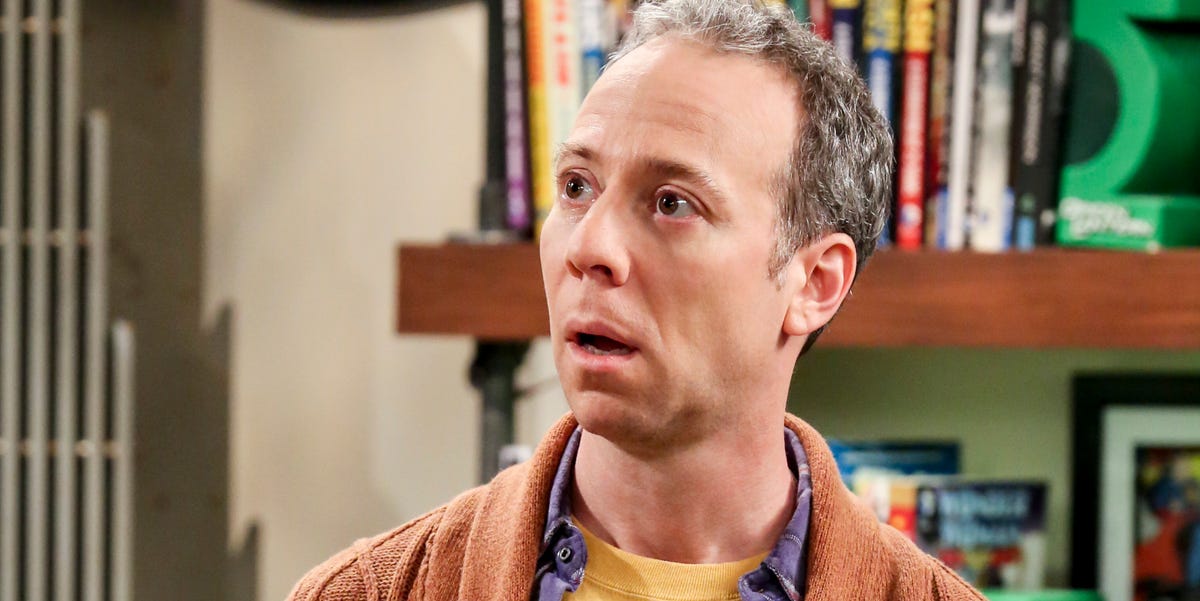
Just when you thought the The Big Bang Theory universe had squeezed every last laugh out of whiteboards, comic books, and socially awkward small talk, the franchise has found another doorway to walk through and this one looks a lot weirder, riskier, and frankly more fun than many fans expected. The next spinoff puts longtime fan-favorite Stuart Bloom front and center, with Kevin Sussman stepping into the lead role for a series that sounds far more ambitious than a simple hangout comedy with extra physics jokes.
The new show, Stuart Fails to Save the Universe, takes a character who was often the saddest guy in the room lovingly, of course and turns him into the center of a much bigger story. That alone makes this spinoff feel different. Stuart was never the loudest character, never the flashiest, and definitely never the one most viewers expected to anchor the next chapter of the franchise. But that is exactly why the idea works. A Stuart-led series gives the Big Bang world a chance to stay familiar while finally doing something unexpected.
What We Know About the New Spinoff
The headline is simple: Kevin Sussman is back as Stuart Bloom, the comic book store owner who spent years orbiting the original gang with a mix of dry humor, desperation, and oddly touching sincerity. The series is set up as a direct expansion of the The Big Bang Theory universe, but it is not aiming to be a carbon copy of the original sitcom. Instead, it leans into bigger genre ideas, which is both intriguing and slightly chaotic a very Stuart energy, honestly.
The premise is much larger than “guy runs comic book store and has a rough week.” Stuart reportedly kicks off a reality-breaking mess after damaging a device built by Sheldon and Leonard, which sends the story into multiverse territory. That means the show has room for science-fiction elements, alternate versions of familiar characters, and a wider visual playground than the original series ever needed. In other words, the franchise is swapping a couch-and-takeout format for something that sounds closer to a nerdy adventure comedy.
Returning Faces Fans Will Recognize
Stuart is not going it alone. The spinoff also brings back Lauren Lapkus as Denise, Brian Posehn as Bert, and John Ross Bowie as Barry Kripke. That is a smart move. One of the easiest ways to make a spinoff feel flimsy is to build it around one supporting character and then surround that person with strangers. This show appears to be doing the opposite. It is expanding the lives of side characters viewers already know, which gives the series built-in chemistry and instant emotional shorthand.
Denise is especially important because she helped ground Stuart during the original series. Their relationship added warmth to a character who could have remained a running joke forever. Bert brings lovable oddball energy, and Kripke adds the exact kind of chaos any comedy ensemble needs. If the original show worked because everybody’s quirks bounced off one another, this new setup has the potential to create a fresh version of that same rhythm without simply copying Leonard, Sheldon, Penny, Howard, and Raj beat for beat.
Why Stuart Is a Better Lead Than People Think
At first glance, Stuart may seem like an unusual choice for the center of a new Big Bang Theory spinoff. He was never the franchise’s obvious breakout in the way Sheldon became a pop-culture juggernaut. But Stuart has something arguably more useful for a sequel-era story: flexibility. He can be funny, sympathetic, awkward, bleak, romantic, and unexpectedly sharp in the same episode. He is both insider and outsider, which gives the show room to talk to longtime fans without becoming trapped by nostalgia.
He also represents a specific kind of viewer connection. Stuart was the guy who often looked like life had body-slammed him into a folding table, yet he kept showing up. He was lonely, self-deprecating, and often hilariously uncomfortable, but he remained recognizable in a way many sitcom characters are not. He did not feel polished. He felt human. In a television landscape stuffed with hyper-confident heroes and ultra-slick antiheroes, Stuart still looks like a man who has absolutely Googled “how to seem normal at dinner” at least three times.
That relatability matters. A spinoff built around Stuart can still be broad and high-concept, but the emotional hook remains small and personal. Fans are not just tuning in for another joke machine. They are tuning in for a character who has always felt like the patron saint of trying your best while clearly being one minor inconvenience away from collapse.
This Is Not Just Another Sitcom Spinoff
One of the most interesting parts of the new series is the creative swing behind it. Instead of keeping everything safe, cozy, and structurally identical to the mothership, the show appears to be embracing sci-fi and fantasy elements in a much bigger way. That makes perfect sense for this franchise. The original characters spent years obsessing over comic books, alternate worlds, fandom, and impossible tech. A spinoff that finally plays inside those toys feels less like a gimmick and more like a delayed payoff.
There is also a platform shift worth noticing. Unlike the original CBS sitcom, this new chapter is headed to HBO Max. That does not automatically make it edgier or darker, but it does suggest more room to experiment with tone, pacing, and visual style. Streaming audiences are generally more open to genre-blending, and the title alone Stuart Fails to Save the Universe sounds like it knows exactly how ridiculous it wants to be.
That combination could help the franchise avoid the biggest trap of sequel storytelling: making something that only exists to remind viewers of the thing they already liked. Nostalgia is powerful, but it is also lazy when used as a substitute for new ideas. This series seems aware of that. It is still connected to the original DNA, but it is trying to stretch that DNA into a stranger shape.
How the Franchise Is Evolving
The Big Bang Theory already proved it could survive beyond its original ending. Young Sheldon became a hit by shifting the tone and perspective, and Georgie & Mandy’s First Marriage continued that expansion by building on the prequel’s family-centered appeal. The Stuart spinoff now adds a third lane, and it may be the boldest one yet.
What is fascinating here is that each expansion has approached the universe from a different angle. Young Sheldon turned the franchise into a coming-of-age family dramedy. Georgie & Mandy’s First Marriage leaned into relationship and domestic comedy. Stuart Fails to Save the Universe seems ready to become the geekiest version of the franchise, which is ironic and kind of perfect, since the original show was built on geek culture in the first place.
In that sense, the new spinoff may actually feel more spiritually linked to the earliest seasons of The Big Bang Theory than some viewers expect. Not because the structure is the same, but because it appears willing to center the obsessions that defined the characters: comic books, fandom, impossible inventions, sci-fi logic, and endless arguments over fictional worlds that somehow feel deeply serious at 2 a.m.
The Biggest Questions Fans Still Have
Of course, there are still a few giant question marks floating around like an untethered weather balloon from the Caltech roof. The biggest one is cameos. The premise opens the door to alternate-universe versions of beloved characters, which means longtime viewers are already wondering whether major original cast members will appear in some form. That possibility is exciting, but the show would be wise not to rely on cameo bait as its main personality.
Another question is tone. Can a franchise known for studio-lot sitcom rhythms successfully pivot into a science-fiction action-comedy without losing its comic timing? That is the gamble. If the show gets too big, it could feel disconnected from what made The Big Bang Theory easy to binge. If it plays things too safe, it risks becoming a spinoff that sounds strange on paper but behaves exactly like every other half-hour comfort watch. The sweet spot is somewhere in the middle: emotionally familiar, creatively unpredictable.
There is also the simple challenge of asking viewers to reframe Stuart. He was often the punchline. Now he has to be the engine. That is not impossible in fact, it is often how the most interesting spinoffs begin but it requires sharp writing. The audience has to believe Stuart can carry the story without losing the vulnerability that made him lovable in the first place.
Why This Spinoff Could Actually Work
Oddly enough, the reasons this show could fail are the same reasons it could succeed. It is a strange premise. It is centered on a character who was never the face of the franchise. It is taking a sitcom world and injecting more overt genre mechanics into it. On paper, that sounds risky. On screen, it might be exactly the jolt the franchise needs.
Stuart has always been the emotional representative of a particular kind of fandom: the people who love the culture deeply but do not necessarily feel like the heroes inside it. Making him the star turns that dynamic inside out. Suddenly the man who sold the comics, admired the adventures, and stood near the action gets to be the one thrown into the center of it. That is not just funny. It is satisfying.
And if the writers can balance heart with absurdity, this spinoff may end up doing what the best franchise extensions do: honoring the original while proving it still has fresh stories to tell. No bazinga required. Well, maybe one bazinga. As a treat.
The Fan Experience: Why This News Hits Differently
There is a specific kind of excitement that comes with a franchise return, and it is not always about plot. Often, it is about memory. Fans do not just remember the jokes from The Big Bang Theory; they remember where they were when they watched it. They remember college dorm rooms, family living rooms, half-finished takeout containers, late-night reruns, and the comforting hum of an episode they had already seen five times. That is why a Stuart-centered spinoff lands in such an interesting emotional place. It is not simply “new content.” It is a revisit to a world many viewers used as background comfort, appointment viewing, or emotional wallpaper during different chapters of life.
And Stuart, of all people, is a surprisingly effective bridge for that feeling. He was never the glamorous one. He was the character who looked like he had been awake for 36 hours, got emotionally injured by a small social misunderstanding, and still came back to work the next day. That makes him easy to root for. Fans often see themselves more clearly in the side characters than in the polished leads, because side characters are allowed to be messier. Stuart was messy in a way that felt familiar.
There is also something delightful about the comic book store becoming such an important launchpad for the next phase of the franchise. In the original series, that store was more than a set. It was a sanctuary for arguments about canon, collectibles, fandom rituals, and belonging. For many viewers, it represented a kind of community space awkward, niche, and deeply sincere. A new story growing out of that environment feels right. It suggests the spinoff understands that the heart of The Big Bang Theory was never just equations on a whiteboard. It was the shared language of obsession.
That is why the sci-fi angle may resonate more than skeptics expect. For longtime viewers, the jump into alternate realities and universe-breaking chaos is not a betrayal of the franchise. It is almost a fantasy fulfillment of everything these characters spent years loving. The original gang debated superhero rules, argued over fictional timelines, and treated genre mythology like sacred text. Now the franchise itself gets to behave like one of those stories. That is not random. That is thematic payback.
For fans, then, the new spinoff experience is likely to be a blend of comfort and curiosity. Comfort comes from seeing familiar faces and hearing rhythms that still feel recognizably Big Bang. Curiosity comes from not quite knowing what this show will be from week to week. That uncertainty is healthy. Franchises usually start to fade when every new entry feels pre-explained. Here, the hook is that viewers can feel the nostalgia while still asking, “Wait, what on earth is this about to become?”
And honestly, that is a good place to be. A spinoff should not feel like reheated leftovers with a nicer plate. It should feel like returning to a favorite neighborhood and discovering that the weird little comic shop on the corner has somehow become the center of the universe. If that is not a proper Stuart upgrade, nothing is.
Final Thoughts
The New “Big Bang Theory” Spinoff Stars an OG Cast Member is the kind of headline that instantly grabs attention, but the deeper story is even more interesting. This is not just another franchise extension built on name recognition. It is a bet on a character who always worked because he felt slightly out of place and that very quality may make him the perfect lead for a series trying to reinvent a familiar world.
If Stuart Fails to Save the Universe sticks the landing, it could become the rare spinoff that earns its existence by doing more than replay old hits. It could expand what the The Big Bang Theory universe is allowed to be. And if it crashes in a spectacular nerd-flavored fireball? Well, at least it will have failed in a much more interesting way than most franchise leftovers ever dare.