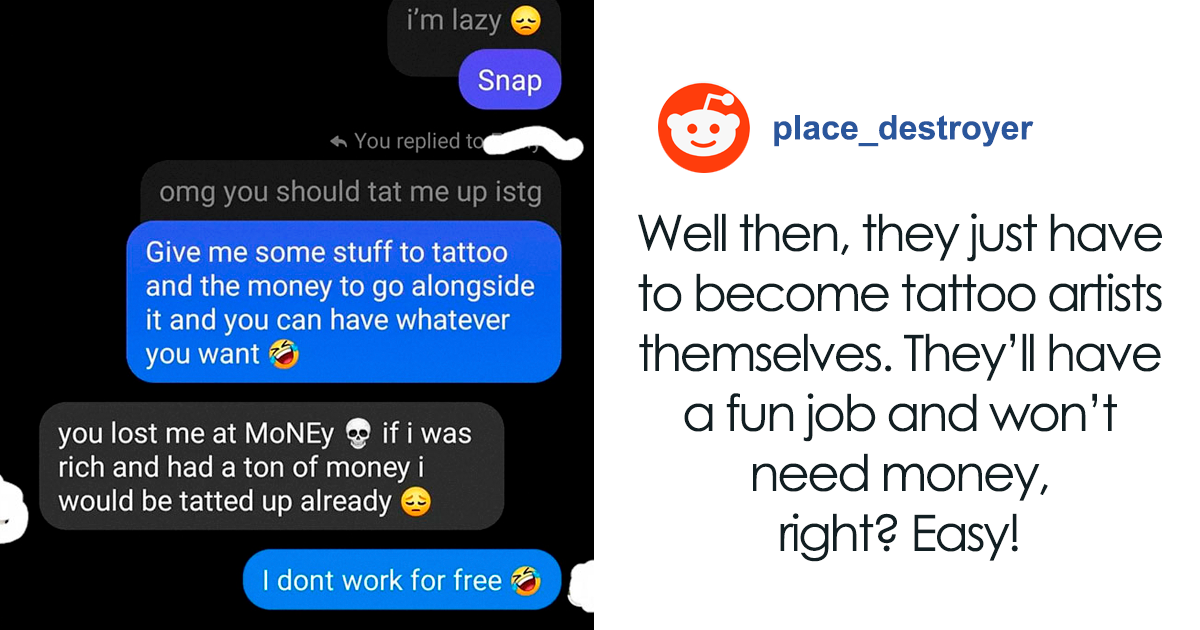
A tattoo can begin as a memory, a sketch, or a midnight idea involving a snake, three roses, and the words “no regrets” spelled correctly this time. Once a professional artist turns that idea into permanent body art, however, it becomes a paid service. That detail apparently shocked one would-be client whose conversation with a tattoo artist went viral after money entered the chat and common sense quietly left through the emergency exit.
The client reportedly wanted to be tattooed but argued that the artist should work for free because tattooing looked enjoyable and therefore counted as a hobby. The artist refused, shared the exchange online, and received widespread support. The incident was funny, but it exposed a familiar problem: creative professionals are often expected to donate labor simply because they care about their craft.
What Happened in the Viral Tattoo Exchange?
The conversation started like an ordinary tattoo inquiry and reached the perfectly normal stage where price is discussed. Instead of asking for an estimate or deciding to save money, the potential client acted surprised that payment was required. The client then minimized the artist’s career by calling it a hobby.
The artist stood firm. Tattooing paid the bills, required professional skill, and was not a free recreational activity performed whenever a stranger requested permanent artwork. Online commenters quickly spotted the flaw in the client’s logic: enjoying a job does not make the labor valueless. By that reasoning, a cheerful chef should provide dinner for free and a landlord who enjoys real estate should stop collecting rent. Oddly, those industries have not adopted the policy.
Why a Professional Tattoo Costs Money
The Price Includes Years of Skill
A finished tattoo may take a few hours, but the ability to create it usually took years to develop. Artists study drawing, composition, line weight, shading, color, placement, skin behavior, machine control, and healing. Many complete apprenticeships, build portfolios, practice repeatedly, and learn infection-control procedures before accepting regular clients.
You are not buying only the minutes visible on the clock. You are paying for trained judgment and technical controlthe same reason an experienced mechanic may solve a problem quickly. Speed can be evidence of expertise, not proof that the work has little value.
Custom Design Happens Before the Needle Starts
For a custom piece, the artist may review references, draw several versions, fit the composition to the body, simplify details that will not age well, prepare a stencil, and plan the order of the work. Revisions also require time. Turning a small wrist idea into a half-sleeve does not happen through artistic telepathy.
This invisible labor is one reason a quote can feel higher than a client expects. The appointment is only the most visible part of the project.
Safe Tattooing Has Real Operating Costs
Tattooing breaks the skin, so hygiene is not an optional upgrade. A properly managed appointment can involve single-use needles or cartridges, disposable ink caps, gloves, surface barriers, razors, disinfectants, dressings, stencil materials, cleaning products, and safe sharps disposal.
The artist also needs machines, furniture, lighting, inks, insurance, booking tools, permits where required, and a clean workspace. Even a tiny tattoo requires setup, paperwork, sanitation, and cleanup. That is why many studios charge a shop minimum. The minimum is not a luxury tax on small hearts; it covers the baseline cost of safely opening the station.
The Artist Carries Responsibility
A responsible artist considers placement, movement, aging, scarring, pain tolerance, and whether the requested detail will remain readable. They may recommend enlarging a design, moving it away from a difficult area, dividing the work into sessions, or declining it entirely.
That advice protects the client. Sometimes the most valuable professional service is hearing, “At that size, this majestic wolf will eventually resemble a worried potato.”
How Tattoo Pricing Usually Works
There is no universal tattoo menu. Prices vary by region, artist experience, demand, style, placement, size, color, complexity, and estimated session time. A specialist with a long waiting list may charge more than a newer artist building a portfolio. That difference is not automatically greed; it reflects skill, demand, and business costs.
Shop Minimums, Hourly Rates, and Flat Quotes
A shop minimum is the lowest amount charged for any appointment. Larger custom work may be priced hourly, by session, or by day. Clearly defined designs may receive a flat quote. No method is inherently superior as long as the artist explains what the price covers before work begins.
Why Artists Request Deposits
Many studios require a deposit to reserve the appointment and begin preparation. It is often applied to the final balance, but studio policies vary. A late cancellation or no-show may make it nonrefundable because the artist held the time, prepared the artwork, and lost the chance to book another client.
Before paying, ask about rescheduling, cancellation deadlines, major design changes, accepted payment methods, and whether the deposit is transferable. Clear questions are professional. Disappearing for six weeks and returning with “hey bestie, still on for tomorrow?” is not.
Why Demanding Free Ink Backfires
Discussing a budget is not rude. Most artists understand that tattoos can require saving. The problem begins when a client treats payment as an insult, dismisses the work as easy, or uses guilt to obtain a discount.
That behavior can signal future trouble. Someone who argues about value before booking may also resist the deposit, arrive late, demand endless revisions, ignore aftercare, or dispute an approved design. A good tattoo relationship requires trust on both sides.
Free or reduced-price tattoos sometimes exist. An apprentice may offer selected practice pieces under supervision. An artist may donate a session, tattoo a family member, run a giveaway, or choose a model for a specific portfolio design. The crucial word is choose. A gift is offered by the giver; it is not extracted by emotional couponing.
How to Discuss a Tattoo Budget Respectfully
A useful inquiry includes the concept, approximate size, placement, reference images, and an honest budget. For example: “I love your black-and-gray botanical work. I have about $400. Could we create something suitable for the outer forearm in that range, or should I save for a larger session?”
This gives the artist room to suggest realistic options. A client might reduce complexity, select available flash, divide a large project into sessions, save longer, or consult another reputable artist whose normal rates fit the budget.
What should a client avoid? Pressuring an artist to copy someone else’s tattoo, comparing them aggressively with a cheaper studio, hiding major design changes until the appointment, or requesting complex work for the price of lunch. Your budget is valid. The artist’s rate is also valid. Sometimes the two simply need more time to become friends.
Why the Cheapest Tattoo May Cost More Later
Price alone does not guarantee quality, and an expensive artist is not automatically responsible. Still, choosing a tattoo solely because it is free or extremely cheap can increase the risk of poor design, weak technique, unsafe conditions, or inadequate aftercare guidance.
Tattooing creates many tiny breaks in the skin. Contaminated ink, nonsterile equipment, poor handling, or negligent aftercare can contribute to infection and other reactions. A professional studio should use fresh gloves, properly prepared surfaces, sealed or single-use supplies where appropriate, safe sharps handling, and clear aftercare instructions.
Research local licensing or health rules, inspect the studio, and review healed work rather than only fresh photographs. Fresh tattoos are saturated, glossy, and excellent at posing for social media. Healed tattoos reveal how the linework, shading, and color actually settled.
Some redness, tenderness, and warmth can occur during early healing. Worsening pain, spreading redness, pus, fever, chills, or a tattoo that is not healing should prompt medical attention. The best bargain is the one that does not end with antibiotics and an awkward explanation at urgent care.
Passion Is Not a Payment Method
The exchange resonated beyond tattooing because artists, photographers, bakers, musicians, and hairstylists hear the same argument: “But you enjoy it.” Enjoyment is treated as evidence that work should cost less, when it is often evidence that the professional invested enough effort to become good.
A baker may love decorating cakes and still buy ingredients. A photographer may love portraits and still pay for cameras, software, insurance, and editing time. Passion can improve a service, but it does not erase the economics surrounding it.
Fair rates also support quality. Sustainable income allows artists to replace equipment, maintain sanitary workspaces, continue training, schedule enough time, and avoid rushing. Respecting the price is not merely flattering the artist; it supports the conditions required for strong, safe work.
The Reality Check Every Tattoo Client Needs
Before contacting an artist, assume the tattoo costs money. Review the portfolio and booking rules, prepare a realistic budget, and provide enough information for an estimate. “How much for a medium dragon?” is not enough. Medium compared with whata gecko, a pickup truck, or the emotional weight of your favorite television finale?
Respect deposits, arrive sober and on time, follow aftercare instructions, and communicate changes early. Remember that an artist is not simply selling ink. The service includes design, execution, sanitation, judgment, communication, and accountability for a result that may remain on your body for decades.
The viral client was not “lost” at money. Money simply revealed that the conversation involved a professional service rather than a favor. Loving the work may make an artist more thoughtful and creative, but it does not make rent, supplies, training, or time disappear.
Experiences That Show Why the “Free Tattoo” Mindset Fails
Imagine a first-time client named Maya who wants a detailed moth tattoo with flowers and a moon wrapping around her upper arm. The artist reviews references, changes several tiny details so they will age better, redraws the wings to fit Maya’s anatomy, and prepares the stencil. Maya sees a three-hour appointment, but the project includes hours of invisible preparation. Paying the quote does not mean she is overpaying for ink; it means she recognizes the work that made the final image possible.
Now consider Jordan, who books a Saturday session and pays a deposit. Two hours before the appointment, Jordan cancels because friends planned brunch. From Jordan’s perspective, “nothing happened.” From the artist’s perspective, a valuable earning block vanished after the design was prepared. The deposit reduces that loss and encourages clients to treat appointments as professional commitments rather than suggestions written in pencil.
Luis handles a limited budget differently. He admires an artist known for large Japanese-style work but cannot yet afford a full forearm composition. Instead of asking for a huge discount, he explains his budget and chooses a smaller flash design. Luis receives strong work, the artist is paid fairly, and nobody pretends that social-media exposure can be deposited at a bank.
Then there is the familiar offer: “My friend has a tattoo machine.” A free home tattoo may heal with patchy color, uneven lines, blowout, or scarring. Fixing it can require a larger cover-up, while removal may require multiple professional treatments. The free tattoo becomes the opening installment in an unexpectedly expensive subscription.
Quote shock can also come from comparing unlike projects. A client may point to a tiny minimalist symbol online and ask why a palm-sized color portrait costs more. The portrait requires different planning, pigments, layering, skin saturation, and session time. Placement matters too: ribs, hands, knees, and other difficult areas may demand slower work or future touch-ups. A professional estimate is not a judgment of the client’s taste or income. It is an attempt to predict the resources needed to complete that specific tattoo responsibly.
Artists have their own difficult experience: learning to say no. Refusing a disrespectful client can feel risky, especially early in a career. Yet a person who minimizes the work may ignore preparation instructions, arrive with a completely different design, pressure the artist to rush, or challenge the final price. Declining one bad project can protect the artist’s schedule, concentration, safety standards, and other clients.
The healthiest tattoo experiences share the same ingredients: clear pricing, realistic expectations, informed consent, strong hygiene, patience, and mutual respect. Clients may ask questions. Artists may set rates and boundaries. Either side may decide the project is not a good fit.
That is the real lesson behind the “you lost me at money” moment. Money did not ruin an innocent hobby; it identified a professional service. A tattoo can be meaningful, funny, rebellious, therapeutic, or beautiful. It is still labor, and good labor deserves to be paid.
Note: Tattoo pricing, deposit rules, tipping customs, licensing requirements, and aftercare recommendations vary by artist, studio, state, and local health authority. Confirm written studio policies and contact a healthcare professional if a new tattoo shows signs of infection or an unusual reaction.