The 1980s set of Stranger Things feels nostalgic because it does not merely decorate the screen with old phones, wood-paneled basements, bicycles, and shaggy hair. It builds an entire emotional time machine. Hawkins, Indiana, may be fictional, but the way it looks, sounds, and behaves feels weirdly familiar even to viewers who never owned a Walkman, never rented a movie on VHS, and never had to blow dust out of a game cartridge like it was a sacred ritual.
That is the secret sauce. Stranger Things does not present the 1980s as a museum exhibit. It presents the decade as a lived-in world: messy bedrooms, cluttered kitchens, mall food courts, school hallways, glowing Christmas lights, basement Dungeons & Dragons campaigns, and the kind of neighborhood freedom that makes modern parents clutch their tracking apps. The nostalgia works because it is specific, tactile, and emotionally loaded.
The show’s production design, costumes, music, and filming locations work together to create a version of the 1980s that feels both real and mythic. It is not just “remember shoulder pads?” nostalgia. It is nostalgia for childhood adventure, analog mystery, suburban boredom, and the terrifying possibility that the scariest thing in town might be hiding behind the wallpaper.
The Power of a Small Town Frozen in 1983
The first season begins in November 1983, in the fictional town of Hawkins, Indiana. That date matters. The early 1980s were late enough for arcade games, Dungeons & Dragons, synth music, walkie-talkies, and blockbuster pop culture to shape kids’ lives, but early enough that the world still felt largely unplugged. No smartphones. No social media. No instant answers. If your friend disappeared, you did not check their location. You grabbed your bike, called the gang, and hoped the creepy government lab nearby was totally normal. Spoiler: it was not.
Hawkins is nostalgic because it is designed like a place where childhood can still feel huge. The roads are dark, the woods are mysterious, and the adults are often several steps behind the kids. That atmosphere echoes classic 1980s adventure films where young people discovered danger before the grown-ups understood what was happening. The Duffer Brothers have openly discussed their love of cinematic influences from that era, including the spirit of Spielberg-style suburban wonder and Stephen King-style small-town dread.
The genius of Hawkins is that it does not look perfect. It looks slightly worn. The homes are comfortable but not glossy. The schools are institutional and fluorescent. The police station feels practical, not stylish. The Byers house looks financially strained and emotionally intense, which makes Joyce’s wall of Christmas lights unforgettable. The Wheeler basement feels like a real kid-controlled kingdom, complete with game tables, snacks, arguments, and the faint smell of carpet that has seen things.
Production Design That Feels Lived In, Not “Retro”
Many period shows make the mistake of turning the past into a costume party. Every object screams, “Look, I am old!” Stranger Things is smarter. Production designer Chris Trujillo and his team created an 1980s environment where the details support the story instead of waving at the camera like an overexcited mall Santa.
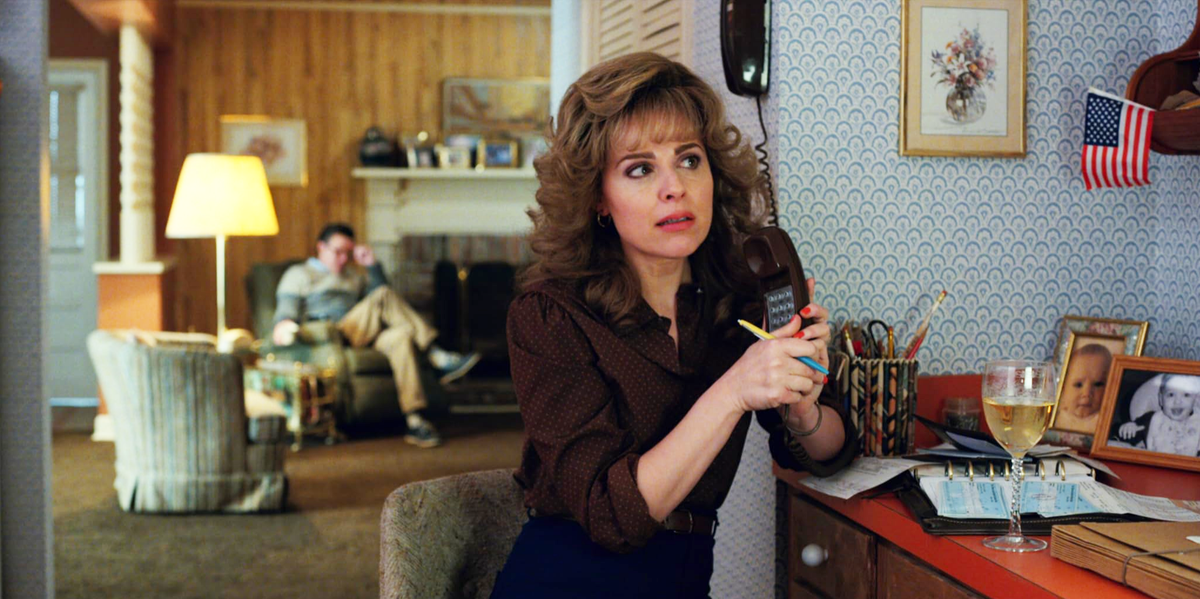
The set design leans into texture: patterned wallpaper, bulky televisions, lamps with warm shades, linoleum floors, metal lockers, bicycles, wood furniture, and shelves full of everyday clutter. These details make the world feel used. The Byers home is not nostalgic because it has Christmas lights; it is nostalgic because those lights are repurposed in a desperate, handmade way. Joyce does not buy a fancy supernatural communication device. She uses what is in the house. That is peak analog problem-solving.
The same principle applies to the kids’ spaces. Mike’s basement is iconic because it feels like a secret headquarters built by children rather than an art-directed shrine to the decade. It is a place for campaigns, whispered plans, and emotionally dramatic exits up the stairs. The room is ordinary, and that ordinariness makes the extraordinary events feel more powerful.
Why Analog Objects Make the Story Feel More Human
A major reason the Stranger Things set feels so nostalgic is that communication takes effort. Characters use walkie-talkies, landline phones, handwritten notes, maps, radios, and face-to-face planning. That friction creates suspense. When the phone rings, it matters. When static crackles through a walkie-talkie, the room changes. When a character cannot reach someone, there is no easy backup plan.
Modern technology often removes mystery. In Hawkins, mystery has room to breathe. A broken compass, a ham radio, a Lite-Brite-style glow, or a wall of alphabet letters can become a lifeline. Objects have dramatic weight because they are limited. The characters must interpret signals, follow clues, and trust each other. The result is a world where every prop feels like part of the adventure.
That is why viewers respond so strongly to the show’s old-school tools. They remind us of a time when discovery was slower and more physical. You had to go somewhere. You had to knock on a door. You had to ride your bike in the rain. You had to risk being grounded, chased, slimed, or eaten by a monster with terrible dental energy.
The Starcourt Mall: A Neon Temple of 1980s Consumer Dreams
Season 3 turned nostalgia up to full blast with Starcourt Mall. The mall is not just a setting; it is practically a character wearing too much cologne. Bright signs, food courts, escalators, fountains, bold storefronts, and summer-break energy make Starcourt feel like the ultimate 1980s hangout.
Part of its power comes from authenticity. The Starcourt Mall scenes were built around a real Georgia mall location, and the production team transformed the space into a mid-1980s retail wonderland. That matters because malls were central to American teen life in the 1980s. They were social hubs, fashion runways, snack zones, date spots, and air-conditioned escapes from parental supervision. Before everyone lived inside a digital feed, the mall was the feed.
Starcourt captures both the thrill and the weirdness of 1980s consumer culture. On the surface, it is all neon, ice cream, movie posters, and teenage flirting. Underneath, literally, there is a sinister secret base. That contrast is classic Stranger Things: the cheerful surface of American suburbia hiding something monstrous below. It is funny, scary, and weirdly accurate to the feeling of growing up and realizing the adult world is much stranger than advertised.
Costumes That Tell You Who the Characters Are
The costumes in Stranger Things are another major reason the 1980s setting feels nostalgic. The wardrobe avoids looking like a Halloween aisle labeled “Totally Rad Decade.” Instead, it uses clothes to reveal personality, class, location, age, and emotional change.
The kids wear practical layers, sneakers, striped shirts, denim, jackets, and clothes that look like they were chosen from real closets. As the characters grow older, their wardrobes shift. The teens become more fashion-conscious. California scenes bring brighter colors and a different teen aesthetic. Season 3’s mall setting allows for bolder looks, while Season 4’s 1986 timeline makes space for heavier metal, Hellfire Club shirts, and outsider style.
Eleven’s wardrobe is especially important because it tracks her search for identity. From hospital-gown escapee to borrowed dress-and-jacket disguise, from mall makeover to battle-ready outfits, her clothes tell a story of someone trying to figure out who she is when the world keeps telling her what she was made to be. That emotional use of fashion makes the nostalgia feel character-driven, not decorative.
Music Turns Nostalgia Into a Full-Body Experience
Visual design gets us into the 1980s, but music locks the door behind us. Stranger Things uses synth score, period songs, and carefully placed musical moments to make nostalgia emotional rather than merely aesthetic.
The most famous example is Kate Bush’s “Running Up That Hill,” a 1985 song that became newly iconic after Season 4. Its use in Max’s story is not a random retro needle-drop. The song becomes a survival tool, a memory trigger, and an emotional anchor. That is why it connected with both longtime Kate Bush fans and younger viewers discovering the track for the first time.
The show also understands that music in the 1980s was often attached to physical objects: tapes, radios, headphones, stereos, and mixtapes. A song was something you carried, rewound, shared, and sometimes guarded like treasure. In Stranger Things, music is not background noise. It is identity. It is friendship. Sometimes, it is armor against a psychic nightmare demon. Honestly, not a bad playlist function.
Pop Culture References With a Purpose
Stranger Things is packed with references to 1980s movies, books, games, and horror traditions, but its nostalgia works because the references serve the story. The influence of films like E.T., The Goonies, Stand by Me, and the work of Stephen King can be felt in the show’s structure: kids on bikes, secret experiments, misunderstood outsiders, dangerous woods, and ordinary towns with supernatural rot underneath.
Dungeons & Dragons is one of the show’s smartest nostalgic devices. It is not just there because dice look cool on camera. The game gives the kids a language for understanding evil. Demogorgon, Mind Flayer, Vecnathese names turn cosmic horror into something the characters can discuss, categorize, and fight. It is childhood imagination becoming a survival system.
This is why the 1980s setting feels emotionally true even when monsters are breaking through walls. The kids process impossible events through the culture they love. They do not need a government briefing. They need a campaign metaphor, a map, snacks, and Dustin explaining everything at dangerous speed.
Real Locations Make Hawkins Feel Touchable
Although Hawkins is fictional, many recognizable locations were filmed in Georgia, including small-town streets, homes, schools, cemeteries, and commercial spaces. Downtown Jackson, Georgia, has stood in for downtown Hawkins, while other Georgia locations have been used for the Byers house, Wheeler house, Hawkins National Laboratory, and more.
This use of real places helps the set feel grounded. Viewers can sense when a location has actual history. A real street corner carries small imperfections that are hard to fake. A real house has proportions, shadows, and neighborhood context that make it feel lived in. The show’s supernatural elements are more convincing because the physical world around them feels touchable.
That is also why fans enjoy visiting filming locations. They are not only chasing celebrity trivia; they are trying to step into the emotional geography of the show. Seeing a real street that once doubled as Hawkins makes the fictional town feel closer, like the Upside Down might be hiding under any ordinary American sidewalk.
Why the Nostalgia Works for People Who Did Not Live Through the 1980s
One of the most interesting things about Stranger Things nostalgia is that it works across generations. Older viewers may recognize the decade from lived experience. Younger viewers may know it through movies, music, fashion, memes, or their parents’ suspiciously dusty boxes of cassette tapes. Either way, the show makes the 1980s feel emotionally accessible.
That happens because the nostalgia is not limited to objects. The deeper nostalgia is for friendship, freedom, imagination, and the thrill of solving mysteries without an algorithm. The kids in Stranger Things are often scared, confused, and in over their heads, but they are also fully present with each other. They argue in person. They apologize badly but sincerely. They form plans with markers and panic. They show up.
In that sense, the 1980s set becomes a symbolic space. It represents a world before constant digital mediation, when boredom could become adventure and friendship required physical effort. The decade is not shown as perfect. Hawkins has grief, bullying, government abuse, family stress, and plenty of interdimensional unpleasantness. But the analog setting creates a kind of emotional clarity. When danger comes, the characters cannot scroll away from it. They have to face it together.
Experiences That Explain the Nostalgia
Watching the 1980s set of Stranger Things can feel like opening a box in an attic and finding objects that still know your name. Even if you did not grow up in that exact decade, the show taps into experiences that many people understand: the comfort of a friend’s basement, the nervous excitement of riding through quiet streets after dark, the glow of a TV in a living room, the drama of calling someone’s house and hoping the right person answered.
There is a special kind of memory attached to places where kids gather. A basement can become a castle. A garage can become a laboratory. A school hallway can become a battlefield of crushes, rumors, and cafeteria politics. Stranger Things captures that feeling beautifully. The Wheeler basement is not impressive by adult standards, but to the kids it is headquarters. It is where imagination has authority. That is deeply nostalgic because many people remember having a place where the outside world felt temporarily manageable.
The mall nostalgia is just as powerful. Starcourt reminds viewers of a time when going to the mall felt like an event. You did not need to buy much. You could wander, people-watch, share fries, try on sunglasses you had no intention of purchasing, and feel like life was happening somewhere between the arcade and the food court. Today, shopping is often a private act done through a screen. Starcourt brings back the public performance of wanting things, seeing friends, and pretending you were much cooler than your allowance suggested.
The show also revives the experience of waiting. Waiting for a phone call. Waiting for a song to rewind. Waiting for your friends to arrive. Waiting for adults to believe you. That slower pace creates tension, but it also creates meaning. Modern life gives us instant contact, instant search, and instant distraction. Hawkins makes every message feel earned. When a walkie-talkie crackles, it feels alive because it might be the only connection available.
Another reason the set feels nostalgic is that the homes are imperfect. They have clutter, mismatched furniture, family photos, busy wallpaper, and rooms that appear to have grown over time. They do not look like showroom interiors. They look like places where people argue about dinner, lose keys, hide secrets, and leave laundry in emotionally significant piles. That imperfection makes them comforting. The world of Stranger Things says home does not need to be beautiful to matter. It just needs to hold the people you love, preferably behind several monster-proof locks.
Finally, the nostalgia comes from how the show treats friendship as an adventure engine. The kids’ loyalty is the real special effect. Their bikes, radios, games, and maps are memorable because they are tools of connection. The set design reminds us that childhood is partly built from objects, but mostly built from shared belief. A table becomes a battlefield because everyone agrees it is. A song becomes protection because someone loves it enough. A string of Christmas lights becomes a miracle because a mother refuses to stop hoping.
That is why the 1980s Stranger Things set is so nostalgic. It is not asking viewers to miss a decade blindly. It is asking them to remember the feeling of being young enough to believe the world was full of hidden doors, brave enough to open one, and lucky enough to have friends who would follow with flashlights, snacks, and questionable decision-making skills.
Conclusion
The 1980s set of Stranger Things is nostalgic because it combines authentic production design with emotional storytelling. Hawkins feels real because its homes, schools, malls, costumes, music, and props are specific without becoming gimmicky. The show understands that nostalgia is not just about old stuff. It is about memory, texture, friendship, fear, and the strange magic of ordinary places.
From the Byers house Christmas lights to the Starcourt Mall neon glow, from basement Dungeons & Dragons sessions to Kate Bush blasting through headphones, Stranger Things turns the 1980s into a living world. It reminds us that the past feels powerful when it is built with care, humor, danger, and heart. Also, it proves one timeless truth: if your small town has a secret government lab, maybe do not ignore the kid with the walkie-talkie.