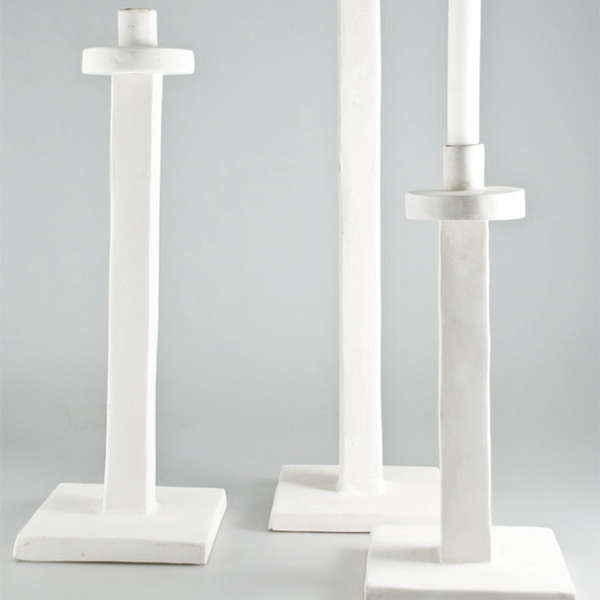
Some home accessories walk into a room wearing sequins. Others whisper, “I was hand-sculpted in the South of France, please act accordingly.” The White Candle Holders by Jacqueline Morabito belong firmly to the second group. Spare, sculptural, and quietly dramatic, these white plaster candleholders turn an everyday taper candle into a small architectural event.
Designed by French creative Jacqueline Morabito, the candle holders reflect the language that has made her work so recognizable: white-on-white surfaces, honest materials, primitive silhouettes, and a calm minimalism that never feels cold. They are not flashy. They are not fussy. They do not beg for attention from across the room. Instead, they wait until evening, when the candle is lit, and then politely steal the entire scene.
In a world crowded with shiny brass candlesticks, glass hurricanes, and mass-produced décor that looks suspiciously identical from one house to another, Morabito’s white candle holders feel refreshing. They look handmade because they are meant to look handmade. They carry the small irregularities, soft edges, and sculptural stillness that make an object feel like it has a pulse.
Who Is Jacqueline Morabito?
Jacqueline Morabito is a French designer associated with interiors, architecture, furniture, lighting, jewelry, gardens, and small objects for daily life. Her world is not built around ornament for ornament’s sake. It is built around restraint, texture, light, and proportion. Her design vocabulary often uses white as more than a color. In her hands, white becomes a surface for shadow, a background for age, and a way to let natural materials breathe.
Morabito’s aesthetic is often described as minimalist, but that word can be misleading if it makes you think of empty rooms with the emotional temperature of a refrigerator. Her work is softer than that. It blends Provençal tradition with contemporary purity. Stone, linen, plaster, oak, terracotta, and earthen textures appear again and again, often surrounded by white walls and simple forms. The result feels serene rather than sterile.
The white candle holders fit perfectly within this creative universe. They are small enough to sit on a dining table, mantel, shelf, or bedside table, but they carry the personality of a much larger sculptural object. They look like something discovered in an artist’s studio, not plucked from a seasonal aisle between throw pillows and panic-purchased picture frames.
What Makes the White Candle Holders Special?
The archival product information describes these candle holders as white plaster pieces, hand-sculpted by an artisan in the South of France. That detail matters. Plaster is humble, matte, and tactile. Unlike glossy ceramic or polished metal, it absorbs light gently. It does not bounce brightness around the room like a disco ball at a dinner party. Instead, it softens the mood.
The holders were offered in three sizes, giving decorators the option to group them together or let one stand alone. A single large candle holder can act like a quiet focal point on a console table. A trio can create a rhythmic tablescape with varying heights. The design has been described as austere and sculptural, with a vaguely primitive look. That “primitive” quality is part of the charm: the shape feels elemental, almost ancient, as if it belongs equally in a Provençal farmhouse, a modern loft, or a museum gift shop with excellent taste.
Because the item has been marked discontinued in archival product listings, the candle holders now sit in that interesting category of design objects: not quite antique, not widely available, and increasingly desirable to people who love collectible home accessories. They are the kind of pieces that make design enthusiasts mutter, “I should have bought two,” which is basically the official soundtrack of vintage shopping.
The Power of White in Morabito’s Design Language
White can be tricky. Used badly, it looks flat, unfinished, or like someone forgot to choose a paint color. Used well, it becomes luminous. Jacqueline Morabito’s work shows how powerful white can be when paired with texture, shadow, and natural materials.
The white candle holders are not interesting because they are white in a generic sense. They are interesting because the white plaster finish reveals form. Every curve, ridge, and uneven sculptural surface becomes visible as light moves across it. During the day, the candle holder reads as an art object. At night, with a taper candle burning, it becomes part of the light source itself.
White also makes the object versatile. Place it on a dark wood dining table and it looks crisp and intentional. Set it on a whitewashed mantel and it becomes tonal and quiet. Pair it with linen, stoneware, olive branches, or antique silver and it slides easily into rustic elegance. Pair it with black metal, concrete, and abstract art and it suddenly feels gallery-ready.
How to Style White Candle Holders by Jacqueline Morabito
1. Create a Minimal Dining Table
A dining table is the natural home for sculptural candle holders. For a Morabito-inspired setting, skip the busy centerpiece and build around texture instead. Use a washed linen runner, simple white plates, clear glasses, and two or three white candle holders arranged down the center. Add beeswax or ivory taper candles for warmth.
The goal is not to make the table look empty. The goal is to make every object feel chosen. If your table starts looking like a monastery with salad forks, add a small bowl of lemons, a bundle of herbs, or a ceramic pitcher. Minimalism is allowed to have snacks.
2. Use Them on a Mantel
White candle holders are excellent mantel companions because they add height without visual clutter. Try placing one taller holder on one side of the mantel and balancing it with a framed artwork, a small vessel, or stacked books on the other. The asymmetry keeps the arrangement relaxed.
If your fireplace surround is stone, brick, or plaster, the candle holder’s matte texture will feel right at home. If the mantel is painted white, the piece will blend in beautifully while still creating shadow and dimension.
3. Pair With Natural Materials
Morabito’s world is full of materials that feel close to the earth: wood, stone, linen, clay, and plaster. To honor that spirit, style these candle holders with objects that have similar honesty. Think raw oak trays, hand-thrown bowls, woven baskets, antique cutting boards, or a linen napkin with just enough wrinkles to prove it has lived a little.
This is where white décor becomes warm rather than clinical. The plaster finish gains depth when placed near grainy, rough, or weathered materials.
4. Let One Piece Stand Alone
Not every candle holder needs a supporting cast. One of the best ways to style a sculptural candle holder is to give it breathing room. Place it on a side table with nothing but a book and a small ceramic dish. Set it on a floating shelf with a single branch in a vase. Use it on a bedside table where its shape can be appreciated up close.
Design objects often become more powerful when they are not crowded. The White Candle Holders by Jacqueline Morabito prove that a small item can hold a room’s attention without shouting.
Why Plaster Works So Well for Candle Holders
Plaster has a long history in art, architecture, and decorative objects. It is used for casts, reliefs, walls, molds, and sculptural studies. In a candle holder, plaster offers a chalky, mineral-like presence that feels very different from metal or glass.
The advantage is visual softness. A plaster candle holder does not create glare. It does not dominate a table with shine. It has a quiet, powdery look that pairs beautifully with candlelight. The possible drawback is that plaster can be more delicate than fired ceramic, stone, or metal. It should be handled with care, kept away from excess moisture, and cleaned gently with a dry or slightly damp soft cloth.
Because candle use involves heat and flame, safety matters. Candle holders should be stable, heat-resistant, and placed on a secure surface away from curtains, books, greenery, and anything that can catch fire. Taper candles should fit properly and stand upright. A beautiful candle holder is still not a babysitter; never leave a burning candle unattended.
Where These Candle Holders Fit in Today’s Interior Trends
The renewed love for quiet luxury, artisanal objects, warm minimalism, and natural materials makes Morabito’s candle holders feel surprisingly current. They may come from an earlier design moment, but they speak fluently to today’s interiors.
Modern homeowners are increasingly drawn to pieces that feel personal and tactile. The trend is moving away from overly polished rooms and toward interiors with texture, imperfection, and soul. White plaster, hand-sculpted forms, and small-batch craftsmanship fit that shift perfectly.
These candle holders also work well with several popular design styles:
- Warm minimalism: Their simple shape and white finish keep the look calm.
- French country modern: The handmade plaster surface pairs well with linen, stone, and antique wood.
- Wabi-sabi interiors: Their imperfect sculptural quality celebrates irregularity.
- Organic modern décor: The natural texture adds softness to clean-lined spaces.
- Collected interiors: Their discontinued status makes them feel like a found treasure.
Buying Tips for Similar White Candle Holders
Because the original White Candle Holders by Jacqueline Morabito have been listed as discontinued, shoppers may need patience. Check vintage design marketplaces, curated resale shops, European home boutiques, auction sites, and specialist interior dealers. Use search terms such as “Jacqueline Morabito candleholder,” “white plaster candle holder,” “French sculptural candlestick,” and “handmade white taper holder.”
If you cannot find the original piece, look for candle holders that capture the same spirit rather than cheap copies. The best alternatives will share certain features: a matte white finish, sculptural shape, handmade feel, and enough weight to sit securely. Avoid pieces that look overly glossy, flimsy, or too perfectly machine-made if your goal is the Morabito mood.
Also check the candle opening before buying. A beautiful holder that does not fit a standard taper candle is not useless, but it is definitely entering “decorative sculpture with commitment issues” territory. Measure carefully, especially when buying online.
Care and Maintenance
White objects are gorgeous until real life shows up holding coffee, soot, fingerprints, and one suspicious mark no one in the household admits making. Fortunately, caring for white plaster candle holders is simple if you stay gentle.
Clean Gently
Use a soft dry cloth for dust. If needed, use a barely damp cloth and avoid harsh cleaning products. Abrasive sponges can scratch the surface, and strong cleaners may discolor or damage the plaster.
Prevent Wax Problems
Use dripless taper candles when possible. If wax drips onto the holder, let it harden before carefully lifting it away. Do not scrape aggressively. A wooden tool or fingernail is safer than metal.
Keep Away From Moisture
Plaster and water are not best friends. Keep the candle holders out of damp bathrooms, outdoor rain, or kitchen splash zones. They deserve a dry, stable location where they can look poetic without being attacked by humidity.
Store With Care
If storing them, wrap each piece separately in soft paper or cloth. Avoid stacking heavy objects on top. Handmade plaster pieces can chip if treated like garage hardware.
Why Designers Love Objects Like This
Interior designers often talk about “layers,” but that does not mean piling on more stuff until the room gives up. A good layer adds mood, texture, height, memory, or contrast. These candle holders do all five.
They bring height through the candle flame. They bring texture through plaster. They bring contrast when set against wood or stone. They bring mood through candlelight. And because they are associated with a specific designer and a distinct French aesthetic, they bring story. That story is what separates a room that looks purchased from a room that feels collected.
The White Candle Holders by Jacqueline Morabito are not merely accessories. They are small design statements about slowness, craftsmanship, and the beauty of restraint. They remind us that a room does not need more noise. Sometimes it needs one white object, one flame, and the confidence to stop decorating before the table looks like a gift shop exploded.
Personal Experience: Living With the Look of White Candle Holders
The first thing you notice when styling white candle holders in the spirit of Jacqueline Morabito is how quickly they change the pace of a room. They do not behave like colorful décor. A blue vase announces itself. A brass candlestick sparkles. A patterned object performs a small tap dance for attention. A white plaster candle holder does something quieter: it edits the space around it.
On a dining table, this effect is immediate. I have found that a white sculptural candle holder works best when the rest of the table is allowed to relax. Instead of building a complicated centerpiece, try one candle holder, a linen runner, and a few low bowls. The table suddenly feels intentional, even if dinner is pasta from a pot and not a scene from a Provençal cookbook. The candle holder gives the setting dignity. The pasta provides the realism.
In a living room, the experience is different. Place a white candle holder on a mantel or console and it becomes a small pause in the visual rhythm. It gives the eye somewhere calm to land. This is especially useful in rooms with books, art, plants, and the normal evidence of human life. The white form acts almost like punctuation. It says, “Breathe here.”
The most satisfying styling trick is grouping similar whites together without making them match perfectly. A plaster candle holder beside a cream ceramic bowl, a stone tray, and an ivory taper candle creates a layered white palette. The tones may differ slightly, but that is the point. Pure matching can look stiff. Slight variation looks collected and alive.
Another lesson: candlelight loves texture. When a flame sits above a matte white surface, shadows become part of the design. Small irregularities in the holder become visible. The object looks different at breakfast, sunset, and late evening. That changing quality is one reason handmade pieces are so rewarding. They do not give you the same view twice.
White candle holders also reveal what needs editing nearby. If the surface around them is crowded with remote controls, receipts, tangled chargers, and a mystery key from 2019, the candle holder will not magically fix the problem. It will, however, gently shame the clutter. In that sense, it becomes a design coach. A very quiet one, but still effective.
For everyday use, I prefer pairing this kind of candle holder with unscented taper candles. Scented candles have their place, but at dinner they can compete with food. No one wants lavender fighting with roasted garlic. Unscented candles keep the atmosphere elegant without turning the room into a perfume counter.
The biggest practical reminder is safety. A sculptural candle holder should still sit flat, hold the candle securely, and stay away from anything flammable. Beauty is wonderful; setting the napkins on fire is less charming. Trim the wick, keep the flame supervised, and use the piece with the same care you would give any open candle.
Living with the look of White Candle Holders by Jacqueline Morabito is really about appreciating restraint. These pieces encourage slower decorating. They ask you to consider form, shadow, material, and silence. In return, they give a room that rare quality designers chase constantly: calm with character.
Conclusion
The White Candle Holders by Jacqueline Morabito are beautiful because they resist the obvious. They do not rely on color, shine, or complicated decoration. Their strength comes from hand-sculpted form, matte white plaster, and a design language rooted in simplicity. Whether used on a dining table, mantel, shelf, or bedside surface, they bring a sense of quiet artistry to the home.
For collectors, they are especially interesting because the original product has been discontinued, making it a piece worth watching for in vintage and curated design markets. For decorators, they offer a lesson in how powerful a small object can be when it has proportion, texture, and soul. For everyone else, they are proof that candle holders do not have to sparkle to be memorable. Sometimes the most elegant object in the room is the one that knows how to whisper.