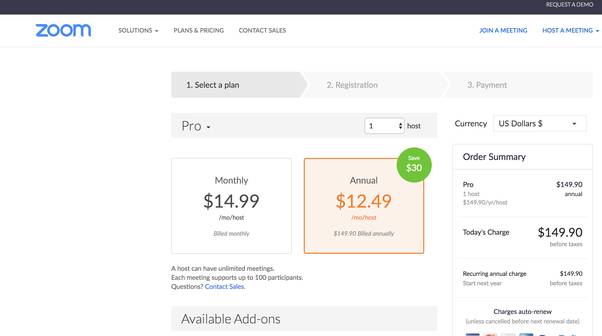
Every subscription business eventually reaches the same awkward dinner-party question: “Should we offer monthly pricing or annual pricing?”
Someone from finance votes for annual plans because cash arrives faster. Someone from growth votes for monthly plans because fewer people faint at checkout. Sales wants flexible contracts. Product wants fewer pricing options. Meanwhile, customers just want to know whether this new tool, app, membership, or service will actually make their lives easier.
So which is better: annual or monthly pricing?
Yes.
The smartest pricing strategy is rarely about declaring one billing cycle the winner and sending the other to live on a farm upstate. Annual and monthly pricing solve different customer problems. Monthly billing reduces risk and lowers the starting commitment. Annual billing rewards confidence, improves cash flow, and can create a stronger customer relationship.
The real question is not, “Which billing period should we choose?” It is, “Which customers need flexibility, which customers are ready to commit, and how can our pricing page help each group choose without feeling tricked?”
Annual vs. Monthly Pricing Is Not a Cage Match
Businesses often treat billing frequency like a binary decision:
- Monthly pricing brings more sign-ups.
- Annual pricing brings more cash.
- Therefore, pick one and defend it with the intensity of a sports fan discussing a questionable referee call.
That logic misses the point. Billing frequency is part of your broader subscription pricing strategy, not the entire strategy. Price, packaging, product value, onboarding, customer support, renewal experience, and cancellation policies all shape whether a customer stays.
A monthly plan is usually a low-friction entry point. It says, “Try us. Keep us only if we earn our place in your budget.” An annual plan says, “You already see enough value here to make this part of your next year.” Both messages can be useful. Both can be honest. Both can be profitable.
The best pricing pages recognize that customers arrive with different levels of certainty. A freelancer trying a project management tool may want a $20 monthly plan because next month is still a mystery wrapped in a spreadsheet. A growing marketing team that uses the platform every day may happily pay annually to save money and avoid another invoice approval ritual.
One product. Two levels of confidence. Two payment preferences.
What Monthly Pricing Really Sells
Monthly pricing is not merely “the smaller number on the screen.” It sells flexibility, experimentation, and emotional comfort.
Monthly billing lowers the perceived risk
A customer may love your product demo and still hesitate to commit to a full year. Maybe their budget is tight. Maybe their manager needs proof before approving a larger spend. Maybe they have been burned by a subscription that promised productivity and delivered seventeen notification emails before breakfast.
Monthly pricing gives cautious buyers room to learn. It can be especially useful for:
- New products with limited market awareness
- Freelancers and small businesses with uneven cash flow
- Seasonal businesses
- Consumer subscriptions with lower prices
- Products that require hands-on testing before customers see value
- Teams that need internal approval before making a longer commitment
A monthly subscription also creates a natural trial period after the official trial ends. Customers are not just testing features; they are testing whether your product fits their workflow, their team, their budget, and their tolerance for yet another password manager.
Monthly pricing improves accessibility
Consider a software product priced at $30 per month. A customer may see that as manageable. But if the annual option requires a $300 or $330 payment today, the math may still be attractive while the cash outlay feels much heavier.
That difference matters. Customers do not make buying decisions with spreadsheets alone. They make decisions with budgets, uncertainty, approval processes, and the occasional fear that their boss will ask, “Why did we buy this again?”
Monthly plans help businesses capture customers who would not buy an annual plan today, even if those customers may become excellent annual candidates later.
Monthly customers can become annual customers
Monthly billing should not be viewed as a failure to secure annual revenue. It can be a customer acquisition path.
A smart subscription business gives customers time to reach a meaningful success moment. Once users have imported their data, invited teammates, completed projects, saved time, increased sales, or built a habit around the product, the annual option becomes more appealing.
In other words, do not shove an annual plan at a customer before they know why they should care. Help them experience value first. Then make annual savings easy to understand.
What Annual Pricing Really Sells
Annual pricing is often described as a discount. That is true, but incomplete. A good annual plan sells certainty, convenience, and a more serious commitment to the customer’s goals.
Annual plans can improve cash flow
When customers pay upfront for a year, the business receives more cash at the beginning of the relationship. That can help fund customer support, product development, marketing, and onboarding. For a young SaaS company, annual subscriptions can make the difference between “we have a roadmap” and “we have a roadmap plus enough coffee to finish it.”
Still, cash collected is not the same as profit, and it is not always the same as recognized revenue. Businesses need to manage the accounting, service obligations, refunds, and customer expectations that come with receiving a larger payment upfront.
Annual plans reduce renewal decisions
Monthly subscribers effectively reconsider the relationship every few weeks. They may not actively cancel, but the payment appears often enough to invite scrutiny. Annual subscribers have fewer payment moments, which can reduce billing fatigue and administrative friction.
That does not mean annual billing magically creates loyalty. A customer who dislikes the product will still dislike the product, even if they are contractually committed through November. The annual plan simply gives the business more time to demonstrate value and build a useful habit.
Annual discounts reward customers who are confident
Customers who already know they will use your product for the long term often appreciate a financial reward for committing early. The annual discount should feel meaningful, but it should not be so aggressive that monthly customers feel punished for having a smaller budget.
For example, a design platform might offer:
- $25 per month, billed monthly
- $250 per year, billed annually
The annual customer receives two months of value without additional charge. The business gets earlier cash collection. The pricing remains easy to explain. Nobody needs a calculator, a legal team, or an ancient prophecy to understand the offer.
But this is only an example, not a universal discount rule. Your annual price should reflect your margins, support costs, customer lifetime value, competitive landscape, and the amount of value customers receive from staying longer.
The Best Subscription Pricing Strategy Gives Customers Both
Offering both annual and monthly pricing is usually the most customer-friendly approach when your product has broad appeal and repeat usage. The monthly option captures buyers who need flexibility. The annual option serves customers who want savings and stability.
The key is to make the choice simple rather than turning your pricing page into an escape room.
Use one clear monthly reference price
Customers should immediately understand what the product costs per month. Even when annual billing is selected, show the monthly equivalent clearly.
For example:
- Monthly: $49/month
- Annual: $39/month, billed at $468/year
This format helps customers compare options without feeling that the annual plan is hiding behind a curtain. Transparency is not just a nice ethical accessory. It reduces confusion, support tickets, refund requests, and the kind of online review that begins with, “I did not realize…”
Make the savings specific
“Save big” is vague. “Save $120 per year” is useful. Customers respond better when they can see what the annual commitment actually means.
You can display savings as:
- A dollar amount saved annually
- A percentage discount
- Equivalent free months
- A bonus feature, onboarding benefit, or service credit
Choose one primary message. Showing every possible version at once can make the page feel like a late-night infomercial wearing a spreadsheet costume.
Do not use dark patterns
A healthy annual pricing strategy does not hide billing terms, make cancellation difficult, preselect expensive options without clarity, or turn a free trial into a surprise annual charge.
Customers should know:
- Whether the plan renews automatically
- When the renewal will occur
- How much it will cost
- How to cancel or downgrade
- Whether refunds are available
- What happens to their data if they leave
Transparent pricing builds trust. Trust improves retention. Retention is much less expensive than repeatedly trying to persuade unhappy former customers that this time will be different.
When Annual Billing Is Not the Best First Offer
Annual plans are powerful, but they are not mandatory for every product, every market, or every customer.
A yearly commitment may create unnecessary friction when:
- Your product is new and customers need proof of value
- Usage is highly seasonal
- The customer’s needs change frequently
- Your target audience has limited purchasing power
- The product is used occasionally rather than continuously
- Customers need multiple approvals for larger upfront purchases
- Your service quality is still inconsistent
Imagine a resume-writing platform that people use for a few months during a job search. Forcing an annual plan may create frustration because the customer’s need is temporary. A monthly plan, usage-based option, or short-term package may be more appropriate.
Likewise, a product with unpredictable usage may benefit from a hybrid pricing model. Customers could pay a modest monthly platform fee, then pay based on usage, seats, transactions, projects, storage, or another measure tied directly to value.
Annual versus monthly billing is not the only decision on the menu. Sometimes the right answer is monthly access with an annual commitment. Sometimes it is annual access paid monthly. Sometimes it is usage-based pricing with optional annual credits. Pricing can be flexible without becoming confusing.
How to Build a Better Annual and Monthly Pricing Page
A high-converting pricing page should help customers make a decision, not make them feel they are taking the SAT again.
Start with the customer’s job to be done
Before choosing a billing frequency, identify why customers buy your product. Are they saving time? Reducing mistakes? Making money? Managing compliance? Replacing manual work? Feeling healthier? Avoiding chaos?
Customers do not want “annual billing.” They want the result your product helps create. Billing frequency should support that result.
Match payment terms to customer behavior
If customers use your product every day, an annual option may feel natural. If they use it for short campaigns, seasonal projects, or one-time tasks, monthly or usage-based billing may be more appealing.
For example, an email marketing platform used year-round may lead naturally to annual pricing. A tax-preparation service may see stronger demand for seasonal or monthly access. A video editing tool may need both because hobbyists and professional teams behave very differently.
Create a fair upgrade path
Customers who begin monthly should be able to upgrade to annual billing without jumping through hoops. Offer the option after they have experienced value, such as after completing onboarding, reaching a usage milestone, inviting teammates, or renewing for several months.
A simple message can work:
“You have been using the Pro plan for three months. Switch to annual billing today and save $96 over the next year.”
The timing matters. An upgrade offer sent before the customer sees value feels pushy. An offer sent after they have built a habit feels helpful.
Measure More Than Annual Plan Conversion
It is tempting to celebrate when annual plan conversion rises. But the real goal is not to trap more customers in longer commitments. The goal is to build a healthier subscription business.
Track these pricing and retention metrics:
- Annual plan share: The percentage of new paying customers who choose annual billing.
- Monthly-to-annual conversion: The percentage of monthly customers who later switch to annual plans.
- Customer churn: The percentage of customers who cancel during a period.
- Revenue churn: Revenue lost from cancellations, downgrades, and reduced usage.
- Customer lifetime value: The estimated long-term value of a customer relationship.
- Refund rate: A warning sign if customers feel pressured or misunderstood the offer.
- Upgrade rate: The percentage of customers who move to higher-value plans.
- Payment failure rate: Failed cards and incomplete payments can quietly damage recurring revenue.
Be careful with interpretation. Annual customers may appear to retain better partly because customers who choose annual billing were already more committed. That does not automatically prove that annual billing caused their loyalty.
Test carefully. Compare customer segments. Look at behavior before and after upgrades. Ask customers why they selected monthly or annual billing. Your pricing page can tell you what people clicked. Your customers can tell you why.
Experience: What Businesses Learn After Offering Both Annual and Monthly Pricing
In practice, businesses that offer both billing options often discover that the pricing debate changes once real customers start choosing for themselves.
At first, the team may assume everyone will choose monthly because the upfront cost is lower. Then a surprising number of experienced customers choose annual plans because they hate repetitive purchasing tasks. They are not necessarily chasing a discount. They are buying fewer approvals, fewer invoices, fewer reminders, and fewer moments where someone asks whether the software is still worth it.
On the other hand, some teams launch an annual discount and expect customers to rush toward it like it is the last slice of pizza at a startup meetup. Instead, customers stay monthly. This is not always a pricing failure. It may reveal that the product has not yet become essential, the annual payment feels too large, or the buyer needs more flexibility than the company assumed.
That is useful information.
One common experience is that monthly subscribers are not “worse” customers. Many are simply earlier-stage customers. A freelancer may begin with a monthly plan while testing a new service. After a few successful projects, that same customer may become more stable, use the product more often, and happily choose annual billing. The business wins not by forcing commitment on day one, but by earning it over time.
Another lesson is that annual pricing works best when customers already understand the product’s recurring value. If a customer opens your app once, gets confused, and leaves, an annual discount will not fix the problem. That is like offering a cheaper gym membership to someone who cannot find the front door. Improve onboarding first.
Companies also learn that the presentation of annual pricing matters almost as much as the price itself. A pricing page that shows “$480 billed annually” with no monthly context can feel expensive. A page that says “$40/month, billed annually at $480, save $120 per year” feels much easier to process. The number did not change. The clarity did.
There is also an operational lesson. Annual billing creates more responsibility for the business. When customers pay upfront, they expect the product, support, and communication to remain reliable for the full term. A company cannot collect a year of revenue in January and disappear into a mysterious fog until renewal season. Customers notice. They have calendars.
The strongest businesses treat annual plans as a promise: “We believe we can keep delivering value for the next year.” They treat monthly plans as another promise: “You are free to stay because we keep earning your business.”
When those promises are real, both plans can work beautifully. When those promises are weak, neither billing cycle can save the relationship.
Conclusion: The Right Billing Choice Is a Customer Choice
Annual or monthly pricing is not a battle between finance and growth, or between commitment and flexibility. It is a way to serve customers at different stages of confidence.
Monthly plans lower the barrier to entry, support experimentation, and keep your product accessible. Annual plans reward customers who already trust your value, reduce payment friction, and improve cash collection. A thoughtful business offers both whenever the product, audience, and economics support it.
The winning strategy is simple: make pricing clear, make savings honest, make cancellation fair, and make the product valuable enough that customers want to stay regardless of how often they are billed.
Because the best subscription pricing model is not the one that forces every customer into the same box. It is the one that lets the right customer choose the right commitment at the right time.
Note: Pricing examples are illustrative. Validate your billing options, discounts, renewal terms, and customer communications through research and controlled testing before implementation.