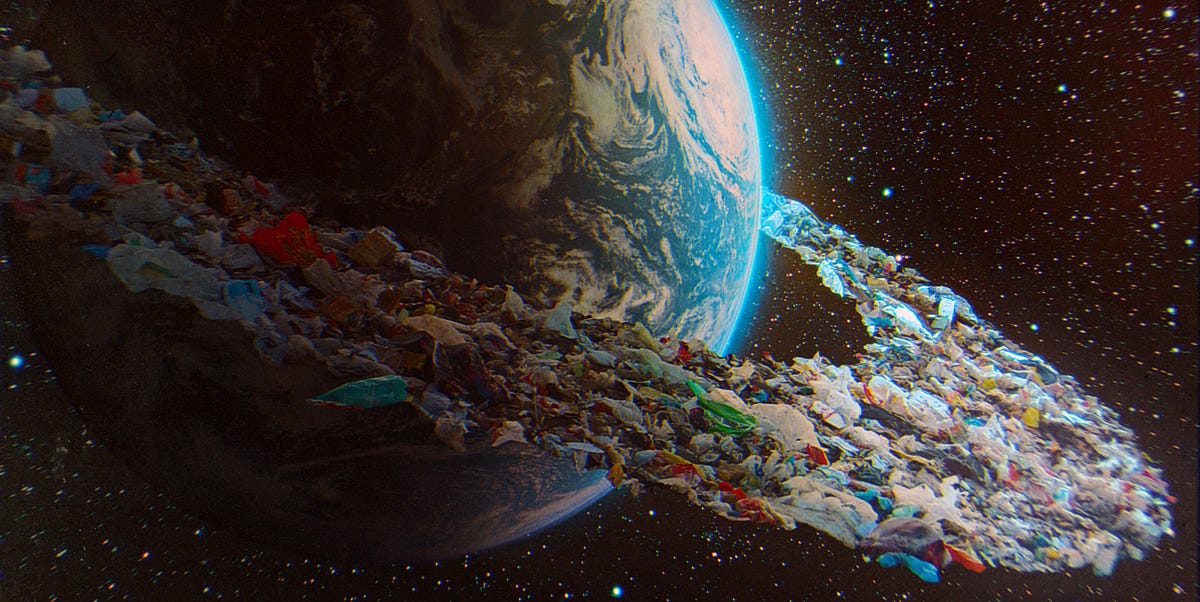
Space is big. Ridiculously big. So big that it seems almost rude to worry about humans cluttering it up. And yet, here we are: the species that can leave coffee cups in conference rooms has also managed to leave dead satellites, rocket bodies, bolts, paint flecks, and mystery fragments whizzing around Earth at terrifying speeds.
That mess has a name: space debris, also known as orbital debris or, less politely, space junk. The scariest possible outcome has an even more dramatic name: Kessler Syndrome. It sounds like a villain from a sci-fi thriller, but it is actually a real scientific concept describing a chain reaction of collisions in orbit. One object hits another, the crash creates more fragments, those fragments hit more objects, and suddenly Earth’s orbital neighborhood starts looking less like a highway and more like a blender with Wi-Fi.
The issue matters because modern life quietly depends on satellites. Weather forecasts, GPS navigation, global communications, disaster monitoring, banking timestamps, military awareness, and climate science all lean on spacecraft circling above us. If key orbits become too dangerous to use, the problem will not stay “up there.” It will come down here, wrapped in dropped signals, costlier services, and fewer safe pathways for future missions.
What Is the Kessler Syndrome?
Kessler Syndrome is a scenario in which the density of objects in Earth orbit becomes high enough that collisions between satellites and debris create a self-sustaining cascade. In simpler terms: space junk makes more space junk.
The concept comes from NASA scientist Donald J. Kessler and Burton G. Cour-Palais, who published a 1978 paper on collision frequency among artificial satellites. Their core warning was elegant and unsettling: as the number of objects in orbit rises, the chance of collisions rises too. Those collisions create fragments, and those fragments increase the chance of even more collisions.
Imagine dropping one glass on a kitchen floor. Annoying, but manageable. Now imagine dropping a second glass onto the shards of the first, then a third, then a blender, then your phone for some reason. Eventually the floor is not just messy; it is dangerous to cross. Kessler Syndrome is that kitchen-floor problem, except the shards are traveling at several miles per second and your “floor” is low Earth orbit.
Is Kessler Syndrome happening right now?
The answer depends on how dramatic you want your music to be. No, Earth is not currently trapped inside an impenetrable shell of debris like a cosmic snow globe of bad decisions. Launches continue, satellites operate, astronauts live and work in orbit, and space agencies manage risks every day.
But yes, the conditions that make Kessler Syndrome possible are real. NASA and other space experts have warned for years that parts of low Earth orbit are increasingly congested. The Aerospace Corporation describes the Kessler scenario as mathematically real but more like a slow-motion disaster than an instant apocalypse. That distinction matters. This is not “space ends tomorrow.” It is “space becomes harder, riskier, and more expensive if we keep treating orbit like a junk drawer.”
What Counts as Space Debris?
Space debris is any human-made object in Earth orbit that no longer serves a useful purpose. That includes dead satellites, spent rocket stages, mission-related hardware, fragments from explosions, debris from collisions, and tiny flecks of paint or metal. The small stuff may sound harmless, but in orbit, speed turns even tiny objects into serious trouble.
In low Earth orbit, debris can travel around 7 to 8 kilometers per second. Impact speeds between two orbiting objects can be even higher. At those velocities, a paint chip is not “just a paint chip.” It is more like a microscopic cannonball with commitment issues.
NASA estimates that more than 25,000 objects larger than 10 centimeters are known to exist in Earth orbit. There are also roughly 500,000 particles between 1 and 10 centimeters and more than 100 million particles larger than 1 millimeter. The biggest objects can be tracked. The smaller objects are often too tiny to follow individually, yet still large enough to damage spacecraft.
Why Space Debris Is So Dangerous
The danger comes from a nasty combination of speed, crowding, and persistence. On Earth, if your old car breaks down, it does not keep driving around the planet at 17,000 miles per hour for decades. In orbit, dead hardware can stay aloft for years, centuries, or even longer depending on altitude.
Altitude changes everything
At lower altitudes, Earth’s thin upper atmosphere creates drag that gradually pulls objects down until they burn up during reentry. Below about 600 kilometers, many pieces of debris may reenter within years. At around 800 kilometers, orbital decay can take centuries. Above 1,000 kilometers, debris can remain in orbit for a thousand years or more.
This means a satellite failure today can become a problem for future mission planners who have not even been born yet. Nothing says “legacy” quite like leaving your great-grandchildren a dead rocket stage in a high-speed orbital crossing lane.
Small debris can still be mission-ending
Large debris can destroy a spacecraft. Medium debris, especially objects between 1 and 10 centimeters, is especially frustrating because it may be too small to track reliably but large enough to cause catastrophic damage. Tiny debris can pit windows, puncture surfaces, degrade solar panels, and slowly wear down spacecraft.
The International Space Station is heavily shielded, and its operators regularly assess possible close approaches. When risk crosses a set threshold, the station can maneuver away from debris. That is an impressive capability, but it is not free. Avoidance maneuvers use planning time, fuel, coordination, and operational attention. Space debris does not simply threaten metal; it drains resources.
Real Events That Made the Problem Worse
Kessler Syndrome is not just a classroom diagram. Several real-world events show how quickly one breakup can add thousands of hazards to orbit.
The 2007 Fengyun-1C anti-satellite test
In 2007, China destroyed its Fengyun-1C weather satellite during an anti-satellite test. The event created thousands of trackable fragments and many more pieces too small to catalog. It remains one of the most significant debris-generating events in space history.
The 2009 Iridium-Cosmos collision
On February 10, 2009, an operational U.S. Iridium communications satellite collided with the defunct Russian Cosmos-2251 satellite. The crash happened at high speed and created a large debris cloud. This was a wake-up call because it was an accidental collision between two intact spacecraft, not an intentional test or rocket explosion.
The 2021 Cosmos 1408 anti-satellite test
In November 2021, Russia destroyed the Cosmos 1408 satellite in an anti-satellite weapons test. The debris cloud created additional risks for the International Space Station and other spacecraft in low Earth orbit. Astronauts had to take precautionary measures, and the event renewed global concern about irresponsible debris creation.
Rocket body breakups and modern satellite growth
Rocket stages can also explode or break apart after completing their missions, especially if leftover fuel, batteries, or pressurized systems are not properly passivated. In recent years, several rocket-body fragmentation events have reminded operators that debris prevention is not just about satellites. The discarded machinery that gets payloads to orbit can become part of the problem too.
Why the Kessler Syndrome Threat Is Growing
The space industry is changing fast. Launch costs have dropped, satellites have become smaller, and companies are deploying large constellations for broadband, Earth observation, and communications. This has enormous benefits. It also means more traffic.
Low Earth orbit is attractive because it offers lower latency for communications and clearer views for imaging. But popular orbital zones can become crowded. Satellites in similar altitude bands must dodge debris, inactive spacecraft, rocket bodies, and each other. The more objects there are, the more conjunction warnings operators must evaluate.
Modern satellites can maneuver, but every maneuver takes fuel and careful decision-making. Too many false alarms waste resources. Too few warnings risk disaster. The sweet spot requires accurate tracking, reliable data sharing, clear rules, and operators who answer the phone when space traffic gets awkward.
What Would Happen If Kessler Syndrome Got Worse?
A severe debris cascade would not make all of space unusable. Space is too large for that. But it could make certain orbital regions too dangerous for routine operations. That would be a serious blow because specific altitudes are valuable for specific missions.
Satellite services could become less reliable
If collision risk rises, satellites may need more shielding, more fuel, more tracking support, and shorter mission plans. Those costs eventually ripple outward. Communications, mapping, weather data, scientific research, and defense operations could become more expensive or less resilient.
Human spaceflight would face higher risks
Crewed spacecraft and stations already plan for orbital debris. A denser debris environment would increase the number of warnings and potential maneuvers. Astronaut safety depends on layered protection: tracking large objects, shielding against small ones, and having emergency procedures ready for worst-case scenarios.
Future exploration could become harder
Most missions beyond Earth must first pass through near-Earth space. A debris-choked orbital environment would complicate launch windows, staging, docking, refueling, and assembly operations. Humanity would not be “trapped on Earth” in a cartoonish sense, but access to space could become more difficult, expensive, and politically tense.
Can We Stop Kessler Syndrome?
The good news is that this is not hopeless. The bad news is that the solution is not as easy as sending one giant space vacuum cleaner into orbit, although someone has definitely imagined that and probably given it a cool acronym.
1. Stop creating new debris
The first rule of orbital cleanup is the same as the first rule of cleaning your room: stop throwing more things on the floor. Spacecraft and rocket stages can be designed to minimize debris release. Operators can vent leftover fuel, discharge batteries, avoid unnecessary separations, and plan responsible end-of-life disposal.
2. Deorbit satellites faster
For years, a common guideline allowed satellites in low Earth orbit to reenter within 25 years after mission completion. The U.S. Federal Communications Commission adopted a stricter five-year rule for many satellites it licenses. The logic is simple: the less time dead satellites spend in busy orbits, the less time they have to become collision targets.
3. Improve tracking and space traffic coordination
You cannot dodge what you cannot see. Tracking systems use radar, telescopes, optical sensors, and data models to estimate where objects are and where they are going. The U.S. Department of Commerce has been developing the Traffic Coordination System for Space, known as TraCSS, to provide space situational awareness data and collision warning notifications to operators.
Better tracking is especially important as commercial satellite fleets grow. The future of space traffic management may look less like heroic astronauts pushing buttons and more like air-traffic control, cloud computing, shared databases, and very serious people arguing over probability thresholds.
4. Remove the most dangerous objects
Active debris removal is the hard part. Engineers have proposed nets, harpoons, robotic arms, tethers, drag sails, lasers, ion beams, and capture vehicles. Some ideas sound like space fishing; others sound like something a supervillain would pitch in a boardroom. But the goal is practical: remove large, dead objects before they collide and generate thousands of fragments.
Experts often focus on large rocket bodies and defunct satellites in long-lived orbits because those objects contain a lot of mass. A collision involving one large object can create a major debris cloud. Removing even a small number of high-risk objects could reduce future collision danger.
5. Build satellites that can survive and behave responsibly
New satellites can include propulsion, autonomous collision-avoidance software, improved shielding, better tracking beacons, and designs that burn up more completely during reentry. Responsible design will not eliminate risk, but it can reduce the odds that every failed spacecraft becomes tomorrow’s orbital banana peel.
Common Myths About Kessler Syndrome
Myth 1: Space debris will form a solid shell around Earth
No. Space is vast, and even crowded orbital regions are mostly empty. Kessler Syndrome is not a physical wall. It is a statistical hazard: the risk of collision becomes high enough in certain regions that safe operation becomes difficult.
Myth 2: One collision means the end of spaceflight
Also no. Collisions are serious, but a single event does not automatically doom every orbit. The danger is cumulative. Repeated breakups, careless disposal, and poor coordination increase long-term risk.
Myth 3: Only governments are responsible
Governments created much of the early orbital debris, but commercial operators now play a major role in space activity. The solution must involve national agencies, private companies, universities, launch providers, insurers, regulators, and international organizations.
Myth 4: Space junk always falls harmlessly into the ocean
Many objects burn up during reentry, and surviving fragments often fall into oceans or remote areas. But reentry risk is not zero. Large uncontrolled objects can create uncertainty for aviation, shipping, and communities on the ground. Responsible disposal matters both in orbit and during return.
Why This Problem Is Really About Stewardship
The Kessler Syndrome is more than an engineering problem. It is a test of whether humans can manage a shared environment before it becomes painfully expensive to fix. Orbit is not owned by one country or one company. It is a global commons, and like all commons, it can be damaged when everyone benefits from using it but no one wants to pay the full cost of protecting it.
That is why space sustainability is becoming a major policy issue. Licensing rules, debris mitigation standards, transparency, data sharing, and international norms all matter. A satellite operator that safely disposes of its spacecraft helps everyone. An operator that leaves a dead satellite tumbling through a busy orbital lane creates risk for everyone.
In other words, the Kessler Syndrome is the universe’s way of reminding us that “out of sight, out of mind” is not a waste-management strategy.
Experiences and Real-World Lessons From the Space Debris Problem
One of the most useful ways to understand the Kessler Syndrome is to think about the everyday systems we already trust. Airports do not work because pilots simply “try not to hit each other.” They work because aircraft follow rules, file plans, communicate with traffic controllers, use transponders, and operate inside a culture where safety is not optional. Space is moving toward that same realization, only with fewer runways and more objects traveling fast enough to make a wrench behave like a missile.
A practical lesson from space debris is that prevention is always cheaper than cleanup. Anyone who has ever ignored a small leak under the sink knows this principle. At first, it is just a drip. Then the cabinet warps. Then the floor gets involved. Then suddenly you are speaking to a contractor named Dave who says things like “structural moisture.” Space debris works the same way, except Dave cannot come to low Earth orbit with a toolbox. Once fragments spread through an orbital shell, cleanup becomes technically complex, legally complicated, and financially painful.
Another lesson is that small things are easy to underestimate. A tiny screw in your garage is annoying if you step on it. A tiny screw in orbit can damage a spacecraft because speed changes the entire equation. This is a powerful reminder for satellite designers and mission planners: risk is not only about size. It is about energy, direction, probability, and exposure over time. A mission that lasts five years in a crowded orbit is living with risk every single day.
There is also a human lesson. Astronauts aboard the International Space Station do not treat debris alerts as abstract statistics. When a possible conjunction is serious, mission teams coordinate avoidance maneuvers or prepare safety procedures. Behind every technical phrase like “debris avoidance maneuver” is a group of people protecting other people. That makes orbital debris less like a distant science topic and more like workplace safety at planetary scale.
For satellite companies, the experience is increasingly operational. Collision alerts must be analyzed, maneuvers must be planned, fuel budgets must be protected, and customers still expect service. A broadband satellite cannot simply say, “Sorry, we had to dodge a 20-year-old rocket fragment, please enjoy buffering.” Operators need better automation, better data, and clearer standards so that safe behavior becomes normal business rather than heroic improvisation.
For the public, the biggest lesson may be invisible dependence. Most people do not wake up grateful for orbital infrastructure. They check the weather, use navigation, stream video, pay with a card, and assume the sky is handling its side of the bargain. The Kessler Syndrome shows that space is not a magical background service. It is infrastructure, and infrastructure needs maintenance.
The hopeful experience is that humans are not helpless here. We know many of the best practices: design cleaner missions, deorbit dead spacecraft quickly, share tracking data, avoid destructive tests, remove high-risk debris, and build international expectations for responsible behavior. None of this requires panic. It requires discipline. Space may be vast, but the useful lanes around Earth are precious. We should treat them less like a dump and more like a bridge we all need to cross.
Conclusion: The Sky Is Not Falling, But It Does Need Housekeeping
The Kessler Syndrome is not a Hollywood-style countdown to doom. It is a long-term warning about what happens when orbital traffic grows faster than our ability to manage it. Space debris already affects mission planning, satellite operations, and astronaut safety. If ignored, it could make valuable orbits more dangerous, more expensive, and less accessible.
The solution is not one miracle technology. It is a layered strategy: prevent new debris, deorbit spacecraft quickly, improve tracking, share data, regulate responsibly, and remove the most dangerous derelict objects. The same ingenuity that filled orbit with satellites can also keep orbit usableprovided we stop acting surprised that throwing things into space has consequences.
Earth orbit is one of humanity’s most important neighborhoods. It powers daily life, expands science, protects communities, and opens the road to deeper exploration. Keeping it clean is not just good space manners. It is self-preservation with a better view.