There are two kinds of storage areas in the world: the ones where every box has a home, and the ones where somebody whispers, “I think the extra filters are behind the mystery bucket.” VESTIL stainless steel shelving is designed to help businesses live in the first category.
Built for commercial, industrial, food-service, laboratory, medical, and warehouse environments, stainless steel shelving offers a clean, durable way to organize supplies without relying on painted racks that may chip, rust, or look exhausted after a few enthusiastic mopping sessions. VESTIL’s stainless steel shelving lineup combines Type 304 stainless steel, adjustable shelf placement, solid shelf surfaces, and serious load capacity into a practical storage system for facilities that need order without drama.
Whether you are planning a restaurant dry-storage area, setting up a maintenance room, organizing a lab, or trying to make a warehouse look less like it was managed by raccoons, this guide explains what VESTIL stainless steel shelving offers, where it works best, and how to choose the right configuration.
What Is VESTIL Stainless Steel Shelving?
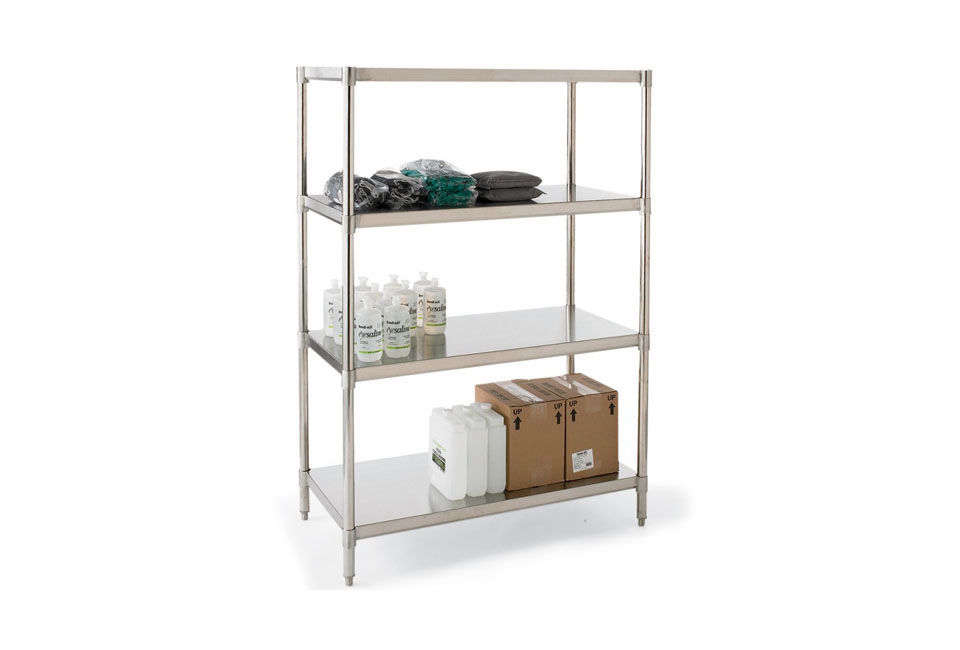
VESTIL stainless steel shelving is a freestanding commercial shelving solution intended for environments where strength, cleanliness, corrosion resistance, and easy access matter. Typical units use Type 304 stainless steel with a #4 brushed finish, giving the shelving a professional satin appearance while supporting everyday use in wet, dry, and frequently cleaned workspaces.
The standard VESTIL stainless steel shelving configurations commonly include four adjustable solid shelves, upright posts, and assembly hardware. The shelves are designed to be repositioned for products of different heights, which is important when one shelf needs to hold compact containers and the next needs to accommodate tall ingredient bins, maintenance fluids, storage totes, or laboratory supplies.
In many listed configurations, VESTIL shelves are made from 18-gauge stainless steel and are rated for up to 600 pounds per shelf when weight is evenly distributed. That phrase matters. “Evenly distributed” does not mean placing a small engine, three mystery crates, and a bowling-ball collection on one front corner and hoping for the best.
Why Stainless Steel Shelving Is a Smart Business Investment
Corrosion Resistance for Demanding Spaces
Stainless steel is popular in commercial settings because it stands up better to moisture and routine cleaning than standard painted steel shelving. Type 304 stainless steel is widely used in food service, healthcare, laboratories, and industrial storage because it offers reliable resistance to corrosion in many everyday environments.
That makes VESTIL stainless steel shelving especially useful near sinks, dishwashing areas, walk-in coolers, prep rooms, janitorial spaces, packaging stations, and maintenance departments. It is not magical metal armor, of course. Harsh chemicals, chlorides, standing water, and neglected spills can still cause problems over time. But compared with ordinary painted storage racks, stainless shelving is much better prepared for life in a busy facility.
A Cleaner, More Professional Appearance
Appearance is not everything, but in customer-facing kitchens, healthcare facilities, breweries, bakeries, food-production rooms, and laboratories, it matters. A brushed stainless finish looks clean, organized, and intentional. It tells visitors, inspectors, employees, and customers that the operation has a plan beyond “put it wherever there is floor space.”
Solid stainless shelves are also easier to wipe down than wire shelving in certain applications. Small containers, spice jars, loose parts, bottles, and narrow tools are less likely to tip through gaps. A solid surface can also make spill cleanup simpler, especially when the shelf design includes edges that help contain drips.
Adjustable Storage That Grows With the Job
Storage needs rarely stay still. A restaurant changes menus. A hospital department adds supplies. A maintenance room gains new chemicals, replacement parts, and equipment. A warehouse discovers that someone ordered a pallet of something nobody remembers approving.
Adjustable shelves help the storage system adapt. VESTIL stainless steel shelving allows users to set shelf heights around the items they actually store rather than wasting vertical space. This is especially useful when storing a mix of bins, cartons, bulk ingredients, tools, machine parts, boxed inventory, or cleaning supplies.
Key Features of VESTIL Stainless Steel Shelving
Type 304 Stainless Steel Construction
Type 304 stainless steel is one of the most recognized stainless grades for commercial and industrial applications. It is commonly selected because it balances corrosion resistance, durability, workability, and cost. For many facilities, it is the practical middle ground between “basic metal rack” and “we need something that can survive a submarine launch.”
For standard food-service, laboratory, medical, and industrial environments, Type 304 stainless steel is often an appropriate choice. However, facilities exposed to unusually aggressive salt, chlorine, acidic chemicals, or coastal conditions should review their environmental requirements carefully before purchasing any shelving system.
#4 Brushed Stainless Finish
The #4 brushed finish gives the shelving a smooth, satin-like appearance with visible directional grain. This finish is common in commercial stainless equipment because it looks polished without being mirror-like. More importantly, it makes the shelves feel appropriate in spaces where cleanliness and presentation are part of the operation.
To keep the brushed finish looking its best, wipe in the direction of the grain instead of scrubbing across it like you are trying to erase a bad decision. Use a soft cloth, warm water, and mild detergent for regular cleaning. Avoid steel wool and aggressive abrasive pads, which can scratch the surface and make maintenance harder later.
Heavy-Duty 18-Gauge Shelves
VESTIL stainless steel shelving uses 18-gauge solid shelves in its standard shelving range. The gauge provides a balance of strength and manageable weight, making the units suitable for heavy commercial storage without turning installation into a full-body workout before the shelves even go into service.
The listed shelf capacity of up to 600 pounds per shelf is substantial, but capacity should always be treated as an operating limit, not a challenge. Weight must be distributed evenly, the shelving must be assembled correctly, and the floor must be level and capable of supporting the loaded unit.
Four Adjustable Shelves
Many VESTIL stainless steel shelving units include four adjustable shelves. This gives operators enough vertical flexibility to create short, medium, and tall storage zones within one shelving bay. A compact shelf spacing may work for canned goods, medical containers, hardware, or small parts, while taller sections can hold ingredient bins, buckets, boxed equipment, or larger maintenance supplies.
Adjustability also supports better inventory discipline. When shelves are sized for the products they hold, employees are less likely to stack items precariously or cram cartons into spaces that were clearly designed for something else. A shelf should support the workflow, not create an obstacle course.
Common VESTIL Stainless Steel Shelving Sizes
VESTIL stainless steel shelving is often available in commercial footprints such as 18-inch or 24-inch depths and 36-inch or 48-inch lengths. Common configurations include options similar to 18-by-36-inch, 18-by-48-inch, 24-by-36-inch, and 24-by-48-inch shelf sizes, typically built into tall freestanding units around 74 inches high.
The best size depends on the room, the stored products, aisle clearance, employee reach, and traffic flow. Bigger is not automatically better. A very deep shelf may hold more inventory, but it can encourage workers to reach too far, lose track of stock at the back, and discover expired products only when they develop personalities.
When an 18-Inch-Deep Unit Makes Sense
An 18-inch-deep shelving unit is useful in narrow storage rooms, compact kitchens, smaller maintenance closets, and spaces where aisle clearance is limited. It works well for cans, containers, supplies, small boxes, cleaning products, and hand tools.
When a 24-Inch-Deep Unit Is Better
A 24-inch-deep VESTIL shelving unit provides more usable storage surface for larger cartons, totes, bulk ingredients, equipment, and oversized supplies. It is often a good fit for warehouse stockrooms, larger kitchens, laboratories, packaging areas, and industrial workspaces where deeper storage is practical.
Best Uses for VESTIL Stainless Steel Shelving
Commercial Kitchens and Food Service
Restaurants, bakeries, cafeterias, catering operations, breweries, and food-preparation facilities benefit from stainless shelving because it is durable, cleanable, and visually appropriate for professional food environments. Use solid shelves for ingredients, containers, cookware, dry goods, sauces, cleaning supplies, and equipment that needs stable support.
Before using any shelving in a food-service setting, verify applicable local health-code requirements and determine whether a specific NSF certification or sanitation standard is required for the intended installation. Stainless steel is a strong choice, but the exact approval requirements can vary by location and use.
Laboratories and Medical Facilities
Labs, clinics, veterinary practices, medical supply rooms, and research facilities often need storage that is easy to sanitize and resistant to routine cleaning. Stainless shelving can support organized storage for supplies, containers, equipment, packaged materials, and nonhazardous tools.
For sensitive environments, avoid assuming that all stainless shelving is suitable for every cleanroom, sterile-storage, or chemical-exposure application. Review sanitation procedures, contamination controls, chemical compatibility, and facility policies before selecting a shelf system.
Industrial Maintenance and Manufacturing
Maintenance departments often operate in a strange universe where one shelf holds bearings, another holds lubricants, and a third contains a box labeled “DO NOT THROW AWAY” from 2009. VESTIL stainless steel shelving brings structure to that universe.
Use it for tools, replacement parts, packaged hardware, fasteners, gauges, maintenance kits, safety supplies, and production materials. The solid shelf design helps contain small items that may fall through wire shelving, while the adjustable layout lets teams create zones for different part sizes.
Warehouses and Stockrooms
In a warehouse or backroom, stainless shelving can be an excellent solution for storage areas exposed to moisture, cleaning routines, or strict hygiene requirements. It can also work well for high-value or customer-facing inventory when appearance matters.
For very heavy palletized loads, long-span storage, or forklift-accessible inventory, dedicated pallet racking may be more appropriate. Stainless shelving is strong, but it is not a substitute for a properly engineered rack system built for pallets, forklifts, or oversized industrial loads.
How to Choose the Right VESTIL Stainless Steel Shelving Unit
Measure the Room Before Ordering
Measure wall length, available depth, ceiling height, doorway clearance, and aisle width before selecting a shelving unit. Remember to account for the space employees need to move safely, open doors, use carts, and access stored items.
A shelving unit that technically fits but blocks a cooler door, emergency pathway, electrical panel, or coworker carrying a stockpot is not a successful installation. It is a future meeting with facilities management.
Calculate the Real Load
List what each shelf will hold, estimate the maximum weight, and include a safety margin. Heavy cases, bulk bags, containers of liquid, metal parts, and dense tools add up quickly. Spread the load across the shelf surface and keep the heaviest items on lower shelves whenever possible.
Never assume the total rack capacity is the only number that matters. Shelf capacity, rack stability, floor condition, proper assembly, load distribution, and employee lifting practices all affect real-world safety.
Plan Shelf Heights Around Workflow
Store frequently used items between knee and shoulder height whenever practical. Place heavy products lower, lighter products higher, and rarely used items near the top. This approach can reduce awkward reaching, bending, and unnecessary lifting.
It also speeds up daily work. A worker should not need to perform a yoga pose, a deadlift, and a minor archaeological excavation just to find a case of gloves.
Consider Solid Shelves Versus Wire Shelves
Solid stainless steel shelves are excellent for small items, spill-prone containers, boxed goods, and supplies that need stable support. Wire shelves can provide more airflow, which can be useful in certain refrigeration, drying, or ventilation-sensitive storage areas.
The right choice depends on what you store. If small parts, bottles, jars, and containers are involved, solid shelving often reduces frustration. If airflow around products is the priority, wire shelving may deserve a closer look.
Assembly, Installation, and Safety Tips
VESTIL stainless steel shelving units are commonly shipped knocked down for assembly. Read the current manufacturer instructions before beginning, organize all hardware, and assemble the unit on a clean, level surface.
After assembly, confirm that all shelves are level, fasteners are secure, and the rack does not rock. Place the unit on a stable floor and avoid using damaged, bent, or missing components. In facilities with seismic requirements, high traffic, carts, or possible impacts, consult local safety requirements and determine whether anchoring is appropriate.
Label shelves by product category, maximum load, or storage zone when it improves employee use. Simple labels can prevent a beautifully organized shelving system from becoming a stainless steel monument to chaos within two weeks.
Cleaning and Maintaining Stainless Steel Shelving
Stainless steel shelving is low maintenance, not no maintenance. Regular cleaning protects the finish, reduces residue buildup, and helps spot minor damage before it becomes a larger problem.
- Wipe shelves regularly with warm water, mild detergent, and a soft cloth.
- Clean spills promptly, especially salt, food acids, chemicals, and standing water.
- Wipe in the direction of the brushed grain for a cleaner appearance.
- Avoid steel wool, abrasive scouring pads, and harsh cleaners that can scratch stainless steel.
- Inspect posts, shelf edges, hardware, and connections during routine cleaning.
- Remove unused clutter so shelves remain accessible and safe.
Surface discoloration does not always mean a shelving unit has failed, but it should not be ignored. Address residue, chemical exposure, and early corrosion signs promptly. In high-moisture or chemical-heavy environments, a more frequent cleaning and inspection routine is usually worth the effort.
VESTIL Stainless Steel Shelving: Practical Experiences and Real-World Use
The most valuable experience with VESTIL stainless steel shelving usually begins after the shelves stop being “new equipment” and become part of the daily routine. That is when a shelving unit proves whether it is truly useful or just another shiny object with an invoice attached.
In a commercial kitchen, the first noticeable difference is often visibility. Solid stainless shelves create a clean home for ingredient bins, containers, small appliances, packaged goods, and cookware. Staff can see what is stored, wipe down the surface quickly, and avoid the annoying problem of narrow bottles wobbling between wire shelf gaps. The result is not glamorous, but it is satisfying in the same way a freshly organized toolbox is satisfying: suddenly, everything has fewer opportunities to disappear.
Maintenance teams often appreciate the shelf adjustability more than they expect. A parts room can begin with neat rows of labeled bins, then slowly collect new filters, belts, hoses, tools, fittings, gloves, repair kits, and boxes with handwritten notes that nobody can decipher. Adjustable shelf spacing lets the storage rack evolve without requiring a complete reorganization every time the department adds a new component size.
In medical or laboratory support areas, the smooth stainless surface can make routine cleaning less complicated. Employees do not need to navigate a maze of wire intersections when wiping down a shelf. That does not eliminate the need for proper sanitation procedures, but it can make the basic task faster and more consistent.
Warehouses often learn an important lesson quickly: capacity is not the same thing as convenience. A shelf may be rated for heavy loads, but loading it with dense items at shoulder height is still a bad workflow decision. The best setups place heavy, frequently handled items lower, reserve mid-level shelves for daily-use supplies, and use upper shelves for lighter or less frequently accessed inventory. Employees may not cheer when they see this layout, but their backs will quietly approve.
Another common experience is discovering that floor space is more valuable than expected. A well-planned stainless shelving unit can move supplies upward instead of outward, freeing room for carts, prep tables, equipment, and safer walking paths. That extra floor area can make a small storeroom feel less like a puzzle box designed by someone who dislikes elbows.
Users also tend to notice that stainless shelving changes behavior. When a storage area looks clean and organized, employees are more likely to put things back where they belong. Labels stay readable. Supplies are easier to count. Expiration dates are easier to notice. Managers spend less time asking where things went, and staff spend less time replying, “It was here yesterday.”
Of course, no shelving system survives poor habits forever. Overloading one shelf, ignoring leaks, stacking materials unevenly, or treating the top shelf as a permanent attic can undo the benefits of a well-built rack. The strongest real-world results come from pairing VESTIL stainless steel shelving with clear labeling, sensible shelf assignments, regular cleaning, and a simple rule: when the shelf looks overloaded, it probably is.
For many businesses, that combination turns shelving from a background purchase into a daily productivity tool. It keeps inventory accessible, supports cleaner work areas, and gives teams a storage system that looks ready for business instead of ready for a garage sale.
Note: Product dimensions, load ratings, warranty terms, certifications, and installation requirements can vary by model and distributor. Confirm the current VESTIL product specifications and applicable local safety or sanitation requirements before purchase or installation.