When a pump starts groaning in the middle of an offshore platform, a pipe leaks inside a radioactive cleanup zone, or a satellite needs a delicate nudge in orbit, sending a person in is not always the smartest plan. Sometimes it is not even a remotely sensible plan. That is where the remote repair robot enters the chatusually with cameras, sensors, robotic arms, and a level of patience no human has displayed while trying to assemble furniture on a Sunday afternoon.
These machines do more than inspect equipment from a safe distance. Modern robotic maintenance systems can help diagnose faults, manipulate tools, clean damaged surfaces, turn valves, place components, weld, drill, and support skilled technicians who may be miles away from the actual repair site. The human expert is still the brain of the operation; the robot is the very expensive, extremely obedient set of hands.
From nuclear facilities and electric substations to offshore rigs and spacecraft, remote repair technology is changing how organizations approach dangerous, distant, and difficult maintenance work. The result is not a future where robots replace every technician. It is a future where fewer technicians have to climb into places that resemble the final level of a video game.
What Is a Remote Repair Robot?
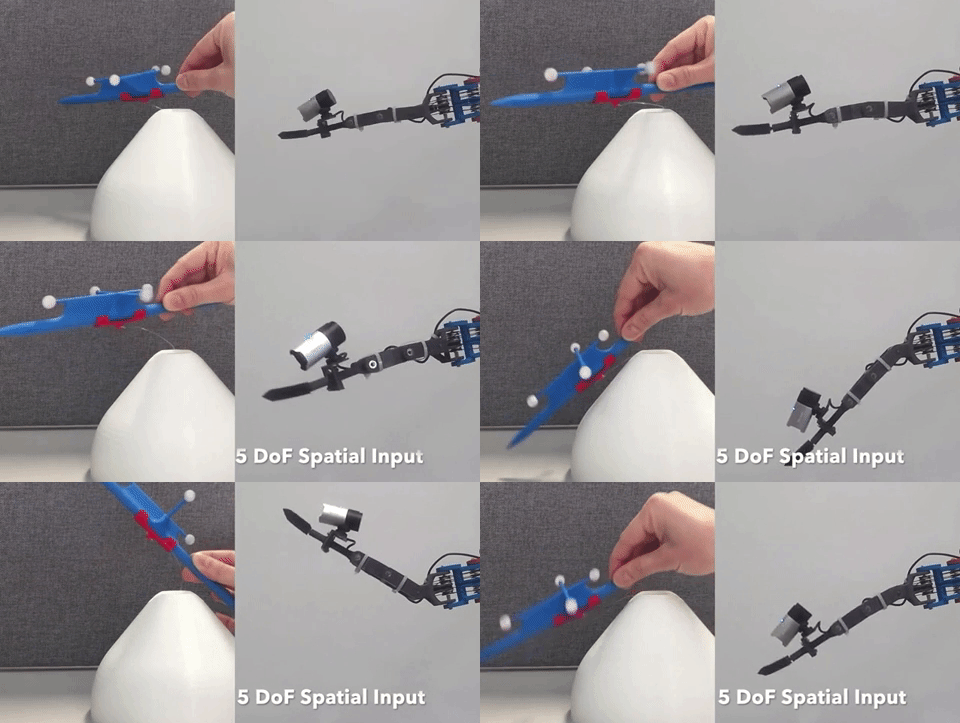
A remote repair robot is a robotic system operated or supervised by people who are not physically standing beside the machine. Depending on the job, the robot may be controlled through a joystick, computer workstation, virtual reality headset, motion-tracking device, or semi-autonomous software platform.
Some robots are mounted to a fixed rail, gantry, or industrial arm. Others move on wheels, tracks, legs, or crawler systems. A remote repair robot may look like a traditional factory arm, a compact camera-equipped rover, a dog-like inspection machine, or a specialized robot built to squeeze through a pipe, tank, tunnel, or maintenance hatch.
The big idea is simple: move the person away from the hazard while keeping their expertise connected to the task. Instead of telling a technician, “Please crawl into that dark, hot, contaminated chamber,” a company can say, “Please sit comfortably at this control station and tell the robot where to point the wrench.” Progress has its perks.
Teleoperation: Human Skill From a Distance
The core technology behind many remote repairs is called teleoperation. That means a human operator sends commands to a robot at another location and receives feedback through video, audio, sensor readings, maps, or force-feedback controls.
In a basic setup, the operator watches live video from cameras mounted on the robot. In more advanced systems, the operator may use multiple camera views, thermal imaging, 3D scans, microphone data, ultrasonic readings, and digital models of the worksite. The robot becomes the operator’s eyes, ears, hands, and, on a good day, their much more flexible knees.
Teleoperation is especially valuable when repair work requires judgment. A robot may be able to follow a programmed route, but it may not understand that a corroded bolt is about to snap, a loose cable is blocking a valve, or a suspicious puddle is definitely not part of the floor’s interior design.
How Remote Repair Robots Actually Work
A successful remote repair robot is not just a mechanical arm with a camera taped to it. It is a full system made up of hardware, software, communication networks, safety controls, and human expertise.
1. Cameras and Sensors Find the Problem
Before a robot can fix anything, it has to understand what is wrong. That often starts with remote inspection. Cameras provide visual information, while thermal sensors can identify hot spots, acoustic sensors can detect abnormal machine sounds, and ultrasonic tools can measure wall thickness or locate hidden defects.
This matters because many maintenance problems begin quietly. A bearing may start making an unusual sound. A pipe may develop a thin section long before it leaks. An electrical connection may run hotter than it should. Predictive maintenance systems use this information to identify trouble early, before a small issue turns into a costly emergency with a clipboard and several meetings attached.
2. A Human Operator Chooses the Repair Strategy
Artificial intelligence can help classify images, recognize equipment, compare readings, and flag unusual conditions. But repair decisions often require practical expertise. The operator may decide whether to clean a surface, inspect a crack more closely, swap a component, tighten a connection, or stop the job entirely.
This is why the best remote repair systems are usually designed around human-in-the-loop robotics. The robot handles movement, repeatability, and access. The human handles context, experience, and the ability to say, “That does not look right. Let’s not make it worse.”
3. The Robot Uses Specialized Tools
Different repairs require different end effectors, which is the industry term for the tool attached to the end of a robotic arm. It sounds like a villain from a science-fiction movie, but it can simply be a gripper, cutter, drill, camera, welding tool, scraper, brush, ultrasonic probe, or valve-turning attachment.
A mobile repair platform may carry several interchangeable tools. One task may require the robot to inspect a damaged section with a camera. The next may require it to cut away insulation, clean a metal surface, position a repair patch, and hold a welding tool in a precise location.
The more predictable the environment, the easier it is to automate. The messier the environment, the more the robot needs human supervision. Anyone who has ever tried to repair something under a sink knows why: the real world is full of pipes, shadows, missing screws, and surprises left behind by the previous owner.
4. Networks Keep the Human and Robot Connected
Remote robotics depends on reliable communication. High-quality video, sensor data, control commands, emergency-stop signals, and machine status updates all need to move quickly and securely between the operator and the robot.
Low latency is especially important when a robot is performing delicate work. A delay of even a fraction of a second can make it difficult to guide a tool, avoid an obstacle, or respond to a changing condition. That is why many industrial systems use edge computing, local control systems, and backup safety functions near the robot instead of relying only on distant cloud services.
In other words, a remote repair robot should not freeze in the middle of a critical task because somebody nearby started streaming a 4K cooking show. The robot needs a connection built for industrial reliability, not internet luck.
Real-World Examples of Remote Robotic Repairs
Remote repair robots are already doing serious work in places where human access is difficult, expensive, or unsafe.
Nuclear Cleanup and Radiological Repair
At U.S. Department of Energy cleanup sites, remotely operated robots have been used to reduce worker exposure during hazardous repair work. One notable application involved a robotic arm mounted to a mobile base inside a radiological evaporator cell. The system used cameras and measurement tools to locate leaks, inspect equipment, and support repair planning in an area where people could not safely enter.
At another cleanup site, workers controlled a collaborative robot from above a valve pit while it cleaned and repaired damaged liner material. The robot was also designed to be adaptable for future tasks such as drilling, cutting, sawing, and remote camera inspection.
These projects show why remote maintenance robots matter: they are not there because the task is flashy. They are there because sending a human in would create unnecessary risk.
Offshore Oil, Gas, and Energy Facilities
Offshore platforms are expensive to operate and inconveniently located in the middle of the ocean, which is not known for its excellent commute times. Mobile inspection robots are increasingly used to monitor equipment, read gauges, collect thermal data, detect unusual sounds, and inspect areas that may be difficult or risky for workers to reach.
Some legged robots can travel through industrial environments, climb stairs, navigate around obstacles, and gather recurring inspection data. When a machine shows signs of trouble, a remote operator can review the data and decide whether a repair crew needs to be dispatched. That shift from “something broke” to “something looks suspicious” can save time, reduce downtime, and prevent larger failures.
Infrastructure, Utilities, and Remote Facilities
Power stations, substations, water systems, tunnels, bridges, and industrial plants often contain assets that need frequent inspection but are difficult to access. Robots equipped with cameras, thermal sensors, microphones, and mapping tools can help maintenance teams monitor equipment without exposing workers to electrical hazards, high temperatures, confined spaces, or unstable terrain.
In many cases, robots begin as inspection tools before moving into repair roles. First, the machine identifies a damaged area. Then it may return with a specialized arm or tool attachment to complete a targeted task. This gradual progression makes sense. It is much easier to trust a robot with a camera than with a cutting tool, especially on a Monday morning.
Space Repair and Satellite Servicing
Space is perhaps the ultimate remote repair environment. Nobody can drive over with a toolbox, and even a simple service task can involve radiation, vacuum conditions, extreme temperatures, and distances that make real-time control difficult.
NASA and other space organizations have long studied robotic servicing, capture systems, robotic arms, and free-flying assistants that can support maintenance missions. Recent demonstrations involving robotic free-flyers and satellite capture technologies suggest how future systems may extend satellite life, remove debris, and support repairs that would otherwise be impossible.
A robot making repairs in orbit is not just cool because it is in space. It is important because replacing a satellite can cost vastly more than servicing one. Also, sending a robotic assistant is generally less complicated than teaching an astronaut how to carry a wrench while floating upside down at 17,000 miles per hour.
Why Businesses Are Investing in Robotic Maintenance
The strongest argument for remote repair robotics is not that robots are impressive. They are. The strongest argument is that maintenance failures are expensive, dangerous, and disruptive.
A remote repair system can help organizations:
- Reduce worker exposure to radiation, chemicals, heat, high voltage, confined spaces, and unstable areas.
- Inspect equipment more frequently without sending a person to every location.
- Detect small failures before they become major outages.
- Give specialized experts access to distant facilities without unnecessary travel.
- Improve documentation by recording video, sensor readings, repair steps, and equipment history.
- Support maintenance teams during labor shortages or complex emergency repairs.
Remote repair robotics also changes the economics of expertise. A highly trained technician may no longer need to fly across the country just to inspect a problem. They can guide a local robot, review live data, and help the on-site team make better decisions. The person is still essential; they simply do not have to spend half their week in an airport chair eating a sandwich wrapped in mystery plastic.
The Limits: Robots Still Need Safety, Security, and Skilled People
It would be a mistake to assume that remote repair robots are magical maintenance creatures. They have limitations, and those limitations matter.
Remote Repairs Are Harder Than Remote Inspections
Inspection is relatively straightforward: point a camera, capture data, compare readings. Repair is more demanding because it involves contact with the physical world. Tools can slip. Surfaces can be damaged. Parts may not fit as expected. A robot may have excellent vision but limited touch sensitivity, or it may have a strong arm but poor access around obstacles.
For that reason, many systems operate with shared autonomy. The robot performs routine movements, avoids known hazards, stabilizes tools, or follows a planned route. The human operator takes over when precise judgment is needed.
Safety Systems Cannot Be Optional
Industrial robots can create hazards if they are poorly designed, badly programmed, or operated without proper safeguards. A remote repair platform needs emergency-stop controls, collision detection, safe operating zones, power isolation procedures, clear operator roles, and maintenance rules that protect anyone working nearby.
Robots are particularly risky during setup, testing, calibration, and maintenance because people may need to enter the machine’s working area. That means remote operation does not eliminate safety planning. It simply changes the safety plan and, ideally, improves it.
Cybersecurity Is Part of Physical Safety
A robot connected to an industrial network is not only a machine; it is also a connected computer system. Remote access, cameras, control software, sensor data, and user permissions must be protected. Unauthorized access to a maintenance robot is not just an IT problem. It can become a physical safety problem in a hurry.
Strong authentication, segmented networks, encrypted connections, access logging, software updates, and clearly defined permissions are essential. The future remote repair robot should be clever enough to fix a valve, but not so exposed that a stranger can tell it to redecorate the facility.
What Comes Next for Remote Repair Robots?
The next generation of robotic maintenance will likely combine better mobility, improved dexterity, artificial intelligence, augmented reality, digital twins, and force feedback. Operators may use virtual models of a facility to plan the repair before the robot touches anything. AI systems may identify likely faults, recommend tools, and flag dangerous conditions. Human experts may supervise several robots at once while stepping in only when the task requires judgment.
The biggest change may be cultural rather than mechanical. Maintenance teams will need to become comfortable working alongside robots, reviewing sensor data, and managing remote operations. The best organizations will not treat robots as replacements for skilled workers. They will treat them as tools that allow skilled workers to do more valuable work with less risk.
That is the real promise of remote repair technology: putting human knowledge where it matters while keeping human bodies out of the worst possible places.
Field Notes: What Remote Repair Work Feels Like in Practice
Note: The following experiences are representative composite scenarios based on documented remote-repair workflows in industrial, infrastructure, energy, and hazardous-environment settings. They are not presented as personal accounts.
The First Surprise: The Robot Does Not Make the Job Simple
People often imagine remote repair as a technician sitting in a clean office, casually steering a robot with one hand while sipping coffee with the other. In real operations, the control room may be clean, but the work is still demanding. Operators have to interpret multiple camera angles, monitor sensor readings, listen for alarms, track tool positions, and communicate with on-site safety teams. The robot removes certain risks, but it does not remove the need to think carefully.
A remote operator may spend several minutes positioning a tool before making a single cut or turning one bolt. That can look slow from the outside. In reality, the slow approach is often the smart one. A rushed movement in a confined space can damage a cable, knock a sensor out of alignment, or create a problem that requires an even bigger robot. Nobody wants to call the larger robot because the smaller robot had a bad day.
Visibility Is Everything
One of the most common lessons in remote maintenance is that a camera view can be both helpful and misleading. A pipe may look close enough to reach until the robot arm tries to move around a support bracket. A damaged surface may appear smooth until light hits it from another angle. A cable may look harmless until it catches on the robot’s tool.
Experienced teams learn to build a full picture before acting. They may combine standard video, thermal imaging, depth sensing, acoustic monitoring, inspection drawings, and historical maintenance records. A successful repair often begins with better observation, not faster movement. The robot may have impressive hardware, but it still benefits from the ancient engineering principle of “look twice before you poke it.”
Tool Changes Matter More Than Most People Expect
In a workshop, a technician can reach for a different socket, drill bit, brush, or inspection camera without much fuss. In a remote environment, tool changes may require a carefully designed docking system, a second robotic arm, or an on-site worker who prepares equipment safely. A repair robot is only as useful as the tools it can carry and the way those tools are managed.
This is why modular design is so important. A platform that can inspect one day, clean the next, and perform a specialized repair after that has more practical value than a robot built for one narrow task. The future is unlikely to belong to a single all-purpose robot that does everything. It is more likely to involve flexible robotic platforms with a well-organized toolbox and highly trained operators.
The Human Team Still Wins the Hard Problems
Remote repair teams work best when they combine different specialties. A robotics operator understands the controls. A maintenance expert understands the equipment. A safety lead monitors hazards. An engineer may review drawings or suggest a repair sequence. A network specialist keeps communications reliable. It is less like one person commanding a robot and more like a pit crew supporting a machine that happens to have a robotic arm.
This teamwork becomes especially important when conditions change. A robot may find corrosion that was not visible in earlier inspections. A repair patch may not fit. A valve may be partially blocked. A tool may lose grip. When that happens, the robot cannot simply improvise with a dramatic shrug. The human team evaluates the situation, adjusts the plan, and decides whether to continue, pause, or bring in a different tool.
The Best Remote Repairs Often Prevent Bigger Repairs
The most valuable remote repair is not always the one that looks dramatic. Sometimes the best outcome is a robot catching an abnormal temperature, a small leak, a loose fitting, or an unusual vibration before the problem becomes a full shutdown. In those cases, the robot may not make headlines. It may simply save a maintenance team from a 2 a.m. emergency call, a costly outage, or a dangerous entry into a hard-to-reach area.
That is why remote repair robots fit so naturally with predictive maintenance. The robot gathers the data, the system identifies the warning signs, and the human team chooses the right response. The repair may happen before anyone outside the facility even knows there was a problem. For maintenance professionals, that is not boring. That is beautiful.
Conclusion: Remote Repair Robots Are Built for the Jobs People Should Avoid
Remote repair robots are becoming essential tools for industries that operate in hazardous, distant, complex, and high-value environments. They allow experts to inspect equipment, guide repairs, collect critical data, and keep workers out of places where a mistake could be costly or dangerous.
The technology is still evolving, but the direction is clear. Robots will handle more routine inspection and repair tasks, while humans remain responsible for judgment, strategy, safety, and the occasional creative workaround that no algorithm saw coming. The future of maintenance is not humans versus robots. It is humans using robots to make difficult work safer, smarter, and a lot less likely to involve crawling into a suspicious pipe.