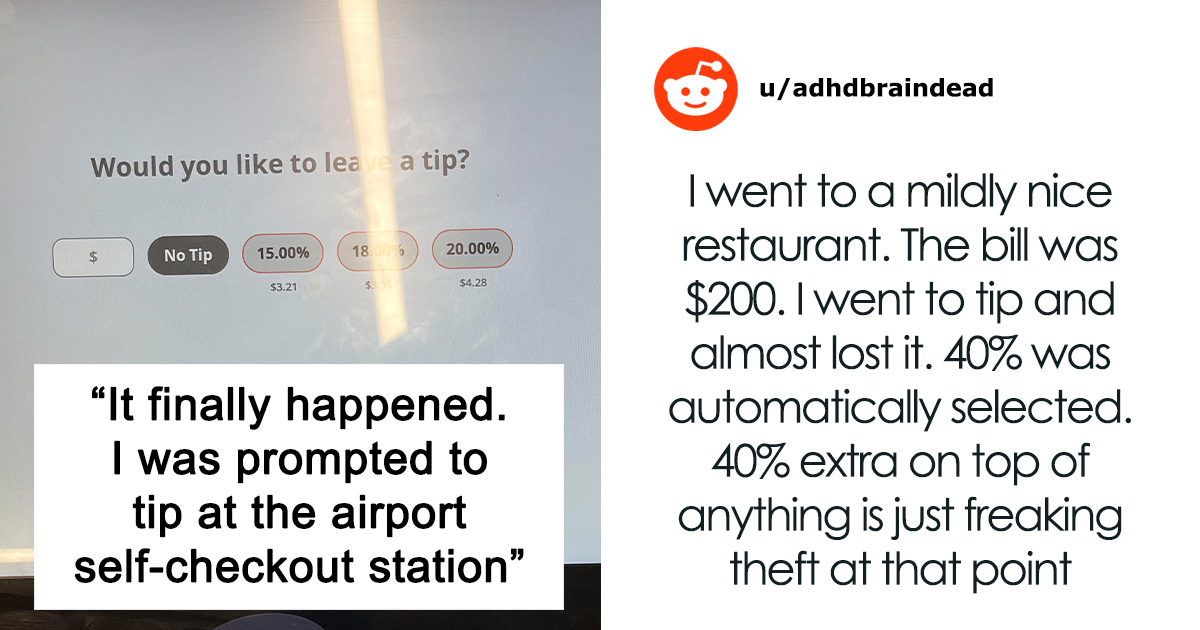
There was a time when tipping came with a pretty simple formula: someone served you, carried something heavy, delivered dinner through the rain, or somehow made your life easier, so you left a little extra to say thanks. Then the payment screen took over the world. Now you can buy a bottled water, scan your own snack, tap your own card, bag your own purchase, and still get a glowing prompt asking whether you’d like to add 15%, 20%, or 25%. At that point, plenty of shoppers are not asking, “How much should I tip?” They’re asking, “Who exactly am I tipping here, the touchscreen?”
That frustration is at the heart of the outrage over self-checkout tipping. The viral phrase calling it the “don’t have to interact with a human fee” stuck because it captured something millions of Americans already felt: the modern checkout process can make customers feel less like guests and more like unpaid interns with a gratitude obligation. And in a moment when grocery bills, restaurant tabs, and household budgets are already stretched, that little tip screen can feel like the final boss battle of consumer patience.
Why self-checkout tipping feels so irritating
The backlash is not really about one payment screen. It is about context. Tipping in America has traditionally been tied to service. A server takes your order, keeps the drinks coming, fixes the kitchen’s mistakes, and somehow remains cheerful while your table debates entrees like it is a constitutional convention. That is the classic tipping setup. Self-checkout flips that logic on its head. The customer is doing the scanning, the bagging, the payment, and sometimes the troubleshooting too.
That mismatch is why self-checkout tip prompts trigger such an emotional reaction. Many consumers do not see a clear service exchange. Instead, they see a machine asking for gratitude after reducing human interaction rather than increasing it. In public conversation, that has been labeled everything from “tipflation” to “guilt tipping” to “emotional blackmail.” The language may be dramatic, but the feeling is real: people do not like being nudged to spend more when they are not sure what the extra money is for.
There is also a trust problem. If a shopper is prompted to tip at a self-service kiosk in an airport, stadium, cafe, or grab-and-go market, a natural question follows: where does that money actually go? Does it go to nearby staff, a pooled house tip system, or nowhere meaningful at all? When checkout technology creates uncertainty, irritation steps in and takes the microphone.
Americans are clearly feeling tip fatigue
The outrage around self-checkout tipping did not appear out of nowhere. It landed in a country that is already tired of tip prompts. Survey after survey has shown that Americans believe tipping is now expected in more places than it was just a few years ago. For many people, the issue is not generosity. It is saturation. When every tablet, kiosk, receipt, app, and digital register starts asking for extra money, the tip stops feeling like a thank-you and starts feeling like a subscription service you never agreed to.
That fatigue shows up in a few consistent ways. First, many consumers say tipping culture has gotten out of control. Second, people are increasingly annoyed by pre-entered suggested tip screens. Third, a noticeable share of shoppers say they actually tip less, or avoid spending altogether, when they feel pressured by digital prompts. That is a bad sign for businesses that assume more prompts automatically mean more goodwill. Sometimes the opposite happens.
And this is where self-checkout becomes the symbol of the whole mess. It is the cleanest example of the tipping question gone weird. When a machine asks for a reward after removing the human element, it highlights the broader fear that tipping is no longer about appreciation. It is about interface design.
How payment technology changed tipping culture
Modern point-of-sale systems made tipping easier to request, easier to standardize, and easier to scale. That sounds efficient, and from a business standpoint, it is. Many restaurant and retail platforms allow owners to switch tip prompts on or off, set suggested percentages, add custom tip buttons, and include a no-tip option. In other words, the tip screen is not some mysterious force of nature. It is usually a business choice.
That matters because once the software exists, the temptation to use it spreads fast. A tip jar used to require counter space and at least a little social awkwardness. A digital tip prompt requires almost nothing. It appears automatically, looks official, and turns tipping into one more tap before checkout is complete. That small change has helped move tipping into spaces where it used to be rare, such as fast-casual counters, coffee pick-up stations, and self-ordering kiosks.
Businesses can make a reasonable case for using that technology. Kiosks can shorten lines, improve order accuracy, reduce labor strain, and give customers more control. For operators managing tight margins and staffing challenges, self-service tools can be practical, even necessary. But the same systems that improve efficiency can also worsen customer resentment if they ask for a tip without clearly explaining why.
The psychology behind the rage: people hate feeling cornered
Part of the self-checkout tipping backlash is economic, but part of it is psychological. Consumers do not just react to the amount on the screen. They react to how the choice is presented. Suggested percentages, large buttons, eye-level prompts, and the public nature of digital tipping can make people feel watched, nudged, or boxed in. Even when there is a “no tip” button, it may feel like the awkward answer in a very public multiple-choice quiz.
That matters more than businesses may realize. Research on digital tipping and tip privacy suggests that when consumers feel they have less control or less privacy during the tipping process, it can damage what happens next. They may feel less generous, less positive about the experience, less likely to return, and less likely to recommend the business to others. In plain English, a tip screen might win the battle and lose the war.
That helps explain why shoppers can sound almost personally offended by self-checkout tipping. The machine is not merely asking for money. It is triggering a sense that the social rules have changed without warning. And people are surprisingly attached to social rules when money is involved.
The key issue: tipping is supposed to follow service
One of the clearest findings in American tipping research is that service quality still matters most. For most adults, the main factor in deciding whether to tip, and how much to tip, is the quality of service they received. That makes self-checkout tipping especially controversial because it weakens the traditional link between service and gratuity.
At a sit-down restaurant, the service relationship is obvious. At a haircut, the service relationship is obvious. At delivery, obvious again. But at self-checkout? Not so much. Maybe an employee stocked the shelves, prepared the food, or maintained the station. That labor is real and valuable. But to many consumers, that still feels different from direct service that calls for a voluntary gratuity at the point of payment.
That distinction is important. Americans are often willing to tip in situations they consider clearly service-based. They become much more resistant when the service is indirect, invisible, or detached from the transaction itself. So the self-checkout tip prompt lands right in the danger zone: it asks for traditional tipping behavior in a nontraditional context.
What workers think is often more moderate than consumers assume
The debate gets even more interesting when workers enter the picture. Consumer anger often assumes businesses and workers are pushing for ever-higher tips in every possible setting. But that is not always what the data shows. Some recent restaurant worker surveys suggest tips have stayed flat or even decreased for many workers, and many tipped employees still consider something in the mid-to-high teens a reasonable expectation rather than some wild, yacht-funding fantasy.
That does not erase the problem. It simply means the enemy is not necessarily your barista, cashier, or food runner. Often the tension is created by the way payment systems are configured. Workers may depend on tips in some roles, but customers still want the request to make sense. When the prompt appears in places that feel disconnected from service, frustration gets aimed at everyone in the building, even if the frontline staff did not choose the software settings.
The legal side: a tip is not the same as a service charge
Another reason self-checkout tipping sparks confusion is that many consumers lump all extra charges together. Legally, though, a voluntary tip and a mandatory service charge are not the same thing. A true tip is optional and determined by the customer. A service charge is a compulsory amount added by the business. Under U.S. labor and tax rules, that distinction matters.
That is why customers get especially annoyed when businesses blur the lines. If a screen presents an optional tip as if it were a routine add-on, or if a bill includes a fixed charge that looks suspiciously like a disguised gratuity, people feel tricked. And once a customer feels tricked, good luck getting them to smile at the receipt.
Businesses that want to avoid outrage should be transparent. If money is going to staff, say so clearly. If there is a service charge, label it accurately. If tipping is optional, make that obvious without turning “no tip” into a walk of shame performed with your index finger.
Why this issue is bigger than one viral checkout screen
The self-checkout tipping controversy has become a flash point because it combines several larger cultural anxieties into one little screen. There is economic pressure. There is distrust of corporate pricing. There is confusion about labor costs. There is frustration with automation. There is also a feeling, fair or not, that consumers are being asked to subsidize business models more directly than ever before.
When people say they are mad about self-checkout tipping, they are often expressing something broader: “I do not mind paying for what something costs. I mind being nudged, guilted, or surprised at the very end of the transaction.” That is not just a complaint about money. It is a complaint about fairness and clarity.
In that sense, the self-checkout prompt became the perfect villain. It is small, visible, modern, and slightly absurd. It turned an already tense tipping culture into a meme, and memes travel fast because they package a complicated feeling into one clean joke. “You want me to tip… for checking myself out?” That sentence practically writes its own comment section.
How businesses can avoid the backlash
1. Match the tip request to actual service
If the customer has not received meaningful personal service, think carefully before presenting a gratuity prompt. Just because the software can ask does not mean it should.
2. Be transparent about where the money goes
If tips are shared with staff who prepared, packed, or supported the order, explain that in plain language. Uncertainty is fuel for outrage.
3. Make “no tip” easy and visible
A no-tip option should feel like a neutral choice, not a confession. Customers are more likely to respect a business that respects their autonomy.
4. Avoid inflated default percentages
When the suggested options start high, consumers can feel manipulated. That may raise some tickets in the short run while lowering trust in the long run.
5. Use pricing honestly
If a business needs to charge more to pay workers fairly, it may be better to build more of that cost into pricing than to rely on surprise prompts in awkward contexts.
The bottom line on self-checkout tipping outrage
The self-checkout tipping debate is not really about whether workers deserve fair pay. Most Americans agree they do. It is about whether a digital prompt makes sense in a moment where the customer has performed most of the transaction themselves. When that answer feels like “not really,” the tip screen stops feeling generous and starts feeling ridiculous.
That is why the “don’t have to interact with a human fee” line hit such a nerve. It was funny because it sounded true. And in modern consumer culture, nothing spreads faster than a joke built on a shared irritation. Self-checkout tipping sparks outrage because it exposes the central tension of tip culture in 2026: people still believe in rewarding service, but they are increasingly skeptical of being asked to reward software.
If businesses want to keep customers on their side, the lesson is simple. Ask for tips where service is clear, keep the process transparent, and do not confuse convenience technology with hospitality. A faster checkout is great. A guilt trip at the payment screen? Not so much.
Real-world experiences that explain why the backlash keeps growing
To understand why this topic keeps blowing up online, you have to picture the everyday situations where people run into these prompts. A traveler rushes through an airport, grabs a drink from a cooler, scans it at a self-checkout kiosk, and suddenly faces a tip request. No conversation. No recommendation. No table service. Just a machine cheerfully asking whether today feels like a 20% kind of day. That traveler is not thinking about hospitality economics. They are thinking, “I just paid extra for airport water, and now I’m being guilt-tripped by a screen.”
Then there is the coffee shop scenario. Someone orders on a tablet, types in their own name, waits at the counter, grabs their own cup, and still gets the same tip options that once felt normal in a full-service setting. Plenty of customers do tip in that situation, especially when staff are moving fast and handling a heavy rush. But others leave feeling unsure whether the tip was appreciation, obligation, or social pressure in a sleek digital costume.
Sports venues create another layer of absurdity. Fans already expect premium prices. Add a self-serve fridge, a quick scan, and a tip prompt on top, and you have the ingredients for instant outrage. The customer experience is basically, “Please perform your own transaction and then reward the experience of performing your own transaction.” It is no wonder people take photos and post them online with captions that sound one bad day away from becoming poetry.
There is also the frozen-yogurt effect, the grab-and-go effect, and the “I touched one screen and now I owe society” effect. These moments pile up. One weird prompt is forgettable. Ten weird prompts in a month make people feel like the rules of everyday spending have been quietly rewritten. That repeated friction matters because tipping is emotional. It is tied to identity, manners, fairness, and class expectations. People want to be generous, but they also want to feel respected.
Many shoppers describe a split-second internal argument at checkout. If they tap “no tip,” will they look cheap? If they tap 20%, are they encouraging a system they already dislike? If they choose custom, why does the machine suddenly feel like a moral philosophy exam? Those tiny moments can shape how people feel about an entire brand. A business may think it added a harmless checkout feature. The customer may feel like they just got ambushed by a digital panhandler with excellent screen brightness.
On the business side, the picture is more complicated. Owners are dealing with labor shortages, rising wages, rent, food costs, payment processing fees, and customers who still want speed and convenience. It is easy to see why digital systems and optional tip prompts seem attractive. But customer experience is not just about speed. It is also about whether the transaction feels fair. When convenience starts to feel like cost-shifting, people notice.
That is why the self-checkout tipping story resonates so widely. Almost everyone has had some version of this moment. It may have happened at an airport kiosk, a stadium counter, a fast-casual lunch spot, a cafe, or a snack station that somehow developed the confidence of a white-tablecloth restaurant. The settings change, but the feeling is the same: confusion first, irritation second, screenshot third.
And that may be the clearest sign of all. When a payment prompt becomes content, the business should probably rethink the prompt.