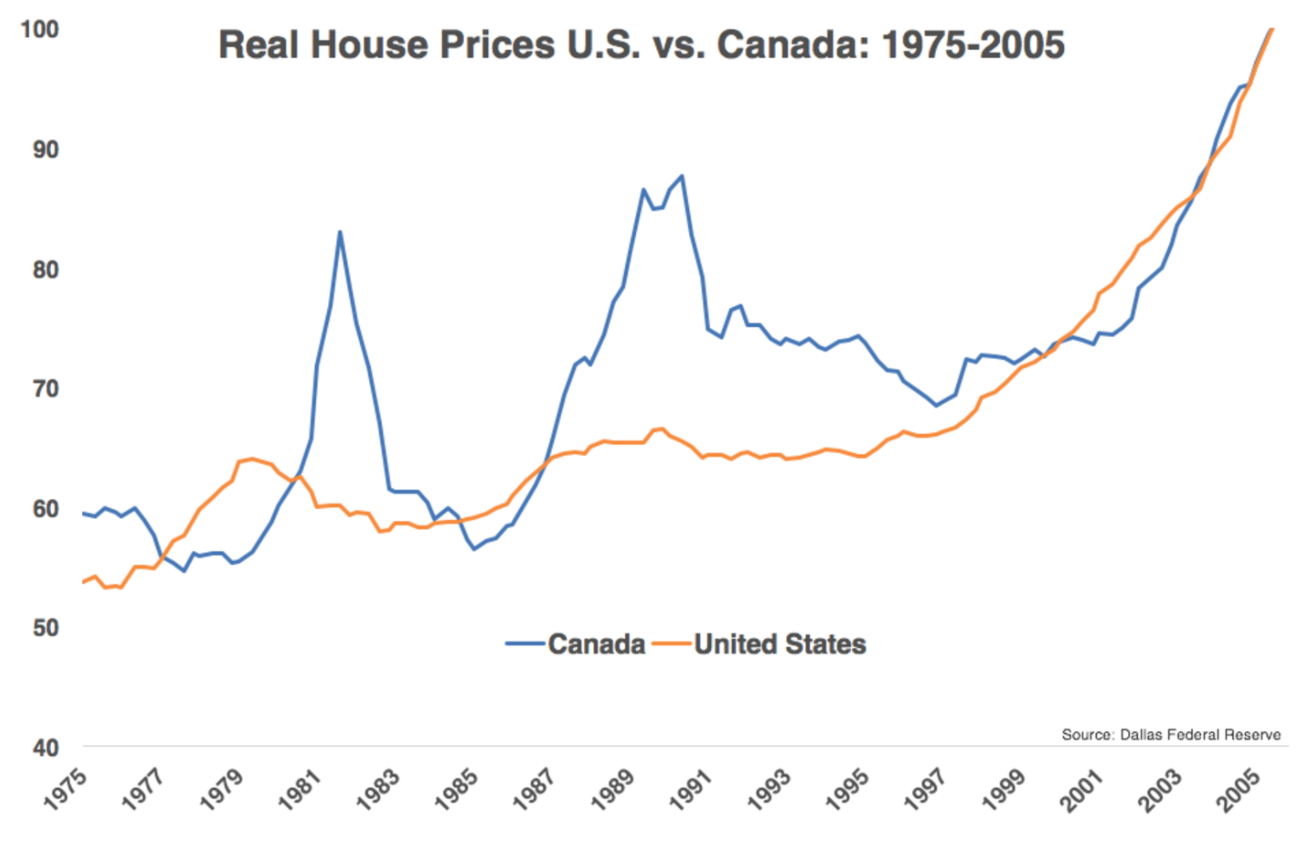
Canada’s housing market can make two opposite things true at once. Prices can fall from a historic peak while first-time buyers feel no closer to owning. Sales can slow, yet a small drop in borrowing costs can bring bidders back. A Toronto condo investor may be eager to exit while a buyer in Saskatchewan wonders why local prices are still climbing. This is not one market so much as a collection of regional markets wearing one national trench coatand every pocket contains a mortgage statement.
In May 2026, the national average sale price was about C$702,079, up 1.5% from a year earlier. Yet Reuters reported that Canadian home prices had fallen roughly 20% from their 2022 peak, while Toronto began 2026 with eight consecutive monthly price declines. The correction was real, but broad affordability remained elusive. That contradiction is the first reason the Canadian housing market is bananas.
Why Falling Prices Have Not Fixed Affordability
The Sticker Price Is Only Part of the Bill
A lower home price helps, but affordability also depends on mortgage rates, income, taxes, insurance, maintenance, condo fees, and the cash required up front. A C$900,000 property that falls to C$820,000 may remain unreachable if the buyer must pass the mortgage stress test, assemble a large down payment, and carry a monthly bill that looks like a small company’s payroll.
Rate increases after 2022 reduced purchasing power faster than prices declined. Later cuts improved conditions, but they did not restore the ultra-cheap borrowing of the pandemic. In July 2026, a Reuters poll expected the Bank of Canada to keep its overnight rate at 2.25% well into 2027. Financing had become easier than at the peak of the rate shock, but the old money-is-nearly-free party was over.
Canada Does Not Have One Housing Market
National averages hide dramatic regional differences. Toronto and Vancouver have dealt with weaker prices, higher listings, and stress in the condominium pipeline. Meanwhile, parts of Quebec, Saskatchewan, Manitoba, and Atlantic Canada have shown firmer demand or record prices. In one city, buyers negotiate. In another, a scarce family home still attracts several offers.
Cheaper cities are not interchangeable substitutes for expensive ones. Employment, transportation, schools, health care, climate, family support, and resale liquidity all matter. A low-priced house is not automatically a bargain if it adds two hours of driving to every weekday.
How the Canadian Housing Market Became So Distorted
Cheap Credit Supercharged Demand
Low interest rates during the 2010s made large mortgages easier to carry. Then the pandemic added remote work, household savings, and even cheaper financing. Buyers chased more space in suburbs, recreational areas, and smaller cities. Prices rose much faster than incomes, and “asking price” briefly became more of a conversation starter than a number.
When inflation pushed rates higher, sales slowed and monthly payments jumped. However, the housing stock did not suddenly become abundant. Owners hesitated to move, builders faced higher financing costs, and buyers learned that a lower purchase price could be canceled out by more expensive debt. The market did not remove the pain; it changed the flavor.
Canada Has Built Too Few of the Right Homes
The shortage is not simply about land. It involves restrictive zoning, lengthy approvals, infrastructure limits, labor shortages, construction costs, development fees, financing, and neighborhood opposition. A project can spend years moving from a proposal to a building permit. If rates or costs rise during that period, the builder may delay or cancel it.
CMHC estimated in 2025 that housing starts would need to nearly double to roughly 430,000–480,000 units annually through 2035 to restore affordability. Its spring 2026 report found stronger rental and “missing middle” construction, but warned that collapsing condo presales and rising unsold inventory threatened future ownership supply in Toronto and Vancouver. Weak sales today can therefore produce fewer completed homes several years from now.
Population Grew Faster Than Housing Capacity
Canada’s rapid population growth in the early 2020s added workers, students, consumers, and future taxpayers. It also added immediate demand for homes. Housing, transit, and local services could not expand at the same speed, especially near universities and major job centers.
Blaming newcomers alone misses the deeper problem. Governments increased population without ensuring that cities could approve and build enough housing. Canada later capped study permits and reduced some temporary-resident targets partly to relieve pressure. Those measures may cool demand, but they cannot replace the homes that were not built during the previous decade. AP reported that the original student-permit cap followed population growth of roughly one million people in a single year.
The Condo Market Built What Investors Wanted
In Toronto and Vancouver, presale condos became both housing and investment products. Many small units were designed around investor budgets rather than family needs. That system worked while prices and rents rose and financing stayed cheap. When rates increased, some investors faced negative cash flow, difficult closings, or resale losses.
Yet a surplus of tiny condos does not solve a shortage of family housing. A 480-square-foot one-bedroom cannot replace a three-bedroom home near a school. Canada can have too much inventory in one segment and too little in anotherlike a pantry with 400 jars of mustard and no bread.
The Mortgage Renewal Wave
Canadian borrowers commonly choose mortgage terms of about five years, even when the loan is amortized over decades. Unlike a typical U.S. 30-year fixed mortgage, the rate resets repeatedly. A household that locked in an unusually low pandemic rate may therefore renew at a much higher rate even after central-bank cuts.
The Bank of Canada estimated that more than four million mortgagesabout 60% of outstanding loanswould renew during the two years following late 2024. CMHC expected arrears to rise moderately through late 2026, with Toronto and Vancouver among the more exposed markets, although arrears remained low by historical standards. Many households will avoid default by cutting travel, dining, renovations, and other spending. Housing stress then spreads through the economy one canceled purchase at a time.
Lower rates can help borrowers and revive demand. The catch is that every buyer receives a similar boost. If new listings and construction do not keep up, easier financing may support prices instead of improving affordability. Cheaper money is helpful, but it cannot sleep four people or produce a building permit.
Renters Are Experiencing a Different Crisis
Renters do not gain wealth when home prices rise, and they may see little relief when sale prices fall. Their market depends on vacancies, purpose-built rentals, condo landlords, wages, and rent rules. RBC found that national asking rents fell between 2024 and 2025, yet average rents for occupied two-bedroom apartments still rose 5.1% in 2025. Relief arrived, but apparently took the scenic route.
Rent control can protect existing tenants while creating a large gap between old and new leases. A renter may remain in a home that no longer fits because moving would add hundreds of dollars to the monthly bill. Montreal has also restricted many short-term rentals to a summer window, hoping to return units to long-term use. Such rules may help locally, but no city can regulate its way into millions of missing homes.
Why Government Policies Keep Disappointing Everyone
Governments have tried foreign-buyer restrictions, vacancy taxes, buyer programs, rental incentives, zoning reform, infrastructure funds, immigration adjustments, and faster approvals. Some measures reduce demand; others encourage supply. Few work quickly.
Buyer subsidies can increase purchasing power without adding homes. Foreign-buyer bans sound dramatic, but foreign purchasers were never the whole market. Reducing development fees can help projects proceed, but cities still need money for roads, sewers, parks, and transit. More density is essential, yet local opposition can delay it for years. Every policy lever appears connected to three other levers and at least one furious public meeting.
The OECD has emphasized that affordability is the main reason Canadian households enter core housing need. The durable solution is not one clever tax. It is a broad program of faster approvals, denser communities, infrastructure coordination, rental construction, and more social and affordable housing.
Is Canada Headed for a Housing Crash?
Canada has bubble-like features: prices outran incomes, household debt is high, and real estate became a national investment strategy. Still, a U.S.-style 2008 collapse is not the only possible ending. Canadian lending rules, mortgage insurance, homeowner equity, and limited distressed inventory can slow a downward spiral.
A long, uneven adjustment may be more plausible. Prices can stagnate while wages and inflation slowly improve affordability. Toronto condos may weaken while Prairie homes rise. A recession and job losses could accelerate declines; lower rates could bring buyers back. The important signals are employment, bond yields, renewals, construction pipelines, listings, and whether new homes match actual household needs.
What Buyers, Sellers, and Investors Should Do
Buyers
Budget for the full carrying cost, not the maximum loan approval. Test payments against a higher renewal rate, taxes, insurance, condo fees, repairs, and commuting. In slower markets, keep financing and inspection conditions instead of treating every listing like the last helicopter out of Toronto.
Sellers
Use recent comparable sales, not a neighbor’s pandemic-era windfall. Well-maintained, realistically priced properties can sell; fantasy-priced listings become digital furniture. Sellers who are also buying should judge both transactions together.
Investors
Model vacancy, repairs, insurance, taxes, management, special assessments, and refinancing costs. A plan that works only when prices rise rapidly is not a plan. It is a weather forecast wearing loafers.
Real-Life Experiences in a Bananas Housing Market
Consider a composite first-time buyer in the Greater Toronto Area. She has a professional job, a solid salary, and years of savings. Then she opens a mortgage calculator and discovers that a “starter” condo requires most of her down payment, a large monthly payment, condo fees, taxes, and a long commute. The unit is smaller than her childhood bedroom, but the listing calls it an “urban sanctuary.” Apparently the sanctuary does not include storage.
A young family wants one more bedroom, a small yard, and access to a good school. Moving farther from the city offers cheaper houses, but it may also require a second car and longer commutes. The parents spend weekends touring homes while calculating whether grandparents can help with the down payment. Housing becomes a multigenerational financing project instead of a household purchase.
Now picture a pandemic-era owner approaching renewal. The home has appreciated, so friends assume the owner is wealthy. The bank statement tells a different story. The mortgage payment is rising, groceries cost more, and property taxes have increased. Selling would mean buying or renting in the same expensive market. The family stays, cuts discretionary spending, and postpones repairs. It is asset-rich in conversation and cash-poor on Tuesday morning.
The condo investor faces another version of the puzzle. A presale unit purchased years ago is finally complete. The original spreadsheet assumed a lower mortgage rate, stronger rent, and a higher resale price. The new calculation shows negative cash flow and competition from nearly identical units. The investor can sell at a loss, contribute money every month, or wait. None of the options resembles the effortless “passive income” video that inspired the purchase.
Renters experience their own whiplash. One tenant has an affordable, rent-controlled apartment that is now too small. Leaving would add hundreds of dollars to the monthly budget, so the tenant stays and reorganizes the same closet again. Another renter moves whenever an investor-landlord sells, paying for applications, deposits, trucks, and time away from work.
There are winners, too. A patient buyer in a high-inventory market may negotiate a discount and secure an inspection. A seller in a tight Prairie market may receive strong offers. A renter may find incentives in a new building. The market is not equally disastrous for everyone; it is uneven and deeply dependent on location, timing, household size, and family wealth.
That last factor matters more every year. Two buyers with identical incomes can have completely different outcomes if one receives a large gift from parents who bought decades earlier. Housing wealth passes between generations, widening the divide between families that own property and those that do not. The market influences marriage, children, careers, migration, retirement, and whether young adults can remain near their support networks. It is not merely a real-estate story. It is a life-planning story with a very expensive cover charge.
Conclusion
The Canadian housing market is bananas because several forces collide at once: expensive homes, short mortgage terms, uneven supply, slow construction, rapid population changes, and sharply different regional conditions. Prices can decline while affordability remains terrible. Rents can soften while tenants still pay more. Extra listings today can coexist with a future shortage caused by canceled projects.
The market is not mysterious, however. Canada built too few suitable homes in the places where people wanted to live and allowed housing to become both shelter and a national wealth strategy. A lasting fix requires more construction, faster approvals, better infrastructure, realistic population planning, and homes designed for real householdsnot just investor spreadsheets.
Note: Housing figures and forecasts change frequently. National statistics can hide large differences among cities, provinces, property types, and price ranges. Buyers and sellers should review current local data and obtain appropriate financial advice before making a transaction.