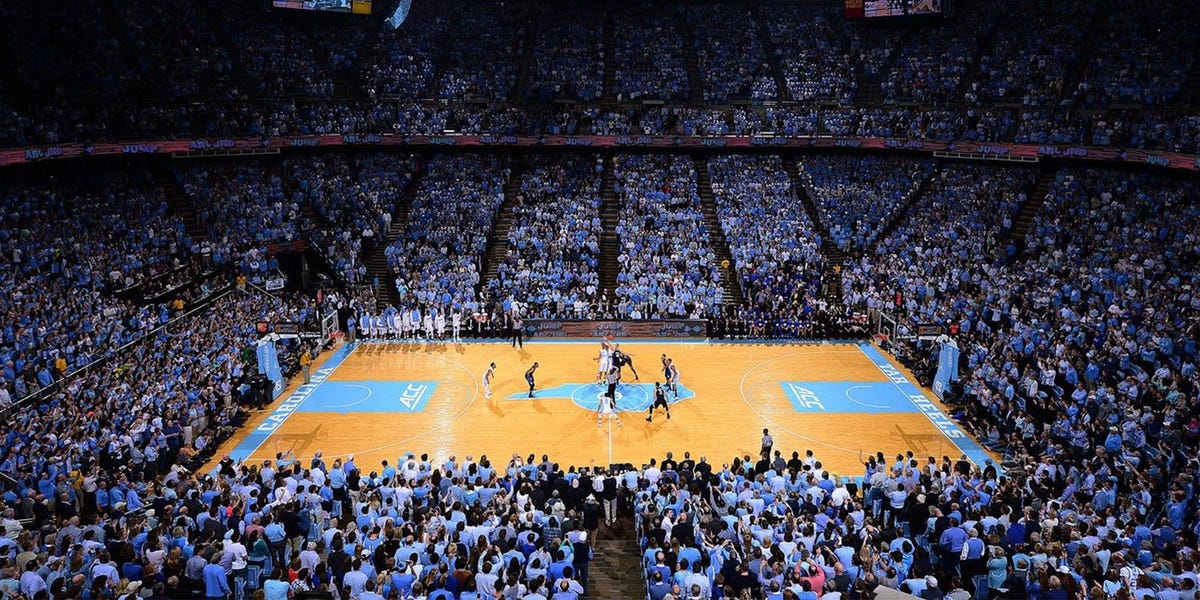
College basketball arenas are not just buildings with baskets, popcorn, and one student in face paint who definitely has an 8 a.m. class tomorrow. They are living, screaming, stomping monuments to school pride. The best college basketball arenas turn ordinary winter nights into theater: pep bands blasting, student sections bouncing, banners watching from the rafters, and visiting teams suddenly remembering how hard it is to inbound a basketball when 15,000 people are yelling like the fate of civilization depends on a defensive stop.
This ranking looks at atmosphere, history, architecture, fan culture, home-court intimidation, tradition, and overall bucket-list value. Capacity matters, but bigger does not automatically mean better. A massive dome can be impressive, but so can a 6,000-seat gym that feels like it was engineered by a very enthusiastic noise scientist. From old-school cathedrals to modern palaces, here are the 25 most impressive college basketball arenas ranked.
How These College Basketball Arenas Were Ranked
The best college basketball arenas combine several ingredients: a passionate fan base, meaningful history, smart design, great sightlines, memorable traditions, and a reputation that travels beyond campus. Some arenas are impressive because they are enormous. Others are impressive because they make 9,000 fans sound like a jet engine trapped in a shoebox. The ranking also considers how strongly each venue shapes the identity of its program.
The 25 Most Impressive College Basketball Arenas
25. Carver-Hawkeye Arena Iowa
Carver-Hawkeye Arena in Iowa City earns a spot because it has become a versatile Midwestern basketball stage. It is home to Iowa men’s and women’s basketball, and in recent years the women’s program helped turn the building into one of the sport’s must-watch environments. The arena’s broad bowl gives it a different feel from tighter old gyms, but when Iowa fans are rolling, Carver can become a black-and-gold wave of noise.
24. Petersen Events Center Pittsburgh
The Petersen Events Center, often called “The Pete,” gives Pittsburgh basketball a strong on-campus presence. Its student section, the Oakland Zoo, has long been one of the ACC’s more underrated chaos factories. The arena feels modern without becoming sterile, and its location on Pitt’s urban campus gives game day a gritty city energy.
23. State Farm Center Illinois
State Farm Center in Champaign is instantly recognizable because it looks a bit like a flying saucer that decided to become a basketball arena. Formerly Assembly Hall, it blends mid-century architecture with major renovations that upgraded comfort, concessions, and premium seating. When the Orange Krush student section is loud, this place feels like a Big Ten pressure cooker.
22. UD Arena Dayton
University of Dayton Arena is one of the great basketball houses in America, and not only because Dayton fans show up with the reliability of sunrise. It is also famous for hosting the NCAA Tournament’s First Four, which gives the building an annual national spotlight. The Flyers’ fan base treats regular-season games like community holidays, and that consistency makes UD Arena special.
21. Neville Arena Auburn
Neville Arena is proof that smaller can be scarier. With a capacity a little over 9,000, Auburn’s basketball home keeps fans close to the floor and lets “The Jungle” student section do its work. The building has become a symbol of Auburn’s modern basketball rise, turning a football-first campus into one of the SEC’s loudest winter destinations.
20. McCarthey Athletic Center Gonzaga
The McCarthey Athletic Center, better known as “The Kennel,” only holds about 6,000 fans, but that is part of the magic. Gonzaga’s rise from mid-major darling to national power gave this arena an outsized reputation. Tickets are scarce, the noise is concentrated, and the crowd sits close enough to make visiting guards feel personally audited.
19. KFC Yum! Center Louisville
The KFC Yum! Center is one of the most impressive modern arenas in college basketball from a pure scale and amenities standpoint. Located in downtown Louisville, it gives the Cardinals a professional-style home with more than 22,000 seats for basketball. It is polished, huge, and built for big-event energy. When Louisville is rolling, the building feels less like a college gym and more like a postseason arena that forgot to wait until March.
18. Xfinity Center Maryland
Maryland’s Xfinity Center is large, loud, and dangerous when the Terrapins have momentum. The student section can turn the arena into a wall of red, and the building’s size gives it serious Big Ten presence. It is especially impressive during rivalry games and upset bids, when College Park reminds visitors that turtle shells can, apparently, be very loud.
17. Gallagher-Iba Arena Oklahoma State
Gallagher-Iba Arena in Stillwater carries one of the best nicknames in the sport: “The Rowdiest Arena in the Country.” The building has old-school bones, wrestling tradition, and a seating bowl that keeps energy close to the action. Oklahoma State basketball history runs deep here, and the venue still feels like a place where the past is sitting in the upper deck with a whistle.
16. The Pit New Mexico
The Pit in Albuquerque is one of the most unique arenas in college basketball because the court sits below ground level. Fans descend into the building, and opponents descend into trouble. The design creates a dramatic, enclosed feel, and New Mexico fans have long given the Lobos a powerful home-court advantage. It is weird, loud, beloved, and absolutely deserving of bucket-list status.
15. Hilton Coliseum Iowa State
Hilton Coliseum is famous for “Hilton Magic,” which is not a marketing slogan so much as a warning label. Iowa State fans have a reputation for turning ordinary conference games into high-volume emergencies. The arena’s design helps trap sound, and the Cyclones’ loyal crowd gives Ames one of the most dependable home environments in the Big 12.
14. Dean E. Smith Center North Carolina
The Dean Smith Center, known as the Dean Dome, is massive, historic, and deeply connected to North Carolina basketball royalty. It is not the tightest arena on this list, but few buildings can match its collection of memories, banners, and famous names. From Michael Jordan’s legacy to decades of ACC battles, the Smith Center remains one of the sport’s most important addresses.
13. Hinkle Fieldhouse Butler
Hinkle Fieldhouse is not merely an arena; it is a basketball time machine with better lighting. Opened in 1928, it is one of the great historic venues in American sports. Its arched windows, classic brick, and Indiana high school basketball heritage give it a soul that modern buildings spend hundreds of millions trying to imitate. Butler games here feel intimate, nostalgic, and wonderfully authentic.
12. Bud Walton Arena Arkansas
Bud Walton Arena in Fayetteville is nicknamed the “Basketball Palace of Mid-America,” and yes, that sounds dramatic, but the building backs it up. It is big, loud, and passionately Razorback. When Arkansas basketball is hot, Bud Walton turns into a red avalanche. The arena’s size and energy make it one of the SEC’s most intimidating stops.
11. Pauley Pavilion UCLA
Pauley Pavilion carries history that most arenas can only dream about. It is tied to John Wooden, national championships, legendary players, and the glamorous pressure of UCLA basketball. Renovations have modernized the building while preserving its identity. The atmosphere can vary depending on the matchup, but as a historic stage, Pauley remains elite.
10. McKale Center at ALKEME Arena Arizona
Arizona’s McKale Center is a desert fortress. Tucson fans are passionate, knowledgeable, and famously difficult on opponents. The building has hosted decades of high-level basketball, and the Wildcats’ success has made it one of the West’s signature college hoops venues. When McKale is full, it has the crisp, hostile energy of a fan base that expects winning and will be personally offended by poor transition defense.
9. Breslin Center Michigan State
The Breslin Center in East Lansing combines modern amenities with serious basketball tradition. Michigan State’s Izzone student section is one of the most respected in the sport, and the program’s consistent success has made Breslin a regular stage for major Big Ten drama. The building feels polished, but the crowd keeps it mean in the best basketball sense.
8. JMA Wireless Dome Syracuse
The JMA Wireless Dome is unlike anything else in college basketball. It is a giant domed stadium that hosts basketball crowds most programs could only fit into their dreams. The scale can be surreal: one end feels like an arena, the other like a weather system. Syracuse’s biggest games create a spectacle no traditional gym can match.
7. Simon Skjodt Assembly Hall Indiana
Simon Skjodt Assembly Hall is pure Hoosier basketball culture. Its steep sides, massive red-and-white crowd, and deep connection to Indiana’s championship past make it one of the most recognizable arenas in the country. The building’s shape is unusual, but the atmosphere is unmistakable. It feels like basketball is not just played there; it is discussed, debated, remembered, and inherited.
6. The Palestra Penn
The Palestra in Philadelphia is called the “Cathedral of College Basketball” for a reason. It has hosted an astonishing amount of basketball history, especially through the Philadelphia Big 5 tradition. The seats are close, the building is old, and the atmosphere has a charming, no-frills intensity. If basketball has ghosts, many of them probably know their way around The Palestra concourse.
5. Rupp Arena Kentucky
Rupp Arena is enormous, iconic, and inseparable from Kentucky basketball. Located in downtown Lexington, it is the home of one of the sport’s most passionate fan bases. The building can feel more like a statewide gathering than a campus event, which makes sense because Kentucky basketball is practically a civic institution. Rupp’s scale, history, and blue-clad crowds keep it firmly among the most impressive college basketball arenas.
4. Mackey Arena Purdue
Mackey Arena is a noise trap disguised as a basketball venue. Its circular design helps sound bounce around the building, and Purdue fans do not need much encouragement to make life miserable for visitors. The Paint Crew student section adds bite, while the Boilermakers’ recent success has pushed Mackey even higher on every serious arena list. It is old-school, loud, and beautifully hostile.
3. Cameron Indoor Stadium Duke
Cameron Indoor Stadium is small compared with many power-conference arenas, but that is exactly the point. The fans are right on top of the court, the Cameron Crazies are part comedy troupe and part psychological operation, and the building’s history is absurdly rich. Cameron does not overwhelm opponents with size. It gets in their personal space, introduces itself loudly, and refuses to leave.
2. Allen Fieldhouse Kansas
Allen Fieldhouse, “The Phog,” is one of the closest things college basketball has to sacred ground. Kansas basketball history, the “Beware of the Phog” banner, the pregame chant, and the roar of the crowd all combine into a venue that feels bigger than its capacity. It is old enough to have character, modern enough to function, and loud enough to make visiting teams question several life choices.
1. Why Allen Fieldhouse Takes the Top Spot
Choosing between Allen Fieldhouse and Cameron Indoor Stadium is like choosing between thunder and lightning. Cameron is more intimate. Allen is grander. Cameron presses down on you. Allen rises around you. The edge goes to Allen Fieldhouse because it combines elite atmosphere, national history, architectural character, and one of the most consistent home-court advantages in college basketball. It is not just impressive; it feels essential.
What Makes a College Basketball Arena Truly Impressive?
The most impressive college basketball arenas are not always the newest or biggest. They are the ones that make fans feel something before the game even starts. A great arena has rhythm. You hear the band warming up, see students filling the lower bowl, notice banners overhead, and immediately understand that the building has its own personality.
Design matters. Mackey Arena’s rounded structure helps create a roar. The Pit’s below-ground court gives it a one-of-a-kind identity. Cameron’s compact layout makes every seat feel close. The Palestra’s historic simplicity reminds fans that basketball does not need luxury suites to become unforgettable.
History matters too. Pauley Pavilion, Rupp Arena, Hinkle Fieldhouse, and Allen Fieldhouse all carry memories that add weight to every game. A random Tuesday matchup feels different when it happens beneath decades of championship echoes. The building does not shoot the ball, obviously, but it can absolutely make a shooter think twice.
Fan Experience: What It Feels Like to Visit These Arenas
Attending a game at one of the best college basketball arenas is different from watching on television. TV shows you the score, the dunks, and the coach pretending not to be furious while clearly being furious. But inside the building, you feel the game in your shoes. The floor vibrates during a run. The student section spots a nervous freshman at the free-throw line. The timeout music arrives at exactly the right moment, and suddenly everyone is standing even though no one officially instructed them to stand.
At Allen Fieldhouse, the pregame atmosphere can feel ceremonial. Fans do not simply arrive; they gather. The building has an old soul, and the noise grows in layers until it becomes the famous Kansas roar. Even neutral fans can sense that they are inside a place where basketball history is treated with reverence.
Cameron Indoor Stadium offers a different kind of thrill. It is compact, intense, and theatrical. The Cameron Crazies are close enough to be part of the broadcast and occasionally part of an opponent’s nightmares. The arena feels handmade for pressure. Every dribble sounds important. Every inbound pass feels like a group project with 9,000 loud supervisors.
At The Palestra and Hinkle Fieldhouse, the experience is more nostalgic. These venues remind fans that college basketball grew up in buildings with brick, windows, tight seating, and community pride. There is a warmth to them that cannot be manufactured. You do not visit Hinkle just to see a game; you visit to touch a piece of basketball memory.
Modern arenas create a different pleasure. The KFC Yum! Center, Xfinity Center, and State Farm Center offer bigger concourses, upgraded seating, strong video boards, and event-level polish. They are easier to navigate and more comfortable for casual fans. When the home team is good, those modern comforts combine with serious noise, creating a game-day experience that feels both convenient and electric.
Then there are the regional pressure cookers: Hilton Coliseum, McKale Center, The Pit, Bud Walton Arena, Neville Arena, and UD Arena. These are places where the crowd often feels deeply personal. Fans know the roster, the referee tendencies, the opponent’s weaknesses, and possibly the backup point guard’s high school nickname. That kind of attention creates intimidation that no scoreboard animation can fake.
The best advice for visiting any top college basketball arena is simple: arrive early, wear the right color unless you enjoy being politely roasted, and do not spend the entire game filming on your phone. Watch the student section. Listen to the band. Read the banners. Eat whatever local arena food people insist is essential. Most importantly, pay attention to the moment when the home team makes a run and the building changes temperature. That is the magic. That is why college basketball arenas still matter.
College basketball is at its best when the venue feels like a character in the story. The players create the highlights, but the arena creates the memory. Whether it is the thunder of Allen Fieldhouse, the close-quarters madness of Cameron, the old-world charm of The Palestra, or the underground drama of The Pit, these buildings prove that the sport’s heartbeat is not only on the court. Sometimes, it is in the rafters.
Conclusion
The 25 most impressive college basketball arenas ranked here show how varied and wonderful the sport’s venues can be. Some are historic cathedrals. Some are modern giants. Some are compact, loud, and slightly unfair to visiting teams with sensitive ears. Together, they explain why college basketball remains one of America’s best live sports experiences. A great arena does more than host a game; it frames the drama, fuels the crowd, and turns a two-hour contest into a memory fans retell for years.