Some interiors look as though they were completed five minutes before the photographer arrived. Every pillow is standing at attention, every countertop is suspiciously empty, and nobody appears to own a phone charger. Table on Ten offered something far more appealing: a space that felt handsome precisely because it was useful, imperfect, and alive.
The original Table on Ten was a small restaurant and inn in Bloomville, New York, set inside a late-19th-century building in the western Catskills. Its early interiors combined salvaged wood, locally milled hemlock, mismatched furniture, antique mirrors, handmade fixtures, chalkboard signs, wildflowers, and practical restaurant equipment. The result was part rural café, part working kitchen, and part neighbor’s house where someone had just pulled bread from the oven.
You do not need a historic building, a brick pizza oven, or a suspiciously photogenic chicken wandering outside to recreate the feeling. The best Table on Ten design ideas are surprisingly accessible. They rely less on buying a coordinated collection and more on choosing honest materials, useful objects, and pieces that appear to have accumulated naturally over time.
What Defines the Table on Ten Look?
The Table on Ten aesthetic sits somewhere between rustic farmhouse design, European country simplicity, and Catskills-style creative reuse. It is warm without being overly decorated, old-fashioned without becoming a theme, and practical without looking institutional.
Most importantly, it avoids the polished sameness that can make modern farmhouse interiors feel more like furniture showrooms than homes. There are no mandatory word signs announcing that the kitchen is, in fact, a kitchen. The character comes from materials and objects rather than slogans.
Its essential ingredients include:
- Reclaimed or rough-sawn wood with visible grain and imperfections
- Mismatched wooden chairs unified by color, scale, or age
- Soft white, charcoal gray, weathered brown, and muted natural tones
- Vintage hardware, mirrors, signs, and kitchen accessories
- Open shelving stocked with objects that are both useful and attractive
- Simple flowers, herbs, branches, and seasonal produce
- Handmade furniture and clever DIY details
- Commercial-grade equipment used without apology
The overall effect should feel collected rather than decorated. That distinction is the secret sauceand unlike actual sauce, it will not stain the tablecloth.
Start With a Quiet, Natural Color Palette
Table on Ten allowed wood, food, flowers, and people to provide most of the color. The architectural palette stayed restrained, with pale walls, charcoal accents, weathered gray finishes, and warm brown furniture.
For a similar rustic dining room, begin with warm white rather than a sharp gallery white. Look for paint with soft cream, putty, or gray undertones. Bright white can make old wood appear dirty by comparison, while a slightly mellow shade lets knots, scratches, and uneven finishes look intentional.
Add charcoal in controlled doses. A dark gray door, stair stripe, chalkboard, lower wall, or painted cabinet creates depth without making the room gloomy. At Table on Ten, charcoal gray was used as a recurring visual thread, including on a stair treatment that resembled a painted runner.
A practical Table on Ten-inspired palette
- Walls: warm white, pale plaster, soft ivory, or light greige
- Accent color: charcoal, slate, soot, or faded black
- Wood: weathered oak, hemlock, pine, or walnut
- Textiles: oatmeal, cream, ticking stripe, and washed linen
- Seasonal color: flowers, vegetables, ceramics, and artwork
Resist the urge to match every shade of wood. A convincing old-meets-new interior usually includes several tones. The trick is to repeat each tone at least once so that nothing looks like it wandered into the wrong house.
Use Reclaimed Wood as the Main Character
One of the strongest Table on Ten design ideas is also one of the simplest: allow wood to look like wood. Original floorboards were reused, counters and shelves were constructed from locally sourced hemlock, and handmade tables celebrated rather than concealed the material’s natural texture.
The historic café’s grayed wood finish was reportedly created with a vinegar-and-steel-wool treatment, a traditional technique that reacts differently depending on the tannins in the wood. Anyone attempting a similar finish should test it on scrap material first. “Rustic surprise brown” is not an official paint color, but it is a common DIY outcome.
Ways to introduce reclaimed wood
A large communal dining table makes the clearest statement, but it is not the only option. Reclaimed boards can become floating shelves, a narrow console, a bench, a kitchen cart, a picture ledge, or a small tabletop.
Keep the construction straightforward. Thick tops, visible joinery, trestle bases, and square legs fit the look better than elaborate carving. A few old nail holes and saw marks provide character; splinters capable of removing a sweater sleeve do not. Sand high-contact areas smoothly and use a food-safe finish on dining surfaces.
When genuine reclaimed lumber is unavailable, choose new wood with strong grain and a matte finish. Avoid artificial distressing that looks mechanically repeated. Real patina is irregular, which is why one edge may be worn smooth while another appears nearly untouched.
Mix Dining Chairs Without Creating Visual Chaos
Table on Ten famously used mismatched tables and chairs, many contributed by members of the local community. That history gave the dining room a sense of belonging that a matching furniture package could never duplicate.
At home, mismatched dining chairs work best when they share at least one quality. They might all be wood, all have curved backs, all fall within the same color family, or all come from roughly the same period. Total randomness usually feels less charming and more like the furniture truck lost part of its load.
Three reliable mixing formulas
Same material, different shapes: Gather wooden chairs in oak, pine, walnut, or stained beech. Their silhouettes can vary as long as the wood tones feel related.
Same color, different eras: Paint assorted chairs charcoal, cream, or muted green. The repeated color creates unity while preserving individual shapes.
Matching sides, contrasting ends: Use a set of simple side chairs with two distinctive armchairs at the ends of the table. This is the easiest approach for people who enjoy eclectic design but also enjoy sleeping at night.
Before buying, compare seat heights. Dining chairs typically need enough clearance for knees and thighs beneath the tabletop. A visually perfect chair that positions its guest at kindergarten height is not a bargain.
Turn Everyday Tools Into Decoration
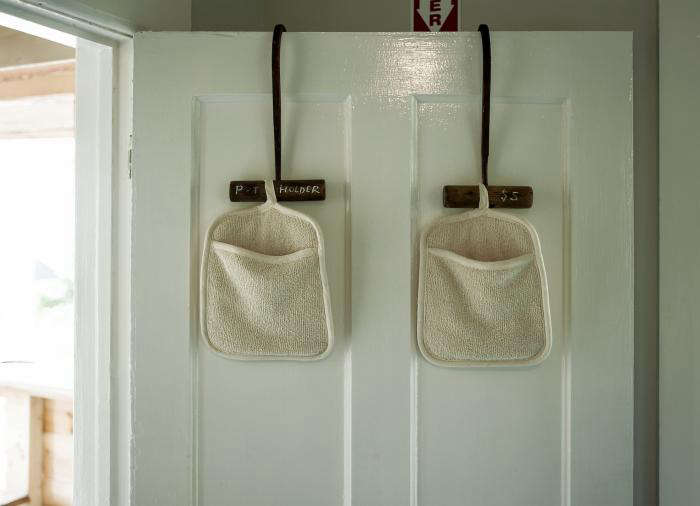
Much of Table on Ten’s charm came from ordinary objects presented with imagination. Terry-cloth pot holders hung from antique hooks. A vintage chalkboard became bathroom signage. Dried herbs and wild garlic formed a loose garland. A framed book page became inexpensive wall art, while a white pitcher held an informal arrangement of garden flowers.
This approach works because the objects belong in the room. Instead of buying decorative versions of kitchen tools, display the tools you actually use. Hang wooden spoons from hooks, stack linen napkins in an open basket, place cutting boards upright against the backsplash, or store utensils in an old stoneware crock.
The key is editing. Five well-used objects look authentic. Fifty objects look like the kitchen drawers have staged a rebellion.
Easy functional décor ideas
- Use a vintage mirror to bounce light across a small dining area.
- Hang aprons, market bags, or pot holders from old hooks.
- Frame a botanical plate, handwritten recipe, map, or book page.
- Display glass jars filled with grains, dried beans, or pasta.
- Store flowers in pitchers, canning jars, or enamel containers.
- Use an old crate to hold produce, cookbooks, or folded linens.
Add a Chalkboard, but Keep It Under Control
A chalkboard instantly suggests the informality of a neighborhood café. It can display a weekly menu, grocery list, dinner-party seating plan, seasonal sketch, or message to the household member who keeps returning an empty milk carton to the refrigerator.
For a cleaner Table on Ten-inspired look, choose a framed chalkboard or dedicate one small section of wall rather than painting the entire kitchen black. An antique frame, thin wood border, or simple ledge for chalk makes the feature feel finished.
Use relaxed handwriting and leave a little empty space. The goal is charming café signage, not an emergency briefing room. If chalk dust is a concern, liquid chalk markers offer sharper lines, although traditional chalk creates a softer, more authentic appearance.
Make Open Shelving Earn Its Keep
At Table on Ten, open shelves functioned as both storage and a small retail display. Coffee, pantry goods, dishes, and useful supplies became part of the room’s visual identity. The shelves were not merely decorative ledges holding three identical beige vases that feared human contact.
To reproduce this idea, reserve open shelving for attractive items used frequently enough to stay clean. White dishes, clear glasses, cookbooks, wooden boards, jars, and simple ceramics are good candidates.
How to style shelves without overstyling them
Start with practical items, then add only a few decorative accents. Group similar objects, vary their heights, and leave visible wall space between clusters. A single branch in a bottle can provide more life than six mass-produced ornaments.
Keep the palette narrow. White ceramics, clear glass, natural wood, and one dark accent create a calm foundation. Food packaging can add color, but choose only products that are genuinely used in the kitchen. Nobody needs to decant crackers into a hand-labeled jar unless doing so makes daily life easier.
Combine Commercial Utility With Domestic Warmth
One clever feature of the original restaurant was its willingness to use straightforward commercial equipment alongside handmade woodwork and vintage pieces. Stainless-steel sinks, dish racks, and restaurant-supply fixtures were treated as normal working components rather than hidden behind decorative panels.
This mixture translates well to residential kitchens. Stainless-steel counters, metal shelving, simple pendant lights, and durable café glasses can add an industrial note. Balance them with warm wood, soft textiles, flowers, and older furniture.
The contrast is important. Too much stainless steel can make the kitchen feel clinical. Too much rough wood can make it resemble a frontier reenactment. Put them together and each material improves the other.
For an affordable version, consider restaurant-supply trays, stackable glassware, wall-mounted rails, wire baskets, and plain white dishes. These items are designed to work hard, which is refreshingly useful in a room where actual work happens.
Bring in Flowers That Look Recently Gathered
The floral arrangements associated with Table on Ten were loose, seasonal, and unpretentious. Instead of formal bouquets, use sunflowers, goldenrod, garden roses, herbs, branches, grasses, or whatever is naturally available.
Arrange stems in a white ceramic pitcher, clear canning jar, enamel jug, or old bottle. Do not worry about achieving perfect symmetry. A slightly unruly arrangement reinforces the feeling that someone walked outside, cut a few stems, and returned before the coffee cooled.
Edible displays work too. A bowl of apples, a crate of squash, or several pumpkins near a window can act as seasonal décor. The advantage is that the centerpiece may later become dinner, a level of productivity rarely achieved by decorative beads.
Use Art and Objects With a Personal Story
The original dining room included antique mirrors and an evolving display of artwork. That evolving quality matters. A warm, collected interior should be allowed to change as new objects enter your life.
Skip the impulse to fill every wall during one shopping trip. Begin with a few meaningful pieces: a family photograph, an old landscape, a child’s drawing, a flea-market still life, a restaurant menu, or a print connected to a favorite place.
Frames do not need to match. Repeating one elementsuch as black edges, natural wood, or cream matsis enough to make the collection coherent. Lean smaller pieces on shelves and hang larger works at eye level. In a dining room, art should be visible from seated positions, not placed so high that guests must admire it like a ceiling fresco.
Create a Communal Table, Even in a Small Room
Table on Ten was designed as a community gathering place, and its long tables supported that purpose. A communal feeling does not require a huge room. It requires furniture that encourages people to remain at the table.
Choose the largest table that allows comfortable circulation. In a narrow room, a long rectangular table may work better than a wide one. Benches can increase capacity, while lightweight chairs make it easier to adjust the arrangement for different gatherings.
Keep the centerpiece low. Guests should be able to see one another without leaning around a floral shrub. Use several small jars, candles, or bowls rather than one towering arrangement.
Lighting should also encourage lingering. A pendant centered above the table provides focus, while small lamps, wall sconces, or candles add warmth. Avoid relying solely on bright overhead fixtures unless the evening’s entertainment includes minor surgery.
Build the Look on Three Different Budgets
Budget approach
Search thrift stores, flea markets, estate sales, architectural salvage yards, and online marketplaces for wooden chairs, old mirrors, pitchers, frames, and small tables. Paint mismatched pieces in one color, add a framed chalkboard, and display everyday kitchen tools on inexpensive hooks.
Midrange approach
Invest in a solid-wood dining table or have a local carpenter build a simple trestle design. Add vintage chairs gradually, install thick open shelves, and replace one generic light fixture with a handmade or industrial pendant.
Long-term investment approach
Use locally milled or reclaimed lumber for built-ins, counters, flooring, or custom furniture. Preserve original architectural details, restore old hardware, and commission pieces designed specifically for the room. Spend where touch and durability matter; save on objects that can be found secondhand.
At every level, patience produces a better result than bulk purchasing. The Table on Ten look depends on variation and history. Those qualities are difficult to buy in a single afternoon, even with a heroic credit limit.
Common Mistakes to Avoid
Making everything “rustic”
If the table, chairs, shelves, floors, lighting, signs, dishes, and wall art are all heavily distressed, the room becomes a costume. Pair old wood with clean plaster, simple glass, smooth metal, or contemporary art.
Confusing clutter with character
Useful objects can create atmosphere, but every surface still needs breathing room. Leave enough open space to prepare food, serve dinner, and place a coffee cup without initiating a tabletop puzzle.
Buying fake history
Mass-produced objects printed with invented dates and fictional farm names rarely feel convincing. An inexpensive real objecta worn cutting board, faded photograph, or handwritten recipeusually has more presence.
Ignoring comfort
Vintage chairs should be stable, tables should have sufficient legroom, and lighting should be flattering enough that guests do not look as though they are being questioned by authorities.
The Experience of Living With a Table on Ten-Inspired Interior
Recreating this look changes more than the appearance of a room. It changes how the room is used. A formal dining area often waits quietly for holidays, protecting itself from daily life. A Table on Ten-inspired space does the opposite. It invites breakfast, homework, coffee, flower arranging, laptop work, neighborly conversations, and dinners that continue long after the plates are cleared.
The first experience many people notice is that imperfection becomes less stressful. A new scratch on a reclaimed table does not trigger a household investigation. It joins older marks and becomes part of the surface. Linen can remain slightly wrinkled. Chairs do not need to stand in a perfect line. The room feels maintained, but it does not demand constant performance.
There is also pleasure in collecting the pieces gradually. One chair may come from an estate sale, another from a relative, and a third from a roadside shop discovered during a weekend trip. Each object carries a small memory. Over time, the dining room becomes a record of places visited and people known rather than a display of products selected from one catalog.
Open shelving encourages a more deliberate relationship with everyday belongings. You begin noticing which dishes you enjoy using and which ones have spent three years hiding behind a novelty mug. The most useful pieces move forward. The unnecessary pieces quietly reveal themselves. This can make the kitchen easier to navigate, although it may also lead to an unexpectedly emotional discussion about chipped cereal bowls.
Natural materials add another sensory layer. Rough-sawn wood has visible depth. Old floors sound different beneath footsteps. Linen, ceramic, glass, steel, and unfinished timber each contribute a distinct texture. These details are subtle, but they prevent a neutral palette from feeling flat.
The style also supports seasonal change without requiring a complete decorating overhaul. In spring, branches and early flowers can fill a pitcher. Summer brings herbs, garden produce, and open windows. Autumn introduces apples, squash, dried grasses, and darker linens. Winter needs little more than evergreen clippings, candles, and a bowl of citrus. The permanent background stays quiet while nature supplies the color.
Entertaining becomes easier because the room is not overly precious. Mismatched glasses feel intentional. Serving boards can remain on the table. Food can be placed in the center and passed around. Guests are more likely to relax when the environment appears ready for them rather than arranged for inspection.
There are practical challenges. Open shelves collect dust and cooking residue, so frequently used objects work better than purely decorative ones. Vintage chairs may require tightening, gluing, or replacement seats. Reclaimed lumber must be checked for splinters, old fasteners, moisture damage, and unsuitable finishes. Chalkboards need cleaning, flowers need changing, and a collected room still requires editing.
Yet those small tasks are part of the appeal. The interior remains active and adjustable. A new picture can replace an old one. A chair can be repainted. A market basket can move from storage to the wall. The room never has to be declared permanently finished.
The most rewarding experience is often the simplest: people stay. They refill their cups, shift their chairs, and continue talking. That is the true lesson behind the Table on Ten look. The design is not memorable because every object is rare or expensive. It is memorable because the space makes ordinary activitieseating, working, gathering, and restingfeel worth paying attention to.
Conclusion: Steal the Spirit, Not Just the Objects
The best way to borrow design ideas from Table on Ten is not to create an exact replica. It is to adopt the principles that made the original interior feel so natural: use honest materials, preserve useful old elements, mix furniture with restraint, display practical objects, and leave room for the space to evolve.
Begin with one meaningful improvement. Add a reclaimed shelf, place wildflowers in a pitcher, hang a chalkboard, or replace a matching chair set with a more personal collection. Then stop and live with the change before adding more.
A convincing rustic interior should never feel as though it arrived in one delivery. It should feel like the house, the people, and the furniture have been getting acquainted for years.