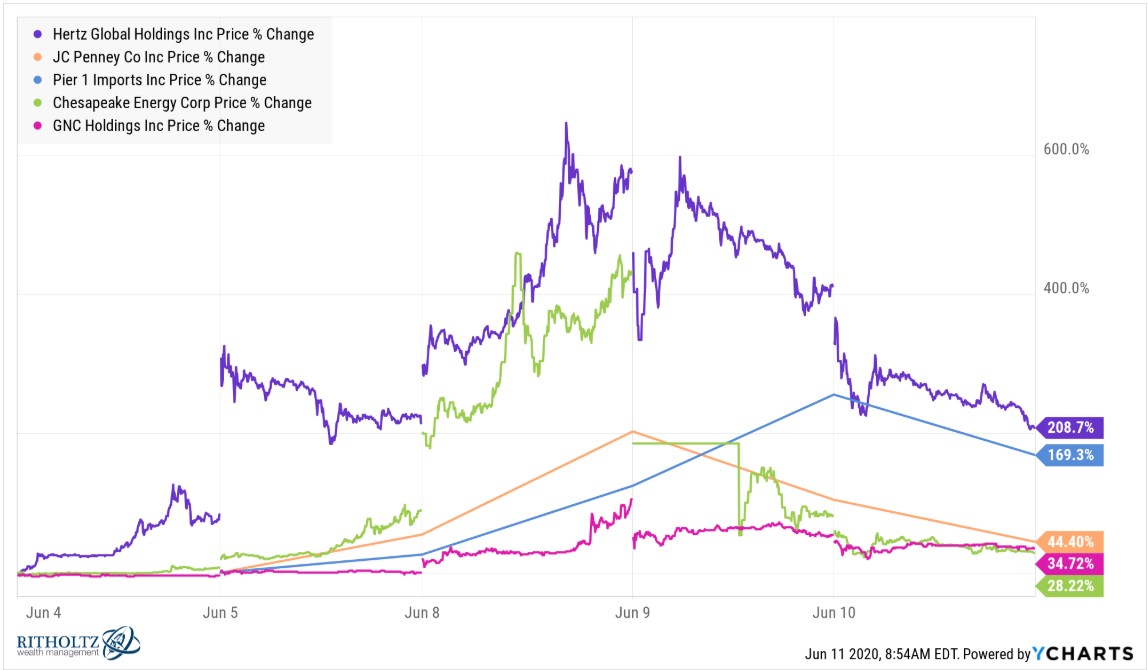
Financial markets constantly reinvent their wardrobe. One decade belongs to railroad stocks, another to internet companies, and the next to artificial intelligence, clean energy, digital assets, or an industry that has not yet been named by an enthusiastic consultant. Trading has moved from crowded floors to smartphones, information travels in milliseconds, and investors can now lose sleep over their portfolios in high definition.
Yet beneath all that technological sparkle, the basic machinery of the market remains surprisingly familiar. Prices respond to expectations. Risk and reward remain connected. Fear arrives quickly, greed overstays its welcome, and nobody consistently predicts every turning point. The headlines change, but human nature keeps renewing its contract.
Understanding the things about markets that never change is more useful than memorizing every forecast. A durable investment strategy is not built on knowing exactly what happens next. It is built on preparing for several possible outcomes while avoiding decisions that require supernatural timing.
Markets Will Always Be Driven by an Uncertain Future
A stock represents ownership in a business, but its market price reflects expectations about that business’s future. Investors consider potential earnings, competition, interest rates, consumer demand, regulation, technological change, and dozens of other variables. Unfortunately, the future refuses to submit audited financial statements.
This is why markets can move sharply even when the present appears calm. Prices are not merely reacting to what has happened; they are adjusting to what investors believe may happen next. A company can report record profits and watch its stock decline because investors expected even better results. Another company can announce a loss and see its shares rise because the loss was smaller than feared.
Good News Is Not Always Good for Prices
Market reactions depend on the gap between reality and expectations. Strong economic growth may boost corporate revenue, but it can also raise concerns about inflation and interest rates. Weak employment data may signal economic trouble, yet investors might interpret it as a reason for monetary policy to become more supportive.
The market is less like a simple scoreboard and more like a group project involving millions of people who disagree about the assignment. That disagreement is not a flaw. It is the mechanism through which buyers and sellers establish prices.
Risk and Return Will Remain Connected
Investors generally demand compensation for accepting uncertainty. Cash and short-term government securities tend to offer greater stability, while stocks, lower-quality bonds, emerging-market assets, and speculative investments usually carry greater risk. The possibility of loss is part of the reason riskier assets can offer higher expected returns.
The key phrase is expected returns, not guaranteed returns. Risk is not a vending machine where an investor inserts courage and receives exactly 10 percent per year. Sometimes risk is rewarded handsomely. Sometimes it sends an educational invoice.
Long-run U.S. market records show that stocks have historically produced stronger cumulative returns than Treasury bills and high-quality bonds. Those results arrived with recessions, crashes, wars, inflationary periods, banking problems, political crises, and years when investors wondered whether capitalism had accidentally unplugged itself.
Volatility Is the Admission Price, Not a System Error
Market volatility is often discussed as though it were an unusual malfunction. In reality, fluctuating prices are normal. New information changes expectations, and changing expectations alter what investors are willing to pay.
Removing volatility would also remove much of the uncertainty that supports the equity risk premium. Investors cannot reasonably expect the long-term growth potential of stocks while demanding the day-to-day stability of insured cash. Every asset has a personality, and stocks were never hired to behave like a savings account.
Investor Psychology Will Continue to Move Prices
Markets are powered by data, capital, technology, and human beings. The human-beings portion is where things become lively.
Behavioral finance research has documented recurring tendencies such as loss aversion, overconfidence, herd behavior, anchoring, recency bias, and fear of missing out. Investors may feel the pain of a loss more intensely than the pleasure of an equivalent gain. They may assume a recent trend will continue indefinitely or become more confident after a lucky streak.
These tendencies are not limited to beginners. Professional investors have emotions too; they simply experience them near more expensive coffee machines.
Fear Will Feel Permanent
During a serious decline, investors often believe the current crisis is fundamentally different from every previous crisis. Sometimes it is different in its cause. The 1929 crash, the inflation shocks of the 1970s, the technology bust, the global financial crisis, the 2020 pandemic shock, and the inflation-driven selloff of 2022 did not share the same script.
What they shared was a widespread feeling that uncertainty had become unbearable. Investors who normally described themselves as long-term thinkers suddenly discovered that their definition of “long term” was approximately until Thursday.
Greed Will Also Feel Rational
Rising prices create persuasive stories. When an asset performs well, media attention increases, forecasts become more optimistic, and previously cautious observers begin explaining why old valuation rules no longer apply. Success attracts capital, and that capital can push prices even higher.
Not every boom becomes a catastrophic bubble. Research into historical market surges shows that dramatic price increases do not automatically lead to equally dramatic collapses. Nevertheless, enthusiasm can separate prices from realistic assumptions. The difficult part is that overvaluation can continue much longer than skeptics expect.
Market Cycles Will Continue, but Their Timetables Will Not Cooperate
Expansion and contraction are natural features of economies and financial markets. Credit conditions loosen and tighten. Corporate profits rise and fall. Industries attract investment, become crowded, consolidate, and occasionally return from the dead wearing a new brand name.
Investors often describe market cycles as though they were orderly seasons: accumulation, expansion, enthusiasm, excess, decline, and recovery. That framework is useful in hindsight. In real time, however, stages overlap and signals conflict.
A market can appear expensive and continue rising. A recession can begin after stocks have already declined. A recovery can start while economic headlines remain awful. By the time conditions feel safe, prices may have already adjusted.
Turning Points Will Be Obvious Only Afterward
Forecasting stock market crashes has remained exceptionally difficult despite sophisticated models, options data, economic indicators, and armies of analysts. Correctly timing the market requires at least two successful decisions: when to get out and when to return.
The second decision is frequently harder. Recoveries often begin when investors are still frightened, unemployment remains elevated, and commentators are debating whether the rebound is “real.” The market does not ring a bell at the bottom. It barely sends a calendar invitation.
Stories Will Always Compete With Valuations
Every major investment trend comes with a story. Some stories describe genuine transformations: electrification, automobiles, computing, biotechnology, e-commerce, cloud services, and artificial intelligence. Powerful innovations can create enormous economic value.
However, a wonderful technology does not automatically make every company connected to it a wonderful investment. The price paid matters. A business can grow rapidly while its stock disappoints because expectations were already excessive. Conversely, a slow-growing company can generate attractive returns if its shares were priced too pessimistically.
Investors will always be tempted to confuse a compelling product, a charismatic founder, or a revolutionary industry with an attractive valuation. Sometimes the two overlap. Sometimes they wave politely from different zip codes.
Popular Narratives Will Change Faster Than Business Economics
Market narratives can reverse with remarkable speed. A company praised for investing aggressively may later be criticized for overspending. A conservative balance sheet may be viewed as unimaginative during a boom and brilliant during a credit crisis.
Underneath the changing commentary, business value still depends on familiar ingredients: revenue, margins, reinvestment needs, competitive advantages, cash generation, debt, and the price investors are willing to pay for those characteristics.
Diversification Will Remain Useful and Occasionally Annoying
Diversification spreads money across companies, sectors, asset classes, and geographic markets. It cannot eliminate losses, but it can reduce the damage caused by a single failed company, concentrated industry, or incorrect forecast.
A properly diversified portfolio will almost always include something disappointing. This is not evidence that diversification has failed. It is evidence that the portfolio contains assets that respond differently to economic conditions.
When technology stocks soar, bonds may look painfully dull. When stocks plunge, those dull bonds may suddenly become the most popular guests at the party. International markets can lag U.S. stocks for years and then lead unexpectedly. Small companies, value stocks, commodities, and real estate each experience periods of strength and weakness.
The Best-Performing Asset Will Be Clear in Retrospect
Investors regularly wish they had concentrated their money in the asset that recently performed best. Unfortunately, last year’s winner does not arrive with a certificate guaranteeing another victory. Performance leadership rotates, and consistently identifying the next leader is extremely difficult.
Diversification accepts that uncertainty rather than pretending to defeat it. Its goal is not to maximize bragging rights at every dinner party. Its goal is to improve the odds that one mistake does not derail an entire financial plan.
Costs, Taxes, and Turnover Will Continue to Matter
Investment returns attract attention because they are exciting. Costs deserve attention because they are relentless.
Management fees, trading expenses, bid-ask spreads, taxes, advisory charges, and unnecessary turnover reduce the portion of market returns that investors keep. A small annual fee may appear harmless, but its effect compounds over long periods because money paid in costs can no longer earn future returns.
Research comparing active investment funds with appropriate market benchmarks repeatedly shows how difficult sustained outperformance can be, particularly after fees. Some managers outperform, but identifying them in advance and remaining with them through inevitable weak periods presents another challenge.
Complexity Will Often Cost More Than It Delivers
Financial products can be useful, but complexity should solve a specific problem. An investment is not automatically superior because its brochure contains arrows, Greek letters, and a photograph of a serious person looking through a glass wall.
Simple portfolios are not guaranteed to outperform, yet they are often easier to understand, monitor, rebalance, and maintain during stressful markets. A strategy that an investor can follow is generally more valuable than an elegant strategy abandoned at the first unpleasant headline.
Patience Will Remain Scarce and Valuable
Compounding needs time. Businesses need time to reinvest profits, develop products, enter new markets, and build competitive advantages. Investors also need time for short-term noise to become less important relative to long-term economic growth.
The challenge is that patience rarely feels productive. Checking prices, changing funds, following predictions, and reacting to news create the sensation of control. Sitting still can feel irresponsible even when inactivity is the most disciplined choice.
Studies of market timing illustrate the danger of missing a relatively small number of strong trading days. Those powerful rebound days often occur near major declines, when nervous investors are most likely to be holding cash. Selling after a fall and waiting for emotional comfort can therefore mean returning only after prices have recovered.
Activity and Progress Are Not the Same
A portfolio does not receive bonus points for frequent editing. Useful actions include saving more, maintaining an emergency fund, controlling fees, rebalancing when allocations drift, reviewing risk tolerance, and updating a plan when financial goals change.
Trading because the market produced an alarming chart before breakfast is a different category of activity.
Surprises Will Remain the Market’s Favorite Hobby
Major market moves are often caused by developments that investors did not anticipate or did not fully appreciate. Unexpected inflation, policy changes, geopolitical events, technological breakthroughs, banking stress, supply disruptions, and shifts in consumer behavior can rapidly alter expectations.
Even when an event is predicted correctly, its market impact may not be. Investors can correctly forecast an election, recession, or interest-rate decision and still lose money because the outcome was already reflected in prices or because markets focused on a different variable.
This is why durable investment planning emphasizes resilience rather than a single forecast. A resilient portfolio considers the investor’s time horizon, liquidity needs, risk capacity, tax situation, and ability to tolerate declines without selling essential assets at an unfortunate moment.
Experience-Based Lessons the Market Keeps Teaching
The following situations are composites of common investor experiences rather than personal financial advice. The names change, the investments change, and the lesson stubbornly refuses to retire.
The Investor Who Waited for Certainty
Imagine an investor named Daniel who has accumulated cash and wants to buy a diversified stock fund. Prices look high, so he decides to wait for a correction. The correction arrives, but the headlines are frightening, so he waits for conditions to stabilize. Prices recover, and Daniel decides they are expensive again.
Nothing about his analysis feels reckless. Each delay has a reasonable explanation. Yet several years pass while his money remains in cash. Daniel was not wrong to recognize risk. His mistake was assuming there would be a moment when opportunity arrived without discomfort.
A practical lesson is that an investor does not need perfect confidence to follow a sensible plan. Regular contributions, gradual investing, or a predetermined allocation can reduce the emotional burden of selecting one magical entry date.
The Investor Who Mistook a Bull Market for Talent
Now consider Maya, who purchases several fast-rising stocks during a powerful bull market. Her account gains quickly. She begins watching more financial videos, increases the size of her trades, and concludes that diversification is for people who have not discovered her method.
Then market leadership changes. The stocks that rose fastest decline the most, and Maya learns that confidence can compound even faster than money. Her original gains were real, but they did not prove that risk had disappeared.
The lasting lesson is not that concentrated investments always fail. It is that favorable conditions can disguise weak decision-making. A strategy should be judged across different environments, not only during the period that made it famous.
The Investor Who Sold for Peace of Mind
Consider Robert, who holds a diversified retirement portfolio during a severe selloff. He knows that market declines are normal, but watching his balance fall makes every abstract principle feel suspicious. He sells most of his stocks and immediately feels relieved.
Several months later, the market begins recovering. Robert expects another decline and postpones reinvesting. As prices climb, returning becomes emotionally harder because buying back would mean admitting that the sale was poorly timed.
Robert’s experience demonstrates that selling is not a single decision. It creates a second decision about when to return. Emotional relief can be valuable, but a portfolio that repeatedly causes panic may indicate that the original allocation was too aggressive. The better solution may be a risk level that can be maintained through a full market cycle.
The Investor Who Owned Yesterday’s Winners
Finally, picture Elena reviewing annual performance tables. She moves money toward whichever sector has recently delivered the strongest returns. Unfortunately, by the time an asset becomes an obvious winner, its popularity and valuation may already reflect enormous optimism.
Elena repeatedly buys after strong runs and sells after disappointing periods. Each choice uses accurate historical data, but her results suffer because she treats past performance as a schedule rather than a record.
Her experience highlights the value of rebalancing. Instead of endlessly chasing winners, rebalancing trims assets that have grown beyond their intended weight and adds to areas that have fallen below target. It feels uncomfortable because it often requires buying what is unpopular. That discomfort is part of the discipline.
The Broad Lesson From These Experiences
Successful long-term investing is rarely about finding a forecast that eliminates uncertainty. It is about building a process that remains functional when uncertainty arrives. Written allocation targets, automatic contributions, diversified holdings, reasonable costs, emergency savings, and scheduled portfolio reviews can reduce the influence of momentary emotion.
The market will continue producing brilliant innovations, surprising winners, painful declines, and confident predictions. Investors do not need to ignore those developments. They simply need to recognize that every headline is not an instruction.
Conclusion: The Market Changes, but the Game Remains Familiar
The instruments, industries, and technologies of finance will continue to evolve. Future investors may trade assets that sound absurd today. They may use tools that process more information in a second than earlier generations encountered in a year.
Still, the foundations of markets are unlikely to change. The future will remain uncertain. Risk will demand compensation without promising it. Fear and greed will influence decisions. Market cycles will refuse to follow a convenient timetable. Costs will reduce returns, diversification will feel unnecessary immediately before it becomes useful, and patience will remain easier to praise than practice.
The most durable advantage is therefore not perfect foresight. It is a process: define clear goals, hold an appropriate mix of assets, control expenses, prepare for volatility, and avoid making permanent decisions based on temporary emotions.
The market’s next surprise is unknowable. Human nature’s reaction to it will probably look very familiar.