Note: This article is written for web publication and synthesizes current U.S.-focused research and real-world trends without inserting source links into the body copy.
Post-pandemic life has a funny sense of humor. For years, everyone talked about “getting back to normal,” as if normal were a couch cushion we had misplaced sometime in March 2020. But the world did not simply rewind. It rebooted, installed a few confusing updates, changed the password, and asked us to accept new terms and conditions.
Today, Americans are living in a strange “back to the future” moment. Offices are open, but many desks are still lonely. Restaurants are buzzing, but QR codes have somehow survived like tiny digital cockroaches. Schools are full again, but learning gaps remain. Travel is back, concerts are packed, and people are hugging againsometimes after doing a tiny risk assessment in their heads. The pandemic emergency may be over, but the pandemic experience is still shaping how we work, shop, learn, socialize, spend, rest, and plan for the next disruption.
The real story of post-pandemic life is not that everything changed forever. It is that some old habits returned, some new habits stuck, and some parts of daily life became hybridspart 2019, part 2026, part sci-fi office sitcom. Welcome to the future we accidentally beta-tested.
What “post-pandemic life” really means now
Post-pandemic does not mean COVID-19 disappeared. It means society has shifted from emergency mode to management mode. The World Health Organization ended the COVID-19 public health emergency of international concern in 2023, and the U.S. federal public health emergency also ended that year. But respiratory viruses, vaccines, testing, sick-day decisions, and public-health messaging remain part of everyday life.
That distinction matters. During the emergency phase, life revolved around restrictions, case counts, masks, school closures, remote work, and sudden shortages of things nobody expected to become precious, like toilet paper and yeast. In the post-pandemic phase, the question is less “Can we leave the house?” and more “What did we learn while we were trapped in it?”
The answer is complicated. We learned that many meetings could have been emails, but also that some emails should have been five-minute conversations. We learned that homes could become offices, gyms, classrooms, restaurants, movie theaters, and minor emotional pressure cookers. We learned that technology can keep society moving, but it cannot fully replace human presence. Most of all, we learned that “normal life” is not a fixed destination. It is a moving target wearing comfortable pants.
The workplace went through a time machine
No area of post-pandemic life changed more visibly than work. Before 2020, remote work was often treated as a perk, a special arrangement, or something suspiciously close to “not really working” in the minds of certain managers. Then the pandemic forced millions of people into a giant national experiment: What happens if the office moves into the kitchen?
The result was not the death of the office. It was the death of the office as the automatic default. Data from major labor and workplace surveys show that remote and hybrid work remain far more common than before the pandemic, especially among employees whose jobs can be done from home. Many remote-capable workers now expect flexibility as part of a modern job, not as a shiny bonus tossed in like free office coffee.
Hybrid work became the compromise nobody fully loves but many people prefer
Hybrid work is the great middle child of post-pandemic life. It is not fully remote. It is not fully in-office. It is the “let’s do Tuesday through Thursday downtown and pretend Monday traffic does not exist” model. For many workers, it offers the best of both worlds: fewer commutes, more control over deep-focus tasks, and enough face time to maintain relationships, mentoring, and office gossip about the mysterious yogurt abandoned in the refrigerator.
For employers, hybrid work is both a talent strategy and a management puzzle. Companies want culture, collaboration, training, creativity, and accountability. Employees want flexibility, quiet time, fewer unnecessary commutes, and the ability to toss laundry into the dryer between spreadsheets. The smartest organizations are no longer asking, “How do we force everyone back?” They are asking, “What work is better together, and what work is better alone?”
The office is becoming a destination, not a habit
In the old world, the office was where work happened because that was where the phone, files, boss, and stale muffins lived. In post-pandemic life, the office has to justify itself. People are more willing to commute when the day includes brainstorming, mentorship, client meetings, team rituals, or access to equipment they cannot fit next to the dog bed at home.
This shift has reshaped downtowns. Office occupancy remains below pre-pandemic levels in many cities, and the Monday-Friday rhythm has been replaced by a “midweek mountain,” with Tuesday, Wednesday, and Thursday often becoming the busiest office days. That has ripple effects for restaurants, transit systems, dry cleaners, parking garages, and every salad place that once survived on office workers paying $18 for arugula and optimism.
Home became the command center
The pandemic turned the American home into a Swiss Army knife. It became the office, classroom, clinic waiting room, yoga studio, coffee shop, movie theater, and emotional bunker. Even as public life reopened, many home-centered habits stuck because they were convenient.
Online grocery ordering, delivery apps, curbside pickup, streaming premieres, telehealth visits, digital banking, remote fitness, and virtual customer service all became more normal. Not everyone uses these services equally, and not everyone enjoys them. But the expectation of convenience has permanently increased. If people can track a pizza in real time, they are less patient with a doctor’s office that still communicates like it is powered by a fax machine and moonlight.
Telehealth moved from novelty to normal option
Telehealth is one of the most practical examples of post-pandemic change. Virtual care cannot replace every physical exam, and nobody wants a dermatologist diagnosing a mysterious rash through a blurry webcam from 2009. But for mental health appointments, medication follow-ups, routine questions, and some urgent-care triage, telehealth has made healthcare more accessible and less disruptive.
The larger lesson is not that everything should be digital. It is that people now expect a choice. They want in-person care when it matters and virtual care when it makes sense. The same logic applies to work, shopping, education, and even government services. The future is not online-only. It is option-rich.
Public life returned, but with new reflexes
Restaurants, airports, concerts, weddings, sports arenas, conferences, and theme parks are busy again. Americans did not lose their appetite for gathering. If anything, the isolation years reminded people that shared experiences matter. A live concert hits differently after the era of livestreams. A crowded birthday dinner feels less ordinary when you remember when blowing out candles seemed like a suspicious aerosol event.
Still, public life now includes new reflexes. Some people stay home when sick more often than they used to. Some carry masks during travel or cold season. Some check cancellation policies before booking trips because the pandemic taught them that plans can collapse faster than a cheap lawn chair. Flexible booking, outdoor seating, better ventilation, and paid sick leave are no longer boring policy details; they are part of how people judge whether an institution is prepared for reality.
Schools are open, but recovery is still unfinished
One of the clearest reminders that post-pandemic life is not simply “back to normal” is education. Schools reopened, classrooms filled, sports returned, and graduations again looked like graduations rather than glitchy video calls. But learning recovery has been uneven.
National assessment data show that many students are still below pre-pandemic performance levels in reading and math. The problem is not only missed lessons. It includes attendance issues, mental health strain, teacher burnout, family stress, screen habits, and widening gaps between students who had strong support during disruptions and those who did not.
For parents and educators, the post-pandemic challenge is not to keep talking about “learning loss” forever like a gloomy weather forecast. It is to rebuild routines, tutoring, reading practice, social skills, and school trust. Children do not need endless reminders that they lived through an educational earthquake. They need stable adults, strong instruction, and systems that do not pretend the earthquake never happened.
Mental health became part of everyday conversation
Before the pandemic, many Americans already faced stress, loneliness, anxiety, depression, and burnout. The pandemic did not invent these problems, but it did put them under stadium lighting. Isolation, grief, health fears, economic pressure, caregiving strain, and uncertainty pushed mental health into mainstream conversation.
In post-pandemic life, people are more likely to discuss boundaries, burnout, therapy, loneliness, sleep, emotional resilience, and workplace well-being. That is progress. The downside is that awareness does not automatically equal access. Mental health care can still be expensive, waitlists can be long, and social media can turn every bad afternoon into a self-diagnosis festival.
The healthiest lesson is practical: mental health is not a luxury add-on. It is infrastructure. A society cannot function well if everyone is exhausted, distracted, lonely, and powered entirely by iced coffee. Workplaces, schools, families, and communities all have a role in making life more humane.
Consumer behavior changed in subtle but sticky ways
Post-pandemic consumers are not exactly the same shoppers they were in 2019. Inflation, supply-chain disruptions, job changes, remote work, and shifting priorities have made people more selective. Many households are value-conscious, but not necessarily joyless. They may hunt for discounts on groceries while splurging on travel, hobbies, home upgrades, or experiences that feel meaningful.
This creates a “careful but willing” consumer mindset. People want convenience, but they also want trust. They want speed, but they notice quality. They will order online, but they also enjoy browsing physical stores when the experience is worth leaving the house. Retailers and brands that survive in this era understand that post-pandemic customers are not just buying products. They are buying time, confidence, comfort, and occasionally the illusion that a new storage basket will fix their entire life.
Cities and suburbs are still renegotiating
The pandemic changed where many Americans wanted to live. Remote work made it easier for some households to move farther from city centers in search of space, affordability, or a backyard large enough for a pandemic puppy that is now the size of a small horse. U.S. Census analysis has shown that working from home and housing costs contributed to growth in exurban areas after the pandemic began.
But the story is not a simple “cities are over” narrative. Many large cities have regained population, energy, and cultural momentum. People still want restaurants, museums, universities, nightlife, public transit, jobs, and the glorious urban ability to get excellent tacos at 11 p.m. The new geography is more flexible. Some workers commute fewer days. Some split time between regions. Some companies shrink offices. Some downtowns are exploring conversions from office space to housing, entertainment, education, or mixed-use districts.
The post-pandemic city will not succeed by waiting for 2019 to walk back through the door wearing a lanyard. It will succeed by becoming more livable, more flexible, and less dependent on five-day office crowds.
Technology became more usefuland more exhausting
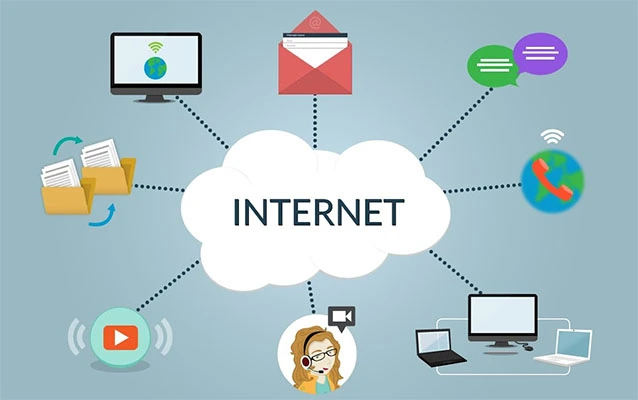
The pandemic accelerated America’s dependence on technology. Video calls, collaboration tools, online portals, digital payments, virtual events, and app-based services became part of ordinary life. That convenience is real. So is the fatigue.
People now face a strange contradiction: technology makes life easier and more irritating at the same time. A video meeting can save a commute, but five video meetings can turn a human brain into soup. A delivery app can save dinner, but ten subscriptions can quietly drain a bank account like a raccoon with a debit card. Remote tools can connect teams, but they can also blur boundaries until the workday expands into every corner of the evening.
The future will require digital discipline. The question is no longer “Can this be done online?” The question is “Should it be?” The best post-pandemic technology will reduce friction without replacing every human moment with a login screen.
What post-pandemic life teaches us about resilience
Resilience used to sound like a motivational poster word, usually printed over a mountain no one asked to climb. After the pandemic, it has become more concrete. Resilience means backup childcare plans. It means savings when possible. It means flexible workplaces, strong public health systems, reliable broadband, local supply chains, trusted information, and neighbors who know each other well enough to help in a crisis.
It also means admitting that efficiency is not the same as strength. Before the pandemic, many systems were optimized to run lean. Then disruption arrived and revealed that lean can become fragile. A hospital with no spare capacity, a family with no time margin, a business with one supplier, or a school with no digital plan may look efficient until life throws a wrench the size of 2020.
The “back to the future” lesson is that progress should not mean forgetting. It should mean remembering intelligently.
How to live better in the post-pandemic era
For individuals, post-pandemic life offers a chance to redesign routines instead of automatically restoring old ones. The goal is not to live in fear or nostalgia. The goal is to choose more deliberately.
Protect your time
If remote or hybrid work gave you back commute time, treat that time like a resource, not empty space waiting to be swallowed by more email. Use it for sleep, exercise, family, reading, cooking, or the rare luxury of doing absolutely nothing without calling it “mindfulness.”
Rebuild social muscles
Many people emerged from isolation feeling socially rusty. That is normal. Start small: coffee with a friend, a neighborhood event, a class, a volunteer shift, or a regular phone call. Human connection is not a bonus feature. It is part of health.
Keep useful health habits
Staying home when sick, improving indoor air, washing hands, keeping vaccines in mind, and respecting other people’s risk levels are not dramatic lifestyle choices. They are basic community manners. Think of them as the public-health version of not clipping your toenails on an airplane.
Use technology with intention
Keep the tools that save time and reduce stress. Question the ones that create noise, surveillance, or endless availability. A smart home, smart calendar, and smart phone are only helpful if they do not make the human feel like the least smart object in the room.
Extra experiences and reflections: living “back to the future”
The most relatable post-pandemic experience may be the feeling of returning to familiar places as a slightly different person. You walk into an office lobby, a school gym, an airport terminal, or a packed restaurant and recognize everythingthe coffee smell, the elevator ding, the awkward small talkbut your brain quietly adds footnotes. Remember when this was closed? Remember when this felt risky? Remember when sweatpants were business casual because the webcam stopped at the shoulders?
For many people, the first big return was not dramatic. It was oddly ordinary. Maybe it was sitting in traffic again and realizing you had not missed the spiritual journey of brake lights. Maybe it was hearing office chatter and feeling both comforted and overstimulated. Maybe it was attending a family gathering where everyone had become a little more protective of their time, health, and emotional bandwidth. The pandemic gave many people an unwanted pause, and during that pause they noticed what had been too loud, too rushed, too expensive, or too automatic.
One common experience is the new relationship with work. Employees who once accepted long commutes as natural began asking why they had spent so many hours moving their bodies to a building just to answer messages from people in the same building. At the same time, fully remote work taught its own lesson: convenience can become isolation. A quiet home office is wonderful until the days blur together and the most meaningful workplace interaction is apologizing to a delivery driver while wearing slippers. That is why hybrid life feels attractive to many people. It gives structure without total captivity and freedom without total disconnection.
Another experience is the changed meaning of home. During lockdowns and restrictions, people became painfully aware of their living spaces. A kitchen table became a classroom. A bedroom corner became headquarters. A balcony became a luxury resort. Some people moved, renovated, decluttered, adopted pets, started gardens, or learned to cook something more ambitious than toast. Others simply learned that a home needs to support real life, not just look decent when guests visit twice a year.
Social life also changed. Many friendships became stronger because people made deliberate effort. Others faded because they had survived mostly on proximity. That can be sad, but it can also be clarifying. Post-pandemic relationships often feel more intentional. People are more likely to ask: Do I actually want to go? Do I have the energy? Is this connection nourishing, or am I attending out of ancient guilt and fear of being removed from a group chat?
Travel returned with a similar mix of excitement and caution. Airports filled again, but travelers became more strategic. They checked refund rules, packed medicine, carried sanitizer, and accepted that flexibility is part of the ticket price. The joy of going somewhere new now sits beside the wisdom of having a backup plan.
In the end, post-pandemic life is not a clean break from the past. It is a remix. We brought back birthdays, offices, classrooms, concerts, vacations, and dinner reservations. But we also brought forward new expectations: flexibility, health awareness, digital access, emotional honesty, and a lower tolerance for pointless inconvenience. That may be the best version of “back to the future”not returning unchanged, but returning wiser, slightly weirder, and far more appreciative of ordinary days that are not actually ordinary at all.
Conclusion: The future is familiar, but not the same
Post-pandemic life is not a grand finale. It is an ongoing adjustment. America has returned to many familiar rhythms, but the beat has changed. Work is more flexible. Home is more central. Public health is more personal. Schools are still rebuilding. Cities are reinventing. Technology is everywhere, for better and for “please stop sending calendar invites.”
The challenge now is to avoid two mistakes. The first is pretending nothing happened. The second is acting as if everything must be permanently defined by what happened. A better path is to keep what worked, repair what broke, and let go of habits that survived only because nobody had questioned them yet.
Back to the future, then, is not about restoring 2019. It is about building a smarter normalone with more flexibility, more resilience, more humanity, and maybe fewer meetings that could have been emails.