Social media photos used to be simple: someone ate brunch, took a picture, and made the eggs look like they had a spiritual awakening. Today, things are trickier. A photo can be filtered, staged, cropped, AI-generated, recycled from another country, posted by a fake account, or paired with a caption that confidently lies like a raccoon wearing a lab coat.
That does not mean every image online is fake. Plenty of social media photos are real, harmless, and even helpful. But trusting a picture just because it looks convincing is no longer smart media behavior. Modern editing tools, generative AI, beauty filters, deepfakes, engagement algorithms, and scam tactics have turned visual content into a trust puzzle. The image may be real, but the story around it may be wrong. The person may exist, but the account may not be theirs. The product may look amazing, but the lighting may be doing Olympic-level gymnastics.
This guide breaks down 48 reasons not to trust photos you see on social media, plus practical examples, media-literacy tips, and real-world experiences that show why a little skepticism can save your money, your mood, and occasionally your dignity.
Why Social Media Photos Feel So Believable
Photos feel powerful because they seem like evidence. We often think, “I saw it with my own eyes,” even when our eyes are looking at a compressed JPEG posted by a stranger named @TotallyRealNewsEagle. Images bypass our slow, careful thinking and go straight to emotion. A dramatic disaster photo makes us worried. A perfect vacation picture makes us jealous. A shocking celebrity image makes us curious enough to click before our brain has finished putting on its shoes.
Social media platforms also reward photos that trigger reactions. Outrage, envy, fear, cuteness, shock, and “wait, is that real?” all perform well. That means the most visible photos are often not the most accurate ones. They are the ones that make people stop scrolling.
48 Reasons Not To Trust Photos You See On Social Media
1. Filters can change almost everything
Filters can smooth skin, brighten eyes, shrink noses, sharpen jawlines, whiten teeth, and make a gray parking lot look like a tropical vacation. A filtered photo may still be based on a real person or place, but it is not the whole truth.
2. AI can create people who do not exist
Generative AI tools can produce realistic faces, bodies, locations, pets, homes, and events. A smiling “person” in a viral post may be no more real than a unicorn with a LinkedIn profile.
3. Deepfakes can imitate real people
AI-manipulated images and videos can make public figures, influencers, or ordinary people appear to be somewhere they were not or doing something they never did. The more famous the person, the more likely their image can be misused.
4. Cropping can remove the truth
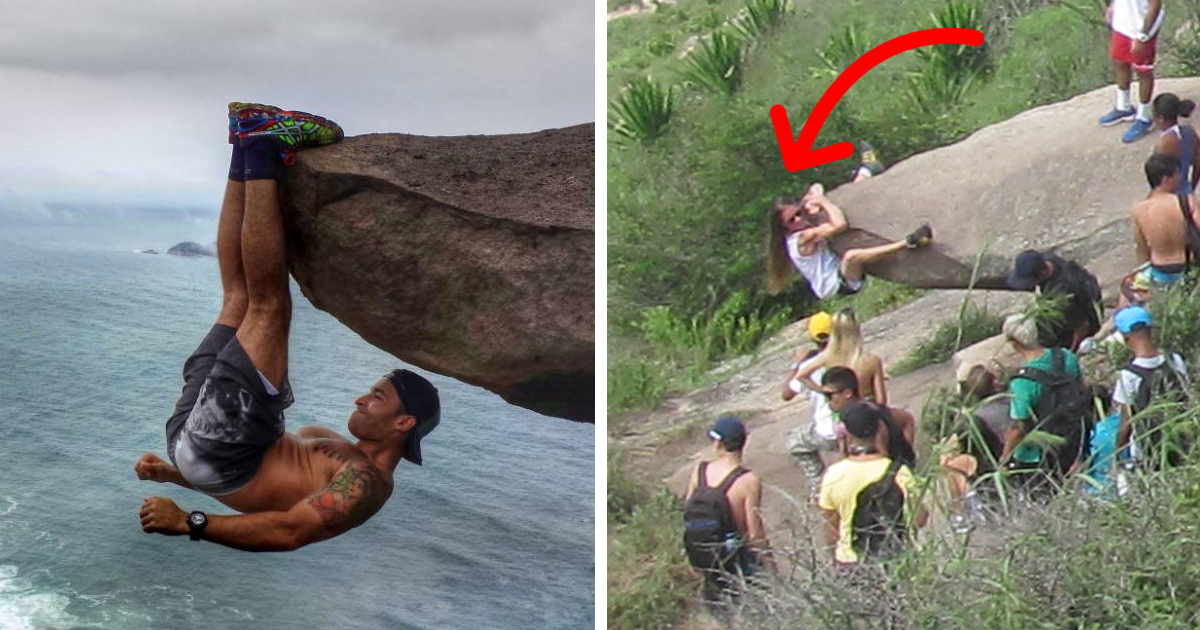
A cropped photo can hide the crowd, the warning sign, the photographer, the messy room, or the fact that the “luxury hotel balcony” is actually beside a highway. Cropping is the magician’s cape of social media.
5. Captions can lie even when photos are real
A real image from one protest, storm, or accident can be reposted with a false caption about a different event. The photo itself may be authentic, while the story attached to it is completely wrong.
6. Old photos are often recycled as breaking news
During fast-moving events, old disaster images, war photos, and dramatic street scenes often resurface. People share them because they look urgent, not because they are current.
7. Screenshots are easy to fake
A screenshot of a message, post, headline, or bank transfer can be edited in minutes. Treat screenshots as claims, not proof.
8. Lighting can create a fantasy
Good lighting can make food look delicious, skin look flawless, and tiny apartments look like magazine spreads. Bad lighting can do the opposite. Lighting is not lying, exactly, but it is definitely flirting with deception.
9. Angles can distort reality
A low angle can make a building look enormous. A high angle can make a room look bigger. A close-up can make a small crowd look massive. The camera angle is often the silent co-author of the story.
10. Beauty apps can reshape bodies
Retouching apps can alter waistlines, muscles, skin texture, hair volume, and facial proportions. Comparing your real body to edited images is like comparing your morning face to a Pixar render.
11. Product photos may be heavily staged
That “miracle” skincare glow, kitchen gadget result, or clothing fit may involve professional lighting, pins, editing, multiple takes, or a model with completely different proportions from the average buyer.
12. Influencer posts may be ads
Sponsored images can look like casual recommendations. A photo of a “favorite” product may be part of a paid campaign, even if the vibe says “I just happened to discover this life-changing blender while wearing linen.”
13. Some accounts steal photos
Scammers often copy real people’s photos to build fake profiles. Romance scams, fake giveaways, fake job offers, and impersonation accounts commonly rely on attractive or trustworthy-looking stolen images.
14. Travel photos can hide crowds and chaos
A peaceful beach shot may have been taken at sunrise, with 400 tourists standing two feet outside the frame. Social media travel photography often edits out heat, waiting lines, trash, prices, and sunburn.
15. Food photos may not represent the actual meal
Restaurant and recipe photos can use styling tricks, editing, and perfect timing. Your version may not look the same, and that does not mean you failed. It means the camera got the plate’s best side.
16. “Before and after” photos can be manipulated
Fitness, skincare, cleaning, weight loss, renovation, and hair-growth images often depend on lighting, posture, timing, clothing, oil, makeup, or editing. A before-and-after photo can be persuasive without being fair.
17. AI image mistakes are getting harder to spot
Early AI images often had strange hands, odd teeth, and melted backgrounds. Newer tools are better. Looking for six fingers is no longer enough; the fake photo has gone to college.
18. Metadata may be missing
Image metadata can include information about when or how a photo was created, but social platforms often strip metadata during upload. Without that context, verification becomes harder.
19. Watermarks are not foolproof
Content credentials and digital watermarks can help improve transparency, but they are not universal. Many images online have no reliable provenance label, and labels can be removed in some situations.
20. Viral images may be designed to provoke
Some posts are made to trigger anger, fear, or tribal loyalty. A shocking image may be bait for shares, comments, donations, or clicks.
21. Algorithms reward emotional reactions
If a photo makes people furious or fascinated, platforms may show it to more users. Accuracy does not always travel as fast as outrage.
22. Fake accounts can create fake popularity
Likes, comments, and shares can be bought, automated, or coordinated. A photo with huge engagement is not automatically trustworthy.
23. Context can be deliberately removed
A single photo may show one second of a much longer situation. Without the before and after, you may be judging a movie from one suspicious-looking frame.
24. Satire can be mistaken for news
Satirical images and parody posts often escape their original context. Once shared by someone who missed the joke, satire can mutate into misinformation.
25. Crisis photos spread faster than corrections
During emergencies, people share images quickly because they want to warn others. Unfortunately, false or miscaptioned photos can spread before journalists, officials, or fact-checkers can confirm details.
26. Stock photos can be used as “evidence”
A generic image from a stock library can be presented as a real customer, patient, employee, protester, or victim. If it looks strangely polished, pause.
27. Fake giveaways use attractive images
Scam pages may post luxury products, cash stacks, cars, or vacation photos to lure people into sharing personal information. The shinier the promise, the more you should check the source.
28. Celebrity photos are frequently edited
Celebrity images may be retouched by professionals, altered by fan accounts, or generated by AI. A glamorous photo is not necessarily a reliable record of what someone looks like.
29. Political images can be weaponized
Campaigns, activists, foreign influence operations, and random engagement farmers can use manipulated visuals to shape public opinion. A political photo should be checked before it becomes your entire personality for the afternoon.
30. Disaster photos can be emotionally exploitative
Images of floods, fires, earthquakes, or conflict can be shared to raise awareness, but they can also be misused to drive clicks, fake donations, or panic.
31. “Natural” photos may not be natural
Casual selfies may involve dozens of attempts, editing apps, posing tutorials, ring lights, and strategic background cleanup. “Woke up like this” often means “woke up, prepared lighting, took 43 shots, selected one.”
32. Luxury lifestyle images can be rented
Private jets, designer bags, sports cars, mansions, and fancy hotel rooms can be rented, borrowed, staged, or photographed in showrooms. Wealth cosplay is a thriving visual genre.
33. Health photos can mislead
Images promoting wellness trends, supplements, diets, or skincare routines may exaggerate results or omit medical context. A glowing face in a photo is not clinical evidence.
34. Fitness images can hide timing and preparation
Fitness influencers may use pumps, dehydration, flexing, lighting, editing, and professional photography. One image rarely represents everyday reality.
35. Pets and wildlife photos can be staged
Cute animal photos may be harmless, but some wildlife images are manipulated, staged, or taken in unsafe settings. A raccoon wearing sunglasses may be funny; it is not necessarily ethical journalism.
36. Background details can be altered
Modern editing tools can remove people, change skies, add landmarks, clean rooms, and replace entire backgrounds. The photo may look ordinary because the edit is ordinary now.
37. Compression hides editing clues
Social platforms compress images, which can blur details and make manipulation harder to detect. A fake photo may survive because the platform squishes the evidence.
38. Reverse image search is useful but incomplete
Reverse image tools can help find earlier versions of a photo, but they do not catch everything. New AI images, private images, and heavily altered pictures may not show clear matches.
39. People share first and verify later
Many users share images because they feel urgent, funny, or shocking. Verification often arrives after the photo has already collected thousands of reactions.
40. Fake local news pages use real-looking photos
Some pages imitate local news branding with dramatic photos and vague captions. They may exist mainly to farm attention, sell ads, or push a narrative.
41. AI can generate fake evidence for scams
Scammers can use AI images to create fake receipts, fake IDs, fake product photos, fake business profiles, or fake proof of charity work. Visual polish does not equal legitimacy.
42. “Authentic” imperfections can be added
Creators can add grain, blur, bad lighting, or shaky framing to make fake images feel more real. Imperfect does not automatically mean honest.
43. Group photos can be misleading
A group image may imply friendship, endorsement, attendance, or support that does not exist. Someone standing next to a person once is not the same as approving everything that person does.
44. Screenshots of headlines may omit updates
A headline screenshot can circulate long after a story has been corrected, clarified, or debunked. Always check whether the article still says what the screenshot claims.
45. Social proof can pressure your judgment
When thousands of people react to a photo, it feels safer to believe it. But crowds can be wrong, especially when nobody wants to be the first person to ask, “Wait, where did this come from?”
46. Emotional images can bypass critical thinking
Photos of children, animals, disasters, celebrities, or injustice can make us react instantly. Strong emotion is a signal to slow down, not speed up.
47. Some images are posted for clout, not truth
Online attention has value. People may exaggerate, stage, or misrepresent photos to gain followers, sell products, attract sympathy, or start arguments.
48. Even honest photos are only partial truth
A photo captures one frame, from one angle, at one moment. It cannot show full context, motive, history, sound, pressure, or what happened next. Even a real photo can tell an incomplete story.
How To Check a Suspicious Social Media Photo
Look for the original source
Ask where the photo first appeared. Was it posted by an eyewitness, a verified news organization, a public agency, or a random account with twelve followers and a profile picture of a wolf wearing sunglasses?
Use reverse image search
Tools like Google Lens and other reverse image search options can help you see whether the photo appeared earlier online. If the same image was posted years ago with a different caption, that is a red flag wearing a marching band uniform.
Check multiple reliable sources
For serious claims, look for confirmation from reputable news outlets, government agencies, fact-checkers, or local authorities. One viral image is not enough.
Read beyond the caption
Captions often do the heavy lifting in misinformation. The image may be real, but the claim may be invented. Look for names, dates, locations, and original context.
Inspect visual details carefully
Strange shadows, warped backgrounds, inconsistent reflections, unnatural hands, impossible text, and mismatched lighting can indicate editing or AI generation. These clues are not perfect, but they help.
Watch your emotional reaction
If a photo makes you instantly furious, terrified, jealous, or desperate to share, pause. Manipulative images often work because they sprint past your critical thinking and dive directly into your feelings.
Why This Matters for Everyday Life
Not trusting social media photos does not mean becoming cynical. It means becoming visually literate. You can still enjoy memes, vacation photos, recipes, fashion ideas, and cute dogs who look like tiny accountants. The goal is not to reject every image; the goal is to stop treating every image as evidence.
This matters because photos influence decisions. People buy products because of before-and-after pictures. They change skincare routines because of influencer images. They believe political claims because of dramatic visuals. They donate money because of emotional posts. They compare their bodies, homes, relationships, and vacations to images that may be filtered, staged, or fake.
Visual misinformation can also affect safety. Fake emergency photos can spread panic. Fake business images can support scams. Fake identity photos can build trust with people who intend harm. A healthy pause before believing or sharing can protect you and others.
Experiences Related to Not Trusting Photos on Social Media
Most people learn to distrust social media photos the awkward way: by believing one first. Maybe you once saw a dramatic image of a storm cloud swallowing a city, shared it with a shocked emoji, and later discovered it was from another continent five years earlier. Congratulations, you joined the extremely large club called “People Who Have Been Fooled by the Internet.” The membership card is invisible, but emotionally very real.
One common experience involves online shopping. A product photo looks perfect: the sweater is thick, the lamp is elegant, the storage box appears large enough to organize your entire life and possibly your unresolved emotions. Then the package arrives, and reality enters the chat. The sweater is thin, the lamp is tiny, and the storage box can hold approximately three paper clips and a dream. The photo was not necessarily fake, but it used ideal lighting, scale tricks, and selective angles to make the product look better than it was.
Another familiar experience is the vacation illusion. A friend posts a peaceful beach photo with turquoise water and zero humans in sight. You imagine paradise. Later, you learn they woke up at 5:30 a.m., waited for people to move, cropped out a snack stand, and spent the rest of the day in a crowd so dense it had its own weather system. The photo is real, but the mood is edited.
Beauty and fitness photos create another kind of lesson. Many users have compared themselves to faces and bodies online, only to discover that filters, posing, lighting, and retouching were involved. That realization can feel annoying, but also freeing. The problem was never your normal skin, normal body, or normal bedroom mirror. The problem was that you were comparing reality to a digital performance.
Then there are viral “news” photos. Someone posts an image with a bold claim, and the comment section becomes a courtroom where everyone is both judge and confused uncle. Later, fact-checkers show that the image was old, miscaptioned, AI-generated, or taken from a completely different event. These moments teach a useful rule: the more a photo demands immediate outrage, the more it deserves immediate verification.
Personal experience also shows that people do not always manipulate photos with evil intent. Sometimes they just want a nicer profile picture, a cleaner room, or a better-looking lunch. A small edit is not automatically harmful. The trouble begins when edited images are presented as proof, medical advice, political evidence, product truth, or realistic standards for everyone else.
The healthiest habit is simple: enjoy photos, but do not surrender your judgment to them. Save the recipe, admire the sunset, laugh at the meme, and appreciate the outfit. But when a photo asks for your money, your anger, your vote, your personal information, or your self-esteem, slow down. Ask where it came from. Ask what is missing. Ask who benefits if you believe it. Your skepticism does not ruin the internet; it gives your brain a seatbelt.
Conclusion
Social media photos are powerful, entertaining, and sometimes genuinely meaningful. They can document history, connect families, promote art, and make ordinary moments feel special. But they can also mislead, exaggerate, manipulate, and sell fantasy as fact. In an era of AI-generated images, beauty filters, deepfakes, staged lifestyles, scam accounts, and viral misinformation, the smartest response is not panic. It is informed caution.
Do not trust a photo simply because it looks real. Check the source, search for context, compare reliable information, and notice when an image is pushing your emotions too hard. The internet is full of pictures. Your attention, trust, and peace of mind are more valuable than a perfectly filtered post.
Note: This article is written for media-literacy and educational purposes. It encourages readers to verify visual content before believing, sharing, buying, donating, or making decisions based on social media images.