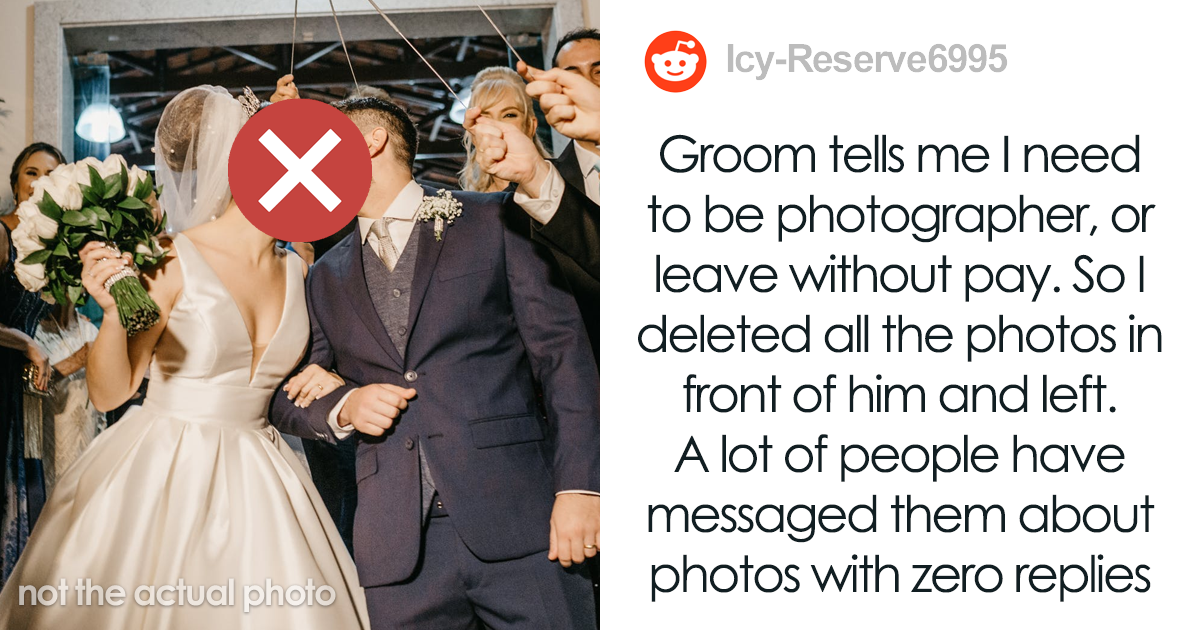
Every wedding has at least one unforgettable moment. Sometimes it is the first look. Sometimes it is the tearful vows. Sometimes it is Uncle Gary attempting the worm on the dance floor after two glasses of champagne and one dangerous burst of confidence. But in one viral wedding story, the most memorable moment came when a photographer, pushed past her limit, deleted the photos she had taken right in front of the groom.
The story exploded online because it had everything the internet loves: wedding drama, questionable manners, a low-budget favor gone wrong, and a moral debate spicy enough to make the comments section do cardio. At the center of it was an amateur photographer who agreed to shoot a friend’s wedding for a very small fee. She was not a professional wedding photographer. She was doing a favor. Unfortunately, the day reportedly turned into a marathon of heat, hunger, dehydration, and disrespect.
According to the original viral account, the photographer was asked to work for around 10 hours for $250. That alone already had many people blinking at their screens like, “Excuse me, was the camera made of cardboard?” The real conflict began when she needed a short break to get food and water. The groom allegedly told her she had to keep working or leave without pay. So she chose a third option: she deleted the wedding photos in front of him and left.
Was it dramatic? Absolutely. Was it avoidable? Also absolutely. Was the internet going to calmly discuss the matter like a committee of emotionally balanced adults? Please. This was a wedding dispute on Reddit. The digital confetti cannon was already loaded.
The Viral Wedding Photo Deletion Story: What Happened?
The photographer’s version of events described a day that started as a favor and ended as a social media wildfire. A friend asked her to photograph the wedding because the couple’s budget was tight. She had photography experience from taking pictures as a hobby, but she was not presenting herself as a seasoned wedding professional with a full-day package, backup shooter, luxury album, and emergency granola bar strategy.
The agreement reportedly involved about $250 for a long day of wedding coverage. For context, professional wedding photography often costs far more because it includes planning, equipment, editing, backups, insurance, travel, experience, and the unique pressure of capturing moments that cannot be politely rescheduled. You cannot ask the bride to walk down the aisle again because the camera settings were “having a personality.”
As the day went on, the photographer said she worked in hot conditions and ran out of water. When dinner arrived, she expected a chance to sit down, eat, and reset. Instead, she reportedly learned there was no seat or meal saved for her. She asked to leave briefly to get something to eat and drink. The groom, according to her account, gave her a blunt choice: continue photographing or leave without pay.
That was the breaking point. She asked whether he was sure. When he stood by the ultimatum, she deleted the photos she had taken and walked away. In one instant, the wedding went from “budget-friendly celebration” to “case study in why vendor meals exist.”
Why The Internet Could Not Stop Talking About It
The story went viral because it was not just about deleted wedding photos. It tapped into bigger questions about respect, labor, friendship, boundaries, and what people think they can demand from someone doing them a favor.
Many readers sided with the photographer. Their argument was simple: if someone is working for you all day, especially in heat, you provide basic human necessities like water, food, and a break. This is not luxury treatment. It is not a diamond-studded vendor meal served by a violinist. It is basic decency.
Others thought the photographer went too far. Wedding photos are irreplaceable, they argued. Even if the groom behaved badly, deleting the images punished the bride, family members, and guests who may not have known about the conflict. For this group, walking out was understandable; deleting the photos was the nuclear button.
Then there was the middle camp, which may be the most reasonable and least fun at parties. They believed everyone made mistakes. The couple should have fed and respected the photographer. The photographer should have protected the files and handled the dispute later. And the entire arrangement should have been put in writing before anyone showed up with a camera and hope.
The Real Lesson: Cheap Wedding Labor Can Get Expensive Fast
One of the biggest takeaways from the viral wedding photographer story is that “cheap” does not always mean “simple.” In fact, cheap arrangements often require more communication, not less. When money is tight, expectations must be crystal clear.
A professional wedding photographer typically has a contract that covers hours, deliverables, meal breaks, cancellation terms, image rights, payment deadlines, editing timelines, and what happens if the schedule goes sideways. A friend doing a favor may have none of that. Instead, everyone relies on assumptions, and assumptions are where wedding chaos likes to build a tiny home.
The couple may have assumed the photographer would work continuously because she was being paid. The photographer may have assumed she would be treated like a person at a long event. Both assumptions should have been discussed before the wedding day. A simple agreement could have prevented the entire disaster:
- How many hours will the photographer work?
- Will she get a meal and water?
- When can she take a break?
- What photos are most important?
- When will payment be made?
- What happens if either side becomes unhappy?
None of these questions are romantic, but neither is watching your wedding memories vanish because someone refused to let a hungry photographer locate a sandwich.
Should Wedding Photographers Be Fed?
In most wedding planning circles, the answer is yes, especially if the photographer is working a long day. Wedding photographers are often on their feet for six, eight, ten, or even twelve hours. They carry heavy gear, manage changing light, organize groups, catch emotional moments, dodge enthusiastic guests with phones, and somehow remain alert enough to capture the cake cutting before a toddler pokes it.
Vendor meals are common because they solve a practical problem. If a photographer has to leave the venue to get dinner, they may miss speeches, dances, candid moments, or unexpected schedule changes. Feeding vendors keeps the event running smoothly. It is not only polite; it is operationally smart.
That does not always mean vendors need the same plated filet mignon as guests. Some venues offer simpler vendor meals at a lower cost. Some photographers bring snacks but still require a meal during full-day coverage. Some contracts specify whether the vendor meal must be hot, when it should be served, and whether the photographer needs to eat at the same time as the couple so they can resume shooting when the action continues.
The key is not extravagance. The key is planning. A fed photographer is more likely to be focused, calm, and nearby. A starving photographer is more likely to become the main character of a viral Reddit post, and nobody wants that in the wedding album.
Why Wedding Photography Is More Stressful Than It Looks
People sometimes underestimate wedding photography because the final images look effortless. A good photographer makes chaos appear elegant. Behind the scenes, however, the job is a pressure cooker with a camera strap.
A wedding photographer must capture moments that happen once. The first kiss does not come with a replay button. The father-daughter dance cannot be paused because a guest steps into the aisle holding an iPad the size of a cafeteria tray. Lighting changes constantly. Timelines shift. Family dynamics appear without warning. Someone is always missing from group photos. Someone else always asks, “Can you make me look taller?”
Professional photographers prepare for these challenges. They bring backup equipment, extra batteries, memory cards, lenses, lighting, timeline notes, and enough emotional stamina to handle Aunt Linda’s request for “just one more picture” 47 times. An amateur photographer doing a favor may not be ready for the workload, especially without breaks or food.
That is why hiring a friend can be risky. It may save money, but it can also blur boundaries. A friend may feel guilty charging professional rates. A couple may feel comfortable asking too much. Everyone smiles during planning, then the wedding day arrives and suddenly friendship is being stress-tested under direct sunlight.
Was Deleting The Photos Justified?
This is where the story becomes complicated. On a human level, many people understand the photographer’s frustration. Being denied water, food, and a short break after hours of work would make anyone angry. Add heat, low pay, and an ultimatum from the groom, and the reaction becomes emotionally understandable.
But understandable does not always mean advisable. Wedding photos are emotionally valuable. They belong to a once-in-a-lifetime event, and deleting them on the spot removes any chance of resolving the conflict later. A calmer option might have been to stop shooting, leave, keep the files, and decide afterward whether to deliver them, request payment, or negotiate.
From a professional perspective, deleting client images is a terrible idea. A professional photographer would be expected to protect the files, even during a dispute. However, this case sits in a gray area because the photographer was not a professional vendor in the traditional sense. She was a friend working for a very low fee under poor conditions, at least according to her side of the story.
The fairest conclusion may be this: the groom’s reported behavior was unacceptable, and the photographer’s reaction was extreme. The groom turned a manageable problem into a confrontation. The photographer turned a confrontation into a permanent loss. The internet turned both into content.
What Couples Can Learn From This Viral Wedding Disaster
1. Do Not Treat Vendors Like Background Props
Photographers, DJs, planners, makeup artists, caterers, and videographers are not decorative furniture with invoices. They are people working long hours to make the day better. Treating them well usually improves the event for everyone.
2. Put Everything In Writing
Even if the photographer is a friend, write down the basics. Hours, payment, breaks, meals, photo priorities, editing expectations, and delivery dates should be clear. A written agreement protects both sides and prevents awkward “I thought you meant…” conversations later.
3. Budget Realistically For Photography
If photos matter to you, invest accordingly. That does not mean every couple needs a luxury photographer, but it does mean understanding the value of the work. Paying a tiny fee for an exhausting job and expecting premium service is a recipe for disappointment with extra frosting.
4. Feed People Who Work All Day
If a vendor is present through the ceremony and reception, plan a meal. Confirm it with the caterer and venue. Make sure the vendor knows when and where to eat. This tiny bit of organization can prevent a giant emotional bonfire.
5. Keep Conflict Away From The Main Event
If something goes wrong, de-escalate. A wedding day is not the ideal time to issue ultimatums, start arguments, or make irreversible decisions. The goal should be to solve the immediate problem and deal with the business side later.
What Photographers Can Learn From The Story
Photographers, especially beginners, can learn just as much from this viral situation. First, never rely on vague promises. A friendly arrangement can still become stressful when money, expectations, and once-in-a-lifetime memories are involved.
Second, protect your work. Use multiple memory cards if possible. Back up files as soon as you can. Do not delete images in anger, even if the client is being difficult. Files are leverage, evidence, and creative property. Once they are gone, every option disappears with them.
Third, know your limits. If you are not a wedding photographer, be honest about what you can provide. Shooting pets, landscapes, portraits, or social media content is not the same as covering a wedding. Weddings are fast, emotional, and logistically demanding. It is okay to say no, or to offer limited coverage instead of full-day responsibility.
Finally, charge enough to take the job seriously. Low pay can create resentment, especially when the workload is high. If a couple cannot afford your full rate, define a smaller service instead of accepting an exhausting job for a price that makes you angry before dessert.
Why This Story Still Resonates
The reason this story continues to circulate is that it feels bigger than one wedding. It reflects a common modern tension: people want professional results, but sometimes they do not want to pay professional prices or respect professional boundaries. At the same time, service providers must balance self-respect with responsibility.
Weddings intensify everything. Money is high. Emotions are high. Expectations are high. Someone’s cousin is usually high on confidence while giving a speech. In that environment, small planning failures can become huge dramatic moments.
The deleted wedding photos became a symbol because they represented the point where someone finally said, “No more.” Whether readers agreed with her method or not, many recognized the feeling of being overworked, underpaid, and treated as though basic needs were inconvenient.
For couples, the story is a warning: kindness is part of event planning. For photographers, it is a warning: boundaries need contracts. For the internet, it is a buffet of opinions, and unlike the photographer, everyone online got fed.
Experiences And Real-World Lessons Related To The Viral Wedding Photographer Story
Anyone who has worked around weddings knows that the day can look magical from the guest tables and wildly different behind the scenes. A guest sees flowers, music, and a glowing couple. A photographer sees the timeline running 25 minutes late, the best man missing, the sun dropping fast, and a DJ about to start the first dance while Grandma is still in the restroom. Wedding work is beautiful, but it is not easy.
One common experience among photographers is the “invisible labor” problem. Because they move quietly and try not to interrupt the event, guests may assume they are simply clicking a button. In reality, they are making hundreds of decisions per hour. They are watching light, composition, emotion, movement, and background distractions. They are anticipating moments before they happen. A great candid photo is not an accident; it is preparation wearing comfortable shoes.
Food and breaks matter because fatigue changes performance. A hungry photographer may miss reactions during speeches. A dehydrated photographer may become slower, less patient, and less creative. Couples sometimes spend months choosing napkin colors but forget to ask whether the people documenting the event will have time to eat. That is like polishing the hood ornament while ignoring the engine.
Another real-world lesson is that friends should be careful when mixing favors and major life events. Asking a friend to take a few casual photos at a backyard party is one thing. Asking a friend to document an entire wedding is very different. If the photos matter, treat the friend like a vendor. If the friendship matters, do not overload them with vendor-level expectations unless everyone clearly agrees.
Many photographers have stories about being seated in faraway vendor rooms, served cold leftovers, or told to eat only after all guests are finishedright when the reception events restart. This creates a practical problem. If the couple eats first and then begins speeches while the photographer is still waiting for food, the photographer must choose between eating and working. Good planning solves this by feeding photographers when the couple eats, because most guests do not want photos of themselves chewing anyway. Nobody needs a dramatic black-and-white image titled “Cousin Brad Versus The Chicken Breast.”
Couples can also benefit from assigning one calm contact person for vendors. The photographer should not have to negotiate meals with the groom during the reception. A planner, coordinator, trusted sibling, or venue manager can handle logistics. This keeps the couple focused on celebrating and prevents emotional decisions from becoming viral cautionary tales.
For beginner photographers, the experience section of this story is especially important: never accept a wedding job without a written agreement, even if the couple is close to you. Include the hours, fee, break schedule, meal expectations, delivery timeline, editing scope, and cancellation terms. Bring water, snacks, backup batteries, backup cards, and a realistic mindset. Weddings are not the place to discover that your boundaries are theoretical.
For couples, the final lesson is simple: generosity is cheaper than disaster. A vendor meal, a chair, and a 20-minute break cost very little compared with the emotional value of wedding photos. Respect does not need to be expensive. It just needs to be intentional.
Conclusion
The viral story of the photographer who deleted wedding photos in front of the groom is funny in the way internet drama is funny: outrageous from a distance, stressful up close, and packed with lessons nobody wanted to learn the hard way. It shows how quickly a wedding can unravel when expectations are unclear and basic respect is missing.
Was deleting the photos the best decision? Probably not. Was refusing food, water, and a break to someone working all day a terrible decision? Definitely. The real villain may not be one person, but poor planning dressed in formalwear.
For couples, the message is clear: hire carefully, communicate clearly, and feed the people helping your wedding run smoothly. For photographers, protect your work, set boundaries, and never let a vague favor become a full-day job without clear terms. Wedding memories are priceless, but the people capturing them still need lunch.
Note: This article is an original, web-ready rewrite based on publicly reported accounts of the viral wedding photography dispute and broader wedding vendor etiquette guidance. It is written for informational and entertainment purposes, with unverified personal claims presented as reported allegations rather than confirmed facts.