Note: This original recipe article is written for web publication and is based on established lamb-roasting, stuffing, food-safety, and tahini-sauce techniques from reputable culinary and food-safety guidance.
A Showstopper Lamb Dinner That Does Not Require a Culinary Degree
A stuffed saddle of lamb sounds like something that should arrive on a silver platter while someone in white gloves announces dinner. In reality, it is one of the most practical celebratory roasts you can make at home. The cut is naturally elegant, the stuffing does half the flavor work, and the creamy tahini sauce makes the whole plate feel modern, warm, and just a little bit restaurant-fancy without requiring a reservation or a second mortgage.
This saddle of lamb recipe is built around contrast. The lamb is rich, tender, and savory. The filling is salty and fruity, with briny feta, sweet dried apricots, golden raisins, toasted pistachios, herbs, garlic, lemon zest, and a small amount of breadcrumbs to keep everything sliceable. The tahini sauce brings nutty creaminess, lemony brightness, and a silky finish that drapes over the lamb like it was born for the job.
For American home cooks, saddle of lamb may not be a supermarket-every-Tuesday cut. Ask a good butcher for a boneless lamb saddle, boneless lamb loin roast, or double lamb loin prepared for stuffing and rolling. The reward is a roast that slices beautifully, cooks faster than a huge leg of lamb, and looks extremely impressive on the table. Translation: it gives “I planned this carefully” energy, even if you assembled it while wearing slippers.
What Is Saddle of Lamb?
Saddle of lamb comes from the loin section of the animal. It is prized because it is tender, relatively lean compared with shoulder, and naturally shaped for rolling. When boned and trimmed, it creates a flat, generous piece of lamb that can be seasoned, filled, rolled, tied, seared, and roasted.
Think of it as the lamb version of a stuffed beef tenderloin or rolled pork loin, but with a deeper, more aromatic flavor. The saddle is ideal for people who love lamb but want something more refined than a long-braised shoulder and easier to carve than a bone-in roast. Because the meat is tender, it does not need hours in the oven. In fact, the best version is carefully cooked, rested, and sliced into juicy spirals with the filling tucked inside.
Why This Salty-Fruity Filling Works So Well
Lamb loves bold flavors. It can handle garlic, rosemary, mint, cumin, lemon, olives, dried fruit, toasted nuts, and creamy sauces without disappearing into the background. That is why Mediterranean and Middle Eastern flavor pairings feel so natural here.
The dried apricots and golden raisins bring sunny sweetness, but they are balanced by salty feta and a touch of chopped green olives. Pistachios add crunch. Fresh parsley and mint keep the filling from becoming heavy. Lemon zest sharpens everything. Breadcrumbs absorb juices and help the stuffing stay in place when the roast is sliced.
The result is not a dessert-like stuffing. It is savory first, fruity second, and balanced all the way through. Every slice gives you tender lamb, creamy cheese, little pops of sweetness, a nutty crunch, and that gentle briny edge that makes you go back for “just one more piece.” Famous last words at any dinner table.
Ingredients for the Stuffed Saddle of Lamb
For the Lamb
- 1 boneless saddle of lamb or boneless lamb loin roast, about 2 1/2 to 3 1/2 pounds, butterflied for stuffing
- 2 tablespoons extra-virgin olive oil, divided
- 1 1/2 teaspoons kosher salt, plus more as needed
- 1 teaspoon freshly ground black pepper
- 1 teaspoon ground cumin
- 1 teaspoon chopped fresh rosemary
- 1 teaspoon chopped fresh thyme
- Kitchen twine, for tying
For the Salty and Fruity Filling
- 3/4 cup chopped dried apricots
- 1/3 cup golden raisins
- 1/2 cup crumbled feta cheese
- 1/3 cup toasted pistachios, roughly chopped
- 2 tablespoons finely chopped green olives
- 1 small shallot, finely chopped
- 2 garlic cloves, minced
- 1/2 cup fresh breadcrumbs or panko
- 2 tablespoons chopped fresh parsley
- 1 tablespoon chopped fresh mint
- 1 teaspoon lemon zest
- 1 tablespoon fresh lemon juice
- 1 tablespoon olive oil
- 1/4 teaspoon red pepper flakes, optional
For the Creamy Tahini Sauce
- 1/2 cup tahini, well stirred
- 1/4 cup fresh lemon juice
- 1 small garlic clove, grated or finely mashed
- 1/2 teaspoon kosher salt
- 1/4 teaspoon ground cumin
- 1/3 to 1/2 cup ice-cold water, added gradually
- 1 tablespoon plain Greek yogurt, optional for extra creaminess
- 1 teaspoon honey or maple syrup, optional for balance
How to Make Stuffed Saddle of Lamb
1. Prepare the Filling
Place the chopped dried apricots and golden raisins in a small bowl. Cover them with hot water and let them stand for 10 minutes. This quick soak plumps the fruit and prevents the filling from becoming chewy. Drain well and pat dry.
In a skillet over medium heat, warm 1 tablespoon olive oil. Add the shallot and cook for 2 to 3 minutes, until softened. Add the garlic and cook for 30 seconds, just until fragrant. Do not let the garlic burn; bitter garlic is the dinner guest nobody invited.
Transfer the shallot mixture to a bowl. Add the apricots, raisins, feta, pistachios, olives, breadcrumbs, parsley, mint, lemon zest, lemon juice, and red pepper flakes if using. Stir until the mixture is evenly combined. It should feel moist but not wet. If it seems loose, add another spoonful of breadcrumbs.
2. Season and Fill the Lamb
Pat the lamb dry with paper towels. Lay it flat on a cutting board, fat side down if one side has more fat. Season the inside with salt, pepper, cumin, rosemary, and thyme. Spread the filling over the lamb, leaving about a 1-inch border around the edges so the stuffing does not escape during rolling.
Roll the lamb firmly but not aggressively. You want a compact roast, not a wrestling match. Tie it with kitchen twine at 1-inch intervals. Rub the outside with olive oil, then season generously with salt and pepper.
3. Sear for Flavor
Preheat the oven to 375 degrees Fahrenheit. Heat a large oven-safe skillet or roasting pan over medium-high heat. Add a little olive oil, then sear the lamb on all sides until browned, about 6 to 8 minutes total. Browning builds flavor and gives the finished roast a gorgeous exterior.
4. Roast Until Juicy
Transfer the skillet or roasting pan to the oven. Roast for about 35 to 50 minutes, depending on the thickness of the roast and your preferred doneness. Use an instant-read thermometer inserted into the thickest part of the meat, avoiding the filling if possible.
For juicy lamb, aim for 135 degrees Fahrenheit for medium-rare before resting, or closer to 145 degrees Fahrenheit if you prefer medium. Food-safety guidance recommends lamb roasts reach 145 degrees Fahrenheit followed by a rest. During resting, the internal temperature can rise slightly, so plan accordingly.
5. Rest Before Slicing
Transfer the roast to a cutting board and tent it loosely with foil. Let it rest for at least 15 minutes. This step is not optional. Resting allows the juices to redistribute, which means the lamb stays moist instead of turning your cutting board into a tiny, tragic gravy lake.
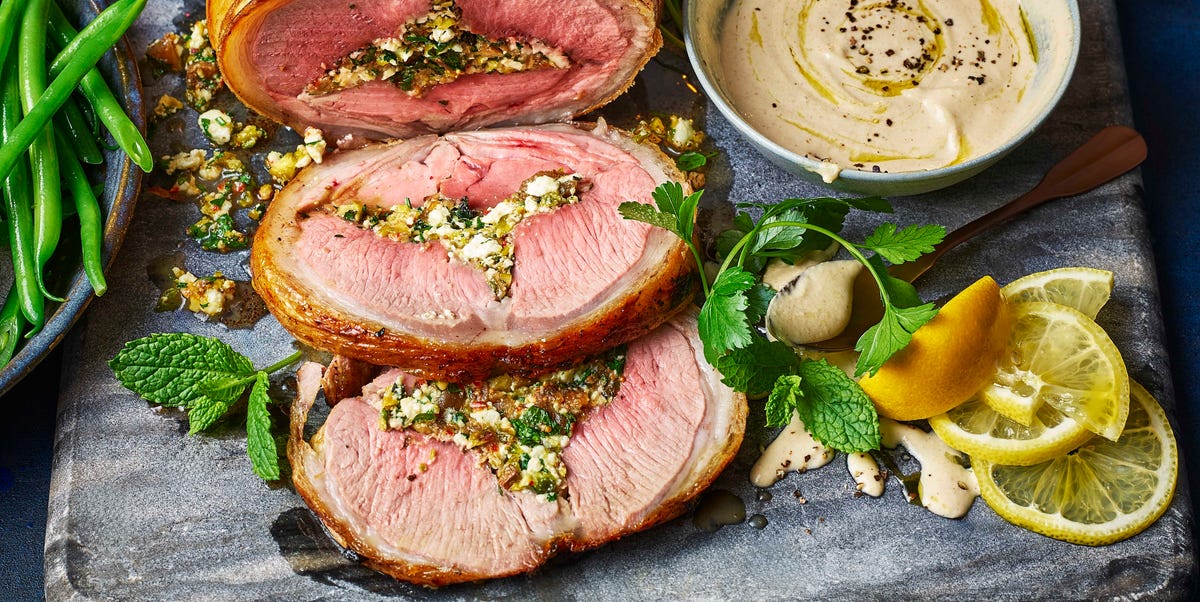
Remove the twine and slice the lamb into thick rounds. The filling should appear in beautiful swirls through the center.
How to Make the Creamy Tahini Sauce
In a medium bowl, whisk together the tahini, lemon juice, grated garlic, salt, and cumin. At first, the mixture may seize and look thick or grainy. Do not panic. Tahini has a dramatic personality, but it calms down with water.
Add ice-cold water one tablespoon at a time, whisking constantly, until the sauce becomes smooth, pale, creamy, and pourable. Stir in Greek yogurt if you want a richer texture, or a tiny spoonful of honey if your tahini tastes especially bitter. Taste and adjust with more lemon juice or salt.
The sauce should be bright enough to cut through the lamb and creamy enough to feel luxurious. Spoon it under the lamb, drizzle it over the slices, or serve it in a small bowl so guests can add their own. There will always be someone who wants extra sauce. That person is correct.
Serving Ideas for Stuffed Lamb Saddle
This lamb is rich and flavorful, so choose sides that complement rather than compete. Roasted carrots, crispy potatoes, couscous, herbed rice pilaf, charred broccolini, or a cucumber-tomato salad all work beautifully. For a holiday table, add pomegranate seeds, fresh mint, and lemon wedges for color and brightness.
If you want a full Mediterranean-inspired menu, serve the lamb with warm flatbread, roasted eggplant, a simple chopped salad, and extra tahini sauce. For a more classic American dinner, pair it with mashed potatoes, roasted asparagus, and a crisp green salad. The recipe is flexible enough for Easter, Christmas, a dinner party, or a Sunday meal that accidentally becomes legendary.
Make-Ahead Tips
You can prepare the filling up to two days ahead and refrigerate it in an airtight container. You can also stuff and tie the lamb one day ahead. Keep it covered in the refrigerator, then let it sit at room temperature for about 30 to 45 minutes before cooking so it roasts more evenly.
The tahini sauce can be made up to three days ahead. It will thicken in the refrigerator, so whisk in a splash of cold water before serving. Leftover lamb keeps well for 3 to 4 days in the refrigerator. Slice it thinly for sandwiches, grain bowls, salads, or warm pita wraps with cucumber, herbs, and more tahini sauce.
Common Mistakes to Avoid
Overstuffing the Lamb
More filling may sound like more joy, but overstuffing makes the roast difficult to roll and slice. Keep the layer even and leave a border around the edges.
Skipping the Thermometer
Lamb can move from perfect to overdone faster than expected, especially with a tender cut like saddle. A thermometer is the best way to protect your investment and your dinner-table reputation.
Serving the Sauce Too Thick
Tahini sauce should be creamy and pourable, not paste-like. Add cold water slowly until it reaches a silky drizzle consistency.
Not Resting the Roast
Cutting too soon releases the juices. Give the lamb time to relax. It has been rolled, tied, seared, roasted, and admired. It deserves a break.
Flavor Variations
Once you understand the basic formula, you can adjust the filling to match your pantry or menu. Swap dried apricots for chopped dates, figs, cherries, or prunes. Replace pistachios with walnuts, almonds, or pine nuts. Use goat cheese instead of feta for a creamier, tangier filling. Add a pinch of cinnamon or allspice for a warmer flavor profile.
For a greener stuffing, fold in sautéed spinach or Swiss chard, making sure to squeeze out excess moisture. For extra brininess, add more olives or a spoonful of capers. For a sharper sauce, increase the lemon juice in the tahini and garnish the finished lamb with sumac.
Why Creamy Tahini Sauce Belongs with Lamb
Tahini is made from ground sesame seeds, and its flavor is nutty, slightly bitter, and deeply savory. When whisked with lemon juice, garlic, salt, and cold water, it transforms into a smooth sauce that feels creamy without needing heavy cream. That makes it ideal for lamb, which already has richness of its own.
The tahini sauce also echoes the sesame and nut flavors common in Mediterranean and Middle Eastern cooking. It connects the roasted meat, dried fruit, herbs, and spices into one balanced plate. Instead of a heavy gravy, you get something bright, modern, and versatile. It is rich enough for a holiday meal but fresh enough for spring or summer entertaining.
Experience Notes: Cooking, Serving, and Enjoying This Lamb Recipe
The first thing you notice when making stuffed saddle of lamb is that the process feels more intimidating in your imagination than it does on the cutting board. Once the lamb is butterflied and laid flat, the recipe becomes wonderfully logical: season, spread, roll, tie, sear, roast, rest, slice. It is the kind of dish that gives back more confidence than it takes.
The filling is where the personality lives. When you mix the apricots, raisins, feta, pistachios, olives, herbs, and lemon zest together, it looks colorful and slightly chaotic, like a tiny edible confetti parade. But inside the lamb, those ingredients settle into harmony. The fruit softens, the cheese becomes creamy, the nuts stay pleasantly crunchy, and the herbs perfume the meat from the inside out.
One of the best experiences with this recipe is the moment of slicing. A plain roast can be beautiful, but a stuffed roast has drama. Each slice reveals a spiral of lamb and filling, and people notice. This is not a dish that gets a casual “looks good.” It gets the kind of silence that happens when guests are busy calculating how soon they can ask for seconds without appearing suspiciously enthusiastic.
The tahini sauce is also a small lesson in kitchen patience. At first, it thickens and looks as if something has gone wrong. Then, with steady whisking and cold water, it turns glossy and smooth. That transformation is satisfying every single time. The sauce can be spooned beneath the lamb for a polished look, but at home, I like serving extra on the side. Someone will use it on potatoes. Someone else will drag bread through it. You may find yourself putting it on roasted vegetables the next day, which is exactly the right move.
For entertaining, this recipe has a practical advantage: much of the work can be done ahead. The filling can be prepared in advance, the lamb can be tied before guests arrive, and the sauce can wait in the refrigerator. That means you are not trapped in the kitchen while everyone else is laughing in the dining room. You only need to roast, rest, and slice.
The leftovers are another quiet victory. Thin slices of stuffed lamb tucked into warm pita with cucumber, arugula, pickled onions, and tahini sauce make an excellent next-day lunch. Chopped leftover lamb can also be scattered over couscous or rice with herbs and lemon. The filling keeps every bite interesting, so leftovers never feel like a punishment for cooking too much. They feel like a secret bonus round.
In the end, this saddle of lamb recipe works because it understands balance. Rich meat needs brightness. Sweet fruit needs salt. Creamy sauce needs lemon. Elegant food needs a little fun. This dish delivers all of that in one impressive roast, making it perfect for holidays, dinner parties, or any evening when you want the table to feel special without turning the kitchen into a battlefield.
Conclusion
A stuffed saddle of lamb with a salty and fruity filling served with creamy tahini sauce is the kind of recipe that feels luxurious but remains completely manageable. The tender lamb, sweet dried fruit, salty feta, briny olives, fresh herbs, toasted pistachios, and lemony tahini sauce create a layered, memorable main dish with serious centerpiece appeal. It is elegant enough for a holiday and practical enough for confident home cooking.
The key is balance: do not overstuff, season generously, use a thermometer, rest the roast, and keep the sauce silky. Serve it with roasted vegetables, potatoes, couscous, rice pilaf, or a bright salad, and you have a meal that looks polished, tastes bold, and earns its place at the center of the table.