There are two kinds of desks in this world: the calm, composed workspace that looks like it belongs to a thoughtful architect, and the chaotic “I swear the stapler was here yesterday” disaster zone. Wooden desk accessories live happily in the first category. They bring order, warmth, and a little old-school dignity to the modern office, where cables breed overnight and pens vanish like tiny office goblins.
The phrase “Office: Wooden Desk Accessories at Merchant No. 4” points back to a beautiful design idea: simple, functional wooden objects that help eliminate desktop clutter without making your desk look like a plastic supply closet. Merchant No. 4 was known as a source for refined, design-conscious pieces, and the wooden desk accessories highlighted there were not loud, flashy, or overly complicated. They were quiet tools for better working: a business card case, a paper and pen holder, a cup for pencils, and a small cord-management piece that made tangled wires look slightly less like a crime scene.
Today, the appeal is even stronger. Whether you work from a corporate office, a spare bedroom, a kitchen table, or a “temporary” home office that has somehow become permanent, wooden desk accessories can make your workspace feel calmer, more intentional, and more human. They organize the little things, soften the hard edges of technology, and make your desk look like a place where ideas might actually behave themselves.
Why Wooden Desk Accessories Still Feel Fresh
Wood has a staying power that plastic rarely achieves. A wooden pen cup, tray, or cable wrap does not scream for attention. It simply sits there, doing its job, looking handsome, and aging gracefully. That is the magic. Wood feels natural in a world of glowing screens, aluminum laptops, and notification pings. It brings texture and warmth to an office without requiring a full renovation or a dramatic speech about “reinventing your workflow.”
Wooden desk accessories also work with many office styles. In a minimalist office, they add warmth. In a traditional study, they feel right at home. In a modern tech setup, they create contrast against monitors, keyboards, and metal stands. A walnut tray beside a laptop can make even a Monday morning spreadsheet feel slightly more civilized. Slightly.
The Merchant No. 4 approach was especially appealing because it favored small, well-designed pieces. Instead of turning the desk into a showroom, the accessories supported the work. That is the lesson worth keeping: the best office accessories do not decorate clutter. They prevent it.
The Merchant No. 4 Look: Simple, Crafted, and Useful
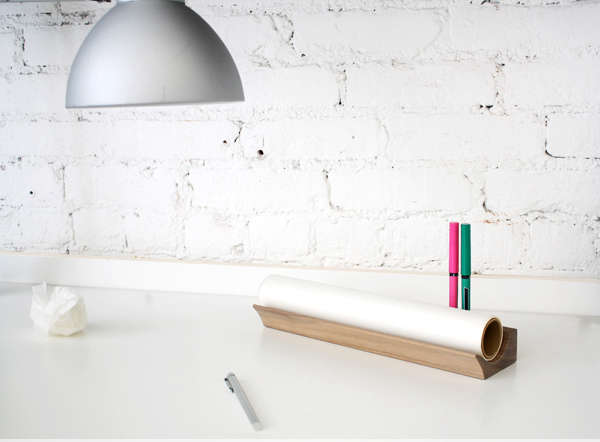
The original Merchant No. 4 wooden desk accessories featured a refined mix of function and craft. They included pieces such as a handcrafted wooden business card case by Masakage Tanno, a wire-management tool called Wrap Wrap designed by Naoto Yoshida, a Large Kami Cup made from castor aralia wood, and a paper and pen holder called Place for Trace. Each item had a clear purpose, but none felt purely utilitarian. They were office tools with personalitylike coworkers who actually refill the coffee pot.
Wooden Business Card Case
A wooden business card case may seem old-fashioned in the age of LinkedIn, QR codes, and “let me AirDrop you my details.” But it still has charm. A wood case protects cards, gives a polished impression, and adds a tactile ritual to networking. Pulling a card from a warm oak or walnut case feels far more deliberate than fishing one out from beneath a receipt and a mint wrapper.
The best wooden card cases are slim, smooth, and secure. Details such as magnetic closures, contrasting wood hinges, or fine grain patterns turn a small office object into something memorable. It says, quietly, “I pay attention to details.” In business, that is not a bad sentence to have sitting in your pocket.
Wooden Cord and Cable Management
Cable management is where beauty meets survival. Chargers, mouse cords, laptop cables, phone cables, and headphone wires can turn a desk into an electronic spaghetti bowl. A wooden cable wrap or cord holder helps keep wires contained without introducing another ugly plastic gadget to the scene.
A small carved wood cord manager can hold a mouse cable, earbuds, or charging cord neatly in place. It is especially useful for people who want a clean desktop but still need several devices within reach. The key is to place cable accessories where cords naturally travel, not where they look cute for five minutes before being ignored forever.
Wooden Pen Cups and Pencil Holders
The humble pen cup deserves respect. It is the tiny tower that prevents your pens, pencils, scissors, and markers from forming a horizontal pile of shame. A wooden cup feels more substantial than plastic and more natural than metal. It can hold writing tools, paintbrushes, rulers, letter openers, or that one fancy pen nobody is allowed to borrow.
A good wooden pen holder should be stable, smooth inside, and sized for real daily use. If it is too small, it becomes decorative. If it is too large, it becomes a junk drawer with no drawer. The sweet spot is a cup that holds your essential tools and quietly discourages you from keeping seventeen dried-out pens “just in case.”
Paper and Pen Holder
A paper and pen holder is ideal for people who still believe in writing things down, which is to say people who enjoy remembering what they meant to do. A wooden tray or holder can keep index cards, sticky notes, envelopes, sketches, and daily task lists in one place. It is especially helpful for designers, writers, architects, teachers, and anyone whose ideas arrive faster than their note-taking app can open.
The best versions keep paper visible but contained. They do not bury notes. They stage them. That difference matters. A beautiful wooden paper holder turns loose sheets into a working system rather than a slow-motion avalanche.
How Wooden Desk Accessories Improve Office Organization
Desk organization is not about making your workspace look empty. It is about making your tools easier to find and your brain less busy. A cluttered desk competes for attention. Every stray paper, loose cable, and wandering pen becomes a tiny visual interruption. Wooden accessories help by creating assigned homes for small items.
Start with the objects you touch every day: pen, notebook, phone, charger, keyboard, mouse, business cards, headphones, and current paperwork. Then choose wooden desk accessories that match those needs. A tray for daily carry items. A pen cup for writing tools. A cable wrap for chargers. A desk shelf or riser for monitor height and hidden storage. A small box for clips, stamps, or memory cards. The goal is not to own more accessories. The goal is to stop hunting for things like a detective in your own office.
A simple rule works well: if an item is used daily, keep it within arm’s reach. If it is used weekly, place it in a drawer or nearby shelf. If it is used twice a year and makes you feel guilty, it probably does not belong on your desk. This rule alone can rescue a surprising amount of surface space.
Ergonomics: Pretty Is Nice, Comfortable Is Better
Wooden desk accessories are not only about aesthetics. They can support a healthier workspace when used wisely. A wooden monitor stand or desk shelf can lift a screen closer to eye level. A tray can keep the keyboard area clear. A cable organizer can prevent wires from pulling devices into awkward positions. Small changes can make the workday feel less like a wrestling match with furniture.
For a comfortable office setup, the top of the monitor should generally sit at or slightly below eye level, the shoulders should stay relaxed, the elbows should remain close to the body, and the wrists should align with the forearms while typing. Under the desk, there should be enough room for legs and feet. Translation: do not store a printer, three storage boxes, and your hopes for inbox zero under there.
A wooden desk shelf can be especially useful because it creates vertical space. It lifts screens, allows keyboards or notebooks to tuck underneath, and gives small accessories a defined zone. This is the difference between “minimalist workspace” and “I shoved everything into a pile behind the monitor.” One is design. The other is denial.
Choosing the Right Wood: Walnut, Oak, Maple, and Beyond
Wood type affects both appearance and mood. Walnut desk accessories often feel rich, dark, and executive. They pair beautifully with black monitors, leather desk pads, brass lamps, and deep green plants. Walnut says, “I have opinions about coffee and probably own a nice notebook.”
Oak desk accessories feel lighter, natural, and versatile. Oak works well in Scandinavian, modern farmhouse, Japandi, and casual home office styles. It adds warmth without making the desk feel heavy. If walnut is a tailored jacket, oak is a perfectly broken-in chambray shirt.
Maple desk accessories are pale, clean, and bright. They are excellent for small offices or workspaces that need visual lightness. Maple pairs well with white desks, soft gray walls, and minimalist setups. It is cheerful without trying too hard, which is more than we can say for most motivational wall art.
Other woods, such as ash, beech, bamboo, cherry, and Japanese oak, can also be excellent choices. The best option depends on your desk surface, lighting, and personal taste. Mixing woods is acceptable, but try to repeat tones intentionally. A walnut tray, oak pencil cup, and cherry monitor stand can work if the room has a collected, layered feel. If everything clashes, call it “eclectic” and then remove one piece.
Sustainability and Indoor Air Quality Matter
One reason many people prefer wooden office accessories is the connection to natural materials. Still, not all wood products are equal. Solid wood, responsibly sourced wood, low-emission finishes, and durable construction are worth looking for. Accessories that last for years are usually better than cheap pieces that crack, warp, or head to the landfill after one dramatic coffee spill.
When shopping for wooden desk accessories, consider products made from certified wood, reclaimed wood, or responsibly managed sources. Certifications such as FSC can help buyers identify wood connected to responsible forestry practices. For engineered wood products, it is also wise to pay attention to finishes and adhesives, especially in enclosed home offices where indoor air quality matters.
That does not mean every desk tray needs a doctoral dissertation in material science. It simply means thoughtful buying is part of good design. A beautiful office accessory should look good, work well, and not make you wonder what mysterious chemical smell is joining your morning coffee.
How to Style Wooden Desk Accessories Without Overdoing It
The secret to styling wooden desk accessories is restraint. Wood looks best when it has room to breathe. Too many wooden items can make a desk feel like a tiny lumberyard with Wi-Fi. Choose a few pieces that solve real problems and repeat a consistent tone or design language.
Create Zones
Divide your desk into zones: writing, tech, storage, and display. A wooden pen cup belongs in the writing zone. Cable management belongs in the tech zone. A tray for keys, wallet, or glasses belongs near the edge. A small plant or object can live in the display zone, but only if it earns its keep by making you happy. If it collects dust and blocks your mouse, it is not decor. It is an obstacle.
Use Trays to Control Visual Clutter
A wooden tray is one of the most useful office accessories because it creates a boundary. Loose items look messy; loose items in a tray look curated. This is one of design’s greatest loopholes. Use a tray for daily essentials such as earbuds, sticky notes, lip balm, reading glasses, and a small notebook. Suddenly, your desk has structure instead of “things that landed here.”
Balance Wood With Other Materials
Wood pairs well with leather, wool felt, linen, ceramic, glass, and metal. A wooden pen cup beside a leather desk pad feels classic. A maple tray beside a white keyboard feels clean and modern. A walnut cable organizer near a black monitor stand feels sleek. Mixing textures keeps the desk from looking flat.
Care Tips for Wooden Desk Accessories
Wooden desk accessories are generally easy to maintain, but they do appreciate basic care. Dust them regularly with a soft cloth. Wipe spills quickly. Avoid soaking wood with water or harsh cleaners. Keep pieces away from direct sunlight when possible, because strong light can fade or darken wood unevenly over time. Extreme heat and humidity can also cause wood to expand, contract, or warp.
If a wooden piece has an oil or wax finish, it may need occasional conditioning. If it has a sealed finish, a slightly damp cloth may be enough. Always dry the surface after cleaning. And please, do not use a wooden paper tray as a coaster unless you enjoy discovering modern art in the form of water rings.
Best Wooden Desk Accessories for Different Work Styles
For the Minimalist
Choose a single wooden tray, a cable organizer, and a slim pen cup. Keep the surface mostly clear. The minimalist desk should feel calm, not empty in a suspicious way. A light wood such as maple or oak works beautifully here.
For the Creative Professional
Add a paper and pen holder, a larger pencil cup, and a shallow tray for samples, swatches, or sketching tools. Creative work often needs visible materials, so the goal is organized access rather than hiding everything away.
For the Executive Desk
Walnut accessories are hard to beat. A wooden business card case, letter tray, desk pad, and pen holder can create a polished look without feeling sterile. Add a lamp with warm light and you are dangerously close to looking like you have your calendar under control.
For the Tech-Heavy Setup
Prioritize a wooden monitor stand, laptop dock, cable wrap, and charging tray. The challenge is keeping devices accessible while hiding the cord chaos. Use wood to soften the setup and create visual order around electronics.
Shopping Tips: What to Look For Before Buying
Before buying wooden office accessories, check the size carefully. A pen cup that looks charming online may be too short for markers. A tray may not fit your notebook. A monitor stand may be too narrow for your keyboard. Measure first, celebrate later.
Look for smooth edges, stable bases, quality joinery, and finishes that feel pleasant to the touch. For items that hold devices, check weight capacity and dimensions. For cable organizers, make sure the slots or wraps fit the cords you actually use. There is no glory in buying a beautiful cable holder that cannot hold your cable. That is how accessories become decorative guilt.
Also consider whether you want matching pieces or a collected look. A matching wooden desk set creates harmony. A collected mix feels more personal. Both can work. The only real mistake is buying accessories before deciding what problem they solve.
Experience: Living With Wooden Desk Accessories in a Real Office
After using wooden desk accessories in a daily workspace, the biggest surprise is not how nice they look. It is how quickly they train your habits. A wooden tray near the front corner of the desk becomes the place for keys, wallet, earbuds, and reading glasses. A pen cup becomes the final destination for pens instead of a vague suggestion. A small cable wrap turns phone charging from “where did the cord go?” into “oh, there it is, behaving like a civilized object.”
The tactile quality matters too. Plastic organizers can be useful, but they often feel temporary. Wood feels permanent. Picking up a walnut card case or sliding a notebook into an oak tray has a small sense of ritual. It slows the hand down in a good way. In a workday filled with rushed emails and blinking tabs, that tiny pause can feel surprisingly luxurious.
Wooden desk accessories also change how visitors perceive a workspace. A client may not comment on a cable wrap or pen cup, but they notice the overall impression: tidy, warm, intentional. The desk feels prepared. That matters in small offices, studios, and home workspaces where the line between personal and professional can blur. A few crafted accessories can signal that this is a real working zone, not just the place where mail, snacks, and mysterious screws gather.
There are practical lessons as well. First, less is better. One tray that catches daily items is more useful than five tiny boxes with unclear missions. Second, scale matters. Large desks can handle a desk shelf, letter tray, and pen holder. Small desks need slimmer pieces, or the accessories become the clutter they were hired to defeat. Third, wood color should be chosen with the desk surface in mind. A walnut organizer on a walnut desk looks rich and seamless, while maple on a dark desk creates contrast and makes small tools easier to see.
Maintenance becomes part of the rhythm. A quick weekly dusting keeps the pieces handsome. Wiping spills immediately becomes automatic. Over time, tiny signs of use may appear: a soft shine where fingers touch the edge of a tray, a faint mark near the pen cup, a slightly deeper tone where the wood has aged. These are not flaws. They are evidence that the objects are doing their job. Unlike cheap plastic organizers that look worse with wear, wood often gains character.
The most satisfying experience is the end-of-day reset. With wooden accessories, clearing the desk takes less than a minute. Pens return to the cup. Notes slide into the holder. Cables wrap neatly. Small items land in the tray. The desk stops looking abandoned and starts looking ready. That simple reset makes the next morning easier. Future you will be grateful, even if future you still refuses to answer emails before coffee.
Conclusion
Office: Wooden Desk Accessories at Merchant No. 4 is more than a nostalgic design reference. It is a reminder that small, well-made objects can improve how a workspace looks, feels, and functions. Wooden desk accessories bring order to clutter, warmth to technology, and personality to the everyday tools of work. Whether you choose a walnut card case, an oak cable wrap, a maple pen cup, or a handcrafted paper holder, the best pieces earn their place by being useful first and beautiful second.
A good desk does not need to be perfect. It needs to support focus, comfort, and the small rituals that make work feel manageable. Wooden accessories help by giving every object a home and every workday a calmer starting point. And if they also make your desk look like it belongs to a thoughtful, organized adult? Well, let us accept the compliment and not examine the junk drawer too closely.
Note: This article is written for web publication in standard American English and synthesizes real design, organization, ergonomics, wood-care, and sustainable-material information without source links in the article body.