When the Road Ends Before It Starts
I had snacks packed, playlists prepared, and the kind of roadtrip optimism that makes you believe gas station coffee is part of the adventure. Then the trip was canceled. Just like that, the open highway turned into a view of my backyard, and my suitcase looked at me with the quiet disappointment of a dog who heard the word “walk” but never saw the leash.
At first, I sulked like a professional. I stared at my travel plans, checked the weather, rearranged a few items on the table for no reason, and considered calling it a lost weekend. But then I noticed something: the garden was glowing. Not “National Park at sunrise” glowing, perhaps, but close enough. A line of ants marched like tiny commuters. A mossy patch looked suspiciously like a mountain valley. A cracked flowerpot had the dramatic presence of an ancient ruin. Suddenly, my canceled roadtrip had not disappeared. It had shrunk.
So I grabbed a camera, a few miniature figures, two toy cars, some pebbles, and a heroic amount of curiosity. Instead of chasing landscapes miles away, I built a tiny roadtrip in my garden. The result was a miniature photography session that turned one canceled plan into a surprisingly cinematic backyard adventure.
What Is Miniature Garden Photography?
Miniature garden photography is the art of using small objects, toys, scale models, natural textures, and clever camera angles to create scenes that feel much larger than they are. It borrows from macro photography, toy photography, still-life photography, and old-fashioned imaginationthe kind you had before your phone started giving you notifications every nine seconds.
In a garden, the setup is almost unfairly rich. Soil becomes desert. Moss becomes forest. A puddle becomes a lake. Flower petals become tropical canopies. A twig can serve as a fallen tree, a bridge, a campsite bench, or, if you are feeling dramatic, the final obstacle in a tiny hero’s journey.
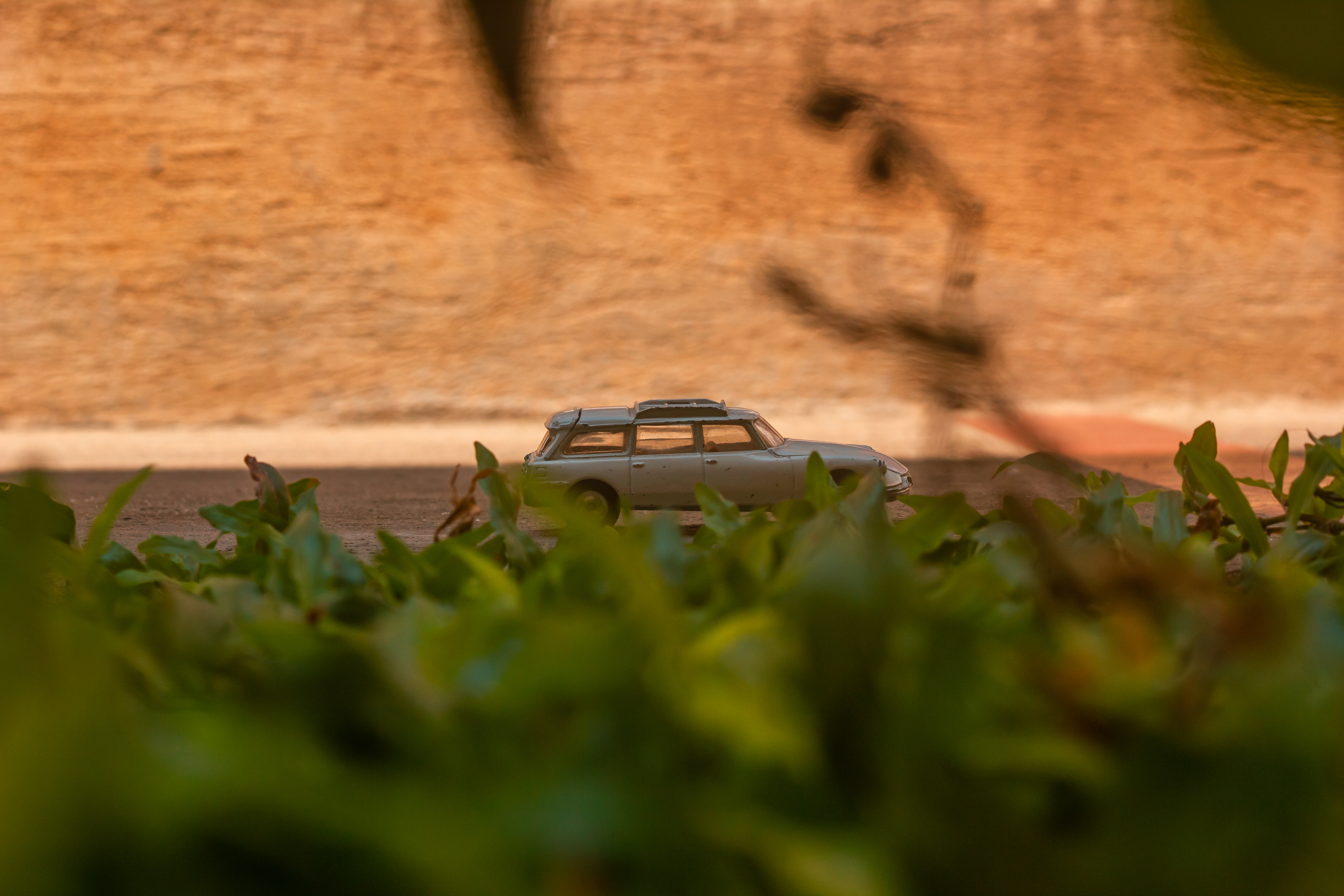
The fun comes from scale. A small toy car placed low against a line of grass can look like it is driving through a wild prairie. A plastic traveler standing beside a mushroom can appear to be exploring a strange new planet. With the right angle, even a garden hose can become a suspiciously modern highway barrier.
Why a Canceled Roadtrip Became the Perfect Creative Prompt
A roadtrip is about movement, discovery, and little surprises along the way. Miniature photography uses the same ingredients, only in a smaller space. Instead of driving three hours to find a scenic overlook, I walked three steps to a patch of clover. Instead of waiting for golden-hour light over a canyon, I waited for sunlight to slide across a terra-cotta pot. The scale changed, but the creative process remained surprisingly similar.
The Tiny Travel Gear I Used
You do not need a studio, a luxury camera, or a suitcase full of gear to try a miniature shoot in your garden. In fact, too much equipment can make the process feel stiff. The point is to play, experiment, and let the backyard do half the production design.
My Simple Miniature Photography Kit
- A camera or smartphone with a close-focus or macro mode
- Miniature people, toy cars, model animals, or small figurines
- Small props such as bottle caps, pebbles, leaves, twigs, and paper signs
- A piece of white paper or cardboard to bounce light
- A small towel or kneeling pad, because creativity is less romantic when your knees are in wet dirt
- Patience, which is technically free but often unavailable before coffee
For my shoot, the stars were a small red toy car, two tiny hikers, a plastic dog, and a miniature suitcase that looked more prepared for the roadtrip than I was. I also used pebbles to build a “mountain pass,” a shallow saucer of water for a lake, and a strip of dark paper as a road. The garden supplied the background: grass, soil, fallen petals, moss, and one very judgmental bee.
Building a Roadtrip Scene Without Leaving Home
The first step was choosing locations in the garden that already looked like landscapes. This is where miniature photography becomes a wonderful exercise in seeing. You stop looking at the garden as “plants and dirt” and start seeing cliffs, forests, trails, fields, and roadside attractions.
Scene One: The Moss Mountain Highway
A patch of moss near the edge of the patio became my first location. From standing height, it looked like a green smudge. From ground level, it looked like a lush mountain pass. I placed the toy car at the bottom, tilted the camera low, and used the moss as a background. Suddenly, the car seemed to be climbing through a remote alpine road, minus the rental insurance paperwork.
Scene Two: The Puddle Lake Stop
A plant saucer filled with rainwater became a tiny lake. I set one miniature traveler near the edge and placed a pebble beside them like a scenic overlook. The reflection in the water added depth, while the blurred garden behind it made the scene feel bigger. It was peaceful, cinematic, and only slightly threatened by a mosquito who apparently wanted producer credit.
Scene Three: The Flower-Petal Desert
Fallen orange petals became a strange desert landscape. I placed the toy car between them and shot from a very low angle. The petals looked like rock formations, and the shallow focus helped hide the normal-sized world around them. This is the magic of miniature photography: it does not require perfect realism. It only needs enough detail to invite the viewer to believe.
Lighting: The Garden’s Free Special Effects Department
Natural light can make or break a miniature shoot. Bright noon sunlight often creates harsh shadows that make small objects look obviously fake. Softer lightearly morning, late afternoon, or a lightly cloudy dayusually works better because it wraps around tiny subjects and makes the scene feel more believable.
I shot most of my garden roadtrip in late afternoon. The light came in from the side, creating long shadows behind the miniature travelers. Those shadows helped sell the illusion of a real journey. A tiny figure with a long shadow suddenly looks thoughtful, brave, and possibly late for a hotel check-in.
Using Shadows for Story
Shadows are not just technical details; they are storytelling tools. A shadow stretching across a paper road can suggest sunset. A figure half-lit behind a leaf can feel mysterious. A toy car parked under a flower can look like it found shade during a summer drive. When working small, every shadow becomes a character.
Simple Light Fixes
When the light was too strong, I used a piece of white paper to bounce light back onto the scene. When the background was too bright, I shifted my angle until the subject had better separation. I also learned that moving a toy two inches can completely change the mood. In miniature scale, two inches is basically a county line.
Camera Angles That Make Tiny Worlds Feel Real
The biggest beginner mistake in miniature photography is shooting from adult eye level. From above, a toy looks like a toy. From ground level, it becomes a traveler, explorer, driver, or dramatic lead in a backyard adventure film with a suspiciously low budget.
Go Low, Then Go Lower
I placed the camera almost at soil level for most shots. This made blades of grass tower like trees and pebbles look like boulders. A low camera angle also helped hide the edges of the scene, which is essential. Nothing ruins a tiny wilderness faster than a visible patio chair in the background looking like a modern skyscraper.
Use Forced Perspective
Forced perspective is a classic trick: place small objects close to the camera and larger background elements farther away so the scene feels deeper and more dramatic. In my garden, a toy car close to the lens and a row of plants behind it created the feeling of a long road. The real distance was probably less than a foot, but on camera it felt like the car had places to be.
Choose What to Hide
Miniature photography is not just about what you show. It is about what you hide. I avoided garden labels, fence lines, large leaves with obvious scale, and anything that would reveal the trick too quickly. The viewer should think, “Wait, is that real?” before thinking, “Ah, yes, someone has been lying charmingly with toys again.”
Composition: Turning a Backyard Into a Travel Story
A miniature shoot works best when it has a story. The story does not need to be complicated. In my case, it was simple: a tiny roadtrip begins, meets obstacles, finds beautiful stops, and ends with the travelers watching the sunset from a mossy hill.
Start With an Establishing Shot
I began with a wider scene showing the toy car on a small paper road between patches of grass. This established the “trip.” It told viewers where they were and what kind of world they had entered.
Add Medium Shots for Action
Next, I moved closer. One figure stood beside the car with a map. Another seemed to check the “view,” which was actually a basil plant. These medium shots gave the story personality. The figures were no longer props; they were travelers making decisions, probably arguing about who forgot the charger.
Finish With Close-Ups
Finally, I photographed small details: a suitcase near a pebble, tire tracks in loose soil, a reflection in water, and a tiny traveler sitting under a leaf. Close-ups made the imaginary roadtrip feel lived-in. Good miniature photography often depends on these details because they invite the viewer to slow down and look again.
Editing the Miniature Roadtrip Photos
Editing should support the illusion, not bury it under filters until the garden looks like it was attacked by a rainbow machine. I kept the edits simple: slight contrast, warmer tones, gentle cropping, and a little cleanup where stray grass or dust distracted from the scene.
I also used cropping to strengthen the scale. If a corner of the frame revealed the real size of the setup, I cut it out. If the background felt too busy, I darkened it slightly. If the toy looked too shiny, I reduced highlights. The goal was not to make the image perfect. The goal was to make the tiny world feel believable enough to enjoy.
Don’t Remove All the Imperfections
Some imperfections make the scene better. A bit of dirt on the toy car made it look like it had actually traveled. A bent blade of grass created a sense of motion. A tiny water droplet on a leaf looked like morning mist. Miniature photography rewards happy accidents, especially the ones that look expensive but were caused by weather and neglect.
Why This Creative Detour Felt Better Than Sulking
The canceled roadtrip still disappointed me. I will not pretend a toy car in a garden fully replaces the joy of windows down, music up, and a real horizon ahead. But the miniature shoot gave me something the original trip might not have: a reason to look closely at what was already nearby.
That is the hidden gift of small-scale creativity. It changes your attention. You begin to notice textures, light, weather, color, and tiny dramas happening underfoot. A garden that once felt ordinary becomes full of possible scenes. A canceled plan becomes a creative assignment. A backyard becomes a film set. Your neighbors may wonder why you are lying face-down near a flowerpot, but artists have suffered worse.
More importantly, the shoot reminded me that adventure is not always measured in miles. Sometimes it is measured in inches, angles, patience, and whether you can convince a plastic dog to look heroic beside a mushroom.
How to Try Your Own Miniature Garden Shoot
If your plans fall apartor if you simply want a fun photography projecttry building a miniature story outside. Start small. Choose one toy, one location, and one simple idea. Maybe it is a camper parked under a fern. Maybe it is a tiny hiker crossing a twig bridge. Maybe it is a miniature family having a picnic beside a “lake” made from a jar lid.
Step-by-Step Miniature Shoot Plan
- Pick a theme: Roadtrip, camping, jungle expedition, beach day, mountain hike, or roadside diner.
- Scout your garden: Look for moss, stones, puddles, flowers, bark, and interesting textures.
- Build a tiny scene: Use natural materials and simple props to suggest a bigger world.
- Shoot low: Bring the camera down to the subject’s level for a realistic perspective.
- Control the background: Hide anything that breaks the illusion.
- Use soft light: Try early morning, late afternoon, or shade.
- Edit lightly: Crop, adjust contrast, and remove distractions without overprocessing.
The best part is that no two shoots will look the same. Your garden has its own geography. Your props have their own personality. Your mistakes will become part of the story. And if the wind knocks over your tiny traveler, congratulations: you have discovered weather realism.
Extra Experience: What I Learned From Shooting a Mini Roadtrip in My Garden
The first lesson I learned was that miniature photography slows you down in the best possible way. A real roadtrip has speed built into it. You pack, drive, stop, snack, photograph, repeat. A miniature roadtrip is different. You might spend twenty minutes deciding whether a pebble looks more like a boulder or a potato. You might move a toy car half an inch and suddenly realize the whole composition works better. The pace is ridiculous, but it is also calming.
I also learned that gardens are messier than they look, and that mess is useful. At first, I wanted to clean every scene. I removed leaves, straightened grass, brushed dirt off the car, and tried to make everything neat. The photos looked boring. Then I let the garden stay a little wild. A fallen petal became foreground color. Loose soil became a rugged trail. A crooked twig became a roadside signpost. The more I accepted the garden’s natural chaos, the more believable the miniature world became.
Another surprise was how emotional tiny scenes can feel. A plastic figure standing alone beside a puddle should not feel poetic. It should feel like something from the bottom of a toy bin. But with low light, shallow focus, and the right framing, that little figure looked like someone pausing at the end of a long day. It reminded me that photography is not only about subject matter. It is about mood, timing, and the viewer’s willingness to enter the story.
There were plenty of failures, too. One scene looked like a dramatic mountain road until I noticed a giant human footprint in the background. Another shot was almost perfect, except the toy car reflected my face in the windshield, creating the disturbing impression of a giant garden ghost. I also spent far too long trying to pose a miniature suitcase upright in a breeze. The suitcase won. I respect it.
The best moment came near the end. The sun dropped lower, and warm light hit the moss patch where I had placed the two tiny travelers. The toy car sat behind them. The “road” curved out of frame. For a second, the scene looked exactly like the feeling I had wanted from the canceled trip: quiet, open, a little adventurous, and full of possibility. It was not the roadtrip I planned, but it became the story I needed.
That experience changed how I think about creative setbacks. A canceled plan does not always mean the day is wasted. Sometimes it means the idea needs a smaller stage. Sometimes the adventure is not waiting beyond the driveway; it is hiding under a leaf, beside a stone, in a puddle reflecting the sky. And sometimes, the best thing you can do is stop arguing with the calendar, kneel in the grass, and let a toy car take the trip for you.
Conclusion
My roadtrip was canceled, but the story did not end there. By turning my garden into a miniature landscape, I found a new way to travel without leaving home. Miniature photography gave me the freedom to build mountains from moss, lakes from puddles, highways from paper, and drama from sunlight. It turned disappointment into a creative project and reminded me that imagination does not need a full tank of gas.
If your plans change, your creativity does not have to park itself in the garage. Grab a camera, gather a few tiny props, and look closely at the world around you. The next great adventure may be waiting in your garden, just behind the flowerpot.