Note: This educational article is copy-ready for web publishing and intentionally avoids build instructions, sensitive design recipes, or source-link clutter.
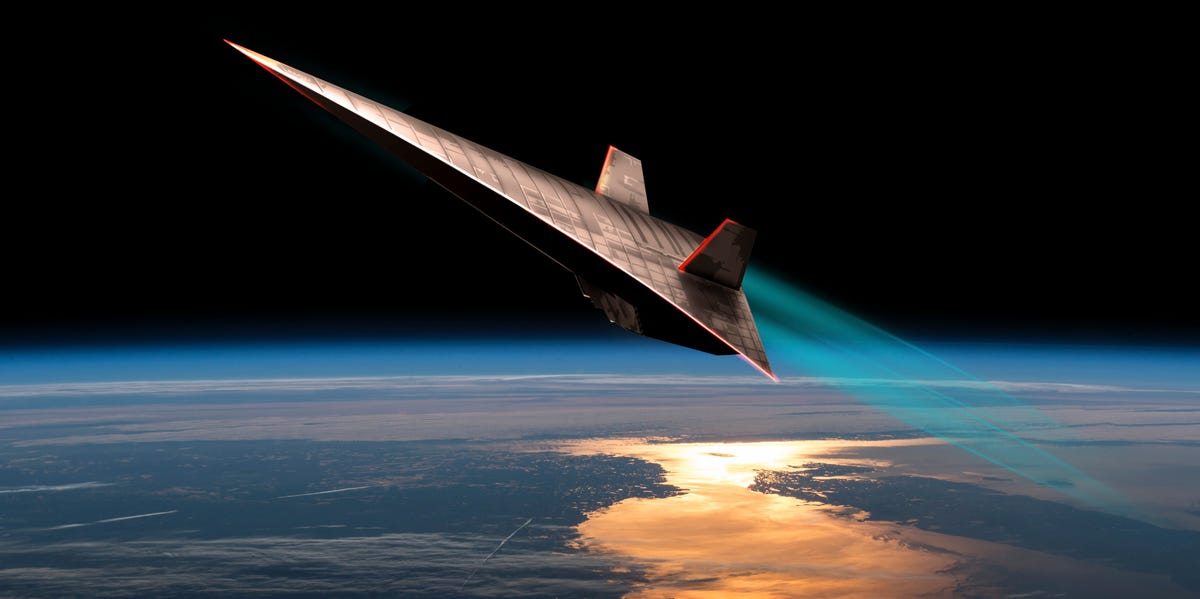
Imagine trying to light a campfire inside a tornado while riding a bullet train through a lightning storm. That is not exactly how a scramjet works, but it is close enough to explain why aerospace engineers deserve both lab coats and emotional support snacks. A scramjet, short for supersonic combustion ramjet, is an air-breathing jet engine designed for hypersonic flight, where vehicles travel faster than Mach 5, or more than five times the speed of sound.
The fascinating part is not only the speed. It is the way a scramjet handles air and fuel. Instead of using spinning compressor blades like a regular jet engine, a scramjet uses the vehicle’s own extreme forward motion to squeeze incoming air. Shockwaves form inside and around the engine, compressing and heating the flow. Then fuel is injected into air that is still moving at supersonic speed. The fuel and air must mix, ignite, and release energy in milliseconds. No gentle stirring. No cozy combustion chamber. Just physics doing parkour.
This is why the phrase mixing jet fuel using shockwaves sounds like science fiction but belongs very much to real hypersonic research. Shockwaves can help compress air, create turbulence, strengthen vortices, and improve fuel-air interaction. But they can also cause pressure losses, heat loads, and engine instability. In a scramjet, shockwaves are both useful tools and unruly houseguests.
What Is a Scramjet?
A scramjet is a type of jet engine built to operate at hypersonic speeds. It belongs to the same broad family as the ramjet, but with one major difference: in a ramjet, the air entering the combustor is slowed to subsonic speed before fuel burns; in a scramjet, the air remains supersonic while combustion happens.
That one difference changes everything. At very high speeds, slowing incoming air too much creates intense temperature and pressure problems. A regular ramjet becomes less efficient as flight speed rises because converting all that kinetic energy into heat can make the airflow too hot and difficult to manage. A scramjet avoids fully slowing the air, allowing combustion to occur while the flow is still screaming through the engine faster than sound.
In simple terms, a scramjet has four major sections:
- Inlet: Captures and compresses incoming air using the vehicle’s forward speed and shockwaves.
- Isolator: Helps manage pressure changes between the inlet and combustor.
- Combustor: Injects fuel into the high-speed air and burns the mixture.
- Nozzle: Expands hot gases to produce thrust.
Unlike a turbojet or turbofan, a scramjet does not rely on rotating compressor blades to squeeze air. That simplicity is one of its superpowers. Fewer moving parts can mean less mechanical complexity. Of course, nature immediately balances that gift by making the airflow unbelievably hot, fast, and difficult to control. Aerospace engineering is generous like that.
How Scramjets Differ From Regular Jet Engines
Turbojets and Turbofans
Most modern aircraft use turbofan engines. These engines pull in air with fan blades, compress it with multiple rotating stages, mix it with fuel, burn it, and push hot gases out the back. They are excellent for commercial aviation and military aircraft, but they are not designed for sustained hypersonic flight.
At hypersonic speed, the air entering the engine is already packed with enormous kinetic energy. A conventional compressor would face extreme thermal and mechanical stress. The faster the vehicle goes, the harder it becomes to keep turbine machinery happy. And unhappy turbine machinery is expensive confetti.
Ramjets
A ramjet removes the compressor and uses forward motion to compress air. It works best after a vehicle is already traveling fast, often in the supersonic range. But in a ramjet, combustion occurs after the air is slowed to subsonic speed. This works well up to a point, but becomes challenging at higher Mach numbers because slowing hypersonic air creates huge heat loads.
Scramjets
A scramjet keeps the internal flow supersonic. This reduces some of the losses and heating associated with slowing air too much. It also creates one of the most difficult combustion problems in aerospace: fuel must mix and burn before it exits the engine. The residence time can be so short that the fuel-air mixture has only a few thousandths of a second to do its job.
That is why scramjet combustion is often compared to keeping a flame lit in a hurricane. Except the hurricane is inside a metal duct moving at hypersonic speed. And the duct is trying not to melt.
Why Shockwaves Matter in Scramjets
Shockwaves are sudden changes in pressure, temperature, and density that occur when air is forced to adjust at supersonic speed. In everyday life, you hear shockwaves as a sonic boom when an aircraft exceeds the speed of sound. In scramjet engines, shockwaves are not just sound effects. They are part of the engine’s invisible plumbing.
The inlet of a scramjet uses carefully shaped surfaces to create oblique shockwaves. These shockwaves compress the incoming air without fully stopping it. Compression raises air pressure and temperature, which helps prepare it for combustion. The goal is to deliver air to the combustor in a condition where fuel can mix and burn efficiently while still maintaining supersonic flow.
Shockwaves can also influence fuel mixing. When fuel is injected into a supersonic airstream, it does not politely blend like cream swirling into coffee. The airflow is too fast, too compressed, and too resistant to leisurely mixing. Shockwaves can create regions of pressure change, vortices, shear layers, and recirculation zones that help fuel penetrate the air and spread more effectively.
However, shockwaves are not magic sprinkles. Poorly managed shock interactions can cause drag, pressure loss, uneven heating, flame instability, or an engine condition called unstart, where the inlet flow breaks down and the engine loses proper operation. In scramjet design, the question is not simply “Can we create shockwaves?” The question is “Can we choreograph shockwaves without letting them start a mosh pit?”
Mixing Jet Fuel Using Shockwaves: The Core Idea
Fuel-air mixing is one of the central challenges of scramjet propulsion. In a normal engine, designers have more time and more controlled flow conditions. In a scramjet, everything happens at extreme speed. The injected fuel must spread into the air, form a combustible mixture, ignite, and release heat without choking the flow or blowing the flame out.
Shockwave-assisted mixing uses pressure waves and flow structures to increase interaction between fuel and air. Researchers study ways to use ramps, struts, cavities, lobed injectors, and other flow-shaping features to create useful shock patterns and vortices. These features can help fuel jets penetrate the airstream, break into smaller structures, and mix more rapidly.
Hydrogen has often been used in scramjet research because it ignites quickly and has high energy per unit mass. NASA’s X-43A, for example, used hydrogen fuel during its record-setting test flights. Hydrocarbon fuels, such as JP-7, are also important because they are more practical for many real-world systems. The U.S. Air Force X-51A WaveRider demonstrated hydrocarbon-fueled scramjet operation, using JP-7 fuel related to the famous SR-71 Blackbird era.
Hydrocarbon fuels bring advantages, especially storage and logistics, but they are harder to burn quickly than hydrogen. That makes mixing and ignition even more important. In some designs, fuel can also be routed through hot engine walls before combustion. This helps cool the structure while heating the fuel, turning the fuel system into both a thermal management tool and an energy source. In hypersonics, even the fuel has a second job. Nobody gets a quiet desk position.
Real Scramjet Examples: X-43A and X-51A
NASA X-43A Hyper-X
The NASA X-43A is one of the most famous scramjet test vehicles in history. It was a small, uncrewed experimental aircraft developed to prove that an air-breathing scramjet could operate at hypersonic speed. In 2004, the X-43A achieved a record-setting flight near Mach 9.6, making it one of the most remarkable demonstrations of scramjet-powered flight ever conducted.
The X-43A was not a passenger plane, a production vehicle, or a sleek airport commuter. It was a research machine, launched with the help of a booster system and designed to collect precious data during a short powered flight. The scramjet burned for only seconds, but those seconds were priceless. At hypersonic speeds, a few seconds of clean data can represent years of design work, wind tunnel testing, simulation, and engineering patience.
Boeing X-51A WaveRider
The X-51A WaveRider took scramjet research in a practical hydrocarbon-fueled direction. Developed through a collaboration involving the U.S. Air Force Research Laboratory, DARPA, Boeing, and Pratt & Whitney Rocketdyne, the X-51A was designed to ride on its own shockwave and demonstrate sustained hypersonic cruise with a scramjet engine.
In its successful 2013 flight, the X-51A reached about Mach 5.1 and flew for more than three minutes under scramjet power, with a total flight time of more than six minutes. That may not sound long compared with a cross-country airline flight, but for scramjet researchers, three and a half minutes of powered hypersonic combustion is not a short hop. It is a standing ovation with telemetry.
The X-51A also showed how difficult scramjet testing can be. Earlier flights experienced issues including inlet unstart and control problems. These setbacks were not embarrassing footnotes; they were part of the learning process. Hypersonic flight punishes assumptions, and every test teaches engineers something about shockwaves, heat, fuel behavior, materials, controls, and the fragile art of keeping a supersonic flame alive.
Why Scramjets Need a Boost Before They Work
A scramjet cannot start from a runway like a normal jet engine. It needs high-speed airflow before it can compress air effectively. That means a scramjet-powered vehicle usually requires another system to accelerate it first, such as a rocket booster, aircraft launch platform, or combined-cycle propulsion system.
This is one of the key limitations of scramjets. They are not useful at low speed. They wake up only when the vehicle is already moving very fast. Think of a scramjet as a world-class sprinter who refuses to get out of bed until someone has already carried them halfway down the track.
Future hypersonic systems may use combined-cycle engines that transition between different modes. For example, one propulsion system might operate as a turbine engine at low speed, a ramjet at supersonic speed, and a scramjet at hypersonic speed. Another approach might combine rockets and air-breathing propulsion. The goal is to cover the entire speed range from takeoff to hypersonic cruise without asking one engine type to do everything.
Thermal Challenges: When Air Becomes a Blowtorch
At hypersonic speed, air does not behave like the gentle breeze that ruffles your shirt on a summer day. It becomes a high-energy fluid capable of heating surfaces to extreme temperatures. Leading edges, inlet surfaces, combustor walls, and nozzles all face intense thermal stress.
This heat affects everything. Materials must survive high temperatures. Fuel systems may need to absorb heat. Sensors and electronics require protection. Even small changes in geometry can alter shock patterns and heat loads. A scramjet is not just an engine; it is a flying thermal-management exam with no partial credit.
Researchers use ground test facilities, computational fluid dynamics, wind tunnels, arc-heated flows, and flight tests to understand these conditions. NASA Langley’s scramjet test complex, for instance, has supported decades of experimental research in hypersonic air-breathing propulsion. These facilities help engineers study combustors, inlets, materials, flameholding, and flow interactions before committing to expensive flight tests.
Combustion Stability: Keeping the Flame Where It Belongs
Burning fuel in supersonic air is not just about adding fuel and waiting for thrust. The flame must stabilize inside the combustor. If fuel burns too slowly, it may leave the engine before releasing enough energy. If combustion releases heat too aggressively, pressure can rise and disrupt the inlet flow. If the flame goes out, thrust disappears. If the flame moves upstream, the engine can suffer serious instability.
Engineers use features such as cavities, struts, and recirculation zones to create pockets where hot gases can linger long enough to help ignite incoming mixture. These are not simple “flame holders” in the backyard grill sense. They are carefully studied flow structures designed to balance speed, pressure, heat release, and stability.
Shockwaves play a role here too. They can help create mixing and compression, but they can also disturb combustion if they interact badly with heat release. Scramjet research is therefore a constant negotiation between aerodynamics and chemistry. One side says, “Go faster.” The other says, “Please give me three more milliseconds to burn.”
Why Scramjets Matter
Scramjets matter because they could enable sustained hypersonic flight within the atmosphere. Potential applications include high-speed research aircraft, rapid global transport concepts, reusable launch systems, and defense technologies. Because scramjets breathe atmospheric oxygen, they do not need to carry as much oxidizer as rockets during atmospheric flight. That could improve efficiency for certain missions.
This does not mean scramjet passenger aircraft are about to replace commercial jets next Tuesday. Practical hypersonic transportation faces enormous hurdles: heat, noise, fuel efficiency, emissions, safety, airport operations, cost, and public acceptance. A Mach 5 business trip sounds exciting until someone asks about ticket prices, window heating, sonic booms, and whether the coffee stays in the cup.
Still, scramjets remain one of the most important technologies in hypersonic research. They sit at the intersection of fluid dynamics, combustion chemistry, materials science, controls, and vehicle design. They are difficult because they demand that many scientific disciplines behave perfectly at the same time. That rarely happens in life, and almost never happens at Mach 6 without a fight.
Common Myths About Scramjets
Myth 1: Scramjets Are Just Faster Jet Engines
Scramjets are not simply turbojets with a gym membership. They operate on a different principle. They use ram compression instead of turbine compression and burn fuel in supersonic airflow. Their design is deeply tied to the vehicle’s shape and speed.
Myth 2: Scramjets Work at Any Speed
They do not. Scramjets need high-speed airflow to operate. At low speeds, they cannot generate enough compression. This is why boosters or combined-cycle systems are required.
Myth 3: Shockwaves Are Always Bad
Shockwaves can create drag and losses, but in scramjets they are also essential tools. Properly managed shockwaves compress air and can help fuel mix with the flow. The problem is not shockwaves themselves; it is uncontrolled shockwaves.
Myth 4: Scramjets Are Ready for Everyday Travel
Scramjets have achieved impressive test flights, but everyday commercial use remains a long-term challenge. The technology is real, but turning it into routine transportation requires solving many engineering, economic, and environmental problems.
Experience Notes: Learning Scramjets Without Melting Your Brain
Studying scramjets feels a little like opening a door marked “advanced aerospace” and discovering that every room behind it contains another smaller, hotter, faster room. At first, the idea seems simple: air comes in, fuel goes in, fire happens, thrust comes out. That is the cartoon version, and it is useful for about ten seconds. Then the real questions arrive wearing lab goggles.
The first experience most people have when learning about scramjets is surprise at how little machinery they contain. No big compressor. No turbine spinning at terrifying speed. No rows of blades doing mechanical ballet. The engine can look almost suspiciously simple. But that simplicity is deceptive. A scramjet moves the complexity out of rotating hardware and into the airflow itself. The engine is shaped to make air behave in very specific ways, and the air is not exactly cooperative.
One of the best ways to understand scramjets is to picture the airflow as a crowded highway moving at impossible speed. Fuel is not poured into a calm chamber; it is injected into traffic. The challenge is to make that fuel merge, spread, react, and release energy before everything exits the engine. Shockwaves act like sudden lane changes, compression zones, and turbulence triggers. They can help break up the flow and improve mixing, but if they are too strong or poorly placed, they can create a traffic jam inside the engine. In scramjet language, that traffic jam can become pressure buildup, instability, or unstart.
Another memorable part of learning scramjets is realizing how short the important events are. NASA’s X-43A made history with a powered scramjet burn measured in seconds. The X-51A’s minutes-long flight was a major achievement because sustained scramjet operation is so demanding. In everyday life, three minutes is barely enough time to microwave leftovers. In hypersonic propulsion, three minutes can validate decades of modeling, testing, and design.
The experience also changes how you think about speed. Most people understand speed as a number: miles per hour, Mach number, travel time. Scramjet research forces you to think of speed as heat, pressure, chemistry, structure, and risk. At hypersonic velocity, air becomes an active engineering problem. It pushes, heats, compresses, vibrates, and reacts. The vehicle is not merely moving through the atmosphere; it is wrestling with it.
For writers, students, and curious readers, scramjets are a perfect topic because they combine drama and precision. The drama is obvious: record flights, shockwaves, glowing hot materials, experimental vehicles dropped from B-52 aircraft, and engines that breathe air at speeds normally associated with meteors having a bad day. The precision is what keeps the topic honest. Every claim must respect physics. Every exciting phrase should be tied to real mechanisms: ram compression, supersonic combustion, fuel-air mixing, shock interaction, thermal management, and flame stabilization.
The biggest lesson from scramjets is humility. The concept is elegant, but the execution is brutal. Engineers are not just building an engine; they are designing a temporary agreement between shockwaves, fuel, heat, and airflow. When that agreement holds, hypersonic flight becomes possible. When it fails, the ocean gets another expensive souvenir. That tension is what makes scramjets so fascinating. They are simple in outline, ferocious in detail, and proof that the fastest ideas in aviation still need patience, testing, and a healthy respect for angry air.
Conclusion
Scramjets are among the most exciting and challenging engines ever studied. They promise air-breathing propulsion at hypersonic speeds by using the vehicle’s own motion to compress air, then burning fuel while that air remains supersonic. Shockwaves are central to the story. They compress airflow, shape the inlet, influence pressure, and can improve fuel-air mixing when carefully controlled.
The phrase mixing jet fuel using shockwaves captures the strange beauty of scramjet engineering. It sounds wild because it is wild. Yet it is based on serious research, real flight demonstrations, and decades of testing by organizations such as NASA, the U.S. Air Force, DARPA, Boeing, and many aerospace laboratories. Scramjets are not everyday engines, and they are not easy engines. They are engines for the edge of the atmosphere, the edge of materials science, and sometimes the edge of everyone’s nerves.
For now, scramjets remain mostly research and specialized technology. But their lessons continue to shape the future of hypersonic flight. Whether they lead to faster access to space, advanced defense systems, or one day a new class of high-speed aircraft, scramjets prove one thing clearly: when engineers learn how to make shockwaves do useful work, the sky stops being the speed limit and becomes the workshop.